Business
Mutfwang Hosts Chinese Ambassador, Investors to Boost Plateau Economy

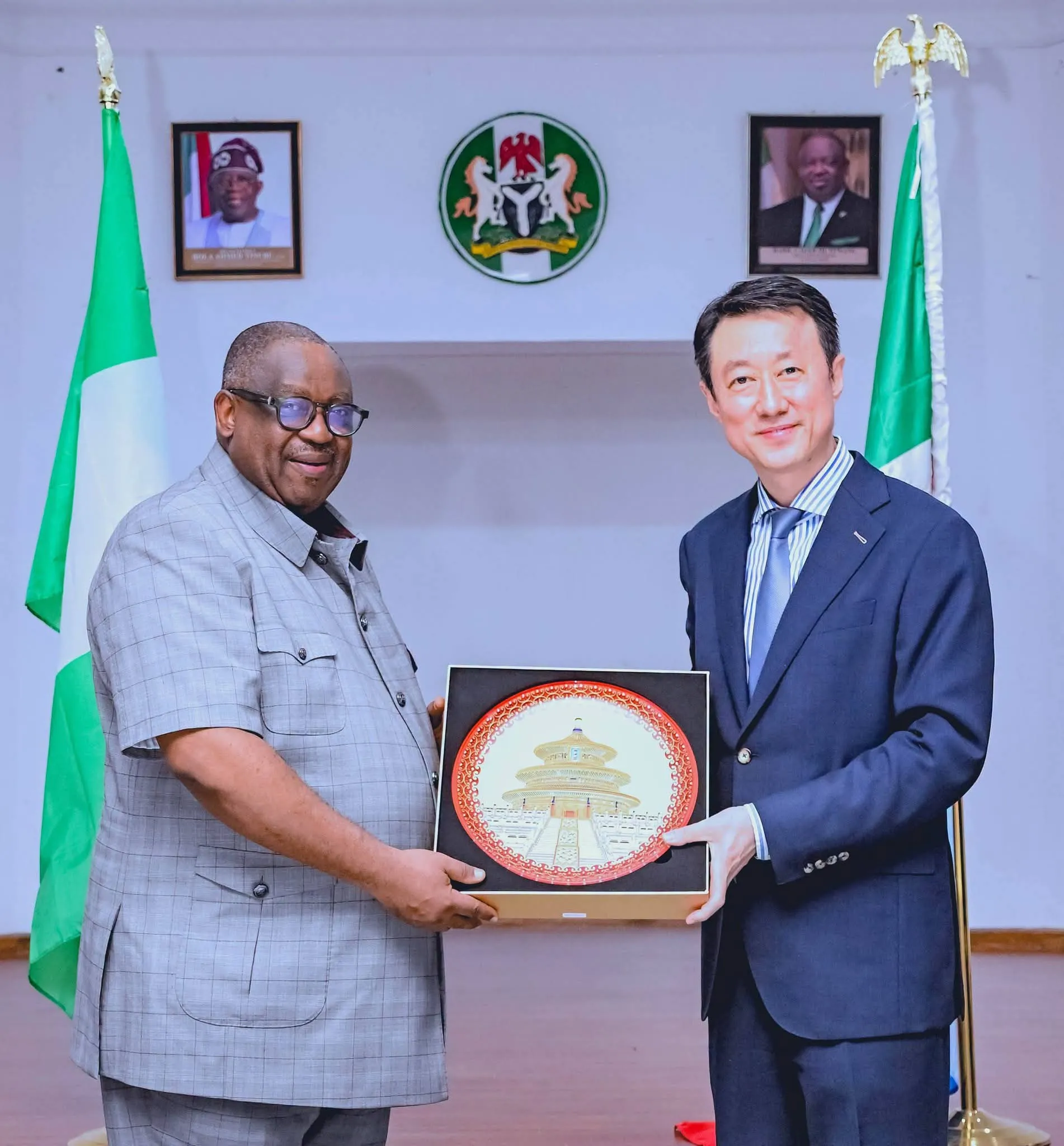
The Plateau State Government has intensified its strategic partnership with China as part of efforts to attract foreign investment, transform agriculture, and accelerate infrastructure development, positioning the state as a competitive destination for business and industrial growth.
Governor Caleb Manasseh Mutfwang disclosed this on Monday while receiving the Ambassador of the People’s Republic of China to Nigeria, Yu Dunhai, alongside a delegation of Chinese investors and business executives at the Government House in Jos.
The visit is part of the state’s broader strategy to strengthen international partnerships and attract foreign direct investment into critical sectors such as agriculture, mining, healthcare, tourism, infrastructure, and industrial development.
Speaking during the meeting, Governor Mutfwang described the relationship between Plateau State and China as one that has steadily evolved over the years, stressing the importance of expanding cooperation beyond national engagements through direct partnerships with Chinese provinces.
He said his administration is committed to leveraging investment, technology transfer, innovation, and knowledge exchange to unlock the state’s vast economic potential.
Agriculture at the Centre of Partnership
Governor Mutfwang identified agriculture as a key area for collaboration, noting that Plateau State has long been recognized as Nigeria’s food basket and a historic mining hub.
He explained that the government is pursuing an ambitious agricultural modernization agenda focused on mechanization, increased productivity, cold-chain infrastructure, livestock development, and agro-processing.
As part of the initiative, the governor unveiled plans for a 500-hectare Special Agro-Processing Zone near the Yakubu Gowon International Cargo Airport, designed to serve as a major export hub for agricultural products while improving value addition for farmers and agribusinesses.
He also highlighted investment opportunities in poultry, dairy farming, fisheries, and animal feed production, emphasizing the need to reduce Nigeria’s dependence on imported dairy products by building a competitive local livestock industry.
Sustainable Mining and Industrial Growth
On mining, Governor Mutfwang advocated responsible and environmentally sustainable practices that promote local value addition and community development.
He also called for closer collaboration with Chinese authorities in tackling illegal mining activities and ensuring that mineral resources contribute meaningfully to the state’s economic development.
China Reaffirms Commitment
In his remarks, Ambassador Yu described Plateau State as a strategic investment destination due to its abundant natural resources, favorable climate, and enormous agricultural potential.
He commended Governor Mutfwang’s leadership and ongoing reforms in infrastructure, agriculture, education, and governance, assuring the state of continued support from both the Chinese Government and the Chinese Embassy in Nigeria.
The ambassador disclosed that the visiting delegation comprised executives from four internationally recognized Chinese companies with extensive operational experience in Nigeria, expressing confidence that the engagement would unlock new opportunities in transportation, infrastructure, agriculture, and industrial development.
New Export Opportunities
Ambassador Yu highlighted the growing economic ties between China and Nigeria, revealing that bilateral trade between the two countries is valued at several billions of dollars annually, while Chinese direct investment in Nigeria reached approximately $700 million in the previous year.
He also announced that China’s recently introduced 100 percent zero-tariff policy on Nigerian exports presents a significant opportunity for Plateau State’s agricultural products to gain access to one of the world’s largest consumer markets.
Drawing from China’s development experience, Yu noted that agricultural reforms had lifted more than 800 million people out of poverty, pledging China’s support in improving agricultural productivity, expanding processing capacity, strengthening livestock production, and developing agricultural value chains in Plateau State.
Addressing concerns over illegal mining, the ambassador reiterated China’s zero-tolerance policy against unlawful mining activities and assured the state government of cooperation in identifying and prosecuting offenders while encouraging legitimate investors to comply with established regulations.
Both leaders expressed optimism that the renewed engagement would usher in a new era of mutually beneficial cooperation, delivering increased investment, job creation, economic growth, and sustainable development for Plateau State.


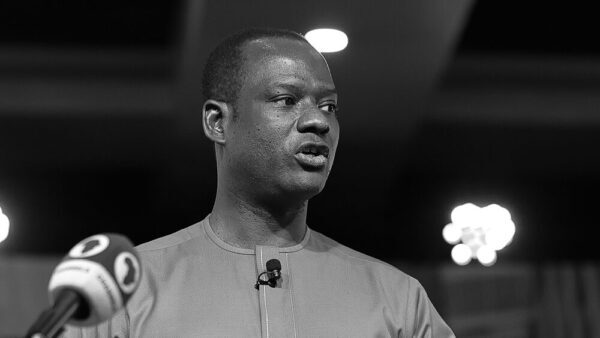
The Federal Government says Fitch Ratings’ decision to revise Nigeria’s credit rating outlook from Stable to Positive reflects progress in economic reforms, foreign exchange market adjustments and efforts to strengthen the country’s external position.
Fitch announced the revision on 9 October, retaining Nigeria’s long-term foreign-currency issuer default rating at ‘B’.
In a statement issued on Saturday, the Minister of Finance and Coordinating Minister of the Economy, Taiwo Oyedele, said Fitch cited increased foreign exchange reserves, easing inflation and improved economic prospects among the factors supporting the outlook revision.
According to the minister, Nigeria’s gross foreign exchange reserves rose to $54.9 billion as of 25 September 2026, from $32 billion in mid-April 2024.
He attributed the increase to more formalised foreign exchange transactions, portfolio inflows, higher exports and remittances.
Fitch also projected that Nigeria would record a current account surplus equivalent to 6.4 per cent of gross domestic product in 2026.


Economic growth and inflation
The ratings agency projected that Nigeria’s real gross domestic product would grow by 4.3 per cent in 2026, compared with 4 per cent in 2025, with growth remaining above 4 per cent in 2027 and 2028.
Fitch expects non-oil activities to remain the main driver of economic expansion.
The projection comes as Nigeria’s economy recorded growth of 4.43 per cent year-on-year in the second quarter of 2026, according to the National Bureau of Statistics (NBS).
The figure was higher than the 3.89 per cent recorded in the first quarter of 2026 and the 4.23 per cent recorded in the corresponding quarter of 2025.
The World Bank’s October 2026 Nigeria Development Update projected average annual economic growth of 4.4 per cent between 2026 and 2028, identifying services and agriculture among the contributors to economic activity.
On inflation, Fitch projected an average rate of 15.4 per cent in 2026, less than half the level recorded in 2024.
The NBS reported that Nigeria’s headline inflation rate eased marginally to 15.39 per cent in August 2026, from 15.43 per cent in July.
The figures provide recent context for Fitch’s assessment of inflation, although the agency’s annual average forecast is different from the monthly inflation rate reported by the NBS.
Reserves, oil production and public debt
Fitch also noted developments in Nigeria’s oil sector, including crude oil production meeting the country’s OPEC target of 1.5 million barrels per day from May 2026.
Mr Oyedele said increased domestic refining was helping to reduce fuel imports and foreign exchange demand.
On public finances, Fitch expects Nigeria’s tax reforms to increase non-oil revenue relative to the size of the economy.
The agency projected that general government debt would average 32 per cent of GDP between 2026 and 2028, below the median of 56 per cent for countries with a ‘B’ rating.
Fitch also highlighted Nigeria’s domestic debt market and the banking sector recapitalisation exercise, noting that many banks had capital adequacy ratios above 20 per cent.
However, the agency identified persistent challenges, including inflation remaining above levels in peer countries, government revenue being low relative to the size of the economy, and interest payments accounting for a high proportion of government revenue.
The minister said the federal government would continue implementing reforms aimed at increasing revenue, improving spending efficiency, strengthening debt management and supporting non-oil economic growth.
Other rating developments
The Fitch decision follows other developments in Nigeria’s international credit assessments.
READ ALSO: FG to negotiate ₦1,350 petrol price ceiling as global oil shock drives pump prices
In May 2026, S&P Global Ratings upgraded Nigeria’s credit rating from ‘B-’ to ‘B’. In August, Moody’s revised its outlook on Nigeria to Positive while retaining its ‘B3’ rating.
Mr Oyedele noted that the government’s medium-term objective remained to improve Nigeria’s credit standing and work towards investment-grade status.
He said the administration would continue to focus on foreign exchange market reforms, tax revenue mobilisation, fiscal governance, more efficient public spending and growth in non-oil sectors.
The minister said its broader objective was to “translate economic reforms into jobs, food security, support for small businesses and improved living standards”.
Discover more from Premium Times Nigeria
Subscribe to get the latest posts sent to your email.
-

 Business2 days ago
Communications Ministry made ₦345.5 million duplicate payment for Abuja ICT Park project
-
Business3 days ago
Fuel subsidy would cost Nigeria over N20trn yearly — Minister
-
News2 days ago
LumenUs helps automate tedious paperwork in times of grief
-
Business2 days ago
Cardoso Takes Nigeria’s Financial Reforms to Singapore, Signs MoU With GFTN on Innovation