Connect with us

Opinion

Lalong @59: Redefining Governance through Patriotism, Vision & Peace – Makut Simon writes

info

Published

on

WhatsApp Image 2022 05 05 at 7.06.03 AM
The story behind the political journey of Rt. Hon. Simon Bako Lalong, Executive Governor of Plateau State and Chairman, Northern States Governors Forum cannot be fully comprehended without looking closely at his upbringing and early childhood which is a story of grass-to-grace fashioned in resilience, hardwork, humility, trustworthiness, team-spirit and forgiveness.
Those who know him from the glitter of the offices he has held including the current one as Governor may think of him as someone who has always been privileged or raised with a silver spoon. For others who have known him in the last 59 years, Simon Bako Lalong is a product of God’s grace and the determination of a man to use his gifts and talents to overcome all limitations around him.
Lalong has spoken severally of being raised in the then rural village of N’yak also known as Ajikamai in Shendam Local Government to poor parents who had little to offer him and his siblings for a bright future. To make matters worse, losing his father early in life meant that the burden of leadership fell on him prematurely being the first born.
Nevertheless, he took up the challenge and submitted himself to God and the discipline of his Uncle and benefactors who took him to Shendam where he continued his education and gradually blossomed amidst difficulties.
Through God’s help, he successfully passed through all levels of education to acquire a Law Degree from the prestigious Ahmadu Bello University Zaria before being called to the Nigerian Bar in 1991. This opened the doors of glory to him.
It is also important to point out the impact of education and the Church in the life of Simon Bako Lalong who tells everyone that the secret of his success and outlook in life is rooted in the Catholic Doctrines inculcated in him very early in life which have shaped his mind about people and service. Many testify to his easy going nature and capacity for love, forgiveness, honesty, compassion, self-control, humility among others which are enumerated in the Holy Bible as the Fruit of the Spirit (Galatians 5:22).
This foundational attributes boosted by experience and exposures have continued to define him since he joined politics. Before seeking political office, Simon Bako Lalong demonstrated his passion for service through many youth, cultural and professional bodies. These include Assistant Secretary, Nigeria Bar Association, Plateau State Chapter; National President of Goemai Youth Movement; Youth Activist and one of the leaders within the Plateau Youth Council many years ago. These responsibilities espoused his competence and thus made it easy for the people to trust him with leadership when in 1999, he contested and won election into the Plateau State House of Assembly to represent Shendam Constituency. Within one year in the House, having served as Chairman, House Committee on Judiciary; Member, House Committee on Local Government & Chieftaincy Affairs, Public Accounts/Petition and Agriculture, he emerged Speaker and successfully served for 7 years – the longest so far in the political history of the State.
Although his tenure as Speaker was not without challenges, Lalong displayed the earlier enumerated attributes of resilience, truth and justice when he held on strong in the face of political tyranny and Federal Might that saw him being illegally removed and his seat declared vacant.
Because he stood on truth and justice, his Recall from the House of Assembly failed woefully while his purported impeachment was upturned by the courts later. In the face of these challenges, his tenure as Speaker is praised for passing the Laws establishing Plateau State University, Bokkos (an institution he brought back to life after it was shut down by the Jang administration); College of Agriculture Garkawa; College of Arts, Science and Remedial Studies, Kurgwi; Bills on Creation of additional/new Chiefdoms, Districts and State Electoral Wards, as well as Bill on establishment of structures in Local Government Councils. As Speaker, he endeared himself to fellow Speakers across the 36 states in Nigeria and was elected twice as Chairman, Nigerian Conference of Speakers from 2001-2002. Today, he is the National Chairman, Conference of Former Speakers of State Houses of Assembly (COFSSHA).
Despite his travails and suffering as Speaker for refusing to carry out an illegal impeachment of the then Governor of Plateau State Chief Joshua Chibi Dariye, Governor Lalong maintained absolute calm and embraced his ordeal with equanimity, leaving vengeance to God rather than attempting to take his pound of flesh even when he eventually emerged Governor in 2015. Putting his foundational attributes of love, forgiveness, honesty, compassion, self-control, and humility to work, he faced Governance head-long rather than dissipating energy fighting perceived enemies.
Little wonder, from 2015 when he took over the as Governor of Plateau State, Lalong changed the trajectory of Governance by removing personal sentiments from public service. He decided to end the culture of personalizing public projects and abandoning people’s resources because of personal ego or political differences.
Despite taking over from a Government of a different political party, he vowed to complete all viable and useful projects that have direct impact on the people. This he has done with tremendous success with the completion of projects not only abandoned by former Governor Jonah Jang, but some dating as far back as the Government of Chief S.D. Lar.
Today, the Mararaban Jama’a – Secretariat Junction road abandoned at about 30 percent with less than one lane done, is fully completed and in use as one of the major dual carriage gateways to the State. The Secretariat Junction Flyover Bridge also inherited was equally completed and has been in use to the delight of motorists and citizens. Similarly, the Riyom General Hospital and Trauma Centre is completed and in use while the General Hospitals in Kwall, Kanke LGA and Mabudi, Langtang South LGA are also completed and will soon be put to use. The list goes on and on.
Having spent most part of his first tenure completing these inherited and abandoned projects, Governor Lalong continued the implementation of Rescue Mission anchored on Peace, Security and Good Governance; Infrastructural Development; and Sustainable Economic Rebirth. Many road projects within the Jos and Bukuru metropolis have been carried out with most of them rehabilitated, reconstructed or newly constructed. The metropolis is also electrified with solar street lights stretching close to 100 kilometres which have enhanced security, aesthetics and night life in the metropolis. The Plateau Judiciary is about taking possession of a brand new High Court Complex touted to the best in the country.
His sense of Justice, equity and fairness has pushed him to democratize infrastructural development by distributing projects across the 17 Local Government areas and always thinking of the grassroots. He has thus ensured that all Local Governments have water, road and other projects including the Lalong Legacy Projects which constitute of world standard Schools and Hospitals. These legacy projects when completed will redefine the face of education and health in Plateau State and ensure that the Legacy of the Rescue Administration lives on for many years to come. But for the legal impediments arising from the dispute between the Government and the former contractor, the Legacy Projects would have been commissioned already. However, the obstacle has already been crossed and the projects will be completed shortly.
Gradually, Governor Lalong is steadily but quietly fulfilling his campaign promises with the introduction of new projects which have dealt a huge blow to his critics who despite enjoying the many inherited and abandoned projects which he completed and others he initiated, prefer to wallow in self-deceit and political numbness just to discredit him. Early this year, he invited Former Head of State Gen. Yakubu Gowon to flag-off the construction of the British-American Flyover and Dualisation to Lamingo Roundabout.
The quality and rapid progress of the work has been impressive and a tale of excitement among citizens. As for the famous Jos Main Market which was burnt down many years ago, the Governor’s determination to find funding has finally paid off with one of Nigeria’s financial Institution, Jaiz Bank agreeing to fund the project on a PPP arrangement. This project which will soon kick start promises to be on of Governor Lalong’s parting gift for the good people of Plateau State.
Without doubt, an area where Governor Lalong’s best has earned him accolades home and abroad is the area of peace and security which remains closest to his heart. His achievements in this area make him second to none in Nigeria as he has virtually erased the recent previous perception of Plateau as a crises-ridden State and a no-go-area. By establishing the Plateau Peace Building Agency and the Inter-Religious Council, Governor Lalong has diffused the ethno-religious sentiments that were hitherto used as trigger for strife and violence.
Little wonder, the State has not experienced ethno-religious crises in a long time except for criminal attacks on innocent citizens by terrorists who have tried unsuccessfully to use religion and generate the bias to instigate the peace loving people to carry arms against one another. This has led to the isolation of these criminals who strike on innocent citizens in the dark of the night killing, maiming, and destroying houses and properties such as in Bassa, Riyom and of recent Kanam, and Wase among others.
Yet, the Governor has remained resolute in strengthening the Operation Rainbow and supporting other security agencies such as the Police, Operation Safe Haven, DSS, Civil Defence and others in facing the criminals headlong. Last year alone, He purchased and distributed 50 patrol cars and 200 security motorcycles to security agencies. In addition, he has introduced Community Policing in conjunction with Vigilante and Neighbourhood Watch Groups and Traditional Institutions that provide intelligence to security agencies. Many were therefore not surprised when after many years, Local Government Elections were conducted in the 17 Local Government Areas of the State in September 2021 without any problems. In the past, attempts to conduct such elections in places such as Jos North became a trigger for violence and bloodshed.
The increased security and safety in Plateau State have resulted in the inflow of more investments into the State by new businessmen and those who had left the State reluctantly during the dark days. Today, the city is always full with people and hotels are almost always sold out.
Government, Private Sector, Professional Bodies and Non-Governmental Agencies are falling over one another to host major national and international conferences and AGMs in Jos. They find it very convenient as the Lalong Government successfully brought in Max Air to operate a flight to and from Abuja, the nation’s capital. The flight has been so successful that within a short time, the flights are almost always fully booked making it necessary for the airline to increase frequencies to almost daily. On the whole, the economy of the State has picked up and citizens are experiencing more prosperity through the establishment of SMEs.
Thanks to the creation of an enabling business environment, citizens and corporate organisations are more willing to pay their taxes while the Plateau State Inland Revenue Service has been restructured and with the help of a reputable tax firm now generates more money than before. This has given the Government an opportunity to not only continue its regular payment of salaries and pensions, but also carry out other obligations to contractors and other partners. Indeed, the Lalong Rescue Administration has demonstrated fidelity and prudence in utilization of public resources through the establishment of Efficiency Unit (EU), Liquidity Management Committee (LMC), Due Process Office, Project Monitoring and Result Delivery Office (PMRDO), implementation of the State Fiscal, Transparency Accountability and Sustainability Program (SFTAS) as well as being a member of the Open Government Partnership (OGP). Little wonder, the records of financial and fiscal discipline won Plateau State the Transparency and Accountability in Extractives at the 2020 OGP Local Innovation Awards held in Seoul, South Korea (1st in Africa). This is after it had won the Award as the second least Corrupt State in Nigeria by the National Bureau for Statistics (NBS).
Turning 59 years weeks before his 7th year in office, Governor Simon Bako Lalong shows his credentials as a man whose rise to public office is certainly not for self-aggrandizement, vain glorification and lucre, but for service that is stewed in humility, fairness, justice and love for the less privileged who like him, depend on God for upliftment and a better life. He remains a darling of Civil Servants who call him “Governor Alert” after seven years of consistent payment of their wages as and when due – a clear departure of what they experienced before his coming into office.
His democratic credentials and leadership position on the National Stage continue to blossom as he walks the talk when it comes to the rule of law and encouraging the growth of democracy. He remains the first Governor in Nigeria to implement full Autonomy for the Legislature and Judiciary as well as Local Governments. This is in addition to his leadership of the Northern Governors Forum and huge sacrifices for the building of the ruling All Progressives Congress (APC). With this background, it becomes more convincing that Simon Bako Lalong has a destiny with fate in the coming years particularly after the 2023 elections when his tenure ends as Governor of Plateau State. Already, groups are mounting uncommon pressure on him to go higher in the service of the nation with the Plateau Legacy Group purchasing the form for him to run for the Plateau South Senatorial District Seat. As the Chairman of the group and Member representing Pankshin, Kanke, Kanam Federal Constituency, Rt. Hon. Yusuf Gagdi succinctly puts it, “leaders like you should not do what they have done to Plateau people and retire home. You have done so much for Plateau State and Nigeria at large and that is why we have put our heads together to take the decision to buy the form for you to contest. You have so much to offer”.
On this special occasion of his 59th birthday, the prayer is for God to give Governor Simon Bako Lalong good health, more wisdom and courage to continuously operate in the will of God and stay true to the early teachings and training he got from the Bible which have taken him thus far.
Happy birthday Your Excellency!
Makut Simon Macham, Ph.D., is the Director of Press and Public Affairs to the Governor of Plateau State.

Continue Reading
Click to comment

Leave a Reply

Your email address will not be published. Required fields are marked *

Featured

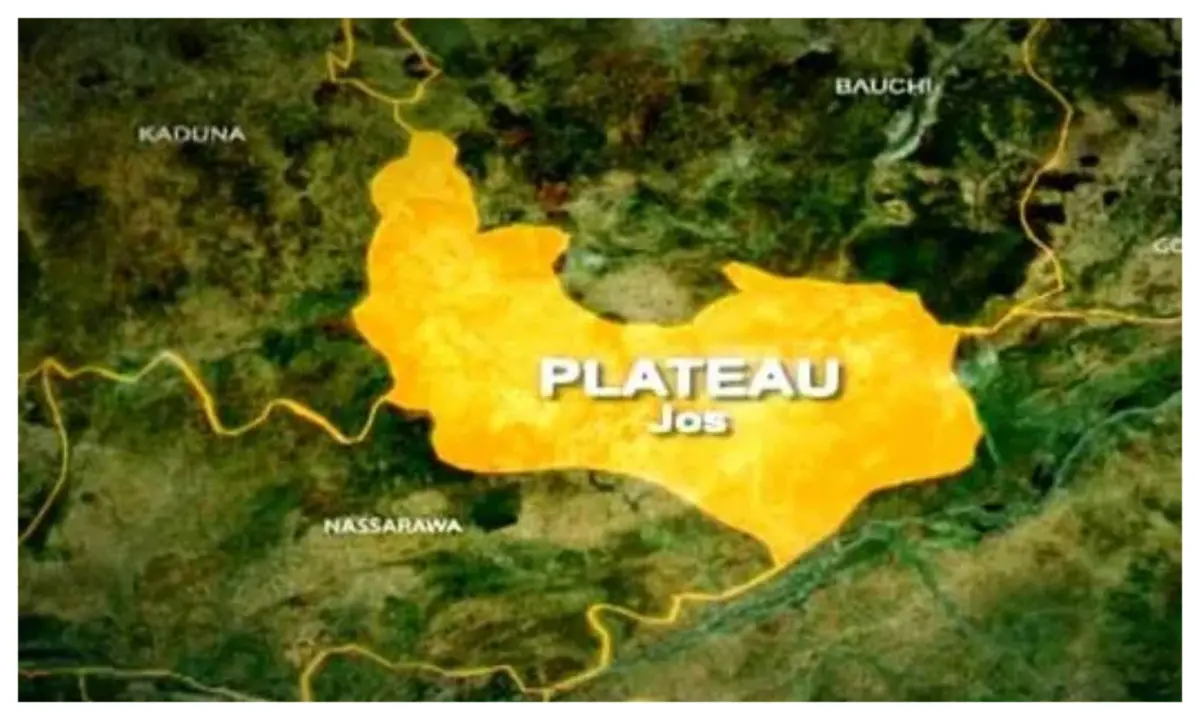
PLATEAU STATE: IS THERE PEACE, OR ONLY THE ABSENCE OF VIOLENCE?

info

Published

on

By

Rev Joshua Longji Sati

PLATEAU STATE: IS THERE PEACE, OR ONLY THE ABSENCE OF VIOLENCE?

RETHINKING THE STATE OF PEACE IN PLATEAU STATE THROUGH THE LENS OF POSITIVE AND NEGATIVE PEACE


      By


Rev Joshua Longji Sati


Peace is one of the most frequently used words in discussions about Plateau State. Governments speak of restoring peace; religious leaders call communities to peace; traditional rulers advocate peaceful coexistence; civil society organisations facilitate dialogue and reconciliation; and communities themselves repeatedly express a desire to live without fear.

Yet an important question remains: What kind of peace is Plateau experiencing?

Is Plateau moving toward positive peace, a condition in which justice, security, human dignity, inclusion, reconciliation and healthy relationships are being strengthened? Or is much of what is described as peace actually negative peace, a temporary reduction in open violence while the grievances, inequalities, trauma, impunity, and structural conditions that produce conflict remain unresolved?

This question is particularly important because silence is not always peace. A community may appear quiet because people have genuinely reconciled, but it may also be quiet because people are afraid, exhausted, displaced, disillusioned, or have concluded that speaking will make no difference.

As of September 2026, the evidence suggests that Plateau is experiencing important and genuine peacebuilding processes alongside continuing conditions of negative peace. There are encouraging signs of dialogue, reconciliation, and institutional peacebuilding, but recurrent violence demonstrates that the deeper foundations of positive peace have not yet been secured.

  1. Understanding Positive and Negative Peace

The distinction between positive and negative peace is associated particularly with peace scholar Johan Galtung.

Negative peace refers broadly to the absence or reduction of direct violence. A community may no longer be experiencing daily attacks, killings, or open confrontation, but this does not necessarily mean that justice, trust, and social harmony have been restored.

Positive peace, by contrast, goes beyond stopping violence. It involves addressing the conditions that allow violence to emerge and persist. It includes justice, equality, participation, respect for human dignity, functioning institutions, reconciliation, trust, and the capacity of communities to resolve disputes without violence.

This distinction is particularly relevant to Plateau.

A community that has not been attacked for six months may be safer than it was previously. But if residents remain afraid to farm, displaced families cannot return, perpetrators are not held accountable, historical grievances remain unresolved, and communities continue to view one another with suspicion, the absence of recent attacks should not automatically be described as genuine peace.

The central question therefore becomes:

Has Plateau merely become quieter, or is Plateau becoming more just, secure, reconciled and capable of peacefully managing its differences?

  1. Plateau Has Genuine Signs of Peacebuilding

It would be inaccurate to portray Plateau simply as a state without peace.

There are significant initiatives demonstrating that individuals, communities, government institutions, religious bodies, traditional leaders, civil society organisations and security agencies are working toward genuine peace.

Community dialogue is increasing

In February 2026, farmers and herders in communities in Bokkos and Riyom signed 25 peace agreements following sustained dialogue and reconciliation facilitated by the Institute for Integrated Transitions. The process brought community members together to identify problems and rebuild relationships.

This is important because positive peace requires more than security deployment. It requires people who have experienced conflict to sit together, listen to one another, and negotiate mechanisms for living together.

Similarly, in August 2026, the Plateau State Peace Building Agency and partners organised a “Peace Under the Tree” initiative involving traditional, religious, youth and women leaders from Afizere and Anaguta communities, focusing on indigenous conflict resolution, restorative justice and community reconciliation.

These are examples of peace understood as relationship-building rather than merely conflict suppression.

There are efforts toward inclusive peace structures

In 2025, a federal peace initiative brought Christian leaders, Fulani leaders, traditional rulers, women and youth representatives together to discuss community-based peace structures across Plateau’s 17 LGAs.

In April 2026, Plateau stakeholders also participated in discussions addressing farmer-herder conflict, criminality and land disputes, with emphasis on inclusive policy and sustainable peace infrastructure.

Such initiatives recognise an important reality: peace cannot be constructed exclusively by security agencies or government offices.

It must involve the people who live with the consequences of conflict.

There are examples of negotiated problem-solving

There have also been smaller examples of practical reconciliation. In August 2026, for example, a dispute following the destruction of 38 farms in Bokkos was reportedly resolved through engagement between farmers and herders, with compensation agreed for the damaged farms.

Such cases may appear small compared with the scale of Plateau’s conflict, but they illustrate what positive peace can look like at community level: wrongdoing is acknowledged, harm is addressed, compensation is negotiated, and relationships are preserved.

  1. Yet Plateau’s Current Reality Cannot Be Described Simply as Positive Peace

The strongest challenge to the claim that Plateau has achieved genuine peace is the continuing recurrence of violence.

In September 2026, the Plateau Government imposed a dusk-to-dawn curfew on Barkin Ladi, Bokkos and Mangu following renewed security threats.

On September 23, reports indicated that attacks in Barkin Ladi and Mangu had killed several people, including a police officer and civilians, despite the curfew.

These incidents matter because positive peace is not simply measured by whether a government has announced a peace programme. It is ultimately reflected in whether ordinary people can live, farm, travel, worship, conduct business, and raise their children without persistent fear of violence.

The continuing attacks demonstrate that Plateau’s peace remains fragile.

  1. The Scale of the Historical Problem Cannot Be Ignored

The historical depth of the crisis also complicates any claim that Plateau has entered a period of genuine peace.

A Plateau State fact-finding committee report presented in September 2025 reportedly documented attacks on more than 420 communities between 2001 and 2025, with nearly 12,000 deaths and thousands of people displaced.

The European Union Agency for Asylum, drawing on ACLED and other sources, recorded 282 security incidents and 737 fatalities in Plateau between 1 January 2024 and 31 August 2025. It also reported an estimated 55,053 internally displaced people in February 2025, with communal clashes and farmer-herder conflict identified as major causes of displacement.

These figures are not simply statistics.

Behind them are:

  • widows;
  • orphans;
  • displaced families;
  • destroyed homes;
  • abandoned farms;
  • traumatised children;
  • disrupted education;
  • broken relationships;
  • damaged livelihoods;
  • communities living with memories of violence; and
  • people who remain uncertain about whether it is safe to return home.

Consequently, peace cannot be measured only by the number of attacks recorded during a particular month.

It must also be measured by whether the consequences of previous violence are being addressed.

  1. Are Victims Being Heard?

This is one of the most important tests of whether Plateau’s peace is genuine.

The first question should not merely be:

Are people fighting today?

It should also be:

Are the people who suffered yesterday being heard today?

Victims often need more than humanitarian assistance. They need acknowledgement, justice, psychosocial support, restoration of livelihoods, security guarantees and opportunities to participate in decisions concerning their future.

The state has taken some steps in this direction. The fact-finding committee that investigated the violence reportedly consulted security agencies, traditional rulers, community leaders and civil society organisations across all 17 LGAs.

That is significant because truth-telling is an essential component of sustainable peace.

However, investigation is only the beginning.

A report becomes meaningful when its findings lead to implementation, accountability, institutional reform and restoration.

In April 2026, President Tinubu also urged Plateau stakeholders to review previous government White Papers on security crises and develop implementable recommendations.

The crucial question therefore is not simply whether reports exist.

It is:

What happens after the report?

  1. Justice Cannot Be Replaced by Reconciliation

One of the greatest dangers in a conflict-affected society is confusing reconciliation with forgetting.

Reconciliation does not mean telling victims to forget what happened.

It does not mean telling communities to “move on” without addressing wrongdoing.

And it does not mean treating victims and perpetrators as morally equivalent simply because both communities have suffered.

Amnesty International, responding to killings in Plateau in 2025, argued that condemnation alone was insufficient and called for investigation and justice for victims, expressing concern about impunity.

This highlights an important principle:

Forgiveness and accountability are not necessarily opposites.

A Christian theology of forgiveness does not require the denial of truth.

Indeed, biblical reconciliation assumes that something has gone wrong and that wrongdoing must be confronted truthfully.

Therefore, when religious leaders preach:

“Let us forgive and forget.”

The more appropriate question may be:

Forgive what? Forget what? And what has been done to address the wrongdoing?

Forgiveness without truth can become another form of injustice.

  1. Political Stability Is Not the Same as Peace

Another danger is equating political calm with peace.

A government may prefer stability because instability threatens governance, investment, and public confidence. But genuine peace requires space for legitimate criticism and participation.

This does not mean that every criticism is correct or that every political demand should be accepted.

It means that citizens must have legitimate avenues through which grievances can be expressed without intimidation.

If people remain silent because they believe that speaking against injustice will bring consequences, then silence should not automatically be interpreted as consent or peace.

This is particularly important in communities emerging from conflict.

The absence of protest may indicate satisfaction.

But it may also indicate:

  • fear;
  • fatigue;
  • hopelessness;
  • political exclusion;
  • displacement;
  • distrust of institutions; or
  • the belief that nobody will listen.

Therefore:

A silent community is not necessarily a peaceful community.

  1. Are Difficult Conversations Actually Taking Place?

Positive peace requires communities to talk about the issues they would rather avoid.

Plateau’s conflicts involve multiple and overlapping factors, including land, livelihoods, identity, ethnicity, religion, political representation, historical grievances, criminality and insecurity.

The EUAA’s assessment describes farmer-herder violence as being driven partly by competition over resources and complicated by religious dimensions.

Therefore, peacebuilding that speaks only about “living together” without addressing land, identity, political inclusion, security, justice and livelihoods will remain incomplete.

The encouraging development is that some current initiatives are beginning to address these difficult issues directly.

The Plateau Peace Committee adopted a report chaired by former Governor Joshua Dariye in June/July 2026 as a framework for addressing persistent security challenges and reconciliation, with emphasis on dialogue, institutional reforms and collaboration with the federal government.

This suggests that the conversation is moving beyond simply asking people to “be peaceful.”

The challenge is to move from conversation to implementation.

  1. Religious Leaders Have a Particularly Important Responsibility

Plateau is deeply religious, and Christian and Muslim leaders have considerable influence over how communities interpret conflict.

Religious leaders can either contribute to genuine peace or unintentionally contribute to false peace.

False peace can emerge when religious teaching becomes:

“Just forgive.”

“Don’t talk about the past.”

“We are all God’s children, so forget what happened.”

Those statements may sound spiritual, but they can become harmful if they prevent victims from telling the truth or seeking justice.

A more constructive theology of peace should hold together:

truth + justice + repentance + forgiveness + restoration + reconciliation.

Christian peacebuilding, for example, should not merely ask:

“Have you forgiven?”

It should also ask:

“Has the truth been acknowledged?”

“Has wrongdoing been confronted?”

“Have victims been restored?”

“Has accountability occurred?”

“What must change so that the violence does not happen again?”

That is a much deeper understanding of biblical peace.

  1. Plateau Is Not Without Hope

It would equally be wrong to conclude that everything happening in Plateau represents false peace.

There are genuine signs of resilience.

Farmers and herders are negotiating agreements.

Religious and traditional leaders are participating in dialogue.

Women and youth are increasingly included in peacebuilding processes.

The Plateau State Peace Building Agency is engaging communities.

Security agencies are pursuing dialogue alongside security operations.

The government has established peace and security as a central policy concern. Its development framework identifies Peace, Security and Good Governance as one of its principal pillars.

These developments matter.

Positive peace does not arrive overnight.

It is constructed through thousands of decisions, conversations, relationships and institutions.

  1. The Present Reality: A Peace in Transition

The evidence therefore points toward a more nuanced conclusion.

Plateau is neither simply at peace nor simply without peace.

It is experiencing a peace transition in which genuine peacebuilding initiatives exist alongside persistent manifestations of negative peace.

There are areas where violence has decreased.

There are communities where dialogue has restored relationships.

There are peace agreements.

There are institutional mechanisms.

There are people deliberately working across religious, ethnic and community boundaries.

But there are also renewed attacks.

There are displaced people.

There are unresolved grievances.

There is continuing fear.

There are questions about accountability.

And there are structural problems that continue to reproduce conflict.

The current reality therefore resembles a fragile peace, rather than a consolidated positive peace.

  1. A Practical Test for Genuine Peace in Plateau

Plateau should therefore develop a broader Peace Test.

Rather than asking only:

“Are people killing one another?”

we should ask at least ten questions:

  1. Security

Can ordinary people live, travel and farm without persistent fear?

  1. Justice

Are perpetrators of serious violence investigated and held accountable?

  1. Victims

Are victims heard, supported and included in decisions affecting them?

  1. Truth

Are communities able to speak honestly about what happened?

  1. Reconciliation

Are former enemies rebuilding relationships rather than merely avoiding one another?

  1. Inclusion

Are women, youth, minorities, displaced people and marginalised communities participating in peace processes?

  1. Livelihoods

Can people return to farming, trading and economic activity without fear?

  1. Institutions

Are government and traditional institutions trusted to resolve disputes fairly?

  1. Accountability

Can citizens criticise government policies and security failures without fear?

  1. Prevention

Are the underlying causes of violence being addressed so that future generations do not inherit the same conflict?

If the answer to these questions is increasingly yes, Plateau is moving toward positive peace.

If the answer is largely no, then what looks like peace may simply be negative peace.

Conclusion: Plateau Must Move from “Peace as Silence” to “Peace as Justice”

The most important question facing Plateau is not whether the state can achieve periods without violence.

It is whether Plateau can build a society in which violence is no longer necessary as a means of expressing grievances, securing land, defending identity, pursuing political interests or responding to perceived injustice.

That requires more than security operations.

It requires justice.

It requires truth.

It requires accountability.

It requires reconciliation.

It requires inclusive governance.

It requires restoration of livelihoods.

It requires healing of trauma.

And it requires communities that are courageous enough to have difficult conversations.

The recent recurrence of attacks, including renewed violence in Barkin Ladi, Bokkos and Mangu in September 2026, shows that the work is far from complete.

But the growing number of community dialogues, peace agreements, interfaith initiatives and institutional peacebuilding efforts also demonstrate that another future is possible.

The task before Plateau is therefore not simply to maintain peace.

It is to deepen peace.

Not merely peace as the absence of gunshots, but peace as justice.

Not peace as silence, but peace as truth.

Not peace as forgetting, but peace as healing.

Not peace as suppression, but peace as participation.

Not peace as forced coexistence, but peace as restored relationships.

And not peace that protects the powerful from uncomfortable questions, but peace that protects the vulnerable from violence and injustice.

The ultimate test of peace is not whether people have stopped speaking.

It is whether they have become free enough to speak, safe enough to live, justly treated enough to trust, and reconciled enough to build the future together.

Plateau’s journey toward genuine peace has begun in many places, but the evidence suggests that it is still a journey, not yet a destination.


Works Cited

  1. Theoretical and Conceptual Sources

Galtung, Johan. “Violence, Peace, and Peace Research.” Journal of Peace Research, vol. 6, no. 3, 1969, pp. 167–191.

Galtung, Johan. Peace by Peaceful Means: Peace and Conflict, Development and Civilization. PRIO/SAGE Publications, 1996.

  1. Plateau State and Contemporary Security Sources

Amnesty International Nigeria. “Plateau: Killing of 51 People Is an Inexcusable Security Failure.” Amnesty International Nigeria, 14 Apr. 2025.

Channels Television. “Fact-Finding Committee Report Reveals 12,000 Deaths in Plateau Attacks.” Channels Television, 17 Sept. 2025.

Channels Television. “Farmers, Herders Sign 25 Peace Pacts to End Bokkos–Riyom Killings in Plateau.” Channels Television, 11 Feb. 2026.

Channels Television. “Plateau Imposes Dusk-To-Dawn Curfew on Barkin Ladi, Bokkos, Mangu.” Channels Television, 21 Sept. 2026.

Channels Television. “Plateau Attacks: Police Officer, Five Others Killed Despite Curfew.” Channels Television, 23 Sept. 2026.

European Union Agency for Asylum (EUAA). “2.1.7. Plateau.” Nigeria: Security Situation, Jan. 2026.

Plateau State Government. 2025 Budget Speech. Government of Plateau State, 2025.

Plateau State Government. “Government of Plateau State: Three-Point Policy Agenda.” Government of Plateau State.

Premium Times. “Mutfwang Receives Dariye Panel Report, Seeks Broader Peace Dialogue.” Premium Times, 30 June 2026.

Premium Times. “Plateau Adopts Dariye Report, Prepares Fresh Peace Dialogue.” Premium Times, 1 July 2026.

State House, Abuja. “President Tinubu Sends Peace Emissary to Plateau State.” The State House, Abuja, 16 Nov. 2025

 

Continue Reading

News

Former Archbishop of Canterbury Justin Welby Calls for Peace, Protection of Communities During Plateau Visit

editor

Published

on

By

Former Canterbury Archbishop, Justin Welby ,Plateau, Violence

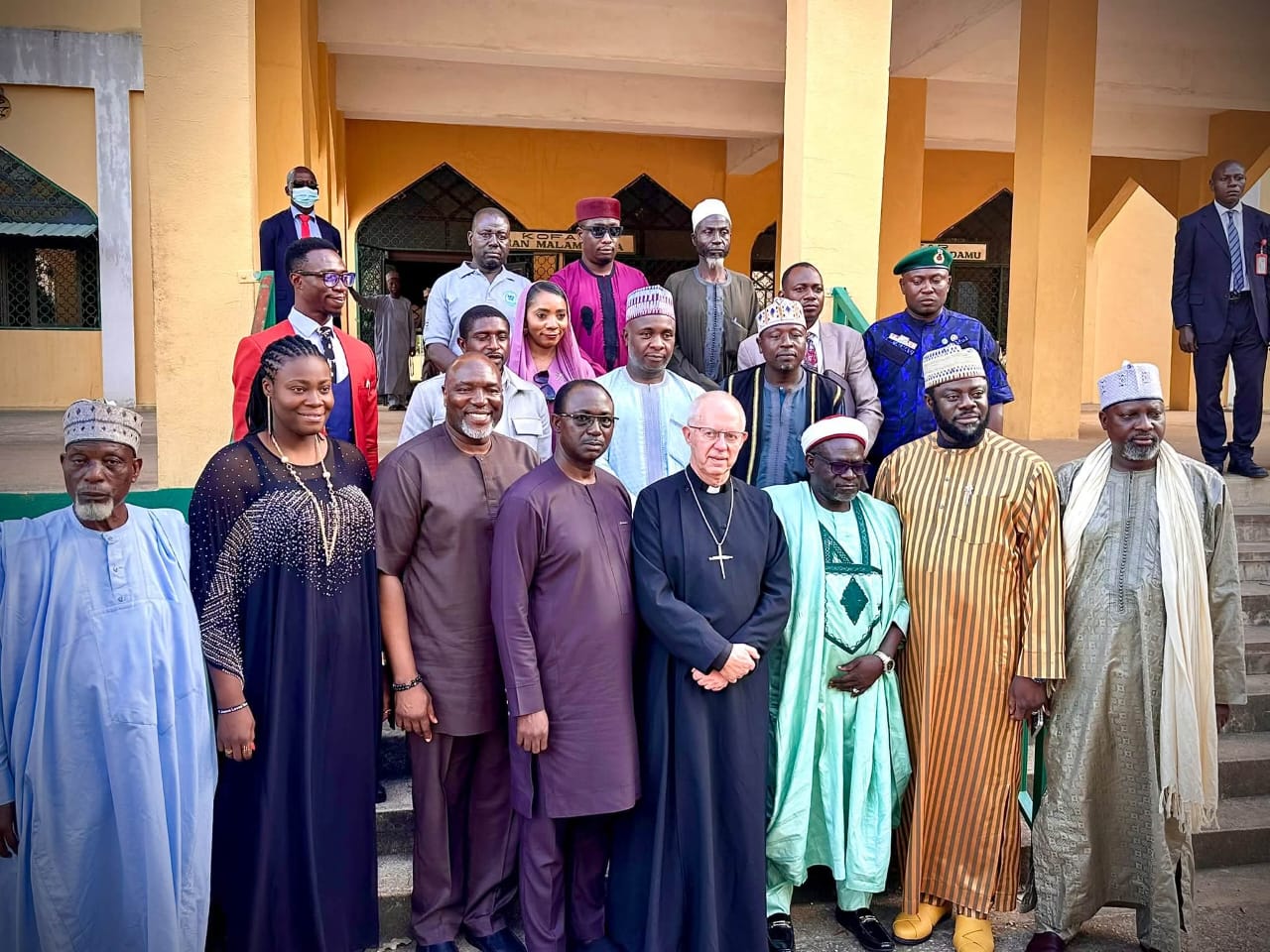
Former Archbishop of Canterbury, Justin Welby, has visited Plateau State as part of efforts to engage Christian and Muslim leaders and communities affected by violent attacks in the state.

During the visit, Welby met with religious leaders in Jos and visited communities affected by violence, including Angwan Rukuba and parts of Bassa Local Government Area.

In Angwan Rukuba, the former Archbishop condoled with families affected by the Palm Sunday attacks, while in Bassa, he delivered a message of hope to residents who have endured years of violence.

Welby was accompanied by the Founder of El-Buba Outreach Ministries International (EBOMI), Prophet Isa El-Buba; Rev. Steve Dangana; the Special Adviser on Religious Affairs to the Plateau State Governor; and the Chairman of the Christian Association of Nigeria (CAN), Plateau State chapter, Rev. Dr. Dunka Gomwalk.

As part of the engagement, Welby held discussions with members of the Plateau State Inter-Religious Advisory Council before visiting the Jos Central Mosque, where he met with Muslim leaders.

Former Canterbury Archbishop, Justin Welby ,Plateau, Violence

Speaking on the purpose of his visit, Welby said he was interested in supporting Christian and Muslim leaders in identifying practical ways of preventing further attacks and protecting vulnerable communities.

He called for sustained commitment to peacebuilding, compassion and the protection of vulnerable people, drawing from his experiences in international peacebuilding efforts.

Welby said the situation in Plateau was receiving international attention, adding that people in different parts of the world were praying for an end to the violence.

“My message is many people long to see this end and are praying for them around the world. Keep praying, keep working, keep vigilant and God will deliver,” he said.

Former Canterbury Archbishop, Justin Welby ,Plateau, Violence3

The former Archbishop also commended recent peace and security initiatives in some communities, including the training of local vigilantes and the installation of closed-circuit television (CCTV) cameras.

During the visit to Bassa, His Royal Highness, Rt. Rev. Ronku Aka, said the community had lost more than 3,000 people to violent attacks over the past decade.

He appealed for continued prayers and stronger efforts towards finding lasting solutions to insecurity, stressing that meaningful development would remain difficult without peace.

Chairman of the Plateau State Inter-Religious Advisory Council, Rev. Dr. Pandam Yamsat, urged Christian and Muslim leaders to strengthen their cooperation in addressing the state’s security challenges.

Yamsat said religious leaders already possessed important elements of the solution to the peace challenges confronting Plateau and should return to the dialogue table to identify practical measures for promoting peace.

He maintained that differences between the two faith communities should not prevent constructive engagement, adding that peace could be achieved through sustained cooperation.

“Peace is doable. If we want peace, we will have it on the Plateau,” Yamsat said.

The Founder of EBOMI, Prophet Isa El-Buba, also called for stronger collaboration between Christians and Muslims in responding to violence across northern Nigeria.

El-Buba described every loss of human life as a loss to society, irrespective of the victim’s religion or ethnic background.

He urged religious leaders and communities to work together and prevent religious differences from being exploited to fuel violence.

According to him, his organisation has continued to promote cooperation between Christians and Muslims while supporting initiatives aimed at empowering vulnerable groups.

El-Buba also advocated programmes to provide Almajiri children with structured Islamic education and guidance, saying such interventions could reduce their vulnerability to extremist interpretations of religious teachings.

Former Canterbury Archbishop, Justin Welby ,Plateau, Violence

At the Jos Central Mosque, the Chief Imam, Sheikh Ghazali Isma’ila Adam, identified youth involvement, stereotyping and political manipulation as some of the challenges affecting peacebuilding efforts.

He called for peace initiatives to extend beyond meetings involving political and religious elites to include young people and communities directly affected by conflict.

The Chief Imam also encouraged increased interaction between Christian and Muslim communities, including visits to one another’s places of worship, saying such engagements could help challenge negative stereotypes and promote peaceful coexistence among younger generations.

The Director-General of the Plateau Peace Building Agency and Secretary of the Plateau State Inter-Religious Advisory Council, Dr. Julie Sanda, said the council’s activities extended beyond meetings and policy discussions.

According to Sanda, religious leaders had accompanied peacebuilding teams to affected communities to comfort residents, listen to their concerns and demonstrate solidarity.

Former Canterbury Archbishop, Justin Welby ,Plateau, Meets Communities, Religious Leaders ,Violence

She thanked Welby for visiting Plateau and listening to the experiences of religious and community leaders, expressing hope that the engagement would lead to further collaboration and the exchange of peacebuilding experiences.

Welby’s visit comes amid renewed security concerns in parts of Plateau State, where the government, religious leaders and security agencies have continued engagements aimed at preventing attacks, strengthening community protection and promoting peaceful coexistence.

The former Archbishop had earlier paid a visit to Plateau State Governor, Caleb Mutfwang, as part of his engagements in the state.

Continue Reading

Trending