News
Poor AI data pipelines could fuel cyber exploitation in Nigeria, regulator warns – Technology Times

The Nigeria Data Protection Commission (NDPC) has warned that poorly curated data pipelines used to develop advanced artificial intelligence (AI) models could expose Nigeria’s digital ecosystem to automated cyber exploitation and mass disinformation.
The warning was delivered at a Stakeholders’ Consultation on Frontier AI hosted by NITHUB, University of Lagos, and the Tech Governance Project, where the nation’s data protection agency highlighted the security and data protection risks associated with increasingly capable AI systems.
Dr Vincent Olatunji, the National Commissioner and Chief Executive Officer of the Commission, represented by Abubakar Mahmud, an officer in the NDPC’s IT and Cybersecurity Department, made the observation at the consultation.

Olatunji, in remarks delivered on his behalf, highlighted the vulnerabilities associated with uncurated data pipelines used to develop advanced foundation models, warning that they could create opportunities for malicious actors to exploit digital infrastructure and spread disinformation at scale. He said the Nigeria Data Protection Act, 2023, provides an important framework for addressing data governance concerns, particularly through requirements relating to data minimisation and algorithmic transparency.
Olatunji, in remarks delivered on his behalf, highlighted the vulnerabilities associated with uncurated data pipelines used to develop advanced foundation models, warning that they could create opportunities for malicious actors to exploit digital infrastructure and spread disinformation at scale.
He said the Nigeria Data Protection Act, 2023, provides an important framework for addressing data governance concerns, particularly through requirements relating to data minimisation and algorithmic transparency.
“Data protection,” Olatunji says, “is not an impediment to innovation, but rather the foundational infrastructure upon which safe, sovereign and globally trusted AI must be built.”
Foundation models are AI systems trained on large volumes of data and capable of supporting multiple applications, including text generation, image creation, software development and information analysis. The quality, origin and management of their training data can influence their reliability, security and potential to expose sensitive information.
The NDPC’s warning places data governance at the centre of Nigeria’s efforts to harness frontier AI, as governments and technology developers explore how increasingly powerful systems could support economic growth and public services while limiting emerging risks.
Nigeria’s data protection law in focus
Olatunji underscored the requirements of the Nigeria Data Protection Act, 2023, particularly the principles of data minimisation and algorithmic transparency.
Data minimisation requires organisations to limit the collection and processing of personal information to what is necessary for a specified purpose. In AI development, this raises questions about the types of personal data developers collect, how they obtain it and whether its use is justified.
Algorithmic transparency concerns the ability to understand and scrutinise how automated systems operate and how they affect individuals. Its application can help organisations assess the implications of AI systems and strengthen accountability for their use.
The Commission is advocating for the integration of ISO/IEC 42001:2023 into Nigeria’s upcoming AI Regulatory Sandboxing Platform to establish privacy safeguards and accountability mechanisms from the earliest stages of AI development.
ISO/IEC 42001:2023 is an international standard that sets out requirements for establishing, implementing, maintaining and continually improving an AI management system. It provides a framework for organisations to manage risks and responsibilities associated with developing and using AI.
A regulatory sandbox generally provides a controlled environment in which businesses can test innovative products, services or technologies under regulatory oversight. Incorporating AI governance principles into such a platform could help developers evaluate compliance and identify risks before deploying systems more widely.
The NDPC’s remarks present the integration of the standard as a recommendation, rather than confirmation that it has already been formally adopted for the planned platform.
NDPC calls for wider collaboration
Beyond domestic regulation, the commission called for collaboration among government, academia, industry and civil society to address the challenges associated with frontier AI.
Olatunji said the NDPC remained committed to a multi-stakeholder approach involving proactive co-creation, regional harmonisation across Africa and alignment with international standards.
The approach reflects the cross-border nature of AI development, in which training data, computing infrastructure, developers and users may be located in different jurisdictions.
Regional coordination could help African countries develop more consistent approaches to AI governance while addressing local concerns, including personal data protection, cybersecurity and control over digital assets.
The consultation examined the potential of highly capable general-purpose foundation models to support national development, alongside the systemic risks that could emerge as such technologies become more powerful and widely deployed.
For Nigeria, the challenge is to establish safeguards that protect individuals and digital infrastructure without unnecessarily restricting responsible technological development. As Nigeria develops its approach to AI oversight, the proposed regulatory sandbox and the commission’s call for international standards could become important elements of the debate over how to balance innovation, accountability and digital sovereignty.
The consultation reinforced the argument that building public trust in AI will require more than technological advances. It will also depend on how responsibly organisations collect data, manage security risks and account for the consequences of automated systems.





Former lawmaker, who represented Kogi West Senatorial District, Dino Melaye, says the people of Yobe State have rejected President Bola Tinubu.
Melaye made the claim in a post on his X handle, shortly after the massive turnout that greeted the presidential candidate of the African Democratic Congress, ADC, Atiku Abubakar, in Yobe.
Recall that Atiku stormed Potiskum on Sunday for his presidential rally at the Dabo Aliyu Stadium, where supporters gathered to receive him.
Videos and photos from the town showed men, women and youths lining the streets, trekking alongside the campaign motorcade and waving ADC flags, banners and posters.
At the rally, Atiku vowed to restore fuel and electricity subsidies if elected in 2027, and promised to tackle insecurity and youth unemployment in Yobe and across the country.
"Let me assure you that once I am elected president in 2027, I will bring back the fuel subsidy. I swear I will also bring back the subsidy on electricity," Atiku said.
It was that crowd that Melaye pointed to when he wrote that Yobe has rejected Tinubu.
"It is very clear that the people of Yobe have rejected Tinubu," he wrote.
The rally came after reports that the ADC was denied a venue in Damaturu, the state capital, forcing the party to move its rally to Potiskum.
2027: ‘Yobe has rejected you’ – Dino Melaye mocks Tinubu after Atiku shut down Potiskum
Business
COP31: Africa’s climate action network PACJA unveils plan to train 500 youths on climate justice
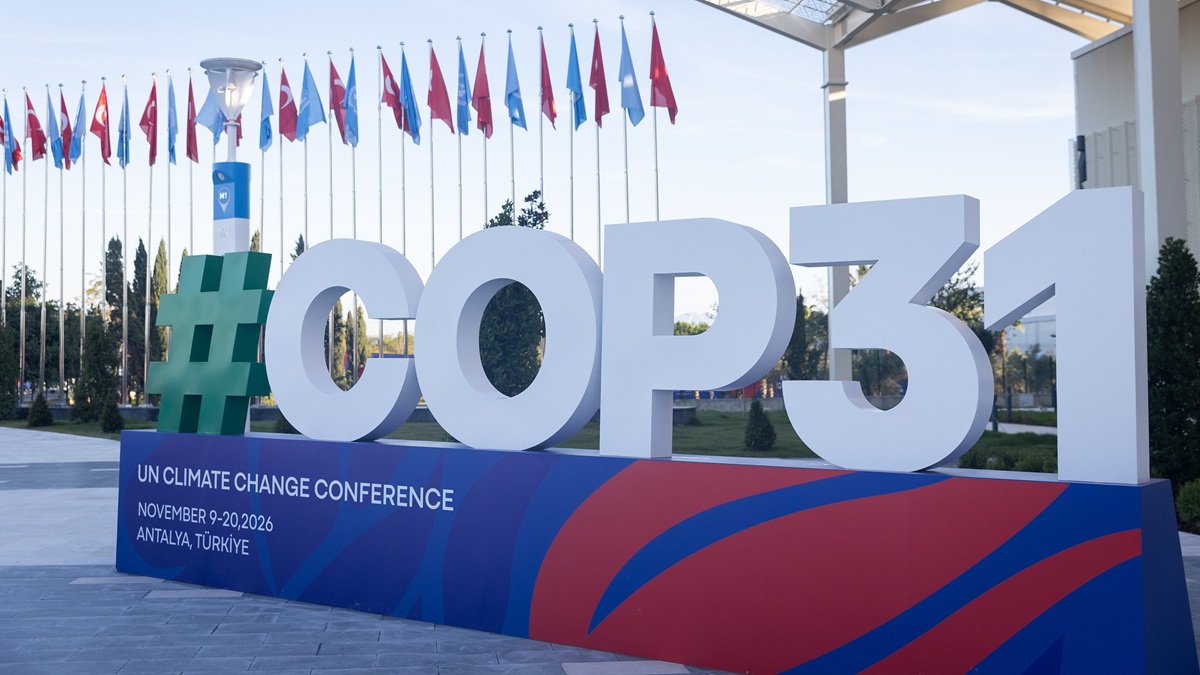
The Pan African Climate Justice Alliance (PACJA), a coalition of over 2000 organisations dedicated to promoting climate action as an advocacy tool in 54 African countries, has launched the sixth cohort of its Nairobi Summer School on Climate Justice, aiming to train 500 youths.
The trainees, to be drawn from within and outside the continent, will attend a capacity development workshop in Addis Ababa, Ethiopia, from 20 June to 3 July 2027, the group stated on Friday at the 31st meeting of the Conference of the Parties (COP31) to the UN Framework Convention on Climate Change.
Participants will learn how climate negotiations work and acquire insight into climate finance, adaptation, loss and damage, just transition and accountability. They will also take part in mock negotiations and meet negotiators and policymakers.
PACJA advances climate action through capacity building, policy advocacy, research, and support for local climate resilience and land restoration projects.
Mithika Mwenda, executive director of PACJA, said Africa’s young people hold less than five per cent of the positions where climate decisions are made, even though they constitute as much as 60 per cent of the continent’s population.
He said the school was set up in 2020 to close that gap. The five previous cohorts trained more than 2500 young people from 144 countries.


The programme will now be held every two years in line with the organisation’s strategic plan for 2026 to 2030.
“Young Africans should not only be invited to the table. They should arrive prepared,” said Augustine Njamnshi, chair of PACJA’s political and technical affairs, who unveiled the cohort.
Mr Njamnshi acknowledged the support given by the African Development Bank, the UN Economic Commission for Africa, the Swedish Development Agency, the East African Legislative Assembly and the HBCU Green Fund to the school.
Alumni’s testimonials
Mr Njamnshi said the school’s alumni include young negotiators, policy analysts, people working on the green economy and in academia.
Smriti Shah of the fourth cohort told PREMIUM TIMES she once believed climate justice was “highly political”, but PACJA has changed her perspective.
“PACJA taught me to carry the views of communities to policymakers, and now I include climate justice in every humanitarian programme I work on,” she said.
Shampi Anna, also from the same cohort, said alumni are helping young members of parliament in Kenya with bills, lobbying and advocacy.
“We worked, and we continue to work with young parliamentarians in Kenya,” Ms Anna said.
ALSO READ: COP31: White paper urges governments to invest in water-based energy storage
A Nigerian and member of the fifth batch, Anuoluwapo Otubusin, told FEMNET, an organisation promoting women’s development in Africa, that she had a remarkable experience that was more than just attending a climate action training.
“It was a turning point in how I currently view advocacy, policy influencing, solidarity and my role in shaping a feminist climate future,” she said.
Prospective applicants for the latest cohort must be 18 to 35 years old and hold at least a high school certificate.
PACJA said it will prioritise applicants from places most prone to climate change in Africa and the Global South, especially young people from indigenous communities, grassroots movements, women’s groups, universities and policy institutions.
Discover more from Premium Times Nigeria
Subscribe to get the latest posts sent to your email.
-

 News4 days ago
UNIJOS Appoints Patricia Lar as First Female Vice-Chancellor
-
News3 days ago
Democrats launch Nvidia investigation, write scathing letter on Huang’s ‘scheme’ with Trump
-
News2 days ago
Tinubu (APC) in Jos: Promises to restore peace in the State and Nigeria
-
News4 days ago
Nigeria opens 3MTT Cohort 5 with ₦4bn funding – Technology Times