News
2027: Tinubu’s northern support faces test amid economic hardship


The All Progressives Congress, APC, has formally launched its campaign for President Bola Tinubu’s re-election in 2027, drawing thousands of supporters, political officeholders and party leaders to Kaduna, even as differing opinions among northern Nigerians raise questions about the extent of the president’s support in the region.
The rally, held on Saturday under heavy security, attracted governors, ministers, senators, members of the National Assembly and state legislatures, as well as APC leaders from across the country.
Reports from Kaduna indicated that hotels were fully occupied, with some supporters reportedly spending the night in vehicles and along the streets because of the large turnout.
Speakers at the rally called for northern unity behind Tinubu’s re-election bid, citing projects and policies they said had benefited the region. They also argued that the president had demonstrated political consideration for the North by supporting the emergence of leaders from the region at different levels of government.
However, the large turnout has not settled the debate over Tinubu’s popularity in the North, where some citizens have expressed dissatisfaction with the administration’s economic policies, while others believe the president deserves another term to consolidate ongoing reforms.
Some spectators were reportedly heard expressing disapproval as prominent guests made their way to the venue. However, the significance of such reactions remains difficult to establish without broader evidence of public opinion.
Rally crowds do not guarantee electoral support — Fagge
Speaking to DAILY POST, Professor Kamilu Sani Fagge, a political scientist at Bayero University, Kano, cautioned against interpreting the number of people at the APC rally as evidence that Tinubu enjoys widespread support among northern voters.
He said political rallies could attract people for reasons other than a commitment to vote for the candidate being promoted.
“This rally does not show love for the president, and not everyone who attends it will vote for President Tinubu,” Fagge said.
“In a democratic system, such gatherings should not be taken as a decisive measure of electoral support. The people who come to watch a rally may simply want to see what is happening and have something to report. Even when another politician organises a rally, you may see the same people attending as spectators.”
The professor also commented on the choice of venue, suggesting that it could influence perceptions of the size of the gathering.
“The APC’s decision to use Ranchers Bees Stadium instead of Ahmadu Bello Stadium makes strategic sense because Ranchers Bees is not so large. When people gather there, their numbers may appear more substantial than they would in a bigger stadium,” he said.
Businessman cites rising costs as reason to reject Tinubu
To examine the differing opinions among Nigerians ahead of the 2027 elections, DAILY POST spoke with individuals from different professional and social backgrounds about their assessment of Tinubu’s administration and whether they would support his re-election.
Alhaji Nasir Tukur, an Abuja-based businessman and former bank employee, said the economic difficulties experienced by businesses under the current administration had weakened his confidence in the president.
He attributed the challenges to rising transportation costs, higher commodity prices and government policies that, according to him, had increased the cost of doing business.
“The harsh economic conditions businesses are experiencing have led to the collapse of many of them. Federal Government policies have directly affected our businesses by causing unprecedented increases in the prices of commodities,” Tukur said.
He recalled that when he began distributing products for major manufacturers in 2016, prices were considerably lower than they are today.
According to him, flour products that previously sold for between N5,000 and N7,000 now cost between N50,000 and N55,000, a development he said had forced many retailers out of the market.
Tukur also criticised what he described as increasing tax pressures on businesses, arguing that changes to taxation and government revenue policies had further weakened commercial activities.
“Another factor responsible for the increase in prices is the recent review of tariffs and revenue derivation by the federal, state and local governments. The pressure has pushed many businesses to their lowest point,” he said.
He added that the difficulties had contributed to companies laying off workers, further increasing the number of people seeking employment.
“All these unpopular government policies have significantly contributed to business collapses, forcing companies to lay off a large number of employees into the labour market,” Tukur said.
The businessman questioned why anyone experiencing such difficulties would consider voting for the incumbent administration in 2027.
His position reflects the concerns of some business owners who say rising operating costs, inflation and taxation have undermined their ability to sustain their businesses and retain employees.
Lecturer backs Tinubu, cites economic reforms and infrastructure
However, Dr Faruk Sadi, a lecturer at a tertiary institution in Kano, offered a contrasting assessment, arguing that the administration should be judged by its policies, implementation and measurable outcomes rather than solely by the immediate difficulties associated with economic reforms.
Sadi said he supported giving Tinubu another opportunity to complete ongoing programmes and consolidate the administration’s policies.
“My position rests on the record of what has been started, what has been delivered, and what remains to be completed. I believe that governments should be judged by their policies, their implementation, and the measurable difference they make in the lives of ordinary people,” he said.
The lecturer cited the unification of the foreign exchange market, changes to the national minimum wage, the student loan scheme and infrastructure projects as reasons for his position.
He also pointed to the administration’s efforts to expand alternative transportation through compressed natural gas, alongside railway and highway projects intended to improve connectivity and trade.
Sadi acknowledged that the economic situation remained difficult for many Nigerians but argued that the impact of government reforms should be assessed through evidence of their results.
“I acknowledge that many households still feel the weight of high prices, and the benefits of these reforms must be measured by evidence, not promised by rhetoric,” he said.
His position reflects the argument among supporters of the administration that, despite the immediate costs associated with some policies, the reforms could deliver longer-term economic and infrastructural benefits.
North’s political mood remains contested ahead of 2027
The contrasting views show the competing considerations shaping political discussions ahead of the 2027 general elections.
For some voters, the cost of living, business survival, employment opportunities and household purchasing power remain central to their assessment of the administration. Others place greater emphasis on economic reforms, infrastructure development and the completion of ongoing projects.
The APC’s campaign has provided an opportunity for the party to demonstrate its organisational strength. However, the extent to which its rally mobilisation reflects broader public support remains an open question.
Attention is also expected to turn to opposition parties, including the African Democratic Congress, ADC, and the Nigeria Democratic Congress, NDC, as they prepare their own activities ahead of the 2027 elections.
Their ability to present credible alternatives and persuade voters will form part of the wider contest over the political direction of the North.
Ultimately, the extent of Tinubu’s support among northern voters will become clearer as the election approaches, with voters’ decisions at the ballot box providing the decisive measure of his electoral backing in the region.
2027: Tinubu’s northern support faces test amid economic hardship

Former lawmaker, who represented Kogi West Senatorial District, Dino Melaye, says the people of Yobe State have rejected President Bola Tinubu.
Melaye made the claim in a post on his X handle, shortly after the massive turnout that greeted the presidential candidate of the African Democratic Congress, ADC, Atiku Abubakar, in Yobe.
Recall that Atiku stormed Potiskum on Sunday for his presidential rally at the Dabo Aliyu Stadium, where supporters gathered to receive him.
Videos and photos from the town showed men, women and youths lining the streets, trekking alongside the campaign motorcade and waving ADC flags, banners and posters.
At the rally, Atiku vowed to restore fuel and electricity subsidies if elected in 2027, and promised to tackle insecurity and youth unemployment in Yobe and across the country.
"Let me assure you that once I am elected president in 2027, I will bring back the fuel subsidy. I swear I will also bring back the subsidy on electricity," Atiku said.
It was that crowd that Melaye pointed to when he wrote that Yobe has rejected Tinubu.
"It is very clear that the people of Yobe have rejected Tinubu," he wrote.
The rally came after reports that the ADC was denied a venue in Damaturu, the state capital, forcing the party to move its rally to Potiskum.
2027: ‘Yobe has rejected you’ – Dino Melaye mocks Tinubu after Atiku shut down Potiskum
Business
COP31: Africa’s climate action network PACJA unveils plan to train 500 youths on climate justice
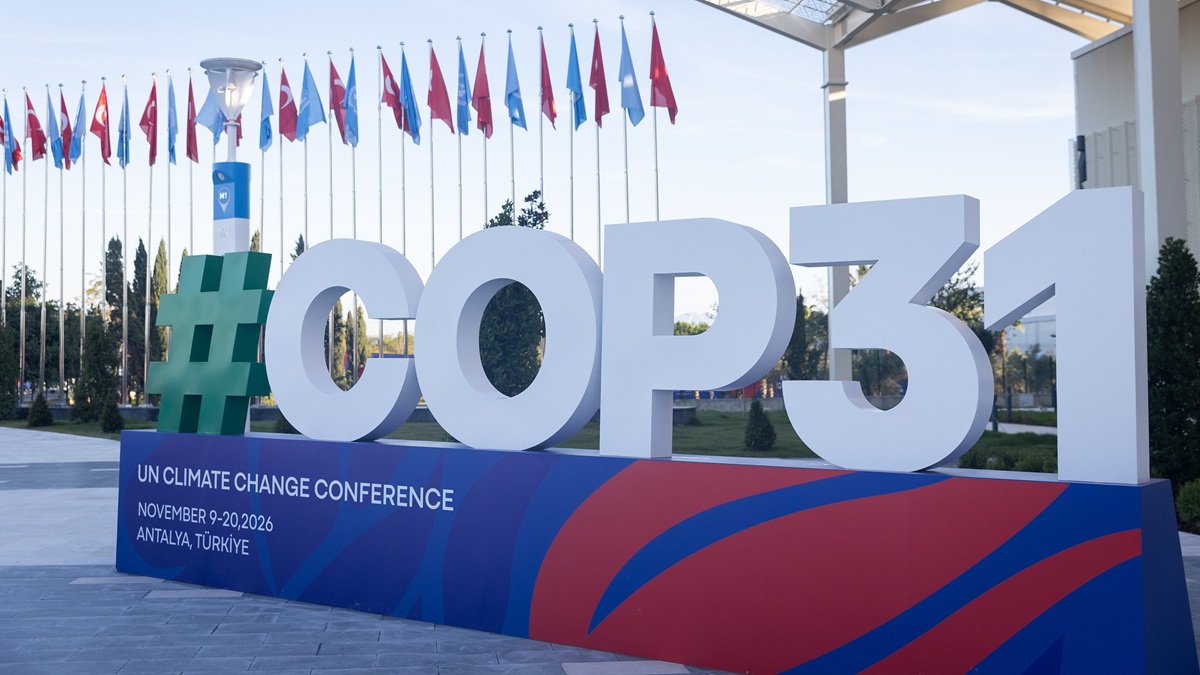
The Pan African Climate Justice Alliance (PACJA), a coalition of over 2000 organisations dedicated to promoting climate action as an advocacy tool in 54 African countries, has launched the sixth cohort of its Nairobi Summer School on Climate Justice, aiming to train 500 youths.
The trainees, to be drawn from within and outside the continent, will attend a capacity development workshop in Addis Ababa, Ethiopia, from 20 June to 3 July 2027, the group stated on Friday at the 31st meeting of the Conference of the Parties (COP31) to the UN Framework Convention on Climate Change.
Participants will learn how climate negotiations work and acquire insight into climate finance, adaptation, loss and damage, just transition and accountability. They will also take part in mock negotiations and meet negotiators and policymakers.
PACJA advances climate action through capacity building, policy advocacy, research, and support for local climate resilience and land restoration projects.
Mithika Mwenda, executive director of PACJA, said Africa’s young people hold less than five per cent of the positions where climate decisions are made, even though they constitute as much as 60 per cent of the continent’s population.
He said the school was set up in 2020 to close that gap. The five previous cohorts trained more than 2500 young people from 144 countries.


The programme will now be held every two years in line with the organisation’s strategic plan for 2026 to 2030.
“Young Africans should not only be invited to the table. They should arrive prepared,” said Augustine Njamnshi, chair of PACJA’s political and technical affairs, who unveiled the cohort.
Mr Njamnshi acknowledged the support given by the African Development Bank, the UN Economic Commission for Africa, the Swedish Development Agency, the East African Legislative Assembly and the HBCU Green Fund to the school.
Alumni’s testimonials
Mr Njamnshi said the school’s alumni include young negotiators, policy analysts, people working on the green economy and in academia.
Smriti Shah of the fourth cohort told PREMIUM TIMES she once believed climate justice was “highly political”, but PACJA has changed her perspective.
“PACJA taught me to carry the views of communities to policymakers, and now I include climate justice in every humanitarian programme I work on,” she said.
Shampi Anna, also from the same cohort, said alumni are helping young members of parliament in Kenya with bills, lobbying and advocacy.
“We worked, and we continue to work with young parliamentarians in Kenya,” Ms Anna said.
ALSO READ: COP31: White paper urges governments to invest in water-based energy storage
A Nigerian and member of the fifth batch, Anuoluwapo Otubusin, told FEMNET, an organisation promoting women’s development in Africa, that she had a remarkable experience that was more than just attending a climate action training.
“It was a turning point in how I currently view advocacy, policy influencing, solidarity and my role in shaping a feminist climate future,” she said.
Prospective applicants for the latest cohort must be 18 to 35 years old and hold at least a high school certificate.
PACJA said it will prioritise applicants from places most prone to climate change in Africa and the Global South, especially young people from indigenous communities, grassroots movements, women’s groups, universities and policy institutions.
Discover more from Premium Times Nigeria
Subscribe to get the latest posts sent to your email.
-

 News4 days ago
UNIJOS Appoints Patricia Lar as First Female Vice-Chancellor
-
News3 days ago
Democrats launch Nvidia investigation, write scathing letter on Huang’s ‘scheme’ with Trump
-
News2 days ago
Tinubu (APC) in Jos: Promises to restore peace in the State and Nigeria
-
News4 days ago
Nigeria opens 3MTT Cohort 5 with ₦4bn funding – Technology Times