Business
CBD COP17: Nigeria seeks West African alliance to protect high seas


The Nigerian government has identified regional coordination, scientific cooperation, effective enforcement, and sustainable financing as key strategies to establish effective high-seas marine protected areas (MPAs) across West Africa and beyond.
Nigeria outlined the strategies on Monday through Sikeade Egbuwalo, the country’s focal point for the Convention on Biological Diversity (CBD), during a high-level segment organised by the BBNJ First Movers for the 30×30 target.
The BBNJ First Movers is a government collaboration led by Chile to fast-track the creation of the first generation of high seas Marine Protected Areas (MPAs) under the UN High Seas Treaty (BBNJ Agreement).
The BBNJ Agreement, formally known as the Agreement on the Conservation and Sustainable Use of Marine Biological Diversity of Areas Beyond National Jurisdiction, provides an international framework for protecting marine biodiversity in areas beyond national jurisdiction.
Chile led the initiative to lay immediate groundwork for protecting international waters as the treaty moves into implementation, with its first Conference of the Parties scheduled to be held in New York in January next year.
Responding to a question on how regional coordination could drive the creation of effective high-seas MPAs to protect West African waters and achieve the 30×30 target, Mrs Egbuwalo said ocean conservation required countries to work together because marine ecosystems and the livelihoods they support transcend national boundaries.


“For Nigeria, the message is simple: the ocean does not recognise national boundaries, and neither should our conservation ambitions,” she said.
She added that the health of shared marine ecosystems is critical to the livelihoods of millions across West Africa, making regional cooperation essential to effective marine protection and meeting the global biodiversity target.
The 30×30 target, adopted under the Kunming-Montreal Global Biodiversity Framework, seeks to conserve at least 30 per cent of the world’s land and sea areas by 2030.
Meanwhile, over the past two decades, the high seas and maritime areas off West Africa have faced severe environmental, economic, and security challenges, largely due to weak regulation, foreign exploitation, and climate pressures.
While national governments try to control territorial waters and Exclusive Economic Zones (EEZs)/Free Trade Zones, the vast high seas beyond these limits have historically functioned as an under-regulated “Wild West,” leaving them vulnerable to overexploitation and illicit activity.
As a result, the Gulf of Guinea and West African shipping lanes have faced high risks of piracy, armed robbery, and attacks on oil tankers, bulk carriers, and fishing vessels, prompting West African seas to be deemed the “world’s most dangerous seas”.

Regional coordination
In her interventions on Monday, Mrs Egbuwalo said Nigeria was working with six other West African countries through the West Africa BBNJ Coordination Committee to advance a proposal for a highly and fully protected high-seas MPA in the Guinea–Canary Currents Convergence Zone.
She said the initiative showed how regional cooperation can turn shared conservation priorities into concrete action by building political ownership, strengthening consensus, and sustaining commitment throughout the process.
Mrs Egbuwalo said achieving the 30×30 target requires more than designating percentages of the ocean for protection, stressing the need for ecologically representative, connected, and effectively managed MPA networks.
According to her, the Guinea–Canary Currents Convergence Zone supports important biodiversity, migratory species and fish populations that connect the high seas with national waters.
She said regional collaboration would let countries pool scientific expertise, share marine data, and identify areas where protection could deliver the greatest ecological benefits.
Livelihoods and food security
The Nigerian official also stressed the need to align marine conservation with fisheries management, food security and coastal livelihoods.
She said Nigeria’s assessment of the proposed regional MPA had considered marine species of nutritional, economic and cultural importance to coastal communities.
This, she said, underscored the importance of engaging artisanal fishers, women involved in fish processing and trade, and other ocean users in the conservation process.
“Conservation and livelihoods must reinforce each other, rather than be treated as competing priorities,” she said.
Monitoring and enforcement
Mrs Egbuwalo identified effective monitoring, control, and enforcement as another critical requirement, warning that marine protected areas must be genuinely protected, not merely designated on paper.
She said a regional assessment of monitoring, control and surveillance capacities had identified existing mechanisms that could be strengthened.
She added that regional cooperation could facilitate joint monitoring, satellite surveillance, sharing vessel-tracking information and collaborating with regional fisheries bodies.
According to her, management and enforcement arrangements must be incorporated from the earliest stages of MPA development.
Additionally, she noted that establishing and managing high-seas MPAs required substantial scientific, technical and financial resources.
She argued that regional cooperation could help countries pool capacities, identify shared needs and attract international partnerships while maintaining regional ownership of conservation initiatives.
READ ALSO: CBD COP17: Namibian Biosafety Expert Martha Kandawa-Schulz dies in Yerevan
As countries prepare for the first Conference of the Parties to the BBNJ Agreement, she called for developing countries to have meaningful access to finance, technology and capacity-building support to participate effectively in its implementation.
Call for implementation
With less than four years remaining to achieve the 2030 biodiversity target, Ms Egbuwalo urged countries to move from ambition to implementation.
She described the proposed Guinea–Canary Currents high-seas MPA as an opportunity to demonstrate how African regional leadership could deliver meaningful protection for the global ocean.
She also identified the sixth International Marine Protected Areas Congress (IMPAC6), scheduled for Dakar in March 2027, as an opportunity to strengthen political momentum and partnerships for the first generation of high-seas MPAs.
She said Nigeria remained committed to working with West African partners and the international community to advance the initiative.
“30×30 is not simply about how much ocean we protect, but how effectively we protect it,” she said, adding that regional cooperation could help West Africa protect biodiversity, strengthen ocean resilience and secure coastal livelihoods.
Discover more from Premium Times Nigeria
Subscribe to get the latest posts sent to your email.





Business
COP31: Africa’s climate action network PACJA unveils plan to train 500 youths on climate justice
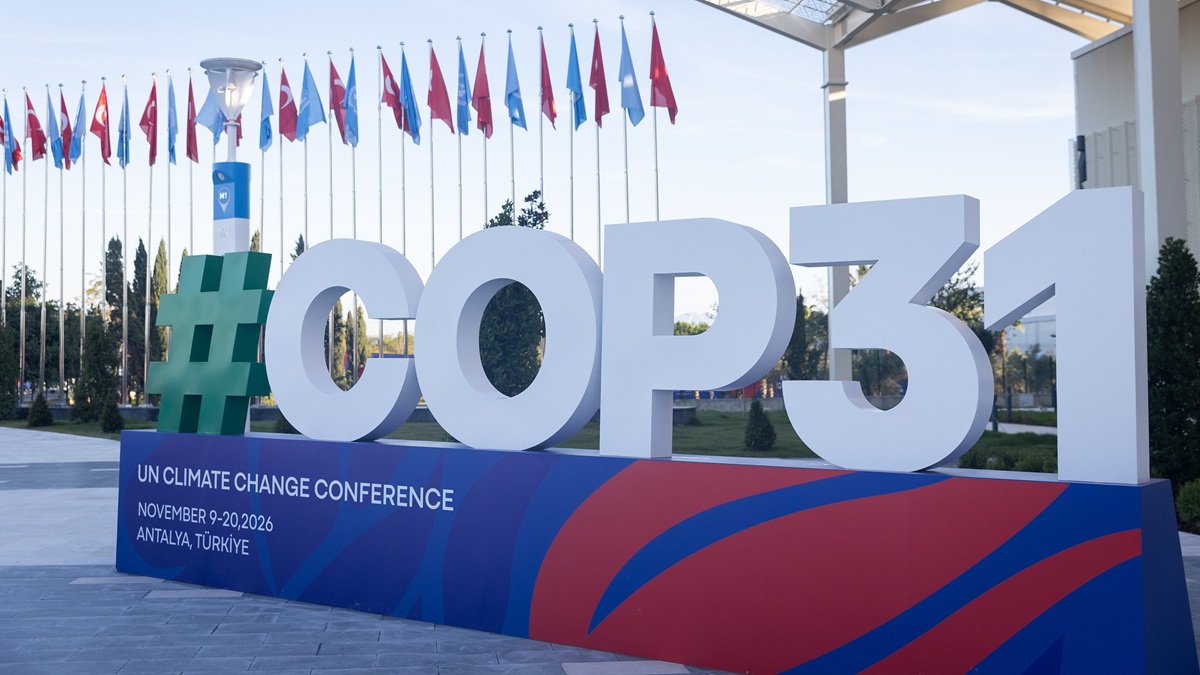
The Pan African Climate Justice Alliance (PACJA), a coalition of over 2000 organisations dedicated to promoting climate action as an advocacy tool in 54 African countries, has launched the sixth cohort of its Nairobi Summer School on Climate Justice, aiming to train 500 youths.
The trainees, to be drawn from within and outside the continent, will attend a capacity development workshop in Addis Ababa, Ethiopia, from 20 June to 3 July 2027, the group stated on Friday at the 31st meeting of the Conference of the Parties (COP31) to the UN Framework Convention on Climate Change.
Participants will learn how climate negotiations work and acquire insight into climate finance, adaptation, loss and damage, just transition and accountability. They will also take part in mock negotiations and meet negotiators and policymakers.
PACJA advances climate action through capacity building, policy advocacy, research, and support for local climate resilience and land restoration projects.
Mithika Mwenda, executive director of PACJA, said Africa’s young people hold less than five per cent of the positions where climate decisions are made, even though they constitute as much as 60 per cent of the continent’s population.
He said the school was set up in 2020 to close that gap. The five previous cohorts trained more than 2500 young people from 144 countries.
The programme will now be held every two years in line with the organisation’s strategic plan for 2026 to 2030.
“Young Africans should not only be invited to the table. They should arrive prepared,” said Augustine Njamnshi, chair of PACJA’s political and technical affairs, who unveiled the cohort.
Mr Njamnshi acknowledged the support given by the African Development Bank, the UN Economic Commission for Africa, the Swedish Development Agency, the East African Legislative Assembly and the HBCU Green Fund to the school.
Alumni’s testimonials
Mr Njamnshi said the school’s alumni include young negotiators, policy analysts, people working on the green economy and in academia.
Smriti Shah of the fourth cohort told PREMIUM TIMES she once believed climate justice was “highly political”, but PACJA has changed her perspective.
“PACJA taught me to carry the views of communities to policymakers, and now I include climate justice in every humanitarian programme I work on,” she said.
Shampi Anna, also from the same cohort, said alumni are helping young members of parliament in Kenya with bills, lobbying and advocacy.
“We worked, and we continue to work with young parliamentarians in Kenya,” Ms Anna said.
ALSO READ: COP31: White paper urges governments to invest in water-based energy storage
A Nigerian and member of the fifth batch, Anuoluwapo Otubusin, told FEMNET, an organisation promoting women’s development in Africa, that she had a remarkable experience that was more than just attending a climate action training.
“It was a turning point in how I currently view advocacy, policy influencing, solidarity and my role in shaping a feminist climate future,” she said.
Prospective applicants for the latest cohort must be 18 to 35 years old and hold at least a high school certificate.
PACJA said it will prioritise applicants from places most prone to climate change in Africa and the Global South, especially young people from indigenous communities, grassroots movements, women’s groups, universities and policy institutions.
Discover more from Premium Times Nigeria
Subscribe to get the latest posts sent to your email.

The National Agricultural Seeds Council (NASC) and the Foundation for Partnership Initiatives in the Niger Delta (PIND) have agreed on a coordinated action to strengthen seed certification, expand domestic production, unlock financing and improve farmers’ access to quality seeds across the country.
Both bodies reached a pact at a two-day forum themed “Unlocking Nigeria’s Seed Potential: Policy Implementation, Investment and Partnerships for Sustainable Access to Quality Seed,” held on November 10 and 11 in Abuja.
The conference, attended by regulators, researchers, seed companies, financial institutions, and other stakeholders, outlined priority actions, responsible institutions, and timelines for addressing challenges across regulation, research commercialisation, financing, distribution, and digital traceability.
Participants acknowledged progress in electronic seed certification, Plant Variety Protection, decentralised quality assurance and community-based seed production.
However, they highlighted high production costs, limited access to finance, inconsistent seed quality, weak last-mile distribution and gaps between research and commercialisation as major constraints to farmers’ access and industry growth.
In remarks delivered on his behalf by NASC’s director of plant protection, Okelola Folarin, the council’s director-general, Fatuhu Muhammed, said the effectiveness of Nigeria’s seed system should be measured by farmers’ ability to obtain reliable seeds at the right time and affordable prices.
“Farmers judge the strength of a seed system by whether they can obtain trusted seed at the right time and at a viable cost.
“The value of this forum is that regulators, researchers, producers, financiers and distributors have moved beyond separate conversations to agree on practical responsibilities and a common direction,” he said.
Mr Muhammed called for increased domestic investment in Nigeria’s seed industry to reduce the country’s dependence on imported seeds.
“It boils down to investment. We need to invest in research and development. These are things we need to do,” he said.
Sam Ogbemi Daibo, executive director of PIND, observed that the forum has shifted deliberations in the sector from repeatedly identifying limitations to assigning responsibilities to address them.
“The real test now is whether the priorities agreed here translate into stronger enterprises, credible markets and dependable access for farmers,” Mr Daibo said.
Similarly, the executive secretary of the Seed Entrepreneurs Association of Nigeria, Stephen Oludapo Adigun, called for affordable financing models that accommodate the seasonal nature of seed businesses.
Eniola Fabusoro, country director of IDH Nigeria, stressed the need for capacity development, improved seed handling practices, and stronger partnerships to translate the forum’s recommendations into measurable outcomes.
Partnership to strengthen seed industry
The forum is the first major step under a two-year memorandum of understanding signed by PIND and NASC to deliver on these objectives.
The partnership seeks to combine NASC’s regulatory expertise with PIND’s experience in market systems development to expand access to certified seeds, strengthen local seed enterprises and attract investment, especially in the Niger Delta.
During the forum, participants examined ways to eliminate certification bottlenecks without compromising quality standards and to improve coordination between regulators and seed producers.
Deliberations also included strategies to move breeder and foundation seeds from research institutions into commercial supply through licensing arrangements, technology transfer, and public-private partnerships.
Participants called for stronger collaboration among researchers, breeders, and seed companies to commercialise improved crop varieties, and recommended effective implementation of the National Seed Policy.
Stricter enforcement against counterfeit seeds and improved quality assurance mechanisms were also suggested.
READ ALSO: COP31: Nigeria’s shift beyond oil requires state action, economic planning – Experts
Moreover, financial institutions and seed enterprises examined funding models suited to the seasonal nature of seed production and distribution, including credit guarantees, insurance and technical support to improve the investment readiness of seed businesses.
Agro-dealers, extension service providers, farmers’ representatives and technology companies also proposed measures to enhance seed affordability, demand planning, access to information and digital traceability.
Organisers said the forum provided a national platform for stakeholders across the seed value chain to agree on coordinated interventions to protect farmers, strengthen credible seed businesses and improve access to quality planting materials.
Discover more from Premium Times Nigeria
Subscribe to get the latest posts sent to your email.
-

 News4 days ago
UNIJOS Appoints Patricia Lar as First Female Vice-Chancellor
-
News3 days ago
Democrats launch Nvidia investigation, write scathing letter on Huang’s ‘scheme’ with Trump
-
News2 days ago
Tinubu (APC) in Jos: Promises to restore peace in the State and Nigeria
-
News4 days ago
Nigeria opens 3MTT Cohort 5 with ₦4bn funding – Technology Times