Connect with us

News

Jos North Council Boss Salutes Yakubu Taddy On His Birthday

editor

Published

on

Taddy

The Executive Chairman of Jos North Local Government, Ambassador Shehu Bala Usman has rejoiced with the Director of News and Current affairs of the Plateau Radio Television Corporation, Jos, Yakubu Salau Taddy on the occasion of his birthday anniversary.

The Chairman in a congratulatory message praised the famous broadcaster for choosing a career that best suits his talent as his diligence, forthrightness, and dedication remain a legacy for younger generations of media professionals.

He noted that the contributions of Yakubu Taddy as a reporter, editor, former State Chairman, of the Nigeria Union of Journalists, a one-time, General Manager of Plateau United, and currently the Director of News and Current affairs of PRTV is worthy of emulation by all.

The Chairman disclosed that Taddy,s penchant for educating the public on germane issues with his hallmark of fairness, balance, clarity, commentaries, spotlight, and content has endeared him to many.

Usman who conveyed his birthday greetings on behalf of the Government and the people of Jos North Local Government to the Taddy,s family, the media and specifically the NUJ on the landmark occasion, noted that his skills in the media has made him a role model.

The Chairman’s prayer is for the Almighty God to continue to strengthen the renowned journalist for greater service to the nation and humanity.

Continue Reading
Click to comment

Leave a Reply

Your email address will not be published. Required fields are marked *

Business

GCR upgrades Fidelity Bank rating on stronger capital position

info

Published

on

By

1750329669604 e1778532147144.jpg

GCR Ratings has upgraded Fidelity Bank Plc‘s national-scale long-term issuer rating to A Plus (NG) from A (NG), while affirming its short-term issuer rating at A1 (NG). The outlook remains stable.

The upgrade reflects Fidelity Bank’s significantly strengthened capital position following the addition of NGN227.0 billion to its total core capital. GCR also recognised the bank’s strong domestic market position, stable funding base and healthy liquidity profile.

Fidelity Bank’s competitive position remains a key rating strength, supported by its strong domestic franchise and nearly four decades of operating experience. With total assets of NGN10.5 trillion and an estimated 8.0 per cent share of the banking industry’s gross loans as of December 2025, the bank ranks as Nigeria’s sixth-largest bank.

The bank also plans to leverage its international banking licence to enter three additional African markets over the medium term. The expansion is expected to diversify its country exposure and further strengthen its competitiveness among rated peers.

Fidelity Bank raised NGN227.0 billion in additional equity capital in 2025, enabling it to fully comply with the revised capital requirement for its licence category. The capital was officially recognised as the core capital in 2026.

Consequently, the bank’s GCR core capital ratio increased substantially to 29.4 per cent at the end of March 2026, from 17.2 per cent in December 2025. Its stage three loan loss reserve coverage also remained strong at more than 100.0 per cent.


PT WHATSAPP CHANNEL
Dangote Refinery AD

GCR expects the bank’s core capital ratio to remain above 20.0 per cent over the outlook period, supported by good earnings retention. The rating agency also noted that Fidelity Bank’s exposure to the oil and gas sector is diversified across the upstream, downstream and services segments. Foreign currency exposure is further moderated through natural hedging.

Fidelity Bank’s funding profile remains positive, underpinned by a large and stable deposit base. Customer deposits grew by 16.1 per cent as of December 2025 and by a further 7.1 per cent as of March 2026, reaching NGN7.4 trillion.

Customer deposits accounted for 89.5 per cent of the bank’s total funding base in March 2026. Approximately 90 per cent of these deposits were held in relatively inexpensive current and savings accounts, providing a strong foundation for sustainable funding.

READ ALSO: Fidelity Bank gets extension to publish H1 2026 audited results

The bank also maintained a robust liquidity position, supported by a substantial portfolio of liquid assets. Its liquid assets-to-customer deposits ratio stood at 56.9 per cent in March 2026, while liquid assets covered wholesale funding by 4.8 times.

The stable outlook reflects GCR’s expectation that Fidelity Bank will maintain a strong financial profile, with its core capital ratio remaining above 20.0 per cent, supported by stable funding, strong liquidity and resilient asset quality indicators.


Discover more from Premium Times Nigeria

Subscribe to get the latest posts sent to your email.
Continue Reading

News

The man who built Apple’s stores doesn’t buy Silicon Valley’s bet on AI shopping

info

Published

on

By

GettyImages 1227849474.jpg

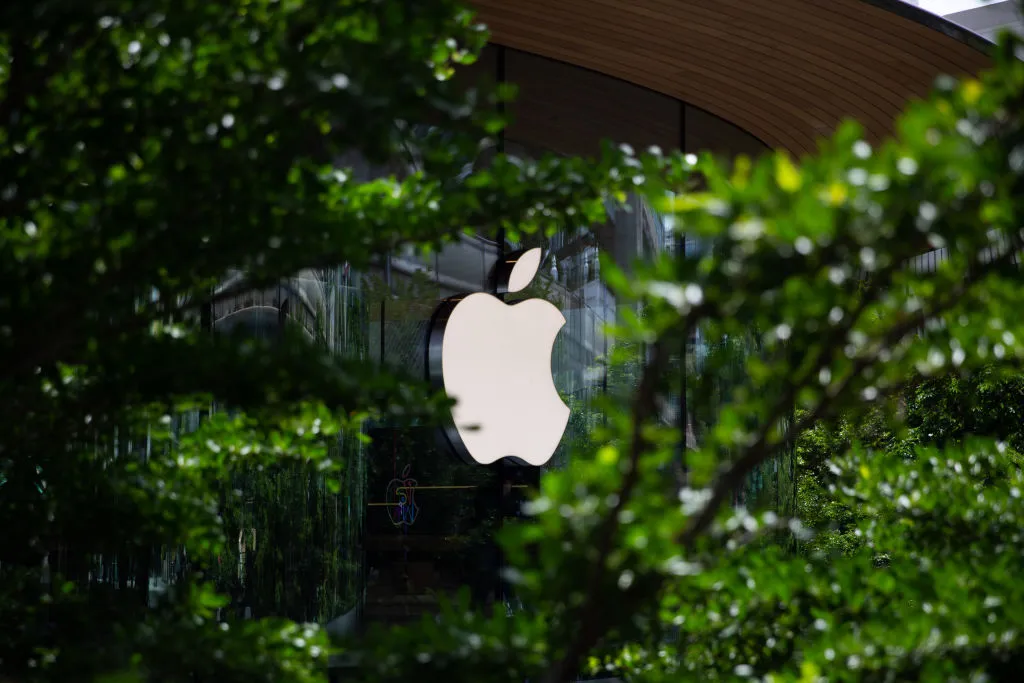
While Silicon Valley is spending billions to make AI agents shop for us, the man who pioneered Apple’s retail stores thinks the industry is overestimating how much of shopping people will hand over to machines — and believes physical stores will continue to thrive.

Ron Johnson, 66, has heard predictions about the demise of physical retail before. He joined Apple in 2000 to build its retail business as online shopping was beginning to take off, and went on to help create a store network that became central to how Apple sells its products and connects with customers.

“AI is a new technology that will improve the online shopping experience,” Johnson said in an interview. “But I don’t know that it’s going to change which way we shop.”

Johnson’s view comes as some of the world’s biggest tech companies are trying to push AI deeper into shopping, betting that agents can automate more of how we find and buy items — a concept commonly called agentic commerce. Google is making that push with its Universal Commerce Protocol, a standard designed to help AI agents take consumers from product discovery to checkout. OpenAI, meanwhile, is turning ChatGPT into a shopping destination where users can research, compare, and, in some cases, even buy products without leaving the chatbot.

Asked whether he could imagine someone letting an agent choose and buy a $1,000 or $2,000 laptop without ever visiting a website or store, Johnson was unequivocal: “Honestly, nobody’s going to do that.”

Buying a laptop, he argued, is too personal a purchase to simply delegate to an AI agent. Buyers want to feel its weight, see the display and decide which size works for them. AI may narrow the choices, Johnson told TechCrunch. He added that many consumers would still want to experience the product themselves before spending that kind of money.

“AI will never be able to have you physically experience a product,” Johnson said. Instead, he expects agents to better inform consumers before they walk into a store. “They’ll just become more informed shoppers when they come to the store.”

Johnson’s conviction stems from a decision Apple made more than two decades ago. Apple’s physical stores, he said, were designed not only as places to buy Macs, but also as places where people could try products, learn how to use them, and return for help when something went wrong.

Some of those bets are revisited in Shop Different: How Retail Revealed Apple’s Genius, Johnson’s new book about building Apple’s retail operations alongside Steve Jobs. Competitors, he said, borrowed Apple’s glass-heavy design, open layouts, and even versions of the Genius Bar, but often missed the people.

“The secret sauce for Apple has always been its people, the people in the store, and how they treat the customer,” Johnson said.

Apple Store employees are not paid on commission, Johnson said, unlike the sales culture common across much of retail. The idea, he said, was to remove the pressure to sell and instead have employees figure out what a customer actually needed.

After leaving Apple, Johnson took over J.C. Penney in 2011 with an ambitious plan to reinvent the struggling department-store chain. He was ousted less than two years later after sales plunged.

Johnson now says he tried to change too much, too quickly, without bringing employees and customers along. Apple’s stores had effectively been a startup that evolved alongside the company’s products. J.C. Penney, on the other hand, was a turnaround that required a different approach.

“I applied a startup mentality to what needed to be a turnaround transformation,” he recalled.

Johnson later returned to the startup world, founding Enjoy Technology, an e-commerce company that brought technology products and setup services directly to customers’ homes. The startup filed for bankruptcy in 2022 and sold substantially all of its assets to Asurion.

For all his skepticism about how AI will reshape shopping, Johnson remains bullish on the technology itself. “I’m a real believer in AI. I’m an AI optimist,” he said.

He believes Jobs would have embraced AI, too, but not as a substitute for human judgment. “There’s no substitute for human intuition,” Johnson said, recalling Jobs’ belief in bringing smart people together to debate problems and find new ways of looking at them.

When you purchase through links in our articles, we may earn a small commission. This doesn’t affect our editorial independence.

Continue Reading

Trending