Health
ANALYSIS: COP31 puts climate finance, fossil fuel transition, energy ambitions to test

Nearly 11 years after the adoption of the Paris Agreement, world leaders are preparing for another round of climate negotiations amid growing concerns that global commitments are not translating into action quickly enough to address the climate crisis.
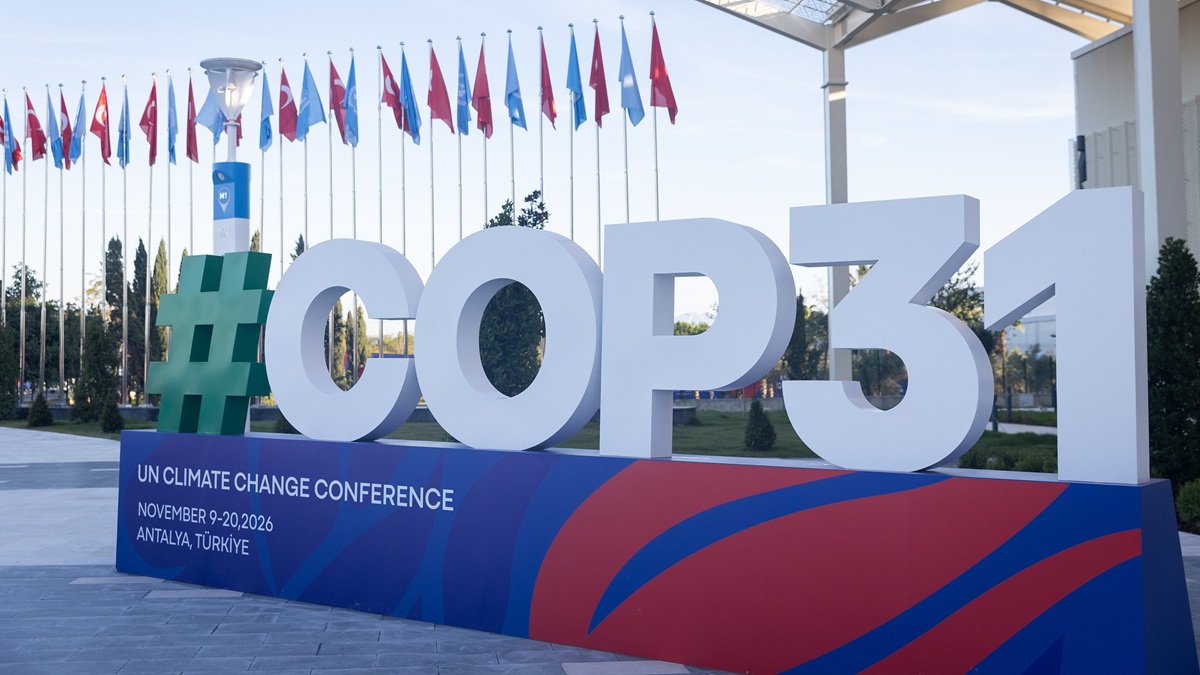
The 31st Conference of the Parties (COP31) to the United Nations Framework Convention on Climate Change (UNFCCC), scheduled for 9 to 20 November in Antalya, Türkiye, will bring together governments, climate scientists, development institutions, businesses and civil society organisations to negotiate the next steps in the global response to climate change.
The summit comes at a critical time, as countries face increasing pressure to reduce greenhouse gas emissions, accelerate investment in clean energy and protect communities already experiencing the effects of rising temperatures.
Yet some of the most difficult questions in international climate negotiations remain unresolved.
Who should pay for climate action? How quickly should countries move away from fossil fuels? And how can developing economies pursue economic growth while reducing emissions and protecting vulnerable populations?
These questions are particularly important for Nigeria and other African countries, where the consequences of climate change are becoming increasingly visible through flooding, drought, extreme heat and pressure on agricultural production.


Beyond the environmental consequences, the negotiations have implications for electricity access, public health, food security, employment and the ability of developing countries to attract investment in cleaner technologies.
COP31 is not expected to produce a single agreement comparable to the Paris Agreement. Instead, much of the work will centre on implementing existing commitments, resolving disagreements carried over from previous conferences and establishing clearer pathways for financing climate action.
The central test will be whether countries can move beyond repeated declarations and agree on practical measures that deliver measurable results.
An unusual leadership arrangement
One distinctive feature of COP31 is the arrangement between Türkiye and Australia, which will share responsibilities for organising and leading the conference.
Türkiye will host the summit, with its Minister of Environment, Urbanisation and Climate Change, Murat Kurum, serving as COP president. Australia’s Minister for Climate Change and Energy, Chris Bowen, will serve as president of negotiations.
The arrangement followed a compromise after both countries pursued competing bids to host the conference.
Under the agreement, Türkiye will oversee the presidency and action agenda, while Australia will lead the formal negotiations.
The partnership is significant because the two countries approach climate policy from different economic positions.
Türkiye is an emerging economy seeking to expand industrial development and energy security, while Australia is a developed economy with substantial fossil fuel production and exports.
Their leadership will therefore be tested by the same disagreements that have complicated previous climate summits, particularly those concerning fossil fuels, climate finance and the responsibilities of developed and developing countries.
The Turkish presidency has placed implementation, electrification, green industrial development and resilient infrastructure among its priorities.
One of its flagship initiatives is the 35-by-35 Global Electrification Pledge, which seeks to increase electricity’s share of global final energy consumption to 35 per cent by 2035, from just over 20 per cent.
The initiative is intended to encourage greater use of electricity in transport, buildings and industry, supported by cleaner power generation, modern electricity grids and energy storage.
However, the pledge forms part of the presidency’s voluntary action agenda rather than a binding agreement negotiated by all countries.
This distinction matters because announcements made by summit organisers do not automatically become obligations under the UN climate process.
The World Leaders Climate Action Summit, scheduled for 11 and 12 November, will provide an early indication of the political support available for these priorities.
The finance question remains unresolved
Climate finance is likely to be among the most contentious issues in Antalya.
Developing countries have long argued that they cannot be expected to reduce emissions and adapt to climate impacts without substantial financial support from wealthier nations, which bear greater historical responsibility for greenhouse gas emissions. This principle is reflected in Article 9 of the Paris Agreement, which requires developed countries to provide financial resources to support developing countries’ mitigation and adaptation efforts.
At COP29 in Baku, Azerbaijan, in 2024, countries agreed that developed nations should take the lead in mobilising at least $300 billion annually in climate finance for developing countries by 2035. The agreement also called for efforts to scale up finance from all public and private sources to at least $1.3 trillion annually by the same year.
The two figures are not interchangeable. The $300 billion target is the new collective finance goal led by developed countries, while the wider $1.3 trillion ambition is expected to draw on a broader range of sources, including private investment.
For developing countries, the concern is whether the money will be available on affordable terms and reach the communities and sectors most exposed to climate risks.
A major disagreement concerns the responsibility of developed countries to provide financial resources under the Paris Agreement.
Developing countries want discussions to address these obligations, particularly the provision of public finance. Some wealthier countries favour a broader approach that includes improving access to finance and expanding the range of contributors.
For Nigeria, the funding needs are substantial.
The country requires investment in renewable energy, electricity infrastructure, climate-resilient agriculture, flood management and early-warning systems. Many of these interventions will depend on concessional finance and public investment, rather than private capital alone.
The question at COP31 will be whether countries can make progress on the scale, quality and accessibility of climate finance, rather than simply restating funding ambitions.
Fossil fuels and the just transition
The future of fossil fuels will also remain a difficult issue.
At COP28 in Dubai in 2023, countries agreed for the first time in a final climate decision to transition away from fossil fuels in energy systems in a just, orderly and equitable manner. The agreement also called for tripling global renewable energy capacity and doubling the rate of energy-efficiency improvements by 2030.
The decision marked a significant shift in climate negotiations. However, countries have continued to disagree over how to implement it, and the commitment has yet to translate into an agreed global roadmap for moving away from coal, oil and gas.
At COP30 in Belém, Brazil, in 2025, countries failed to secure a formal roadmap for the transition away from fossil fuels. The omission exposed the continuing divide between nations seeking faster action and those whose economies depend heavily on fossil fuel production.
The issue is particularly sensitive for Nigeria, where oil and gas remain important sources of government revenue and foreign exchange. At the same time, millions of people lack reliable electricity, while gas flaring, pollution and energy poverty continue to affect communities.
A transition that ignores these realities risks deepening existing inequalities. But maintaining dependence on fossil fuels without a credible plan for cleaner energy also exposes the country to economic and environmental risks as the global energy system changes.
This is where the just transition mechanism agreed at COP30 becomes important. Countries are expected to discuss its structure and implementation at COP31.
The mechanism is intended to strengthen international cooperation, technical assistance and capacity-building to help countries and workers navigate the shift to lower-carbon economies.
For Nigeria, a meaningful just transition must go beyond replacing one energy source with another. It should address the affordability and reliability of electricity, the future of workers in fossil fuel-dependent industries, the development of local clean-energy businesses and the needs of communities affected by environmental degradation.
Adaptation cannot wait
While emissions reduction receives considerable attention at climate summits, adaptation is equally urgent for countries already experiencing the effects of climate change.
Flooding, prolonged dry spells and rising temperatures are affecting livelihoods and infrastructure across Africa. In Nigeria, recurring floods have displaced communities, damaged homes and farms, disrupted transport and increased pressure on public services.
The effects extend beyond physical damage.
Extreme heat can affect workers’ productivity and health, while disruptions to agricultural production can worsen food insecurity. Poorer households often have fewer resources to recover from these shocks.
At COP30, countries agreed on 59 indicators to help measure progress towards the Global Goal on Adaptation. The indicators are intended to assess how countries are strengthening resilience in areas such as water, food systems, health and infrastructure.
However, agreeing on indicators does not automatically provide the resources needed to implement adaptation plans. Developing countries continue to demand more predictable funding, particularly for projects that may not attract private investment.
COP30 also called for efforts to at least triple adaptation finance by 2035. Questions remain over how the commitment will be measured and delivered.
Nigeria’s climate ambitions
Nigeria will arrive in Antalya with an updated climate commitment that sets out a more specific emissions-reduction pathway.
Under its third Nationally Determined Contribution (NDC 3.0), submitted in 2025, Nigeria targets an absolute emissions reduction of 168.2 million tonnes of carbon dioxide equivalent by 2030 and 184.9 million tonnes by 2035, using 2018 as its base year. These targets represent reductions of about 29 and 32 per cent, respectively, against the country’s 2018 net emissions. Nigeria also maintains its ambition to achieve net-zero emissions by 2060.
The plan includes commitments for the energy, industrial, agriculture, land-use and waste sectors. For the oil and gas industry, it targets zero routine gas flaring by 2030, alongside reductions in fugitive emissions from leaks and venting.
But the challenge is turning these commitments into functioning projects and measurable results.
Achieving these targets will require sustained investment in renewable energy, stronger electricity infrastructure, effective regulation and better coordination among government agencies and private investors.
This is particularly relevant to COP31’s proposed 35-by-35 electrification target.
A narrowing window for climate action
COP31 also comes as the international community prepares for the second Global Stocktake under the Paris Agreement, the process through which countries assess collective progress towards the treaty’s goals.
The first stocktake, concluded in 2023, found that global efforts were insufficient to keep the world on track to limit warming to 1.5 degrees Celsius above pre-industrial levels. Its outcome called for faster action on renewable energy, energy efficiency, deforestation and the transition away from fossil fuels.
The latest United Nations Environment Programme Emissions Gap Report reinforces the urgency. It warns that global temperatures are expected to exceed the 1.5-degree threshold, even as it argues that the scale and duration of that overshoot can still be limited through faster emissions cuts.
The report estimates that current national climate pledges, if fully implemented, would reduce emissions by only 11 to 15 per cent by 2035 compared with 2025 levels. A pathway designed to return global temperatures to 1.5 degrees by the end of the century would require emissions to fall by 45 per cent by 2035.
The United States’ absence from the official government delegation will also be notable.
The country formally withdrew from the Paris Agreement in January 2026, presenting another challenge to international cooperation at a time when stronger action from major emitters is needed.
Ultimately, the significance of COP31 will not be measured by the number of speeches, announcements or pledges made in Antalya. It will depend on whether countries can resolve outstanding disagreements, strengthen support for vulnerable nations and establish practical pathways for delivering commitments already on the table.
For Nigeria, the summit should be more than an opportunity to restate its climate ambitions. It is a chance to push for accessible finance, strengthen the case for investment in clean energy and ensure that the transition supports jobs, electricity access and livelihoods.
This report is published as part of the COP31 Reporting Fellowship of the Centre for Journalism Innovation and Development
Discover more from Premium Times Nigeria
Subscribe to get the latest posts sent to your email.


Health
Plateau Mega Medical Outreach Treats 17,603 Patients, Performs 724 Surgeries Across Three Zones

The Plateau State Government says its free Mega Medical Outreach has attended to 17,603 patients and performed 724 surgical operations across the three senatorial zones, significantly exceeding its initial target of 6,000 beneficiaries.
The Commissioner for Health, Dr Nicholas Baamlong, disclosed this on Saturday, November 7, 2026, while briefing journalists on the conclusion of the general phase of the exercise organised by Governor Caleb Mutfwang.

According to Baamlong, the outreach, which ran from October 19 to November 6, covered selected public health facilities across the Central, Southern and Northern Senatorial Zones, providing free consultations, laboratory investigations, eye care, dental services and major and minor surgical procedures successfully carried out with no deaths.
The figures released by the Ministry of Health show that the programme attended to 4,294 patients in the Central Zone, 5,625 in the Southern Zone and 7,684 in the Northern Zone.
Across the three zones, the government recorded 5,033 eye consultations, distributed 3,588 pairs of eyeglasses and performed 390 cataract surgeries. A total of 4,857 laboratory investigations and 1,334 dental consultations were also conducted.
The outreach further recorded 724 surgical operations, comprising 151 major and 573 minor surgeries. The procedures included myomectomies, hysterectomies, prostatectomies, thyroidectomies, caesarean sections and orthopaedic interventions.
The ministry also disclosed that 457 people were enrolled in the Plateau State Contributory Healthcare Management Agency (PLASCHEMA) during the exercise.
Baamlong said the 17,603 beneficiaries represented approximately 193 per cent above the initial target, describing the turnout as evidence of the demand for accessible and affordable healthcare services in the state.
However, the commissioner acknowledged that the outreach should not be treated as an isolated intervention, stressing the need to strengthen healthcare delivery across primary, secondary and tertiary health facilities.
He disclosed that Governor Mutfwang intends to institutionalise the programme as a regular intervention rather than a one-off exercise, dismissing suggestions that it was organised primarily because of the approaching election.
According to him, the programme had been planned earlier in the year but was delayed by the coordination, planning and engagement required with development partners, including German partners.
He explained that while emergency interventions, outbreak responses and ambulance services remain part of the ministry’s activities, the medical outreach is another component of the government’s broader healthcare strategy.
The commissioner said the long-term objective should be to strengthen existing health institutions to the point where elaborate medical outreaches would no longer be necessary, while ensuring that residents have regular access to essential healthcare services.
The programme is, however, not yet entirely concluded, as the government announced another three-week phase of specialised medical interventions at Plateau State Specialist Hospital, Jos, Jos University Teaching Hospital (JUTH) and Potters Specialist Hospital, Jos.
The next phase is expected to cover advanced orthopaedic, neurological, neurosurgical, urological and ear, nose and throat (ENT) surgeries for patients requiring more complex medical procedures.
The Permanent Secretary of the Ministry of Health, Mr Samuel Aliyu Tsoho, said the intervention cost millions of naira, while appreciating the governor, medical personnel and other stakeholders who participated in the exercise.
He particularly acknowledged health workers who travelled to rural communities and remained at designated facilities to provide services throughout the outreach.
While the government has presented the figures as a major achievement, the planned institutionalisation of the programme raises an important question about the sustainability of free medical interventions and the capacity of existing public health facilities to provide affordable services beyond periodic government-sponsored outreaches.
For thousands of residents who benefited from the exercise, the intervention provided access to treatments and surgeries that might otherwise have been financially difficult to afford. The challenge now is to translate the intervention into lasting improvements in healthcare access, infrastructure and service delivery across Plateau State.
Health
Kogi announces ₦7 billion upgrade of PHCs but won’t provide details while clinics remain incomplete, understaffed

From a distance, the OAU Primary Health Centre in Ojoku, Ankpa Local Government Area of Kogi State, appeared newly built when PREMIUM TIMES returned to the facility on 6 May 2026.
Its blue-and-white exterior had been painted, the roof was in place, and doors and windows had been fitted.
But a closer inspection revealed signs of unfinished work. The clinic was locked, with no health workers or patients in sight. No clinical services were being provided.
PREMIUM TIMES had first visited the facility in December 2025 and found that it was not providing clinical services.
Aminu Nuhu, head of the Department of Health Services, Ankpa Local Government Council, identified OAU PHC Ojoku as one of six facilities selected for revitalisation in the council area.
He said the council was still searching for health workers to deploy to some of the revitalised facilities.
“Those that have been revitalised, we are looking for staff to put in those facilities,” he said.
However, the absence of personnel was not the only problem.
Mr Nuhu said a borehole had been drilled at the facility but could not supply water because there was no electricity or solar installation to power the pump.
“They have completed it, but we are expecting them to put it into operation,” he said.
Nearly five months after the first visit, PREMIUM TIMES returned to the facility and found that clinical services had still not commenced.
A security guard at the facility said there was no medical equipment inside.
“There is nothing inside,” he said. “It’s just the building.”
The situation at OAU PHC Ojoku was among the problems uncovered during a months-long PREMIUM TIMES investigation into the Kogi State government’s multibillion-naira primary healthcare revitalisation programme.
The investigation examined whether the government’s investment had translated into functional health facilities capable of delivering essential services to residents.
It found unfinished rehabilitation work, inadequate staffing, lack of basic infrastructure and health workers operating from temporary accommodation, despite the government’s announcement that dozens of facilities had been revitalised and commissioned.

The N7 billion promise
In January 2025, the Kogi State government announced that it had committed over N7 billion, with support from the World Bank, to upgrade 88 PHCs across the state’s 21 LGAs.
The announcement was made during the formal handover of project sites to contractors at the Model PHC in Felele, Lokoja.
Governor Ahmed Ododo, represented by the Commissioner for Health, Abdulazeez Adams, said the intervention would contribute to the upgrading of more than 150 PHCs into functional Level 2 facilities.
The contractors were directed to complete the projects within four months.
On 7 November 2025, the state government announced the commissioning of 80 revitalised PHCs.
Muazu Musa, executive director of the Kogi State Primary Health Care Development Agency, said the facilities had been transformed from Level 1 to Level 2.
Under the federal government’s 2025 HOPE-PHC Programme Operations Manual, functional Level 2 PHCs are expected to provide 24-hour health services, including basic emergency obstetric and neonatal care.
The programme’s verification framework also covers the availability of skilled birth attendants, reliable electricity or backup solar power, functional toilets with water and access to clean water.
These requirements are intended to ensure that upgraded facilities can provide essential healthcare services beyond improvements to their physical structures.
However, the Kogi State Government did not provide PREMIUM TIMES with the complete list of the 80 facilities it announced as commissioned.
As a result, the newspaper could not independently establish whether the facilities inspected during the investigation were among those officially commissioned.
Following the money: N6.09 billion in four contracts
A review of Kogi State procurement disclosures revealed four infrastructure contracts covering 88 PHCs.
The contracts had a combined value of N6.1 billion and were awarded to Multi Purpose Errand Mens Services Ltd, QSA Nigeria Ltd, Inknuel Ltd and Base-SAN Ventures Nigeria Ltd.
The records showed that N5.5 billion, representing approximately 90.6 per cent of the combined contract value, had been recorded as paid to the four contractors.
PREMIUM TIMES could not independently verify the payments against bank statements or government treasury records. The figures are therefore described as amounts recorded ‘as paid’ in the procurement disclosure.

The procurement records also revealed a discrepancy in the geographical coverage of the contracts.
Although the state government said the intervention covered all 21 LGAs, the descriptions of the four contract lots identified only 20 distinct LGAs.
Kogi LGA, whose headquarters is Koton-Karfe, was not listed in any of the four lots.
This does not necessarily mean the LGA was excluded from the intervention. However, without the complete list of the 88 beneficiary facilities, PREMIUM TIMES could not determine whether the omission occurred in the procurement summary or reflected the actual distribution of the projects.
The combined contract value of N6.1 billion was also lower than the government’s announced commitment of over N7 billion.
The available records did not explain what additional activities or expenditures accounted for the difference.
Separately, the state’s 2025 fourth-quarter Budget Implementation Report recorded a final budget of N8.205 billion for the broader Immunisation Plus and Malaria Progress by Accelerating Coverage and Transforming Services (IMPACT) programme.
The report showed year-to-date expenditure of approximately N7.818 billion.
However, the IMPACT programme covers activities beyond the four infrastructure contracts. Its expenditure cannot therefore be treated as the amount spent specifically on the 88 PHC rehabilitation projects.
The records available to PREMIUM TIMES did not reconcile these figures.
Questions over Lot D contractor
One of the contracts, identified as Lot D, was awarded to Base-SAN Ventures Nigeria Ltd for work covering 23 PHCs across Ankpa, Olamaboro, Omala, Ofu, Dekina, Ibaji and Bassa LGAs.
The procurement disclosure recorded approximately N1.069 billion as paid under the contract.
During a follow-up visit to PHC Ankpa, PREMIUM TIMES found a project signboard identifying “BASESAN VENTURE NIG LTD” as the contractor responsible for upgrading the facility.
The variation between the company name on the signboard and the name in the procurement disclosure raised questions about the contractor’s precise legal identity.
Separately, publicly available corporate information reviewed by PREMIUM TIMES identified BASESAN Ventures Limited, with registration number RC 822294, and listed a person named “Sanni Eggidi A” as a person with significant control.
The newspaper could not independently establish whether BASESAN Ventures Limited, Base-SAN Ventures Nigeria Ltd and the company named on the project signboard were the same legal entity or related companies.
PREMIUM TIMES subsequently contacted Sanni Abdulraheem, the member representing Ajaokuta Federal Constituency in the House of Representatives, seeking clarification on whether he had any connection to BASESAN Ventures Limited.
The similarity between the name in the corporate information and that of the lawmaker does not establish that they refer to the same individual.
The newspaper also sought clarification on the relationship between the companies and requested records relating to the 23 PHCs covered by Lot D, including their approved scopes of work, completion status and inspection and certification documents.
The lawmaker’s response has not been received as of publication.
Missing records, unanswered questions
Beyond the discrepancies in contract values and geographical coverage, the procurement disclosure did not identify all 88 PHCs individually.
It also did not specify the approved scope of work, contract value or payment status for each facility.
The state government did not provide PREMIUM TIMES with the complete list of the 80 PHCs announced as commissioned in November 2025.
Without these documents, it was impossible to match the facilities covered by the contracts with those announced as completed and commissioned.
The absence of facility-level inspection reports and completion certificates also prevented independent verification of what was approved, delivered, and certified at individual project sites.
These gaps do not, on their own, establish diversion of funds or failure to execute the contracts. They do, however, limit public scrutiny of the government’s claims about the intervention.
Between December 2025 and September 2026, PREMIUM TIMES inspected and revisited health facilities across Ankpa, Lokoja and Ajaokuta LGAs.
The newspaper interviewed health workers, residents, and government officials; examined project signboards; and reviewed procurement and budget documents.
The findings concern facilities that local officials or site-level evidence linked to the state intervention.

PHCC Ankpa: services running, problems persist
At the Primary Health Care Centre in Ankpa (PHCC Ankpa), clinical services were ongoing when PREMIUM TIMES first visited.
The facility provided antenatal care, routine immunisation, family planning, outpatient consultations and delivery services.
Momo Oneshona, the officer-in-charge, said the centre could receive as many as 70 patients on Mondays for immunisation, antenatal care and general consultations.
However, the facility faced significant operational challenges.
Health workers said there was no running water, grid electricity or solar power for general operations.
The available solar installation served the vaccine refrigerators.
“We don’t have solar, we don’t have water here, we don’t have light,” Mrs Oneshona said.
She explained that workers sterilised reusable instruments by boiling them over gas or ordinary stoves.
During the initial inspection, the laboratory was padlocked and appeared dusty.
The facility also faced staff shortages.
“We have a shortage of staff,” Mrs Oneshona said. “They retire; no replacement.”
She estimated that about seven workers were actively providing services, including three Community Health Extension Workers (CHEWs) and two Junior CHEWS.
According to Mrs Oneshona, the shortage of personnel and absence of a security guard meant the facility could not operate overnight.
This fell short of the 24-hour service expectations for functional Level 2 PHCs.
Contractors left unfinished work
Beyond the operational challenges, PREMIUM TIMES observed an unfinished building undergoing rehabilitation within the facility’s compound.
Doors and window frames had been removed and piled inside, while openings in the walls and roof remained exposed.
“They scattered our place and went away,” Mrs Oneshona said. “We only saw them working, then they departed.”
Mr Nuhu, the Ankpa LGA health official, confirmed that PHCC Ankpa was among six facilities selected for revitalisation.
He said construction workers left the project between December 2025 and January 2026 and had not returned by the time of the newspaper’s initial inspection.
Of the six facilities, he identified PHC Emekutu as the only one he considered fully completed at the time of his interview.
Mr Nuhu also described broader staffing challenges across Ankpa LGA.
He estimated that the council had 68 functioning PHCs but only about 50 to 55 per cent of the personnel required to operate them effectively.
According to him, 12 facilities relied entirely on volunteers, while six or seven retired health workers had been retained to keep services running.
Laboratory affected by rainwater
When PREMIUM TIMES returned to PHCC Ankpa on 28 September 2026, the laboratory was accessible.
Rain had fallen shortly before the visit.
Water was visible on sections of the laboratory floor, while damp and discoloured patches appeared on parts of the walls.
A project signboard at the facility identified the work as the “Upgrading of Primary Health Care Centre Ankpa – Ankpa LGA”.
It named Kogi State IMPACT Project 2024 as the client and listed “BASESAN VENTURE NIG LTD” as the contractor.
The procurement disclosure separately identified Base-SAN Ventures Nigeria Ltd as the contractor for Lot D, covering 23 PHCs across seven LGAs.
Although the signboard linked PHCC Ankpa to the IMPACT project, PREMIUM TIMES could not obtain the facility’s approved scope of work, valuation, payment records or completion certificate.

Lokongoma PHC: Renovation followed by more construction
At PHC Lokongoma, in Lokoja, local health officials linked the facility to the state’s revitalisation programme.
When PREMIUM TIMES visited on 13 May 2026, the centre had a new perimeter fence, a paved compound, freshly painted walls and red roofing.
However, the gate was locked when the reporter arrived at approximately 5:45 p.m.
A nearby shop owner said health workers generally left between 2 p.m. and 3 p.m.
According to the resident, the clinic provided antenatal care, deliveries, routine immunisation and treatment for minor illnesses when open.

PREMIUM TIMES did not obtain the facility’s duty roster to independently verify its operating hours.
The resident also said the clinic had been renovated less than a year earlier.
Subsequent images showed that construction activities continued after the May inspection.
Images dated 9 July 2026 showed work on sections of the red roof, additional structures and paving.
By 20 July, further images showed blue roofing, more structures and additional paving.

The images establish that further work took place after the May visit.
However, PREMIUM TIMES could not determine whether services continued during construction or whether the successive works formed part of the same project.
The available records also did not establish what each round of construction covered, who financed it or whether the work had been inspected and certified.
Ganaja PHC: Eight years in school classrooms
At Ganaja, in Ajaokuta LGA, health workers were still providing healthcare services from two borrowed classrooms inside UBE Standard College when PREMIUM TIMES visited.
Local health officials linked the facility to the state’s revitalisation programme.
Health workers said flooding had forced them to abandon their original building nearly eight years earlier.
Since then, they had been operating from the temporary accommodation.
“We were on the other side before, but flood covered that place,” the Officer-in-Charge, identified as Ms Aminu, said. “We are just managing this place as a temporary site.”
Across the road from the school, the former PHC showed signs of prolonged abandonment.
Vegetation had overtaken parts of the compound, while refuse had accumulated around the deteriorating building.

Inside the school, one classroom served as an office and consultation room.
Medical supplies, vaccine carriers, desks, chairs and patient records occupied the limited space.
The arrangement constrained the services health workers could provide.
Ms Aminu said the classrooms could not accommodate patient admissions or maternity services.
She estimated that approximately 10 workers were attached to the facility but said there was no midwife.
As a result, pregnant women requiring delivery services were referred elsewhere.

Ms Aminu said a replacement PHC was being constructed elsewhere in Ganaja.
She estimated that the project was about 70 per cent complete.
However, PREMIUM TIMES could not independently verify the estimate because the reporter could not locate and inspect the construction site.
Ms Aminu could not provide sufficiently precise directions, and no one was available to accompany the reporter.
She also could not provide a completion date or indicate when health workers would relocate.
When PREMIUM TIMES returned in September 2026, the clinic was still operating from the school classrooms.
Nearly eight years after flooding displaced the original facility, health workers and patients were still waiting for a permanent building.
The situation also raised questions about whether the replacement project had adequately considered the flooding that forced the relocation.
PREMIUM TIMES did not establish the cause of the original flooding or attribute it specifically to climate change.
The documents reviewed did not include a flood-risk, environmental or climate-vulnerability assessment showing what safeguards had been incorporated into the replacement project.

Commissioned, but were the facilities ready?
The Kogi State government’s November 2025 announcement that 80 PHCs had been commissioned suggested substantial progress in its healthcare revitalisation programme.
However, findings from facilities inspected by PREMIUM TIMES revealed gaps between infrastructure development and the delivery of functional healthcare services.
At OAU PHC Ojoku, a newly painted building remained without clinical services during follow-up visits.
At PHCC Ankpa, patients continued receiving care despite unfinished rehabilitation work, staffing shortages and inadequate water and electricity supply.
At Lokongoma, additional construction was documented months after an earlier renovation.
At Ganaja, health workers continued operating from school classrooms while awaiting a permanent facility.
Local officials or site-level evidence linked these facilities to the state’s intervention.
However, because the complete commissioning list was unavailable, PREMIUM TIMES could not establish whether any of the four facilities was among the 80 announced as commissioned.
The newspaper also could not obtain facility-level inspection reports or completion certificates showing what had been assessed and certified before commissioning.
These gaps leave important questions unanswered about the criteria used to declare facilities ready, the work completed at individual sites and whether the upgrades translated into the services expected of Level 2 PHCs.
READ ALSO: PT Health Watch: Blood grouping alone cannot guarantee safe transfusion, experts warn
Government fails to provide project records
PREMIUM TIMES sought explanations and supporting documents from the Kogi State government before completing the investigation.
On 15 May 2026, the newspaper submitted written requests under Nigeria’s Freedom of Information Act 2011 to the Kogi State Ministry of Health and the Kogi State Primary Health Care Development Agency.
The requests sought an inventory of PHCs; details of revitalisation and infrastructure projects; the identities of beneficiary facilities and contractors; contract sums; project status; Basic Health Care Provision Fund disbursements; staffing information; and facility operational records.

The newspaper followed up through telephone calls and WhatsApp messages with the Commissioner for Health and Aisha Mohammed, who identified herself as secretary and personal assistant to the executive director of the State’s primary healthcare agency.
When the requests did not produce substantive responses, PREMIUM TIMES contacted the Commissioner for Information and Communications, Kingsley Fanwo.
The newspaper informed him of the outstanding requests and asked him to respond on behalf of the government or help obtain answers from the relevant agencies.
Calls, WhatsApp messages and a text message were sent to Mr Fanwo, including a reminder that the report was being finalised and that the government’s response could still be included.
By publication time, the state government had not provided the complete schedule of the 88 facilities, the list of 80 commissioned PHCs, facility-level scopes of work, inspection reports or completion certificates.
Discover more from Premium Times Nigeria
Subscribe to get the latest posts sent to your email.
-

 News4 days ago
Plateau Govt Hails Council Chairmen as Inspection Tour Reveals Projects Across 17 LGAs
-
Business4 days ago
FG Backs Risk-Based Capital, Urges Insurance Directors to Move Beyond Passive Compliance
-
News1 day ago
Makinde Visits COCIN Headquarters in Jos, Urges Christians to Shape Nigeria’s Political Future
-
News3 days ago
The New York Times reportedly in talks to buy Letterboxd for $330 million