Business
Baze University acquires two aircraft as founder expands aviation education


Baze University, Abuja, has acquired two training aircraft from Austria as it expands its investment in aviation education.
The aircraft arrived at the Nnamdi Azikiwe International Airport, Abuja, on Friday and received a traditional water cannon salute, according to reports by Nigerian media.
The university’s founding Pro-Chancellor, Datti Baba-Ahmed, disclosed the acquisition, saying it would strengthen Nigeria’s aviation training capacity and support the development of skilled professionals.

The Vice-Chancellor, Abiodun Adeniyi, a professor, also described the development as part of a broader entrepreneurial vision to build institutions that contribute to national development.
The acquisition represents another expansion of Baze University, which has invested in higher education and healthcare before venturing into aviation training.
In a reflection shared on Facebook on Saturday, Mr Adeniyi described the development as an example of entrepreneurship driven by vision, patience, hard work and calculated risk-taking.


He said the acquisition illustrated how businesses could grow through personal investment, borrowing, reinvestment and diversification, rather than waiting until they had accumulated all the capital needed for expansion.
“Successful entrepreneurs do not necessarily wait to become debt-free before expanding. They distinguish productive borrowing from reckless indebtedness, deploying resources into assets that create lasting economic value,” he wrote.
Mr Adeniyi said the investment went beyond private wealth creation, arguing that businesses established around education, healthcare and aviation could contribute to national development by creating jobs, building local capacity and developing human capital.
He described such investments as an expression of economic patriotism, where entrepreneurship also responds to national needs.
Expanding into aviation
The two aircraft are expected to support practical flight training at Baze Aviation School, which is being developed in Bwari, Federal Capital Territory.
The school is part of the university’s plans to combine classroom instruction with practical aviation training. Its proposed facilities include a dedicated runway, hangar, terminal building, laboratories and simulation centres.
The Coordinator of the Aviation School, Aliyu Bello, said the aircraft would enable students to gain hands-on experience alongside ground-school instruction.
Mr Baba-Ahmed said the institution planned to train at least 600 professionals in areas including air traffic control, air rescue and firefighting, subject to approval by relevant regulatory authorities.
He also disclosed plans for an aerodrome hub with a runway measuring 1,800 metres by 30 metres, with an additional 15 metres.
The National Universities Commission has approved two undergraduate programmes at the university for the 2026/2027 academic session: Aviation Management under the Faculty of Management and Social Sciences and Aerospace Engineering under the Faculty of Engineering.
Mr Adeniyi said the university would become the first private university in Africa to operate its own aviation school.
Entrepreneurship and national development
Mr Adeniyi’s remarks place the aircraft acquisition within a broader debate about the role of private investment in addressing Nigeria’s development challenges.
Nigeria’s aviation industry requires specialised human resources across several fields, including pilots, aircraft maintenance engineers, air traffic controllers and other technical professionals. Training institutions that combine academic instruction with practical facilities could help expand the pool of skilled workers available to the sector.
READ ALSO: How community-based schools could help Nigeria tackle out-of-school children crisis – dRPC
However, aviation training is capital-intensive and requires substantial investment in aircraft, infrastructure, maintenance, safety systems and regulatory compliance.
Mr Adeniyi said the development demonstrated the importance of sustaining a vision through years of uncertainty and making investments that could generate long-term economic value.
He traced Mr Baba-Ahmed’s expansion from Baze University, established largely with personal resources and subsequently supported by bank financing, to investments in healthcare through Baze Hospital, higher education through Baba-Ahmed University in Kano and now aviation training.
The professor argued that investments in such sectors could help reduce dependence on foreign expertise while creating opportunities for Nigerians to acquire technical skills and participate in productive enterprises.
He said the benefits of entrepreneurship should not be measured only by wealth accumulated by investors but also by the institutions created, jobs generated and national needs addressed.
“Perhaps the lesson is that great enterprises are built not simply with money, but through vision, sacrifice, perseverance and the capacity to transform ambition into productive institutions,” Mr Adeniyi wrote.
He added that when private enterprise responds to national development priorities, it takes on significance beyond commercial success.
The vice-chancellor congratulated Mr Baba-Ahmed on the acquisition, describing it as another expression of a sustained investment philosophy whose benefits could extend beyond the investor.
Discover more from Premium Times Nigeria
Subscribe to get the latest posts sent to your email.


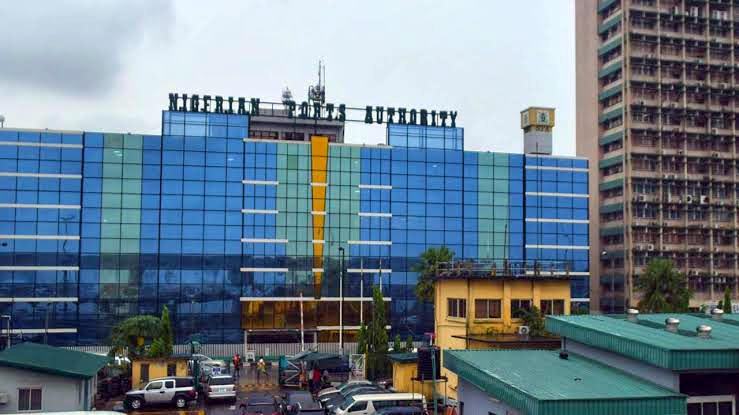
The Nigerian Ports Authority (NPA) has urged journalists to rely on accurate data and evidence in reporting on the maritime sector, saying credible journalism is essential to improving Nigeria’s trade competitiveness and investor confidence.
The General Manager of the Authority’s Corporate Affairs Division, Ikechukwu Onyemekara, said this on Wednesday at the opening of a two-day Data-Driven Business and Maritime Reporting Training organised in partnership with the Premium Times Training Academy in Ikeja GRA, Lagos.
Mr Onyemekara said accurate reporting helps businesses, investors and policymakers make informed decisions, while careless reporting could create uncertainty and undermine confidence in the country’s ports.
“Good journalism is part of the environment in which trade happens. It does not dredge a channel or berth a ship, but it shapes the confidence that brings ships and cargo in the first place,” he said.
The training was designed to strengthen journalists’ understanding of the maritime economy and improve their ability to interpret data and explain its implications to the public.
Ports’ operations
Mr Onyemekara, who spoke on behalf of the Authority’s Managing Director and Chief Executive Officer, Abubakar Dantsoho, said Nigeria’s total merchandise trade reached about N41.4 trillion in the second quarter of 2026, representing a 5.6 per cent increase compared with the corresponding period of 2025.
According to him, a significant share of the country’s trade, including crude oil, refined products, machinery, food and industrial inputs, passes through its seaports and terminals.
“When our ports work well, that trade costs less and moves faster. When they do not, households and businesses pay for it, often without knowing why,” he said.
Citing the NPA’s 2025 Operational Performance Report, the official said cargo throughput across Nigerian ports increased by 24.8 per cent, from about 103.6 million metric tonnes in 2024 to 129.3 million metric tonnes in 2025.
He added that cargo throughput reached 68.2 million metric tonnes in the first half of 2026, up 12.2 per cent from 60.8 million tonnes recorded in the corresponding period of 2025.
The ports also received 2,300 ships during the period, up from 2,152 a year earlier.
The official said outward cargo accounted for 41.9 per cent of total throughput in the second quarter of 2026, which the Authority described as evidence of improved export performance.
He said the figures reflected the activities of port workers, marine crews, haulage operators, clearing agents, warehouse staff and traders whose livelihoods depend on port operations.
The NPA official also highlighted the growing contribution of Lekki Deep Sea Port, which handled nearly 40 per cent of cargo through Nigerian ports in the first half of 2026.
He said more than three-quarters of Lekki’s cargo traffic was linked to refinery operations, illustrating how industrial investments were reshaping Nigeria’s trade flows.
“The headline figure tells you how big Lekki has become. The breakdown tells you why, and what to watch as other cargo grows. That is the difference between reporting a number and explaining it,” Mr Onyemekara said.
Landlord port model
Explaining the Authority’s role in port operations, he said Nigeria had operated a landlord port model since the concession of port terminals in 2006.
Under the model, the NPA owns and administers port land and waters, while private terminal operators manage cargo-handling operations within their terminals.
He said the Authority provides marine services, including pilotage, towage, dredging and navigational aids; maintains common-user facilities; monitors terminal operators’ concession obligations; and plans long-term port development.
Reporting maritime
Mr Onyemekara, however, urged journalists to distinguish the responsibilities of the various agencies operating within the port system when reporting delays or operational challenges.
According to him, cargo delays could result from terminal operations, documentation, customs examinations, truck movements or road conditions, making it necessary for journalists to establish where a failure occurred before assigning responsibility.
The official said the NPA was pursuing port modernisation, digitalisation, export facilitation and sustainability as part of efforts to improve efficiency.
He disclosed that the Federal Government had secured £746 million in UK-backed financing to modernise the Lagos Port Complex, Apapa, and Tin Can Island Port.
READ ALSO: PREMIUM TIMES Editor-in-Chief, 23 others earn PhDs as Baze University graduates 1,079 students
He also said the Authority was rehabilitating ports in the eastern region, including Onne, Warri and Calabar, while supporting promoters of new deep seaports.
On digitalisation, he said the Federal Government’s National Single Window became operational in March 2026, providing a common platform for trade documentation and payments across government agencies.
He said the NPA was also deploying a Port Community System, with support from the International Maritime Organisation, to link terminal operators, shipping lines, government agencies and freight forwarders.
The official added that the Authority’s electronic truck call-up system, Eto, was intended to improve truck movement and reduce congestion around the ports.
He urged journalists to consult primary sources, compare data across equivalent periods, provide the baseline behind percentages and give all parties a fair opportunity to respond.
“My charge to you is simple. Let evidence lead your stories. Let context shape them. Let fairness guide them. When rumour and data disagree, follow the data. When the data is incomplete, say so and ask for more.
“We do not ask you for praise; we ask for accuracy. Where we fall short, report it. Where we make progress, report that too, with the same discipline,” Mr Onyemekara said.
The two-day training brought together journalists and resource persons to strengthen reporting on business and maritime issues using data and open-source information.
At the training, media experts, including Musikilu Mojeed, Editor-in-Chief at PREMIUM TIMES; Idris Akinbajo, Managing Editor at PREMIUM TIMES; and Ray Echebiri, Editor-in-Chief at NextMoney, exposed participants to open-source data and resources for Nigerian maritime industry reporting, as well as techniques for analysing data and reports to produce enterprising journalism.
Discover more from Premium Times Nigeria
Subscribe to get the latest posts sent to your email.

President Bola Tinubu has directed the Energy Commission of Nigeria (ECN) to accelerate the development of the country’s bioenergy industry as part of his administration’s efforts to reduce dependence on petrol and diesel, lower energy costs and create jobs.
The president gave the directive following Nigeria’s admission as a Partner Country of the Global Bioenergy Partnership (GBEP), an international initiative hosted by the Food and Agriculture Organisation of the United Nations (FAO).
According to a statement issued by the president’s spokesperson, Bayo Onanuga, on Saturday, Nigeria was admitted into the partnership on 5 November in Rome, Italy.
The statement said the development followed the Federal Executive Council’s approval of the Strategic Plan of the Nigeria Bioenergy Partnership.
Bioenergy refers to energy derived from biomass, including organic materials of plant and animal origin, as well as their waste and by-products. These materials can be converted into electricity, heat and fuels through various processes.
Diversifying Nigeria’s energy sources
Since assuming office in 2023, Mr Tinubu has introduced several initiatives aimed at diversifying Nigeria’s energy sources and reducing energy costs.
These include the Presidential Initiative on Compressed Natural Gas (Pi-CNG), whose mandate was later expanded to include electric vehicles, and the establishment of the Presidential Committee on Green Economic Initiatives.
Nigeria’s participation in the Global Bioenergy Partnership is expected to build on these efforts by creating opportunities to harness the country’s agricultural resources and biomass potential.
The president said Nigeria had no reason to overlook the economic benefits of converting agricultural waste and other organic materials into commercially viable energy products.
“Developing a domestic biofuel industry will open new markets for Nigerian farmers, create employment opportunities and stimulate manufacturing, particularly in rural communities,” Mr Tinubu said.
“I expect the Commission to translate Nigeria’s membership of the Partnership into investments, new industries and more affordable energy for Nigerians.”
He commended the Director-General of the Energy Commission of Nigeria, Mustapha Abdullahi, and his team for securing the country’s admission into the partnership and advancing the federal government’s energy diversification policy.
Mr Tinubu also urged the commission to work with the private sector to establish biofuel production facilities across the country without compromising national food security.
Nigeria seeks investment in bioenergy sector
In a separate statement issued on 24 November, the Energy Commission said Nigeria’s admission into the partnership marked a significant milestone in the country’s sustainable energy development efforts.
It said Mr Abdullahi represented the federal government at the 32nd GBEP Steering Committee Meeting in Rome, where he formally endorsed the partnership’s Terms of Reference on behalf of Nigeria.
In his acceptance speech, Mr Abdullahi expressed the country’s appreciation to the partnership and reaffirmed Nigeria’s commitment to contributing to global efforts towards sustainable bioenergy development, energy security and climate action.
He also presented Nigeria as a potential destination for sustainable bioenergy investments, highlighting its abundant agricultural resources, biomass potential and opportunities across several areas.
READ ALSO: Tinubu approves Anambra free trade zone, road projects
These include bioethanol, biodiesel, biogas, biomass-based electricity generation, sustainable aviation fuel and waste-to-energy.
The commission said Mr Abdullahi called on GBEP partners and international investors to deepen collaboration with Nigeria, emphasising the need for strategic partnerships, investment mobilisation and an enabling policy environment to unlock the sector’s economic and environmental benefits.
As Nigeria’s designated focal point to the partnership, the Energy Commission will coordinate the country’s participation in its programmes, including those focused on sustainability, capacity building and international knowledge exchange.
The commission said membership would provide Nigeria with a stronger platform for international cooperation, investment opportunities and technology and knowledge transfer, positioning the country to play a greater role in sustainable bioenergy development in Africa and beyond.
Discover more from Premium Times Nigeria
Subscribe to get the latest posts sent to your email.
-

 Events4 days ago
Plateau Govt Backs AGNN’s PENIEL 2026, Says Unity Among Christians Critical to Peace
-
Events4 days ago
PENIEL 2026: AGNN Calls for Deeper Encounter with God, Unity and National Transformation
-
News3 days ago
‘The Righteous Are Not on the Throne, That Is Why Nigerians Are Suffering’ — SDP’s Adewole Adebayo Fires the APC While Speaking to Press at Jos Conference
-
Business2 days ago
Plateau Government, BOI, PLASMIDA Back Young Innovators at YAI Bootcamp in Jos