Health
Kogi announces ₦7 billion upgrade of PHCs but won’t provide details while clinics remain incomplete, understaffed


From a distance, the OAU Primary Health Centre in Ojoku, Ankpa Local Government Area of Kogi State, appeared newly built when PREMIUM TIMES returned to the facility on 6 May 2026.
Its blue-and-white exterior had been painted, the roof was in place, and doors and windows had been fitted.
But a closer inspection revealed signs of unfinished work. The clinic was locked, with no health workers or patients in sight. No clinical services were being provided.
PREMIUM TIMES had first visited the facility in December 2025 and found that it was not providing clinical services.
Aminu Nuhu, head of the Department of Health Services, Ankpa Local Government Council, identified OAU PHC Ojoku as one of six facilities selected for revitalisation in the council area.
He said the council was still searching for health workers to deploy to some of the revitalised facilities.


“Those that have been revitalised, we are looking for staff to put in those facilities,” he said.
However, the absence of personnel was not the only problem.
Mr Nuhu said a borehole had been drilled at the facility but could not supply water because there was no electricity or solar installation to power the pump.
“They have completed it, but we are expecting them to put it into operation,” he said.
Nearly five months after the first visit, PREMIUM TIMES returned to the facility and found that clinical services had still not commenced.
A security guard at the facility said there was no medical equipment inside.
“There is nothing inside,” he said. “It’s just the building.”
The situation at OAU PHC Ojoku was among the problems uncovered during a months-long PREMIUM TIMES investigation into the Kogi State government’s multibillion-naira primary healthcare revitalisation programme.
The investigation examined whether the government’s investment had translated into functional health facilities capable of delivering essential services to residents.
It found unfinished rehabilitation work, inadequate staffing, lack of basic infrastructure and health workers operating from temporary accommodation, despite the government’s announcement that dozens of facilities had been revitalised and commissioned.

The N7 billion promise
In January 2025, the Kogi State government announced that it had committed over N7 billion, with support from the World Bank, to upgrade 88 PHCs across the state’s 21 LGAs.
The announcement was made during the formal handover of project sites to contractors at the Model PHC in Felele, Lokoja.
Governor Ahmed Ododo, represented by the Commissioner for Health, Abdulazeez Adams, said the intervention would contribute to the upgrading of more than 150 PHCs into functional Level 2 facilities.
The contractors were directed to complete the projects within four months.
On 7 November 2025, the state government announced the commissioning of 80 revitalised PHCs.
Muazu Musa, executive director of the Kogi State Primary Health Care Development Agency, said the facilities had been transformed from Level 1 to Level 2.
Under the federal government’s 2025 HOPE-PHC Programme Operations Manual, functional Level 2 PHCs are expected to provide 24-hour health services, including basic emergency obstetric and neonatal care.
The programme’s verification framework also covers the availability of skilled birth attendants, reliable electricity or backup solar power, functional toilets with water and access to clean water.
These requirements are intended to ensure that upgraded facilities can provide essential healthcare services beyond improvements to their physical structures.
However, the Kogi State Government did not provide PREMIUM TIMES with the complete list of the 80 facilities it announced as commissioned.
As a result, the newspaper could not independently establish whether the facilities inspected during the investigation were among those officially commissioned.
Following the money: N6.09 billion in four contracts
A review of Kogi State procurement disclosures revealed four infrastructure contracts covering 88 PHCs.
The contracts had a combined value of N6.1 billion and were awarded to Multi Purpose Errand Mens Services Ltd, QSA Nigeria Ltd, Inknuel Ltd and Base-SAN Ventures Nigeria Ltd.
The records showed that N5.5 billion, representing approximately 90.6 per cent of the combined contract value, had been recorded as paid to the four contractors.
PREMIUM TIMES could not independently verify the payments against bank statements or government treasury records. The figures are therefore described as amounts recorded ‘as paid’ in the procurement disclosure.

The procurement records also revealed a discrepancy in the geographical coverage of the contracts.
Although the state government said the intervention covered all 21 LGAs, the descriptions of the four contract lots identified only 20 distinct LGAs.
Kogi LGA, whose headquarters is Koton-Karfe, was not listed in any of the four lots.
This does not necessarily mean the LGA was excluded from the intervention. However, without the complete list of the 88 beneficiary facilities, PREMIUM TIMES could not determine whether the omission occurred in the procurement summary or reflected the actual distribution of the projects.
The combined contract value of N6.1 billion was also lower than the government’s announced commitment of over N7 billion.
The available records did not explain what additional activities or expenditures accounted for the difference.
Separately, the state’s 2025 fourth-quarter Budget Implementation Report recorded a final budget of N8.205 billion for the broader Immunisation Plus and Malaria Progress by Accelerating Coverage and Transforming Services (IMPACT) programme.
The report showed year-to-date expenditure of approximately N7.818 billion.
However, the IMPACT programme covers activities beyond the four infrastructure contracts. Its expenditure cannot therefore be treated as the amount spent specifically on the 88 PHC rehabilitation projects.
The records available to PREMIUM TIMES did not reconcile these figures.
Questions over Lot D contractor
One of the contracts, identified as Lot D, was awarded to Base-SAN Ventures Nigeria Ltd for work covering 23 PHCs across Ankpa, Olamaboro, Omala, Ofu, Dekina, Ibaji and Bassa LGAs.
The procurement disclosure recorded approximately N1.069 billion as paid under the contract.
During a follow-up visit to PHC Ankpa, PREMIUM TIMES found a project signboard identifying “BASESAN VENTURE NIG LTD” as the contractor responsible for upgrading the facility.
The variation between the company name on the signboard and the name in the procurement disclosure raised questions about the contractor’s precise legal identity.
Separately, publicly available corporate information reviewed by PREMIUM TIMES identified BASESAN Ventures Limited, with registration number RC 822294, and listed a person named “Sanni Eggidi A” as a person with significant control.
The newspaper could not independently establish whether BASESAN Ventures Limited, Base-SAN Ventures Nigeria Ltd and the company named on the project signboard were the same legal entity or related companies.
PREMIUM TIMES subsequently contacted Sanni Abdulraheem, the member representing Ajaokuta Federal Constituency in the House of Representatives, seeking clarification on whether he had any connection to BASESAN Ventures Limited.
The similarity between the name in the corporate information and that of the lawmaker does not establish that they refer to the same individual.
The newspaper also sought clarification on the relationship between the companies and requested records relating to the 23 PHCs covered by Lot D, including their approved scopes of work, completion status and inspection and certification documents.
The lawmaker’s response has not been received as of publication.
Missing records, unanswered questions
Beyond the discrepancies in contract values and geographical coverage, the procurement disclosure did not identify all 88 PHCs individually.
It also did not specify the approved scope of work, contract value or payment status for each facility.
The state government did not provide PREMIUM TIMES with the complete list of the 80 PHCs announced as commissioned in November 2025.
Without these documents, it was impossible to match the facilities covered by the contracts with those announced as completed and commissioned.
The absence of facility-level inspection reports and completion certificates also prevented independent verification of what was approved, delivered, and certified at individual project sites.
These gaps do not, on their own, establish diversion of funds or failure to execute the contracts. They do, however, limit public scrutiny of the government’s claims about the intervention.
Between December 2025 and September 2026, PREMIUM TIMES inspected and revisited health facilities across Ankpa, Lokoja and Ajaokuta LGAs.
The newspaper interviewed health workers, residents, and government officials; examined project signboards; and reviewed procurement and budget documents.
The findings concern facilities that local officials or site-level evidence linked to the state intervention.

PHCC Ankpa: services running, problems persist
At the Primary Health Care Centre in Ankpa (PHCC Ankpa), clinical services were ongoing when PREMIUM TIMES first visited.
The facility provided antenatal care, routine immunisation, family planning, outpatient consultations and delivery services.
Momo Oneshona, the officer-in-charge, said the centre could receive as many as 70 patients on Mondays for immunisation, antenatal care and general consultations.
However, the facility faced significant operational challenges.
Health workers said there was no running water, grid electricity or solar power for general operations.
The available solar installation served the vaccine refrigerators.
“We don’t have solar, we don’t have water here, we don’t have light,” Mrs Oneshona said.
She explained that workers sterilised reusable instruments by boiling them over gas or ordinary stoves.
During the initial inspection, the laboratory was padlocked and appeared dusty.
The facility also faced staff shortages.
“We have a shortage of staff,” Mrs Oneshona said. “They retire; no replacement.”
She estimated that about seven workers were actively providing services, including three Community Health Extension Workers (CHEWs) and two Junior CHEWS.
According to Mrs Oneshona, the shortage of personnel and absence of a security guard meant the facility could not operate overnight.
This fell short of the 24-hour service expectations for functional Level 2 PHCs.
Contractors left unfinished work
Beyond the operational challenges, PREMIUM TIMES observed an unfinished building undergoing rehabilitation within the facility’s compound.
Doors and window frames had been removed and piled inside, while openings in the walls and roof remained exposed.
“They scattered our place and went away,” Mrs Oneshona said. “We only saw them working, then they departed.”
Mr Nuhu, the Ankpa LGA health official, confirmed that PHCC Ankpa was among six facilities selected for revitalisation.
He said construction workers left the project between December 2025 and January 2026 and had not returned by the time of the newspaper’s initial inspection.
Of the six facilities, he identified PHC Emekutu as the only one he considered fully completed at the time of his interview.
Mr Nuhu also described broader staffing challenges across Ankpa LGA.
He estimated that the council had 68 functioning PHCs but only about 50 to 55 per cent of the personnel required to operate them effectively.
According to him, 12 facilities relied entirely on volunteers, while six or seven retired health workers had been retained to keep services running.
Laboratory affected by rainwater
When PREMIUM TIMES returned to PHCC Ankpa on 28 September 2026, the laboratory was accessible.
Rain had fallen shortly before the visit.
Water was visible on sections of the laboratory floor, while damp and discoloured patches appeared on parts of the walls.
A project signboard at the facility identified the work as the “Upgrading of Primary Health Care Centre Ankpa – Ankpa LGA”.
It named Kogi State IMPACT Project 2024 as the client and listed “BASESAN VENTURE NIG LTD” as the contractor.
The procurement disclosure separately identified Base-SAN Ventures Nigeria Ltd as the contractor for Lot D, covering 23 PHCs across seven LGAs.
Although the signboard linked PHCC Ankpa to the IMPACT project, PREMIUM TIMES could not obtain the facility’s approved scope of work, valuation, payment records or completion certificate.

Lokongoma PHC: Renovation followed by more construction
At PHC Lokongoma, in Lokoja, local health officials linked the facility to the state’s revitalisation programme.
When PREMIUM TIMES visited on 13 May 2026, the centre had a new perimeter fence, a paved compound, freshly painted walls and red roofing.
However, the gate was locked when the reporter arrived at approximately 5:45 p.m.
A nearby shop owner said health workers generally left between 2 p.m. and 3 p.m.
According to the resident, the clinic provided antenatal care, deliveries, routine immunisation and treatment for minor illnesses when open.

PREMIUM TIMES did not obtain the facility’s duty roster to independently verify its operating hours.
The resident also said the clinic had been renovated less than a year earlier.
Subsequent images showed that construction activities continued after the May inspection.
Images dated 9 July 2026 showed work on sections of the red roof, additional structures and paving.
By 20 July, further images showed blue roofing, more structures and additional paving.

The images establish that further work took place after the May visit.
However, PREMIUM TIMES could not determine whether services continued during construction or whether the successive works formed part of the same project.
The available records also did not establish what each round of construction covered, who financed it or whether the work had been inspected and certified.
Ganaja PHC: Eight years in school classrooms
At Ganaja, in Ajaokuta LGA, health workers were still providing healthcare services from two borrowed classrooms inside UBE Standard College when PREMIUM TIMES visited.
Local health officials linked the facility to the state’s revitalisation programme.
Health workers said flooding had forced them to abandon their original building nearly eight years earlier.
Since then, they had been operating from the temporary accommodation.
“We were on the other side before, but flood covered that place,” the Officer-in-Charge, identified as Ms Aminu, said. “We are just managing this place as a temporary site.”
Across the road from the school, the former PHC showed signs of prolonged abandonment.
Vegetation had overtaken parts of the compound, while refuse had accumulated around the deteriorating building.

Inside the school, one classroom served as an office and consultation room.
Medical supplies, vaccine carriers, desks, chairs and patient records occupied the limited space.
The arrangement constrained the services health workers could provide.
Ms Aminu said the classrooms could not accommodate patient admissions or maternity services.
She estimated that approximately 10 workers were attached to the facility but said there was no midwife.
As a result, pregnant women requiring delivery services were referred elsewhere.

Ms Aminu said a replacement PHC was being constructed elsewhere in Ganaja.
She estimated that the project was about 70 per cent complete.
However, PREMIUM TIMES could not independently verify the estimate because the reporter could not locate and inspect the construction site.
Ms Aminu could not provide sufficiently precise directions, and no one was available to accompany the reporter.
She also could not provide a completion date or indicate when health workers would relocate.
When PREMIUM TIMES returned in September 2026, the clinic was still operating from the school classrooms.
Nearly eight years after flooding displaced the original facility, health workers and patients were still waiting for a permanent building.
The situation also raised questions about whether the replacement project had adequately considered the flooding that forced the relocation.
PREMIUM TIMES did not establish the cause of the original flooding or attribute it specifically to climate change.
The documents reviewed did not include a flood-risk, environmental or climate-vulnerability assessment showing what safeguards had been incorporated into the replacement project.

Commissioned, but were the facilities ready?
The Kogi State government’s November 2025 announcement that 80 PHCs had been commissioned suggested substantial progress in its healthcare revitalisation programme.
However, findings from facilities inspected by PREMIUM TIMES revealed gaps between infrastructure development and the delivery of functional healthcare services.
At OAU PHC Ojoku, a newly painted building remained without clinical services during follow-up visits.
At PHCC Ankpa, patients continued receiving care despite unfinished rehabilitation work, staffing shortages and inadequate water and electricity supply.
At Lokongoma, additional construction was documented months after an earlier renovation.
At Ganaja, health workers continued operating from school classrooms while awaiting a permanent facility.
Local officials or site-level evidence linked these facilities to the state’s intervention.
However, because the complete commissioning list was unavailable, PREMIUM TIMES could not establish whether any of the four facilities was among the 80 announced as commissioned.
The newspaper also could not obtain facility-level inspection reports or completion certificates showing what had been assessed and certified before commissioning.
These gaps leave important questions unanswered about the criteria used to declare facilities ready, the work completed at individual sites and whether the upgrades translated into the services expected of Level 2 PHCs.
READ ALSO: PT Health Watch: Blood grouping alone cannot guarantee safe transfusion, experts warn
Government fails to provide project records
PREMIUM TIMES sought explanations and supporting documents from the Kogi State government before completing the investigation.
On 15 May 2026, the newspaper submitted written requests under Nigeria’s Freedom of Information Act 2011 to the Kogi State Ministry of Health and the Kogi State Primary Health Care Development Agency.
The requests sought an inventory of PHCs; details of revitalisation and infrastructure projects; the identities of beneficiary facilities and contractors; contract sums; project status; Basic Health Care Provision Fund disbursements; staffing information; and facility operational records.

The newspaper followed up through telephone calls and WhatsApp messages with the Commissioner for Health and Aisha Mohammed, who identified herself as secretary and personal assistant to the executive director of the State’s primary healthcare agency.
When the requests did not produce substantive responses, PREMIUM TIMES contacted the Commissioner for Information and Communications, Kingsley Fanwo.
The newspaper informed him of the outstanding requests and asked him to respond on behalf of the government or help obtain answers from the relevant agencies.
Calls, WhatsApp messages and a text message were sent to Mr Fanwo, including a reminder that the report was being finalised and that the government’s response could still be included.
By publication time, the state government had not provided the complete schedule of the 88 facilities, the list of 80 commissioned PHCs, facility-level scopes of work, inspection reports or completion certificates.
Discover more from Premium Times Nigeria
Subscribe to get the latest posts sent to your email.





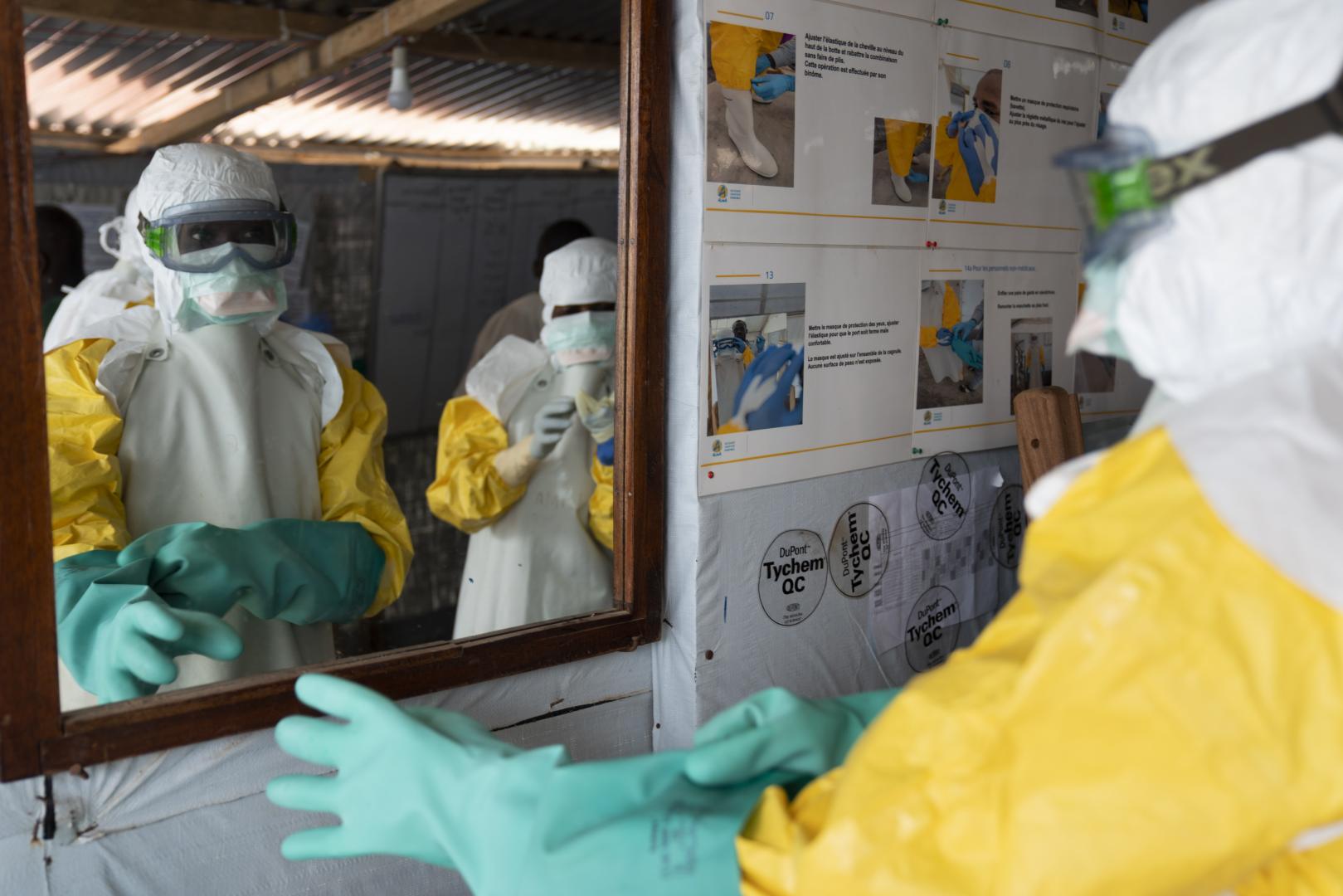
The Democratic Republic of the Congo (DRC) is experiencing the largest Ebola outbreak in its history, according to the World Health Organisation (WHO).
The country has recorded 10,668 confirmed cases and 5,198 deaths as of 3 November 2026.
The outbreak has spread across 67 health zones in eight provinces, with active transmission continuing in 51 health zones as of 3 November 2026.
The WHO disclosed this in its Disease Outbreak News report published on 6 November, adding that the country has also recorded 2,881 recoveries.
According to the report, 964 additional confirmed cases, including 511 deaths, had been reported since WHO’s previous outbreak update of 23 October.
Five countries affected
Since the outbreak, caused by the Bundibugyo virus, was declared on 15 May 2026, five countries have reported cases: DRC, France, Kenya, Nigeria and Uganda.
However, the outbreaks in France and Uganda have been brought under control since August, while Kenya and Nigeria continue their response efforts.
The latest WHO report said no new cases had been reported in Kenya or Nigeria since its previous update of 23 October.
Describing the scale of the outbreak in the DRC, WHO said it had become “the largest Ebola disease outbreak ever recorded in the Democratic Republic of the Congo irrespective of virus species.”
Community deaths raise concern
The WHO expressed concern over the high number of deaths occurring outside treatment centres, particularly among young children, highlighting the difficulties in identifying cases early and ensuring patients receive timely medical care.
Of the 512 deaths reported in the DRC since 21 October, 335 occurred in communities, while 177 were recorded in treatment centres.
“The high proportion of deaths occurring in communities, especially among young children, continues to highlight challenges in early case detection and timely access to appropriate care,” WHO said.
WHO noted that the outbreak remains concentrated in Ituri and North Kivu provinces, which account for most confirmed cases and deaths.
Ituri has recorded 7,485 cases and 3,532 deaths, while North Kivu has reported 2,593 cases and 1,422 deaths.
The WHO said 1,463 new confirmed cases were recorded across the DRC in the 21 days leading up to 3 November, with Ituri and North Kivu accounting for most of the infections.
Nigeria’s Ebola response
In Nigeria, the WHO reported one laboratory-confirmed imported case of Bundibugyo virus disease in the Federal Capital Territory (FCT) on 20 October.
The patient was medically evacuated to Switzerland on 26 October and remains in isolation while receiving medical care in Geneva.
As of 3 November, WHO noted that 62 contacts had been identified in Nigeria, with six completing the mandatory 21-day follow-up period.
The Nigeria Centre for Disease Control and Prevention (NCDC), in its situation report published on 4 November, also confirmed that six contacts had completed their follow-up, while 56 remained under monitoring.
The agency reported no newly identified contacts or symptomatic contacts during the preceding 24 hours.
The WHO said Nigerian authorities, with support from the organisation and other partners, had intensified contact tracing, case investigations and infection prevention measures.
ALSO READ: WHO recommends two new Ebola vaccines for clinical trials as DRC battles Bundibugyo outbreak
Investigations are also ongoing to establish the likely source of the infection and reconstruct the patient’s travel and exposure history.
What is Bundibugyo virus disease?
Bundibugyo virus disease is a severe form of Ebola disease caused by the Bundibugyo virus, one of the viruses in the Orthoebolavirus genus.
According to the WHO, it is a zoonotic disease, meaning it can spread from animals to humans. Fruit bats are suspected to be its natural reservoir.
Initial human infections are thought to occur through contact with the blood or secretions of infected wildlife, including bats and non-human primates.
The virus subsequently spreads between people through direct contact with the blood, secretions, organs and other bodily fluids of infected individuals. It can also spread through contaminated surfaces and materials.
The incubation period ranges from two to 21 days, and infected people are not infectious before symptoms appear. Early symptoms include fever, fatigue, muscle pain, headache and sore throat. These may progress to vomiting, diarrhoea, organ dysfunction and, in some cases, bleeding.
The WHO noted that early symptoms can resemble other illnesses, including malaria, so laboratory testing is important to confirm the diagnosis.
No vaccines or specific treatments are currently approved for Bundibugyo virus disease. The WHO said controlling the outbreak depends on early identification and isolation of cases, medical care, contact tracing, safe burial practices and community engagement.
Discover more from Premium Times Nigeria
Subscribe to get the latest posts sent to your email.

Just after dawn on a humid morning in May, Enomfon Okure stepped out of her apartment on Braimoh-Igbo Street in Itafaji, Lagos Island, preparing for another workday in nearby Ikoyi.
Before taking a few steps, she instinctively covered her nose.
The stench had become part of her mornings since January 2025, when she moved into the neighbourhood with her family.
Beside the road, black wastewater flowed slowly through an open drainage channel. At intervals, more toilet waste gushed from pipes protruding from nearby buildings and emptied directly into the drain.

Flies hovered over the murky water as pedestrians squeezed along the narrow walkway, trying to avoid contact with it.
For Mrs Okure, a nurse and mother of four, the scene has become an inescapable part of daily life.
“I am struggling to survive here,” she told PREMIUM TIMES.
“My husband rented this place because it is close to my office in Ikoyi. But when I arrived, I discovered that almost all the gutters in the area receive wastewater from houses. Some of them even carry human waste.”
Her greatest concern, she said, was the safety of her children.
“I don’t allow them to play outside because if they fall into the gutter, it will be dangerous,” she said.

Eventually, Mrs Okure said the situation became unbearable.
“I discussed it with my husband and decided to send the children back to Akwa Ibom to stay with relatives,” she said. “This environment is a gateway to diseases.”
Over several weeks, PREMIUM TIMES visited Braimoh-Igbo Street, Obe Street, Alli Street, Massey Street, Kakawa Street, Okepopo Street, Isale Gangan Street, Adeniji Adele, Tinubu Square and other parts of Lagos Island.
Across residential and commercial areas, this newspaper observed pipes from buildings discharging wastewater and toilet water directly into public drainage channels.

Beyond residential neighbourhoods
The problem extends beyond residential areas.
At Tinubu Square, one of Lagos Island’s busiest commercial centres, traders told PREMIUM TIMES that wastewater and sewage from public toilets and commercial buildings flow into the drainage network serving the area.
David Nonso, who sells clothing materials there, said traders had endured the foul smell for years.
“All the toilets in this market are connected to the drainage,” he said.
“When people flush, everything goes into the gutters. The smell can be terrible, especially when it rains or when the weather is very hot.”

PREMIUM TIMES observed wastewater and sewage flowing through open drains beside rows of shops as traders and shoppers moved through the commercial district.
Mr Nonso attributed the problem partly to the dense development on Lagos Island, where buildings are packed closely together.
“Their houses are too close to each other,” he said. “Nobody is even giving space for somebody to do soakaway.”
Ibrahim Abubakar, a tailor in the area, also said wastewater regularly flows through the drains in front of the market.


Another trader, Emeka Uzor, who sells electrical goods, expressed concern about the health implications for traders, customers and residents who come into contact with the polluted environment.
“The drainage was meant to carry rainwater, but now it carries everything,” Mr Nonso said. “People have become used to it because it has been happening for years.”
He said a disease outbreak in such a crowded commercial area could affect far more than the traders who work there.
“When disease breaks out, it affects everybody,” he said. “Even our children don’t come there because it is very bad. If somebody falls into that gutter, that one is terrible.”
Buildings over drains
PREMIUM TIMES also found another practice that could complicate efforts to inspect and maintain public drains.
In several locations, sections of drainage channels disappeared beneath buildings before re-emerging further down the street.
On parts of Braimoh-Igbo Street, Obe Street and adjoining roads, the newspaper observed buildings sitting over sections of drainage channels, leaving parts of the drains inaccessible from the street.
Residents alleged that some landlords had extended their buildings over existing drainage alignments and were using the concealed sections to channel wastewater and sewage from their properties.
PREMIUM TIMES could not independently determine what was being discharged into the sections concealed beneath the buildings. However, dark, foul-smelling wastewater was observed emerging from some drains further downstream.
On 17 June, this newspaper contacted the Lagos State Building Control Agency (LASBCA) through the Freedom of Information (FOI) to seek clarification on the approval and regulation of building structures that allow residents to channel toilet pipes directly into public drainage systems. The newspaper also sought the agency’s response to the widespread practice of constructing buildings and shops on drainage channels.
Despite repeated visits to the agency’s office in an attempt to obtain answers, LASBCA did not respond to the enquiries.
For residents, however, the consequences are visible on the streets. Wastewater continues to flow through open drains around homes and businesses, even where its precise source is hidden beneath concrete.
What the law says
The practices documented by PREMIUM TIMES are prohibited under Lagos State’s environmental regulations.
The Lagos State Environmental Management and Protection Law, 2017, places responsibilities on property owners and occupiers to maintain their premises and prohibits activities that could obstruct drainage infrastructure or pollute the environment.
Under Section 112 of the law, owners and occupiers are required to keep their premises clean, including surrounding gutters and drains.
Section 118(1)(a) prohibits the construction of structures on drainage alignments, sewers, footpaths and required road setbacks.
The provision is relevant to PREMIUM TIMES’ findings on parts of Lagos Island, where sections of drains disappeared beneath buildings before re-emerging further down the streets.
The law also addresses the discharge of untreated waste.
Section 185 provides that a person must not discharge untreated waste or chemical substances into the environment except in accordance with applicable regulations or federal law.
For certain establishments, including housing estates, hotels and commercial facilities, Section 188(1) prohibits the discharge of trade and industrial effluent into public drains or the natural environment without a permit from the relevant agency.
Section 115(4) also prohibits the indiscriminate dumping of domestic, industrial or commercial waste along roads, channels and other specified locations.

Beyond the environmental law, Lagos building regulations require developers to provide appropriate systems for disposing of wastewater from buildings. These include public or private sewers, septic tanks with appropriate secondary treatment, wastewater treatment systems or cesspools.
Yet PREMIUM TIMES observed pipes from residential and commercial buildings discharging wastewater directly into public drains in several parts of Lagos Island.


Enforcement has not stopped the practice
The state has previously taken action against properties accused of violating wastewater and environmental regulations.
The Lagos State Wastewater Management Office (LSWMO) sealed a property in Okota after discovering that raw sewage from its septic tank was being discharged into a public drainage system.
Three months later, enforcement officers shut a residential property on Apongbon Street on Lagos Island for allegedly releasing faecal matter into public drains.

In September 2025, LSWMO sealed EMCEL Court Phase I and Well Stock Apartments in Ikota GRA, Eti-Osa, accusing the facilities of discharging untreated wastewater into public drains and the surrounding environment.
The agency has carried out similar enforcement in other parts of Lagos. In August 2025, it sealed residential properties in Abule Egba and Lekki, Eti-Osa, after accusing occupants of deliberately pumping raw sewage into public drains.
In April, while announcing the return of monthly environmental sanitation, the Commissioner for the Environment and Water Resources, Tokunbo Wahab, reminded residents to keep drainage channels around their properties clean and dispose of waste properly, warning that violators would be sanctioned.
Despite these enforcement actions and warnings, PREMIUM TIMES found wastewater still flowing through public drains in several communities on Lagos Island.
Billions spent on drainage infrastructure
The conditions documented by PREMIUM TIMES are occurring despite substantial public investment in Lagos’ drainage infrastructure.
According to the Lagos State government’s 2024 Citizens’ Accountability Report, the Office of Drainage Services and Water Resources spent about N45.53 billion during the year, representing 99 per cent of its total budget of N46.06 billion.
The expenditure covered several drainage-related projects, including construction, dredging and rehabilitation.
The state reported spending N13.65 billion on drainage construction and dredging across Lagos and N11.48 billion on the rehabilitation of drainage systems across local government areas. Another N9.36 billion was recorded for dredging and construction, while N2.30 billion went towards outstanding liabilities on drainage construction.
These expenditures are primarily related to drainage and flood management and should not be confused with spending on sewage or wastewater treatment, which is handled separately by the Lagos State Wastewater Management Office.
They are nevertheless relevant to another finding of this investigation: public drains in some of the communities visited were being used for purposes for which they were not designed, while sections of drainage channels had also been built over or otherwise made difficult to access.
The Lagos State government itself describes maintaining drainage rights-of-way, cleaning drains and dredging canals as important parts of its flood-control efforts.
Yet on parts of Lagos Island visited by PREMIUM TIMES, drains intended to convey stormwater were also carrying household wastewater and refuse.
The state’s budget records show that drainage expenditure is spread across several programmes and budget lines, making it misleading to use a single administrative allocation as the government’s total spending on drainage.
Lagos State government muted
The questions were put to the Lagos State government in writing. Getting answers, however, proved more difficult.
On 17 June, PREMIUM TIMES submitted an FOI request to Mr Wahab, asking what the ministry knew about illegal sewage discharges, how it monitored properties connected to public drains and what action it had taken against offenders.
The request did not end there.
On 30 July and again on 4 August, PREMIUM TIMES returned to the commissioner’s office to follow up and give the ministry another opportunity to respond to the findings of the investigation.
During the second visit, Mr Wahab’s secretary sat in his office, went through his records and then delivered the commissioner’s position before heading downstairs to the car park.
“The commissioner says he is not interested,” he said.
That left unanswered questions about whether the ministry had identified properties discharging sewage into public drains, how widespread the practice was and whether anyone had been sanctioned.
PREMIUM TIMES also tried to establish whether the conditions documented on Lagos Island were reflected in the health records of children living in the area.
In June, the newspaper visited Massey Children Hospital on Lagos Island to request data on children treated for cholera, typhoid fever, acute diarrhoea, dysentery and other waterborne diseases.
The hospital’s administrative department said approval from the Lagos State Health Service Commission was required. A letter requesting the information was submitted and received on 2 July.
There was no response despite follow-up efforts.
A separate FOI request was sent to the Lagos State Commissioner for Health, Akin Abayomi, on 17 June, seeking information on the health implications of poor sanitation and sewage discharge.
When PREMIUM TIMES returned to the relevant offices on 30 July and 4 August, the questions were still unanswered.
However, the open sewage situation in Lagos Island is believed to have contributed to the high cholera cases recorded in the area. Each year, as rainfall intensifies, floodwaters mix with sewage and refuse from clogged drains, spreading diseases like cholera.
In 2024, Lagos accounted for about half of the total cholera cases recorded in Nigeria, with many of these cases reported in Lagos Island.
The Lagos State Waste Management Authority (LAWMA) was also asked to explain what it knew about the problem. An FOI request was submitted to the agency on 17 June, followed by visits and other efforts to obtain a response.
None came.
The Lagos State Wastewater Management Office (LSWMO), however, responded after PREMIUM TIMES sent questions by email. The agency’s response came on 5 August.
According to A. Abiola, who responded on behalf of the agency’s General Manager, Adefemi Afolabi, untreated wastewater, raw sewage and faecal sludge should not be flowing into public stormwater drains or gutters. Such drains, he explained, are meant to carry rainwater, not sewage.
He noted that property owners are expected to provide proper sanitation systems, including septic tanks and soakaways or wastewater treatment plants, depending on the type and size of their buildings.
LSWMO said it checks compliance through inspections, tracing drainage routes, testing wastewater samples and responding to complaints from residents and whistleblowers.
When illegal discharges are found, the agency said it can issue abatement notices and, where property owners fail to comply, disconnect illegal pipes, seal premises, impose fines or prosecute offenders.
The agency said it had issued hundreds of abatement notices across Lagos and sealed scores of residential and commercial properties over the past two years. Some of the enforcement actions, it said, involved properties on Lagos Island.
But LSWMO also offered an explanation for why the practice has proved difficult to eliminate.
Lagos Island, it said, is densely built, with small plots, ageing infrastructure and a high groundwater table. Those conditions can make it difficult for owners of older buildings to install or upgrade conventional sanitation systems. Poorly maintained soakaways can also overflow in areas where the water table is shallow.
Some landlords respond by diverting greywater into gutters, the agency said, but that does not make the practice lawful.

Where a building lacks a proper sewage-disposal system, LSWMO said the owner is responsible for putting one in place. The agency said it can provide technical guidance, while accredited sewage dislodgers can temporarily remove waste during the work.
It also said it was looking at decentralised wastewater and faecal sludge treatment systems for densely populated areas where conventional sewer networks would be difficult or expensive to build.
The agency’s response also shed light on the buildings that PREMIUM TIMES found sitting over sections of drainage channels.
LSWMO said the removal of physical encroachments falls under other urban planning agencies. But where such structures are used to hide illegal wastewater connections, the wastewater office said it can intervene and refer the matter to the appropriate authorities.
Health risks of unsafe wastewater disposal
Health and environmental experts interviewed by PREMIUM TIMES warned that the conditions documented on Lagos Island could expose residents to disease, particularly where wastewater contains faecal matter or contaminates water and food.
Ernest Onyebuchi Nwoke, a Senior Lecturer in the Department of Physiology at Ambrose Alli University, Ekpoma, said untreated sewage in open drains increases the risk of diseases associated with poor sanitation.
He identified cholera, typhoid fever, dysentery, hepatitis A and other diarrhoeal illnesses as particular concerns.

Children, he said, can be especially vulnerable because they are more likely to come into contact with contaminated surfaces while playing.
“Children are especially vulnerable because they frequently come into contact with contaminated surfaces and often put their hands in their mouths,” Mr Onyebuchi Nwoke said.
“Even walking barefoot through contaminated floodwater can expose them to parasites such as hookworm.”
The risks could increase during flooding, he said, when contaminated water from overflowing drains spreads into homes, markets and other public spaces.
“When floodwater overflows, it carries pathogens from drains into homes, contaminates food and water sources, and increases people’s exposure to disease-causing organisms,” he said.
Mr Onyebuchi Nwoke also warned that groundwater could become contaminated where septic systems are poorly constructed, leak or overflow, particularly in areas with a high water table.
He called for stronger enforcement against illegal wastewater connections, regular inspection of drainage infrastructure and improved sewage management.
‘Infrastructure alone cannot solve the problem’
Olamide Martins Ogunlade, Associate Director for Climate Change and Extractives at the Corporate Accountability and Public Participation Africa (CAPPA), said using stormwater drains for wastewater undermines the purpose for which the infrastructure was built.
“Public drains are meant to carry rainwater away quickly to reduce flooding,” Mr Ogunlade said. “When people connect wastewater or sewage pipes to them, they are forcing the drainage system to perform a function it was never designed for.”
According to him, converting stormwater drains into open sewers not only weakens the drainage system but also increases environmental pollution and public health risks.
He said mixing sewage with stormwater creates conditions for the rapid spread of cholera, typhoid, dysentery, hepatitis and other waterborne diseases, particularly during heavy rainfall when contaminated drains overflow into streets, homes and markets. The polluted drains also become breeding sites for mosquitoes and rodents while contaminating nearby rivers and lagoons.
Mr Ogunlade said the shortage of public sewer infrastructure in many parts of Lagos cannot justify the illegal discharge of wastewater into drainage channels.
“Property owners have a responsibility to provide safe and approved wastewater disposal systems,” he said. “Wastewater should be contained and treated, not discharged directly into public drains.”
He also raised concerns over buildings constructed on drainage alignments, saying such developments make it difficult for government agencies to inspect drains, remove blockages, detect illegal wastewater connections and carry out routine maintenance.
“In a flood-prone city like Lagos, preserving drainage corridors is just as important as constructing new ones,” he said. “Once drains are built over, problems remain hidden until a major flood exposes them.”
Commenting on Lagos State’s investment in drainage infrastructure, Mr Ogunlade said building new drains alone would not solve the problem if maintenance, enforcement and public cooperation remained weak.
“Infrastructure alone cannot solve the problem,” he said. “Government must pay as much attention to maintaining existing drainage systems, enforcing environmental regulations and educating the public as it does to building new infrastructure. If wastewater management is neglected, even the best drainage system will eventually fail.”
Discover more from Premium Times Nigeria
Subscribe to get the latest posts sent to your email.
-

 News3 days ago
Plateau Govt Hails Council Chairmen as Inspection Tour Reveals Projects Across 17 LGAs
-
Business3 days ago
FG welcomes GIGM’s expansion into digital mobility, urges reliable services
-
Business3 days ago
FG Backs Risk-Based Capital, Urges Insurance Directors to Move Beyond Passive Compliance
-
Education3 days ago
PLASGEOC Raises Alarm Over Child Marriage, Calls for Greater Protection of Girls in Plateau