Health
Nigeria’s under-five mortality rate drops 17%, neonatal deaths rise – Official


The federal government has expressed concern over the rise in neonatal mortality in Nigeria, despite a decline in deaths among children under five.
The Coordinating Minister of Health and Social Welfare, Muhammad Pate, disclosed this while citing the 2024 Nigeria Demographic and Health Survey at the commemoration of the 2026 National Health Promotion Day in Abuja on Thursday.
According to the survey, under-five mortality declined from 132 deaths per 1,000 live births in 2018 to 110 in 2024, representing a reduction of about 17 per cent.
However, neonatal mortality, which measures deaths within the first 28 days of life, increased from 39 to 41 deaths per 1,000 live births within the same period.
Mr Pate, represented by the ministry’s Permanent Secretary, Daju Kachollom, said the figures highlight the need to accelerate preventive healthcare, early diagnosis and timely access to quality medical services.
The event, themed “Health Promotion: Owning My Health,” with the slogan “Take Charge, Live Well,” marked the third edition of the National Health Promotion Day.


The minister reaffirmed the federal government’s commitment to the Health Sector Renewal Investment Initiative, which prioritises improving maternal and child health, strengthening primary healthcare, expanding immunisation, tackling non-communicable diseases and reducing the burden of HIV, tuberculosis and malaria.
He described health promotion as a strategic investment in the country’s health system, noting that improving health outcomes required more than the availability of hospital services.
According to him, preventive interventions, informed individual choices, healthier environments and systems that support citizens’ wellbeing are equally important.
Preventive healthcare
Mr Pate listed ongoing preventive health interventions to include hypertension detection, hepatitis elimination through initiatives such as Project 365, cervical cancer prevention and screening, improved nutrition, immunisation and measures to prevent and control communicable diseases.
He said the impact of these interventions should be measured through increased screening, completed referrals, access to treatment and the prevention of avoidable illnesses.
He also stressed that public awareness must be matched by accessible, affordable and effective healthcare services.
According to the minister, awareness campaigns alone would not produce the desired outcomes if people could not access screening, obtain appropriate treatment or receive safe and respectful care.
He called for stronger collaboration among families, schools, workplaces, traditional and religious institutions, the media, civil society organisations, development partners and the private sector to promote healthy diets, physical activity, good hygiene, mental wellbeing, vaccination and appropriate screening.
He also urged stakeholders to address misinformation and harmful health practices.
The minister further called on all levels of government to integrate health promotion into routine primary healthcare, community engagement and development planning to ensure that vulnerable and underserved populations were not left behind.
He urged Nigerians to embrace the campaign slogan, “Take Charge, Live Well,” by seeking credible health information, understanding their health risks, participating in recommended screening and immunisation programmes, and seeking medical attention promptly when necessary.
Stakeholders pledge support
In their goodwill messages, development partners and civil society organisations reaffirmed their commitment to supporting the Federal Ministry of Health and Social Welfare in advancing health promotion.
The United Nations Population Fund (UNDP) representative, Olukunle Omotoso, emphasised the importance of community engagement, health literacy, gender equality and access to sexual and reproductive health services, particularly for women and young people.
CARE International, represented by Oluloto Ebenezer, also pledged continued support for initiatives aimed at promoting positive health-related behavioural changes at the community level.
Similarly, the Africa Health Budget Network highlighted the importance of family planning, healthy nutrition and routine screening for hypertension and diabetes.
The Permanent Secretary, Ms Kachollom, encouraged participants to take advantage of screening services provided at the event to promote early disease detection and encourage greater responsibility for personal health.
Nigeria’s maternal and newborn mortality burden
The latest figures come against the backdrop of Nigeria’s high burden of maternal and newborn deaths.
According to the World Health Organisation (WHO), Nigeria recorded a maternal mortality ratio of 1,047 deaths per 100,000 live births in 2020.
In its 2023 report, titled “Improving Maternal and Newborn Health and Survival and Reducing Stillbirths: Progress Report 2023,” WHO estimated that Nigeria recorded 82,000 maternal deaths, 181,000 stillbirths and 277,000 neonatal deaths in 2020.
The combined 540,000 deaths accounted for 12 per cent of global maternal, stillbirth and neonatal deaths, despite Nigeria contributing only six per cent of the world’s live births.
The report ranked Nigeria second after India among the countries with the highest combined burden of maternal deaths, stillbirths and neonatal deaths.
Discover more from Premium Times Nigeria
Subscribe to get the latest posts sent to your email.





Artists and health experts are using art, storytelling and interactive activities to raise awareness about antimicrobial resistance (AMR).
AMR occurs when bacteria, viruses, fungi and parasites no longer respond to medicines used to treat infections, making diseases more difficult to manage.
The awareness event, Microbe Madness 2.0, organised by the Art for Health Initiative (AHI), was held in Lagos on Wednesday, the first day of the 2026 World AMR Awareness Week, observed from 18 to 24 November.

The event themed: One Action for our Future, featured exhibitions by artists exploring AMR and other health-related themes, including a mental health exhibition showcasing works produced by artists who participated in an earlier workshop organised by AHI.
It also featured spoken-word performances by Ruth Mahogany, music by Nanya ljeh and Paragon, and interactive games designed to help participants understand AMR and how everyday actions can help prevent it.

Antibiotics misuse
Delivering the keynote address at the event, Philip Osun, a clinical microbiologist at the Lagos University Teaching Hospital (LUTH), warned against the indiscriminate use of antibiotics.
Mr Osun said antibiotics are designed to treat bacterial infections and are ineffective against viral illnesses such as most common colds.
“Don’t rush to the chemist and say I need antibiotics,” Mr Osun said, urging people to seek medical advice rather than self-medicate.
He also cautioned against taking antibiotics prescribed for others, sharing medicines or starting, stopping or changing treatment without professional advice.
According to him, antimicrobial resistance occurs when germs develop mechanisms to overcome medicines designed to treat them, making infections difficult to manage.
Mr Osun said the consequences could include prolonged illness, expensive treatment and increased pressure on families and healthcare facilities.
The World Health Organisation (WHO), in a statement to mark the start of World AMR Awareness Week, said bacterial AMR was associated with an estimated 4.7 million deaths globally in 2021, with sub-Saharan Africa recording the highest rates of AMR-associated mortality.
The WHO said tackling resistance requires action across human, animal, plant and environmental health, noting that inappropriate use of antimicrobials, poor infection prevention, inadequate water and sanitation, and unsafe waste disposal contribute to its spread.

Preventing infections
The microbiologist encouraged Nigerians to prevent infections through regular handwashing, vaccination, safe food and water practices, proper wound care and good hygiene.
He said preventing infections reduces the need for antimicrobials and helps limit the development and spread of resistance.
Mr Osun also explained the One Health approach, noting that human, animal and environmental health are interconnected.
He said antimicrobial resistance is not only a human health problem but also involves animals and the environment, requiring coordinated efforts to prevent infections and reduce inappropriate antimicrobial use.
Using art to communicate health messages
Speaking about the initiative, Chidera Aneke, founder of AHI and a Media EIS Frontliner, said AMR remains poorly understood despite its growing impact.
READ ALSO: World Antibiotic Awareness Week: New health challenge emerges with antibiotics misuse
Ms Aneke said the organisation uses art and creative activities to communicate health information in ways people can relate to and remember.
She said the initiative plans to make Microbe Madness an annual event and involve more creatives in public health awareness.
“With more funding, we can make this a yearly event,” she said, adding that the initiative wants people to learn about health issues through activities that are enjoyable and interactive, rather than only workshops and seminars.
The event also had in attendance Olayinka Badmus, Resident Adviser for the Media EIS Fellowship and Technical Director at Afrihealth for Social Development and Impact (ASDI).
It was organised with DRASA Health Trust as a technical partner and support from the Yemisi Shyllon Museum of Art and BNL Healthcare Limited.
Discover more from Premium Times Nigeria
Subscribe to get the latest posts sent to your email.
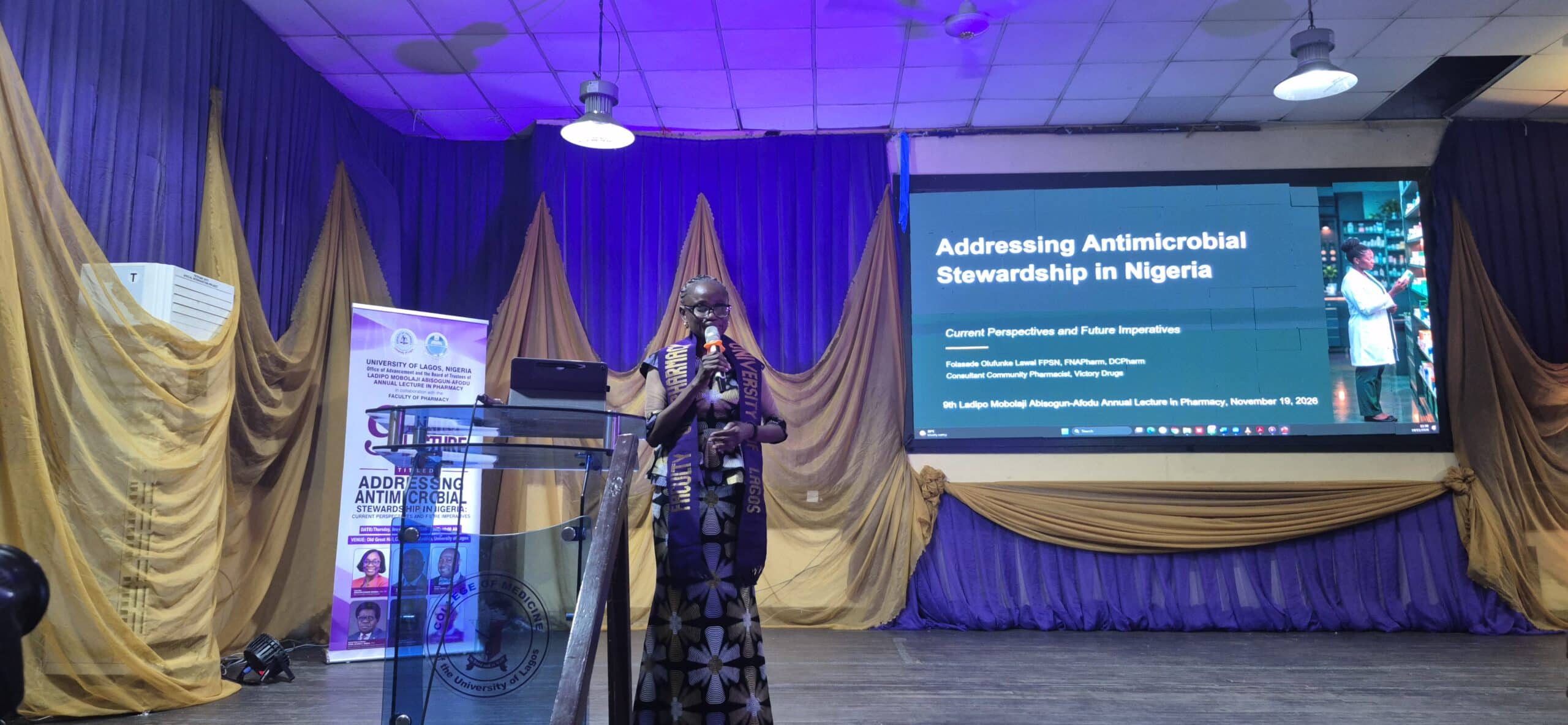
Nigeria needs to translate its antimicrobial resistance (AMR) policies into action to curb the growing threat of drug-resistant infections, a pharmacist has said.
Folashade Lawal, managing director and chief executive officer of Victory Drugs, said the country had developed policies and guidelines to address AMR but faced challenges implementing them across healthcare facilities and communities.
“The challenge now lies not in planning but in implementation,” Ms Lawal said on Thursday while delivering the ninth Ladipo Mobolaji Abisogun-Afodu Annual Lecture in Pharmacy at the College of Medicine, University of Lagos.
The lecture, titled Addressing Antimicrobial Stewardship in Nigeria: Current Perspectives and Future Imperatives, was held during the 2026 World Antimicrobial Resistance Awareness Week, observed from 18 to 24 November.

Policies, implementation gaps
Nigeria’s first National Action Plan on Antimicrobial Resistance covered 2017 to 2022. The plan sought to reduce, prevent and slow the emergence of resistant organisms through awareness, surveillance, infection prevention and control, responsible antimicrobial use, and research.
An assessment of its implementation found that only 44 per cent of the plan’s activities had been completed, highlighting gaps in coordination, funding and implementation across sectors.
Nigeria subsequently launched its second One Health National Action Plan on AMR, covering 2024 to 2028, with six strategic objectives, including stronger governance, surveillance, public awareness, infection prevention and control, responsible antimicrobial use, and research and capacity development.
Ms Lawal said antimicrobial stewardship activities are yet to become routine in many healthcare institutions, despite the country’s policy commitments.
She called for stronger enforcement of regulations governing antimicrobial sales, sustainable funding for stewardship programmes at federal, state and institutional levels, improved access to diagnostic services and laboratory infrastructure, and the establishment of stewardship programmes across healthcare facilities.
She also urged the government to strengthen antimicrobial consumption monitoring, invest in workforce development and research, and expand public awareness of responsible antimicrobial use.
In his welcome remarks, the Dean of the Faculty of Pharmacy, University of Lagos, Sunday Adesegun, said antimicrobial resistance threatened the effective treatment of infectious diseases and could reverse gains made in modern medicine.
He said Nigeria continued to grapple with self-medication, indiscriminate access to antibiotics, inadequate infection prevention and control, and gaps in antimicrobial resistance surveillance.
“Antimicrobial stewardship is not merely a professional responsibility; it is a collective obligation to safeguard public health,” Mr Adesegun said, urging stakeholders to move beyond awareness to concrete action.

Growing threat
Ms Lawal described antimicrobial resistance as a “silent pandemic” that steadily undermines the effectiveness of medicines used to treat infections.
She said bacterial antimicrobial resistance was associated with approximately 4.7 million deaths globally in 2021, including 1.14 million deaths directly attributable to resistant infections.
In Nigeria, she cited estimates that antimicrobial resistance was directly responsible for 50,500 deaths and associated with about 227,000 deaths in 2021.
She warned that resistance threatens not only the treatment of common infections but also modern medical procedures, including surgery, cancer treatment, organ transplantation, neonatal care and intensive care, which depend on effective antimicrobials.
Ms Lawal identified self-medication, inappropriate prescribing and dispensing, unrestricted access to antibiotics, weak regulatory enforcement, inadequate infection prevention and control, and limited diagnostic capacity as major drivers of antimicrobial resistance.
She said inadequate laboratory services often leave healthcare professionals relying on empirical treatment without diagnostic confirmation.
Pharmacists’ role
Ms Lawal urged community pharmacists to refuse inappropriate antibiotic supply without valid prescriptions, source medicines from regulated suppliers, counsel patients on proper use and refer patients for medical care when necessary.
She said hospital pharmacists should support stewardship through prescription reviews, monitoring antimicrobial consumption and collaborating with other healthcare professionals to optimise treatment.
She also called for antimicrobial stewardship to be integrated into pharmacy education and for stronger collaboration among healthcare professionals.
The chairman of the occasion, Olumide Akintayo, a former president of the Pharmaceutical Society of Nigeria, said healthcare professionals, government and other stakeholders had contributed to inappropriate antimicrobial use.
He called for urgent action, including improved regulation, public awareness and responsible professional practice.
He also noted that Nigeria would host the fifth Global High-Level Ministerial Conference on Antimicrobial Resistance in December.
READ ALSO: Plateau pharmacists campaign against child marriage, urge girl-child education
Research grant
At the event, Olusegun Ajala of the Department of Pharmaceutical Chemistry, Faculty of Pharmacy, University of Lagos, won the 2026 Ladipo Mobolaji Abisogun-Afodu Research Grant Award in Pharmacy and received N2.7 million.
His proposal, titled Development of a Psidium guajava-Based Antibiotic Adjuvant for Restoring the Susceptibility of Multidrug-Resistant Bacteria to Conventional Antibiotics, was selected as the winning research proposal.
Deborah Ogundemuren and colleagues from the Department of Pharmaceutics and Pharmaceutical Technology came second with a proposal to develop a bioactive, sprayable hydrogel for postpartum perineal wound care as an antibiotic-sparing strategy.
Osideko Oluwaseun and colleagues from the Department of Pharmaceutical Chemistry came third with a proposal on the chemical standardisation and antibacterial characterisation of fermented maize mash supernatant, known as omidun, produced using different fermentation strategies.
Discover more from Premium Times Nigeria
Subscribe to get the latest posts sent to your email.
-

 Business1 day ago
Elon Musk Launches X Money, Bringing Banking and Payments to Social Media Platform
-
News4 days ago
79% of local providers ready for Nigeria’s sovereign cloud, NITDA finds – Technology Times
-
News4 days ago
JOGAMA Announces November 20 Date for 16th Edition, Voting Closes November 17
-
Health1 day ago
JUTH Student Nurse Anaesthetist Dies After Collapsing During Football Match in Jos