Connect with us

News

Accept court ruling, shun anti-party activities – APC chieftain tells Senator Karimi

info

Published

on

Senator Sunday Karimi,

A chieftain of the All Progressives Congress, APC, in Lokoja, Mohammed Ibrahim, has urged his former political leader, Senator Sunday Karimi, to accept the Federal High Court judgment removing him as the party's Kogi West Senatorial candidate.

DAILY POST recalls that the court, in its recent ruling, affirmed Sunday Bamidele Aro as the authentic winner of the APC Kogi West senatorial primary election conducted in May.

The judgment brought an end to the legal battle that followed Karimi's attempt to transfer the case from the Federal High Court in Lokoja to the Abuja Division.

But in his reaction, Ibrahim, in a statement issued on Friday, withdrew his support for Karimi, insisting that the court's final verdict reflected the wishes of the people and the decision of the party.

"I am one of his supporters, but it's obvious the party's interest is superior to that of any individual," he said.

The APC chieftain also dismissed speculations that the party could lose Kogi West without Karimi's support.

He, however, urged the lawmaker and his supporters to put aside their differences and work for the party's success in the district by rallying behind the court-recognised candidate, Aro.

Accept court ruling, shun anti-party activities – APC chieftain tells Senator Karimi

Continue Reading
Click to comment

Leave a Reply

Your email address will not be published. Required fields are marked *

News

Mutfwang Tasks Educated Citizens On Building A Better Nigeria For All

info

Published

on

IMG 20261106 WA0016 1.webp

By Funmilayo Adeyemi

Gov. Caleb Mutfwang of Plateau, says building a better Nigeria requires more than just academic qualifications – it demands integrity, competence and active commitment of the educated citizens to national development.

Mutfwang made the call, while delivering a lecture titled, “Building the Nigeria we Want: The Role of the Educated Mind,” at the 15th Convocation Lecture of Veritas University, on Friday in Abuja.

He said Nigeria’s development required educated citizens who would deploy their knowledge, skills and influence in the service of the common good rather than personal interests.

He identified critical thinking, the ability to distinguish truth from propaganda, moral responsibility and competence as essential qualities of an educated mind.

According to him, Nigeria does not lack intelligent and brilliant people but needs more citizens who can combine intelligence with integrity and service.

“Nigeria has suffered greatly from tyranny of the loudest voice; we need minds that reason clearly while others merely shout.”

He noted that many of the country’s challenges, including corruption, weak institutions, ethnic divisions and poor leadership, were often sustained by educated individuals who misused their knowledge.

“The educated mind is once our greatest hope and, when corrupted, it becomes our most sophisticated danger.

“The Nigeria we want will not be built by finding, at last, the incorruptible messiah. It will be built by constructing inclusive institutions, entrenching legal-rational authority, accumulating social capital and balancing state capacity with the rule of law and accountability,” he said.

He urged graduates to regard their academic qualifications as a responsibility to society rather than personal achievements.

He also encouraged them to contribute to national development, whether at home or abroad, through knowledge transfer, investment, mentorship and other meaningful engagements.

”If your path leads abroad, let your success flow homeward, in knowledge, investment, mentorship, and the stubborn refusal to write off the country that made you,” he said.

The governor said Nigeria’s progress largely depends on strong institutions, accountable leadership, respect for the rule of law and equitable distribution of opportunities.

He stressed that nation-building was a gradual process requiring deliberate efforts by citizens across different sectors.

He urged educated Nigerians to participate in public service and resist the temptation to abandon the country’s political and social spaces to those unfit to lead.

According to him, national development is not the exclusive responsibility of government but requires individuals to demonstrate honesty and professionalism in their respective workplaces.

Quoting renowned Nigerian author, Chinua Achebe, Mutfwang affirmed that the country’s major challenge was a failure of leadership.

He, however, said the challenge extended beyond leadership to include weak institutions and societal attitudes that shaped the country’s development.

He urged the graduates to uphold the values of truth, character and service as they prepared to begin a new phase of their lives.

The Vice-Chancellor of the university, Prof. Hyacinth Ichoku while commenting on youth’ migration, said that government had a responsibility to create an enabling environment for young Nigerians to remain in the country and contribute to national development.

Ichoku identified insecurity, poverty, corruption, inadequate electricity and poor infrastructure as factors discouraging young people from pursuing their aspirations.

According to him, young people are the powerhouse of any nation, and failure to harness their potential will make meaningful development difficult.

“If we have insecurity, widespread poverty, corruption and a lack of facilities for young people to develop their potential, it becomes difficult for them to stay.

“They begin to migrate to places where they believe they can fulfil their aspirations and achieve their dreams.

“Every young man and woman has dreams to realise and they will naturally move to wherever they believe those dreams can become a reality,” Ichoku said.

Speaking on the forthcoming elections, the President of the Catholic Bishops’ Conference of Nigeria (CBCN), Most Rev. Matthew Ndagoso, said the Church was mobilising Nigerians, particularly Catholics, to pray for peaceful and credible polls.

Ndagoso said the initiative was aimed at seeking divine intervention in the electoral process, given the country’s experiences with previous elections.

“We are not only praying, we are also sensitising citizens to ensure that they play their role. It is our collective duty as Nigerians to ensure that we cast our votes,” he said. (NAN)www.nannews.ng

Edited by Philip Yatai

 

Continue Reading

News

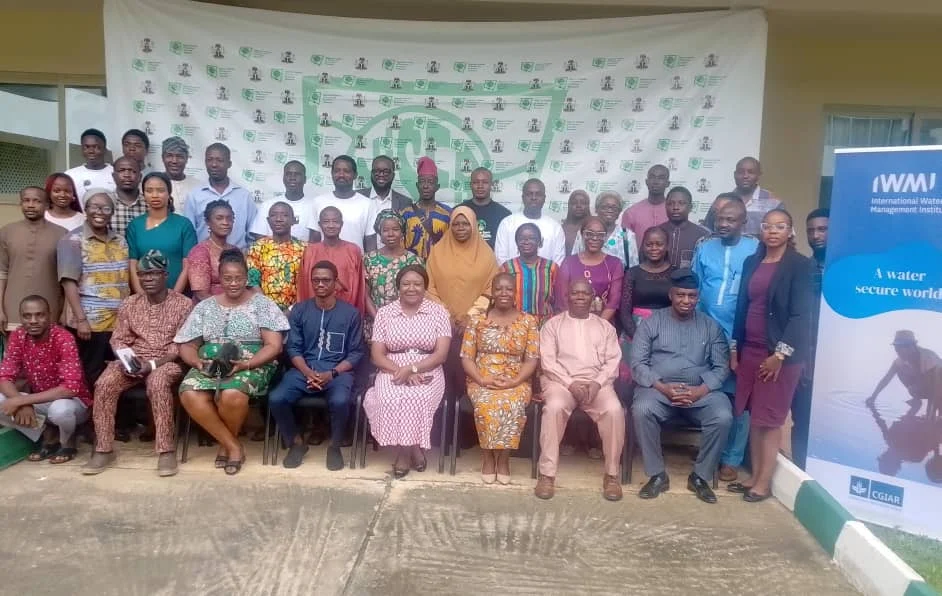
NISER,​‌‌⁠‍​​‍⁠⁠‍‌⁠‍⁠‌​​⁠‌​ IWMI Seek Urgent Reforms To Fix Nigeria’s Agricultural System

info

Published

on

IMG 20261106 WA00111.webp

By Suleiman Shehu

The Nigerian Institute of Social and Economic Research (NISER) and the International Water Management Institute (IWMI) say Nigeria must urgently reform its agriculture to boost productivity and tackle food crises.

The institutions made the call at a stakeholders’ seminar and validation roundtable in Ibadan on Thursday.

The seminar, themed “Strengthening Nigeria’s Agrifood Knowledge and Innovation System for Demand-Driving Scaling (AKIS-DS), was organised by NISER in collaboration with IWMI.

It was organised under the CGIAR’s Scaling for Impact program.

The News Agency of Nigeria (NAN) reports that the AKIS-DS initiative seeks to understand how Nigeria’s agricultural knowledge and innovation system works.

This includes the roles and relationships among research institutions, extension and advisory services, government agencies, private sector and farmer organisations.

NISER Director-General (DG), Prof. Antonia Simbine, said Nigeria’s persistent food inflation and rising food insecurity show the need to reform agricultural knowledge and innovation systems.

Simbine said it was unacceptable that Nigeria’s agriculture continues to face high food inflation and insecurity.

According to her, the sector contributes approximately 28 per cent of Gross Domestic Product (GDP) and employs 50 per cent to 70 per cent of the rural workforce.

Simbine emphasised that Nigeria’s food crises should not be exclusively attributed to prevailing conflicts and global developments, saying longstanding structural weaknesses in the agricultural sector also contribute significantly.

She said the predominance of smallholder farmers cultivating less than two hectares, heavy dependence on rain-fed agriculture, outdated farming technologies and post-harvest losses were among the factors undermining food production.

The DG also identified climate change and insecurity across major food-producing communities as critical challenges confronting the agricultural sector.

She was concerned that insecurity had disrupted farming activities and forced many rural residents to abandon their communities in states such as Plateau and Benue, recognised for their agricultural contributions.

Simbine called for improved agricultural research, modernisation of fertiliser practices, sustainable land management, mechanisation and infrastructural investment to boost productivity.

She emphasised the need to accelerate the adoption of climate-smart and digital agricultural technologies, reminding research institutions of their responsibility to generate relevant innovations and ensure they reach smallholder farmers.

The IWMI Country Focal Point in Nigeria, Dr Charity Osei-Amponsah, said developing agricultural technologies alone without effective mechanisms to ensure innovations reach the intended beneficiaries was inadequate.

Osei-Amponsah said agricultural technologies must reach the right users, particularly smallholder farmers, and be adopted and used effectively to improve productivity and access to markets and finance.

She further stressed the importance of replicating successful innovations across different farming communities and states to expand their impact.

Osei-Amponsah maintained that stronger collaboration among agricultural stakeholders, improved knowledge-sharing mechanisms and institutional reforms were necessary to ensure research findings translated into practical benefits for farmers.

In his presentation, IWMI intern, Mr Mubaraq Owolabi, identified the need to strengthen connections among research institutions, extension services, farmers and financial institutions.

Owolabi further said that ensuring a monitoring and evaluation system would strengthen Nigeria’s agricultural innovation.

“Strengthening these institutional linkages and promoting effective coordination among stakeholders are essential to ensuring that agricultural research translates into practical benefits for farmers in Nigeria,” he said. (NAN)

Edited by Moses Solanke

Continue Reading

Trending