News
2027: APC Begins Uploading Governorship, Assembly Candidates to INEC Portal


The All Progressives Congress (APC) has begun uploading the names of its governorship and State Houses of Assembly candidates to the Independent National Electoral Commission (INEC) Candidate Nomination Portal (ICNP) ahead of the 2027 general elections, as the party moves to beat the August 8 submission deadline.
Findings at the APC National Headquarters in Abuja showed that the party’s Information and Communications Technology (ICT) department started processing the nomination documents on Saturday.
The exercise covers 28 governorship candidates and 993 State Houses of Assembly candidates across the country.
The party is expected to give priority to 16 serving governors seeking second-term re-election. They include Governors Umo Eno of Akwa Ibom, Hyacinth Alia of Benue, Uba Sani of Kaduna, Abba Yusuf of Kano, Dikko Radda of Katsina, Nasir Idris of Kebbi, Umaru Bago of Niger, Caleb Mutfwang of Plateau, Ahmad Aliyu of Sokoto, Agbu Kefas of Taraba and Dauda Lawal of Zamfara, among others.
APC is also expected to upload the names of 12 first-time governorship candidates, including Obafemi Hamzat in Lagos, Solomon Adeola in Ogun, Ogundu Kingsley Chinda in Rivers, Eric Opah in Abia, Mohammed Abubakar in Bauchi, Mustapha Gubio in Borno, Jamilu Gwamna in Gombe, Ahmed Aliyu Wadada in Nasarawa and Baba Malam Wali in Yobe.
Rivers State Governor Siminalayi Fubara is the only APC governor who will not be seeking a return ticket after withdrawing from the governorship race in May. Announcing his decision at the time, Fubara said he stepped aside in the interest of the state.

He said, “Rivers State is bigger than any individual, and at this critical moment, the peace, stability, and unity of our dear state must take precedence over every personal interest.”
He also appealed to his supporters to remain calm. He said, “To my supporters who stood firmly with me throughout this journey, who gave their time, resources, prayers, and unwavering hope, I offer my deepest gratitude. I understand the disappointment, the anger, and the pain many of you may feel.”
Governorship elections will not be conducted in Anambra, Bayelsa, Edo, Ekiti, Imo, Kogi, Ondo and Osun because of their off-cycle election calendar. The APC had earlier uploaded the names of its presidential and 469 National Assembly candidates.
A source within the party’s National Working Committee (NWC) said a special committee was established to ensure that only properly verified nominations are uploaded to the INEC portal.
According to the source, “The party has set up a special committee headed by Hon. Jibrin Bancir, the Principal Private Secretary to the APC National Chairman.”
The source added, “The committee is saddled with the responsibility of collecting and verifying all nomination forms from State Chairmen before handing them over to the ICT unit. We are leaving nothing to chance ahead of the August 8 deadline for the closure of the INEC portal.”
Under Section 29(1) of the Electoral Act 2026, political parties are required to submit the names of candidates they intend to sponsor, together with the required affidavits and statutory declaration forms, within the timeline fixed by INEC.
Unlike previous elections where political parties could make last-minute changes through physical submissions, the new law imposes strict penalties for late submissions or changes after the portal closes. INEC opened the ICNP portal on July 18 and it is scheduled to shut automatically at 6:00 p.m. on August 8.
Despite the ongoing upload, the final list of State Houses of Assembly candidates is still being reviewed, with some names expected to be replaced following recommendations by the party’s Primary Elections Appeal Committee.
APC National Publicity Secretary Felix Morka had earlier disclosed that the party received hundreds of petitions after its primary elections, making further reviews necessary.
According to Morka, “The party received over 700 petitions following the shadow elections held in May. The outcome of the primary appeal committee reports is being closely studied, and its implementation may necessitate the dropping and replacement of some names to ensure justice and party cohesion before the INEC deadline.”




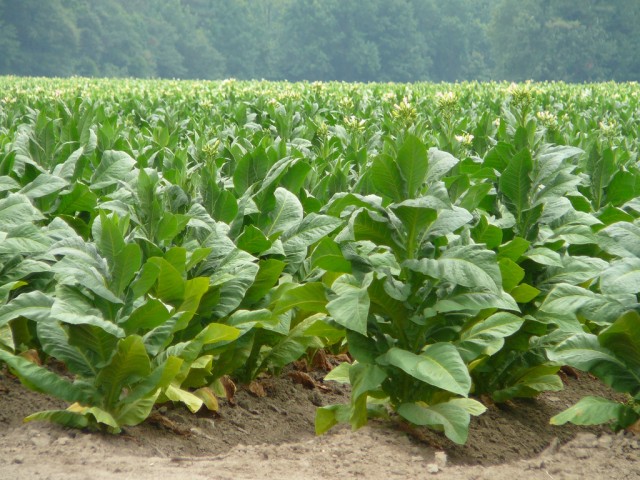

A new analysis by the World Health Organisation (WHO) has revealed that tobacco-leaf production in Africa increased by almost nine per cent between 2012 and 2024, despite a nearly 19 per cent decline in global production.
The increase, according to the findings, is raising concerns about the health risks faced by tobacco farmers and workers, as well as the wider environmental and social consequences of tobacco cultivation.
Africa produced more than 639,000 tonnes of tobacco leaf in 2024, representing about 11 per cent of global tobacco-leaf production, the analysis noted.
The findings showed that tobacco production is highly concentrated in five countries: Zimbabwe, Malawi, Tanzania, Mozambique and Uganda.
East Africa alone accounts for nearly 90 per cent of tobacco-leaf production on the continent.

Health risks
Vinayak Prasad, head of the Tobacco Free Initiative at WHO, said tobacco farming exposes workers and their families to serious health risks, while also damaging the environment and potentially trapping farmers in cycles of debt.
Mr Prasad said the issue extends beyond tobacco control and should also be viewed through the lens of health, trade, development and environmental sustainability.
“This is not just a tobacco-control issue. It is a health, trade, development and environmental issue,” he said.
The analysis identified green tobacco sickness as one of the direct health risks faced by tobacco farmers.
The condition occurs when nicotine from wet tobacco leaves is absorbed through the skin during handling.
Farmers and other workers may also be exposed to pesticides and tobacco dust during cultivation and processing, the report noted.
Beyond direct exposure, tobacco farming also consumes large amounts of land, water and other natural resources that could otherwise support food production and sustainable livelihoods.
The practice is also associated with soil degradation, deforestation and greenhouse gas emissions from the curing of tobacco leaves.
Children at risk
WHO also raised concerns about children from poor households being involved in tobacco farming.
According to the organisation, children in some low and middle-income countries miss school to work on tobacco farms and supplement their family income.
The report said this could further expose children to the health and social risks associated with tobacco cultivation while affecting their education.
Tobacco’s economic burden
The health concerns come alongside an increase in Africa’s cigarette imports.
According to the analysis, the continent’s cigarette import bill more than doubled between 2012 and 2024, rising from $833 million to $1.77 billion.
The findings also challenged the argument that tobacco is economically indispensable to most countries.
Tobacco-leaf exports account for more than one per cent of gross domestic product in only a small number of economies, including Malawi and Zimbabwe.
For most countries, the economic contribution of tobacco production and trade is limited, while the health, social and environmental costs remain substantial, WHO said.
Mr Prasad said countries needed support to move away from economic dependence on tobacco and provide alternative livelihoods for farmers and workers.
“Countries need support to move away from economic dependence on a product that harms health, farmers and the environment,” he said.
He said the findings showed why trade and development policies needed to be aligned with public health and sustainable development goals.
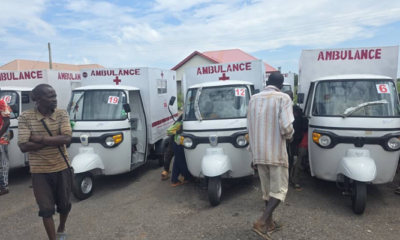
READ ALSO: FG begins nationwide distribution of ambulances to strengthen emergency care
Alternative livelihoods
Under Articles 17 and 18 of the WHO Framework Convention on Tobacco Control, countries are encouraged to promote economically viable alternatives for tobacco workers and growers.
The provisions also call on countries to protect the environment and human health from the effects of tobacco cultivation.
WHO called for stronger support for countries seeking to diversify away from tobacco production, protect farming communities and strengthen tobacco-control policies.
The organisation also urged countries to reduce the economic burden associated with tobacco use and trade.
Discover more from Premium Times Nigeria
Subscribe to get the latest posts sent to your email.

-

 Events1 day ago
Nigeria’s Christian Leaders to Unite in Abuja for First Lausanne Congress in Over 10 Years (Register Now)
-
News3 days ago
Sony Music, Warner sue Anthropic, alleging a “brazen campaign” of intellectual property theft
-
Business3 days ago
OpenAI to end Cursor deal with SpaceX over contract, safety concerns
-
Health3 days ago
FG deploys task force to respond to diphtheria outbreaks in Kano, Katsina