Connect with us

News

Yakasai accuses Kano government of blocking ADC campaign billboards

info

Published

on

African Democratic Congress (ADC) member Salihu Tanko Yakasai

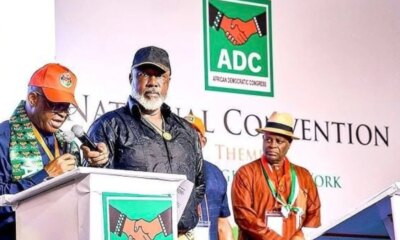
Prominent African Democratic Congress (ADC) member Salihu Tanko Yakasai has accused the Kano State Government of preventing the opposition party from putting up campaign billboards across the state.

Yakasai made the allegation in a statement shared on his Facebook page on Wednesday.

He claimed that the administration of Governor Abba Kabir Yusuf had restricted the ADC from using billboards to promote its political activities in Kano.

The state government has previously introduced rules governing outdoor advertising and the display of political posters.

In June 2023, the government announced restrictions on indiscriminate outdoor advertising and poster pasting. It directed individuals and organisations to use approved billboards and electronic platforms.

However, it was not immediately clear whether the situation raised by Yakasai was connected to the general advertising regulations or a specific restriction placed on the ADC.

Reacting to the alleged development, Yakasai said, “I never imagined that the kind of oppression the APC is accused of carrying out in some states could happen in Kano.”

“The administration of Governor Abba Kabir Yusuf has prevented our party, the ADC, from erecting campaign billboards across Kano State,” Yakasai alleged.

He added: “Governor Abba, remember that power belongs to Allah. Remember where you came from before occupying this office.”

He further warned that political positions can change, saying those in power today may find themselves in a different situation in the future.

“Remember, no matter how far a stone is thrown, it will eventually fall to the ground,” he stated.

Yakasai also referred to Governor Yusuf’s past political experiences, saying some of the people the governor previously accused of oppression are now under his authority.

“Those you claim oppressed you yesterday are now under your authority, but you do not know where Allah may place you tomorrow,” Yakasai said.

He called on political leaders to show restraint and avoid actions that could be seen as suppressing opposition voices.

The Director of Media and Publicity to Governor Yusuf, Sanusi Bature Dawakin Tofa, was unavailable for comment as of press time.

Continue Reading
Click to comment

Leave a Reply

Your email address will not be published. Required fields are marked *

News

NPFL: VAR Is Not A Luxury, Technology Is Taking Over – Avonda Richard

info

Published

on

WhatsApp Image 2026 11 06 at 8.02.51 PM.jpeg

Avonda Richard, an ardent supporter of the Nigerian Premier Football League (NPFL) based in Ogba, Lagos State, has called for the introduction of Video Assistant Referee (VAR) technology in the domestic league, insisting that Nigeria must embrace modern football technology to improve officiating and strengthen the credibility of its football competitions.

READ ALSO: NPFL: VAR, Improved Referee Officiating Needed To Restore League Integrity – Ezekiel | Sports247 Nigeria

Speaking during Sports247’s Let’s The Fans Talk programme, Richard expressed concerns over the standard of refereeing in Nigerian football, acknowledging the efforts of match officials while pointing out the challenges affecting their performance, particularly inadequate training and facilities.

“To be honest, the Nigerian officiating sometimes is really, really poor. But I must also give it to them; they are trying their best,” Richard said.

He argued that some referees lack the necessary professional training and access to adequate facilities to prepare them for the demands of the game, stressing that officiating should be treated as a serious profession that requires proper development and continuous education.

Richard maintained that introducing VAR into the NPFL would help reduce officiating errors and bring Nigerian football closer to the standards of other competitive leagues.

“VAR is not a luxury because technology is taking over. So VAR is something that Nigeria needs to introduce in the Nigerian Premier League,” he stated.

Beyond the introduction of technology, Richard also called for improved television coverage of the domestic league, noting that Nigerian football deserves greater visibility and should be accessible to supporters in the same way they follow major European competitions.

“We should be having a Nigerian professional league that people can watch, just like when we watch Premier League, Italy and Germany on the screen,” he added.

He believes that increased broadcast coverage would attract more attention to the NPFL, create greater awareness among football supporters and encourage accountability within the league.

Richard’s comments highlight the growing conversation around the need for improved refereeing standards, investment in modern technology and greater visibility for Nigerian football as the NPFL continues to seek stronger recognition within African football.

Continue Reading

Business

CBN issues regulations for non-security virtual assets, effective November 5,

info

Published

on

BY NKECHI NAECHE-ESEZOBOR—The apex regulator, the Central Bank of Nigeria (CBN) on Friday  issued regulations for the Operations of Non-Security Virtual Assets in Nigeria, setting out a framework for licensing, regulating and supervising stablecoins, virtual asset service providers and related activities.

According to a circular to virtual asset service providers and stakeholders in the financial services industry, the apex bank said the regulations are meant to promote responsible innovation, strengthen the integrity of the Nigerian financial system and provide an appropriate framework for emerging digital payment instruments.

The CBN said the regulations are issued under the CBN Act, 2007, the Banks and Other Financial Institutions Act, 2020, and other applicable laws. It described them as a comprehensive, risk-based framework covering the licensing, authorisation, regulation, supervision and oversight of non-security virtual assets in Nigeria.

The framework covers stablecoins, Deposit Money Tokens, virtual asset service providers, virtual asset payment services, platform-facilitated peer-to-peer services, and custody, transfer, remittance, clearing and settlement activities.

The regulations also set requirements on the classification and designation of regulated tokens and activities, and on the licensing of issuers and providers of non-security virtual asset services. Other areas covered include capital, reserve-backing, liquidity and redemption; corporate governance, risk management and internal controls; and technology risk, cybersecurity and operational resilience.

They further address the safeguarding of reserve and customer assets; customer protection, disclosures and complaints management; and anti-money laundering, counter-terrorist financing and counter-proliferation financing obligations. Sanctions screening, transaction monitoring, blockchain analytics, Travel Rule compliance, counterparty due diligence, regulatory reporting, supervisory access, information sharing, enforcement, administrative sanctions and orderly wind-down arrangements are also included.

The CBN said the regulations apply to persons carrying out regulated activities in or from Nigeria, those directing such activities at persons in Nigeria, and those whose activities may materially affect the country’s payments system, financial system, foreign exchange market or financial stability. They may apply whether or not the person has a physical presence in Nigeria.

The apex bank said the regulations do not displace the statutory mandate of the Securities and Exchange Commission or any other competent authority. Activities involving security virtual assets, securities, investment contracts or other capital-market products remain subject to the capital-market regulatory framework. Where an activity involves both non-security virtual assets and matters under another authority’s mandate, approvals must be obtained from each competent authority.

All affected institutions, issuers, service providers, operators, promoters and other stakeholders are required to familiarise themselves with the regulations and comply fully with the applicable requirements.

The regulations take effect from November 5, 2026. The circular was issued by the CBN’s Payments System Policy Department.

The post CBN issues regulations for non-security virtual assets, effective November 5, appeared first on Business Today NG.

Continue Reading

Trending