Health
MTN, Gates Foundation launch AI initiative to improve maternal healthcare in Nigeria

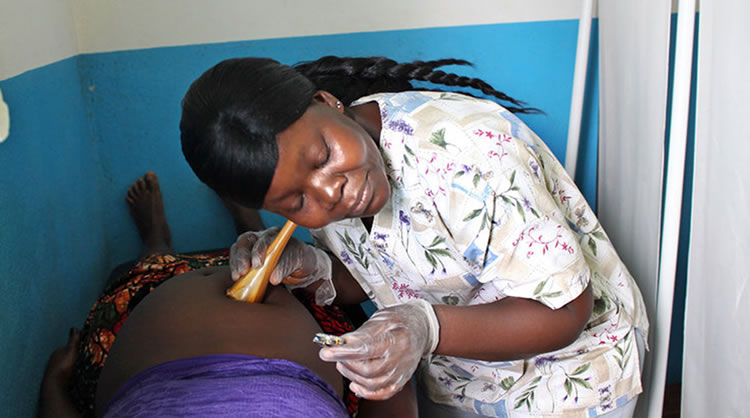
The MTN Group Foundation and the Gates Foundation have launched an artificial intelligence (AI) initiative in Nigeria to help frontline health workers identify pregnancy and childbirth complications earlier and give women access to maternal health guidance.
The Nigeria Maternal Health Multiplier, according to a press release on Tuesday, aims to reach 500,000 women by 2030, equip 5,000 frontline health workers with digital tools and support 500 health facilities to provide more consistent maternal healthcare.
The initiative will use AI, mobile technology and improved connectivity to support pregnant women, health workers and primary healthcare facilities.
The MTN Group noted that it will receive an initial investment of about $25 million between 2026 and 2030, comprising direct and in-kind contributions from MTN and the Gates Foundation.
According to the statement, the four-year partnership was announced at Semafor’s Next three billion event, on the sidelines of the 81st session of the United Nations General Assembly in New York.
Maternal Health in Nigeria
According to the statement, Nigeria has made progress in reducing maternal deaths over the past decade, but significant challenges remain.


Globally, maternal deaths have fallen by 40 per cent since 2000, but progress has stalled, while the risk of maternal death in sub-Saharan Africa remains about 250 times higher than in Western Europe.
“While Nigeria has made real progress in reducing maternal deaths over the past decade, a large burden remains to be addressed: The country accounts for nearly 30 per cent of all maternal deaths worldwide.”
Many of these deaths are preventable, but with only 59 per cent of women completing four or more antenatal care visits, warning signs often go undetected until it’s too late, it noted.
It added that “both the scale of that challenge and the urgency it represents are why Nigeria was selected as the first market for implementation of the Maternal Health Multiplier.”
How the programme will work
The initiative will combine three main interventions: include AI-enabled, phone-based decision-support tools for pregnant women and frontline health workers, affordable smartphones and mobile data for women, and improved internet connectivity at primary healthcare facilities.
The tools are expected to help health workers identify warning signs earlier and provide timely guidance, while giving pregnant women access to trusted health information throughout pregnancy, childbirth and the postnatal period.
MTN noted that the programme will build on the federal government’s Maternal and Neonatal Mortality Reduction Innovation Initiative (MAMII), which is being implemented under the Ministry of Health and Social Welfare’s Sector-Wide Approach.
The Coordinating Minister of Health and Social Welfare, Muhammad Pate, said the partnership would support existing health system reforms.
“Partnerships that work with our existing health systems, rather than around them, are exactly what’s needed to reach mothers who are still falling through the cracks,” Mr Pate was quoted to have said.
READ ALSO: SPECIAL REPORT: Shut clinic deepens healthcare crisis in Benue IDP camp
The Minister of Communications, Innovation and Digital Economy, Bosun Tijani, said the initiative reflects the type of collaboration needed to apply digital transformation to public services.
“For too long, the biggest barrier to improving service delivery in Nigeria, whether in health, agriculture, or education, has not been a lack of innovations, but a lack of focus on the foundational systems necessary to drive adoption,” Mr Tijani said.
Beyond technology
MTN Group President and Chief Executive Officer, Ralph Mupita, said the programme would seek to put locally relevant health information directly in the hands of women and health professionals.
“As artificial intelligence evolves, we can put trusted, locally relevant health insights directly into the hands of mothers and healthcare professionals, tailored to their unique needs and languages,” Mr Mupita said.
Gates Foundation Chief Executive Officer, Mark Suzman, however, stressed that the benefits of AI would depend on reaching people who might otherwise be excluded from such technology.
“AI has enormous potential to improve health, but only if its benefits reach the people who stand to gain the most,” Mr Suzman said.
Discover more from Premium Times Nigeria
Subscribe to get the latest posts sent to your email.







It started with a sharp pain in Musa Saidu’s stomach.
The 20-year-old initially thought little of it. But the pain was soon followed by fever, vomiting and frequent watery stools. Within hours, his condition had deteriorated.
This was August 2025, during a cholera outbreak in Bukkuyum Local Government Area of Zamfara State, where Mr Saidu and his family were living after fleeing their home in Dan Bago village following attacks by bandits.
Like thousands of people displaced by years of insecurity in the state, the family had already lost the stability of home. Now, as Mr Saidu became increasingly ill, they faced another problem: getting medical care.
His parents first tried what they could afford. They gave him some medicines and mixed a local herbal remedy with water, hoping his condition would improve. But it did not.
With the health facility serving their community no longer functional, the family eventually took Musa to the Orphan and Less Privileged Clinic (OLPC) in Bukkuyum town, where he was diagnosed with cholera.
But reaching a health facility did not immediately end their difficulties.
The clinic was struggling with an influx of cholera patients. Only three health workers were on duty, while essential medicines were unavailable.
Many residents affected by the outbreak were brought to the same facility, while some had to seek treatment elsewhere because of shortages of staff, medicines and space.
For displaced families such as Mr Saidu’s, the outbreak exposed a problem that went beyond cholera.

Years of insecurity have displaced many communities across Zamfara, forced health workers away from some rural areas and disrupted access to healthcare, safe water and disease surveillance. These are services that become particularly important during an outbreak of a disease that can kill within hours if severe dehydration is not treated.
When insecurity becomes a health crisis
Zamfara is one of the states hardest hit by the insecurity that has spread across north-western Nigeria over the past decade.
What began largely as cattle rustling has evolved into organised violence by armed groups commonly referred to as bandits. Communities have been attacked, residents killed or abducted and thousands forced from their homes.
The armed groups have also imposed levies on some farming communities, stolen livestock and harvests and carried out kidnappings for ransom.
Data obtained from the Mass Atrocities Tracker show that 28,974 people were killed across Nigeria between 2021 and 2025. Borno recorded the highest number, with 4,539 deaths, followed by Zamfara with 3,936 and Kaduna with 2,811.
Zamfara recorded the highest number of abductions during the same period, with 5,447 people kidnapped. Kaduna recorded 4,050 and Niger 3,331.
But deaths, abductions and displacement are only some of the consequences.
In Bukkuyum LGA, residents and health workers told The ICIR that insecurity has also weakened access to healthcare. Some communities have been deserted, while health workers have stopped providing services in areas they consider unsafe.
Reports in 2025 indicated that only about 200 of Zamfara’s more than 700 Primary Healthcare Centres (PHCs) were functional, with persistent insecurity blamed for the closure or abandonment of many facilities.
For residents of affected rural communities, the closures mean illness can require travelling several kilometres, sometimes through unsafe areas, before reaching a health worker.
For people displaced by violence, the risks are compounded by overcrowding, poor sanitation, poverty and limited access to safe water.
During a cholera outbreak, those conditions can become deadly.
Displaced, then confronted by cholera
Buba Muhammad had already fled his home in Sadawa with his family because of repeated bandit attacks when his son began vomiting and passing frequent watery stools.

The 40-year-old farmer and his family were living as displaced persons in Bukkuyum, where several families shared limited space and sanitation facilities.
Mr Muhammad immediately tried to find medical help.
There was no functioning health facility close to where they were staying.
“My first attempt when my son was affected was to go to a hospital, but there was no facility nearby,” he said. “I had to take him to a medicine shop.”
The medicines he obtained there did little to improve the boy’s condition.
As the vomiting and diarrhoea continued, Mr Muhammad decided to take him to General Hospital Bukkuyum, the nearest facility where he believed the child could receive appropriate treatment.
But another problem awaited them.
The hospital was struggling with patients arriving from communities affected by the outbreak.
“We didn’t receive the proper care we expected immediately because there were not enough staff,” he recalled.
“There was no bed space. We even kept our patient on the floor before a staff member later found us a bed.”
The illness also placed a financial burden on a family already displaced by insecurity.
Mr Muhammad said they spent heavily on transportation and medicines, including drugs they had to buy outside the hospital after receiving prescriptions.
“The only solution to ease the hardship of such unwanted incidents or outbreaks is to provide facilities in our local communities,” he said.
But he said restoring healthcare without addressing insecurity would leave another part of the problem unresolved.
“We need security in our locations because we are not safe; there are attacks every day and night in our locations. The government needs to double its efforts to end the problem.”
A preventable disease finds fertile ground
Cholera is an acute diarrhoeal disease caused by consuming food or water contaminated with the bacterium Vibrio cholerae. Without prompt treatment, severe cases can lead to rapid dehydration and death.
It is also largely preventable through access to safe water, adequate sanitation and good hygiene, while prompt administration of oral rehydration solution and other appropriate treatment can substantially reduce deaths.
Yet cholera has repeatedly affected communities in Zamfara State.
In 2023, a World Health Organisation (WHO) report recorded 907 suspected cholera cases in the state, representing about 28 per cent of Nigeria’s suspected cases during the period covered.
The state was affected again in 2024. WHO reported more than 700 cases and over 30 deaths across Zamfara and neighbouring Sokoto during the period covered by its report.
By 9 July 2025, Zamfara had recorded 1,619 suspected cases, six confirmed cases and 31 deaths across 12 of its 14 local government areas, according to a UNICEF situation report.
UNICEF said suspected cases increased by 30 per cent within one week, with children and young people accounting for 62 per cent of reported cases.
The crisis continued.
In August 2025, an outbreak in communities in Bukkuyum LGA killed at least eight people and affected more than 200 across 11 communities, according to residents and local officials cited by Reuters.
For residents already dealing with displacement, unsafe water and weakened healthcare services, the outbreak exposed how insecurity can magnify an otherwise preventable public health emergency.

The Nigeria Centre for Disease Control and Prevention (NCDC) identifies unsafe water, inadequate sanitation and poor hygiene as major factors driving cholera transmission.
In parts of Bukkuyum LGA, insecurity has made addressing those risks more difficult. Residents have been displaced into congested settlements, some health facilities are non-functional, and health workers say reaching remote communities for surveillance and other services can be dangerous.
For some patients, simply reaching treatment presents another risk.
For rural residents, treatment can mean a dangerous journey
In Masu community, Salihu Bello returned home one afternoon to find his two sisters seriously ill.

“They had stomach pain, and became very weak,” he recalled. “Later we realised it was cholera.”
With no health facility in the community, the family initially relied on local remedies.
But the sisters’ condition continued to worsen. Seeking treatment meant undertaking a difficult journey to Bukkuyum town. Before reaching the town, they had to cross a river, a challenge that has become even more dangerous since insecurity forced many healthcare workers to stop visiting remote communities.
“Sometimes health workers used to come to our community, but because of security problems they stopped,” Mr Bello said.
As night fell, the family began the trip. Fear of bandits lingered throughout the journey, but Mr Bello said concern for his sisters outweighed every other worry.
“At that moment, we were not thinking about insecurity. We only wanted to save them. It took about three hours before we received attention because we arrived very late at night,” he said.
When a health worker eventually prescribed medicines, he had to wake a medicine vendor before dawn to obtain them.
His sisters remained under observation for about 24 hours before their conditions improved.
For Mr Bello, the experience showed the cost of having no functioning healthcare facility nearby.
“If we have a health facility in our community, things will be easier, considering how quickly the disease can affect the human body,” he said.
“Before a patient from our community gets to the hospital, they suffer a lot. Having our own health facility would make access to treatment much easier.”
But the health facility is only part of what residents say they need.
In Masu and other communities around Bukkuyum, preventing cholera begins with something even more basic: clean water.
Unsafe water keeps the risk alive
In communities around Bukkuyum, residents said access to clean water remains a major challenge.
Some depend on streams for drinking, cooking and other household needs. In Dan Bago, residents said people and cattle sometimes rely on the same water sources.
For a community already vulnerable to cholera, such conditions increase the risk of transmission.
Nigeria’s 2021 Water, Sanitation and Hygiene National Outcome Routine Mapping (WASHNORM) report highlighted the scale of the country’s water and sanitation challenge.
The report, based on a survey of more than 24,600 households, estimated that approximately 179 million Nigerians, about 87 per cent of the population, lacked access to safely managed drinking-water services.
The situation was particularly difficult in northern Nigeria. The Northeast had the lowest access rate at just two per cent, compared with 29 per cent in the Southwest.
Although 67 per cent of the population had access to basic water supply services, about a quarter of Nigerians still relied on unimproved or surface water sources.
Muhammadu Sadawa, a community leader, said insecurity has made the situation worse by forcing residents from their homes and concentrating displaced families in already strained settlements.
“Another major challenge we have in our community now is insecurity,” he said. “Most of our people left the community because of banditry. Where we are now living is too congested and very dirty. That congestion helped the disease spread among us.”
Mr Sadawa said access to healthcare had also deteriorated.
Although there is a health facility in his community, he said it is no longer functional.
“We have a facility, but it is not in existence. There are no staff, no drugs. The building is dilapidated and almost collapsing,” he said.
During the cholera outbreak, residents therefore had to look elsewhere for treatment.
He said some families struggled to obtain care before outside assistance arrived, while others faced delays because of distance and the cost of treatment.
“Many people died, and it took a long time before we received any intervention. Some people were treated, some were not. I have a relative who spent over N50,000 on treatment. Many families went through the same thing,” he said.
For critically ill residents, reaching another health facility can itself be difficult.
Mr Sadawa said residents must cross a river to reach Bukkuyum town, where they can get more comprehensive medical care.
“When someone is sick, we have to cross a river before reaching the hospital. We need the facility renovated, and we also need a bridge or canoes to help us cross,” he said.
He estimated that more than 50 people in and around his community were affected during the outbreak, with some becoming ill in displacement settlements before being taken to Bukkuyum town for treatment.
Health workers struggle to reach vulnerable communities
At General Hospital Bukkuyum, Abdullahi Salihu remembers the pressure as cholera patients arrived from communities across the local government area.
“At the time of the outbreak, it was very tense and hectic considering how patients were being brought to the hospital,” he said.
“Some survived, some were quarantined, and unfortunately some died.”
According to Mr Salihu, insecurity complicated the response.
Patients who could leave affected communities were brought to the hospital. But health workers had limited options for people trapped in settlements that were difficult or unsafe to reach.
“As health workers, we faced a lot of challenges because of insecurity,” he said.
“Some people managed to bring patients from their communities because they had no other option. But for those who could not come out, there was little we could do for them.”
Mr Salihu said government officials, politicians and humanitarian organisations provided intravenous fluids, antibiotics, rehydration supplies and other support during the outbreak.
But insecurity was not the only challenge.
Many of the patients were displaced people who had lost livelihoods and struggled to afford transportation, food and other necessities.
“Most of them were displaced from their communities with nothing to eat,” he said. “Then the outbreak added another difficulty to their lives.”
Zaharadeen Abdullahi, a health worker at the Women and Children Welfare Clinic in Bukkuyum, also described insecurity as a major obstacle to preventing and responding to outbreaks.

“Insecurity is a major contributing factor to outbreaks like this,” he said.
“We have services, vaccinations and awareness programmes, but because of security challenges many health workers cannot reach vulnerable communities.”
Some affected settlements are more than 10 kilometres from health facilities, Mr Abdullahi said. In some areas, insecurity has also limited the transportation options residents can use.
“Some communities cannot use motorcycles because of security threats,” he said. “People have to walk long distances or use donkeys. Because cholera requires urgent treatment, these delays can lead to deaths.”
He said displacement had created additional risks.
“Most of the affected people are internally displaced persons living in congested conditions,” Mr Abdullahi said. “Many rely on unsafe water sources, and stagnant water is still being used for drinking and household activities.”
He acknowledged support from the Zamfara State government, UNICEF and other organisations during the outbreak but said greater investment was needed in health facilities, medical supplies and outreach to vulnerable communities.
Insecurity weakens disease surveillance
Shakir Balogun, an epidemiologist, said recurring cholera outbreaks in conflict-affected parts of Zamfara should not be viewed simply as a disease problem.

He said they also expose weaknesses in healthcare access and disease surveillance created or worsened by years of insecurity.
Mr Balogun said insecurity had affected the health system’s ability to reach some communities even before recent cholera outbreaks.
“When insecurity makes communities difficult to reach, children can be missed by immunisation programmes, cases of Acute Flaccid Paralysis (AFP) can escape surveillance, and cases of acute watery diarrhoea can similarly go undetected or reach treatment late,” he said.
“The pathogen changes; the health-system vulnerability does not.”
Mr Balogun said these weaknesses became particularly evident during the 2025 cholera outbreak.
According to him, the African Field Epidemiology Network (AFENET), with technical and financial support from the US Centres for Disease Control and Prevention, deployed eight Field Epidemiology Training Programme residents and a graduate to support Zamfara’s response between 11 September and 2 October 2025.
The team worked with state authorities in four high-burden local government areas.
ALSO READ: WHO, EU launch health support project as Nigeria battles multiple disease outbreaks
Mr Balogun said the response identified cases in inaccessible and insecure settlements. It also identified under-reporting linked partly to weak active case searches and insecurity, as well as delayed reporting and incomplete records.
Other challenges included transporting stool samples to the state reference laboratory, shortages of essential supplies outside initially prioritised LGAs and inadequate personnel in some health facilities.
The findings suggest that insecurity can affect almost every stage of outbreak control, from identifying a sick person and reporting a suspected case to testing samples and getting treatment to patients.
Mr Balogun said strengthening community-based surveillance could help close some of those gaps.
Trusted residents and community structures, he said, can help identify and report suspected cases when conventional health teams cannot safely reach affected settlements.
Treatment also needs to be brought closer to vulnerable communities.
“If insecurity means a severely ill patient has to travel several hours or cross an unsafe area before receiving ORS or intravenous fluids, geographical access itself becomes a determinant of survival,” he said.
He recommended establishing oral rehydration points and treatment units close to vulnerable communities, backed by reliable referral systems for patients who develop severe disease.
Authorities should also use surveillance and previous outbreak data to identify communities repeatedly affected by cholera and position essential supplies there before outbreaks escalate, he said.
“You do not want to begin moving ORS, IV fluids, chlorine and other essential supplies into a hard-to-reach community only after an outbreak has accelerated,” Mr Balogun said.
“We should use surveillance and historical data to identify recurrent hotspots and position supplies before the rainy season.”
Treatment alone will not stop recurring outbreaks
Bringing treatment closer to affected communities could save lives, but Mr Balogun said it would not eliminate the conditions that allow cholera to return.
He said safe water and sanitation remain fundamental.
Vaccination and effective case management can reduce infections and deaths during outbreaks, he said, but communities will remain vulnerable if they continue to depend on unsafe water and inadequate sanitation.
Mr Balogun recommended strategic use of oral cholera vaccines among high-risk populations and in communities with recurring outbreaks, particularly where insecurity makes immediate improvements to water and sanitation infrastructure difficult.
But he cautioned against treating vaccination as a replacement for those investments.
“Vaccination is an additional layer of protection, not a substitute for water, sanitation, surveillance and access to treatment,” he said.
Government turns to community-based response
The Zamfara State government said it has adopted community-based measures to maintain disease surveillance and provide basic cholera support in areas where insecurity makes conventional healthcare difficult.
The state Ministry of Health, working with the World Health Organisation (WHO) and other partners, has also begun developing a Multi-Hazard Incident Action Plan to strengthen preparedness and response to public health emergencies, including cholera.
Ahmad Muhammad, the Zamfara State epidemiologist, acknowledged the difficulty of reaching communities affected by insecurity.

He said one strategy has been to identify community health workers from insecure areas, bring them to safer locations for training and then send them back to support residents.
“We train them, particularly the community health workers there. So we train them and then allow them to go back to their community and support them,” he said.
Mr Muhammad said trained workers are provided with available medical supplies and asked to report suspected cases so health officials can track whether infections are increasing or declining.
He said the approach forms part of the state’s risk communication and community engagement strategy, under which people with health-related roles in affected communities are trained to support local outbreak response.
Patients who can safely be evacuated are moved to accessible areas for further treatment, including general hospitals and the treatment centre at the Infectious Disease Hospital in Gusau, he said.
He attributed the state’s reduced cholera burden this year, compared with the previous year, to interventions including community sensitisation, improved hygiene, and oral cholera vaccination.
“Community sensitisation and improvement of hygiene, oral cholera vaccination campaign last time. The burden of the disease has reduced this year compared to last year,” he said.
He said the government had also intensified water, sanitation and hygiene interventions, including measures aimed at reducing open defecation.
“So I think those strategies have really gone a long way in mitigating the impact,” he said.
But for residents of communities where health facilities remain closed or poorly equipped and safe water remains difficult to obtain, the conditions that make cholera dangerous have not disappeared.
This reporting was supported by the Centre for Journalism Innovation and Development (CJID).
Discover more from Premium Times Nigeria
Subscribe to get the latest posts sent to your email.

The World Health Organisation (WHO) has warned that gaps in routine immunisation are leaving Nigerian children vulnerable to preventable diseases, urging the government to increase domestic health financing and strengthen disease surveillance and outbreak preparedness.
Pavel Ursu, the WHO representative in Nigeria, raised the concern on Tuesday during the organisation’s Health Diplomacy Dialogue in Abuja, which brought together diplomats and health officials to discuss health security, disease outbreaks, global health financing and antimicrobial resistance.
Mr Ursu said Nigeria continued to face challenges in containing vaccine-preventable diseases, including measles and circulating vaccine-derived poliovirus, despite support from international partners.
He said the country’s immunisation programme must reach approximately eight million additional children annually, placing increasing pressure on the health system.
“If we want to maintain the same level of performance, we have to invest more,” he said.
Mr Ursu acknowledged support from Gavi, the Vaccine Alliance, and other partners in providing vaccines and related commodities but stressed the need for Nigeria to progressively increase domestic financing and assume greater responsibility for protecting its population.
He also highlighted changes in global health cooperation, including declining development assistance for health and ongoing discussions about reforming the global health architecture.
He said African countries needed to strengthen domestic financing, improve health system resilience, expand digital health services and promote local manufacturing of health commodities.
Mr Ursu said the dialogue was established to provide a platform for the WHO and diplomatic missions to exchange strategic information on public health developments, emerging threats and international health policy, including for embassies without dedicated development cooperation programmes.
He called for stronger international cooperation, including timely information-sharing and coordinated responses to outbreaks that could cross national borders.
Outbreaks expose gaps in health security
Speaking on health security, Alex Chimbaru, the WHO emergencies adviser, said Nigeria’s disease outbreaks reflected persistent weaknesses in immunisation coverage, disease surveillance and access to safe water and sanitation.
He said more than 700 children had been disabled by circulating vaccine-derived poliovirus in previous years, warning that the actual number could be higher.
Mr Chimbaru also highlighted cholera as a major public health concern, citing inadequate water, sanitation and hygiene infrastructure, insecurity and population displacement as factors complicating prevention and response efforts.
He said Borno State accounted for 96 per cent of cases in the affected area discussed during his presentation, highlighting the need to prioritise interventions in vulnerable communities.
According to him, the WHO, other United Nations agencies, Médecins Sans Frontières (MSF) and other partners supported the response through surveillance, logistics, case management, vaccination, risk communication and infection prevention and control.
Mr Chimbaru called for sustained investment in water and sanitation, functional public health emergency operations centres, rapid response teams and stronger cross-border coordination to prevent and contain outbreaks.
He also urged development partners to reinforce government-led health systems rather than establish parallel structures, stressing that sustainable financing and stronger primary healthcare services were essential to health security.
Abuja to host global conference on antimicrobial resistance
The dialogue also featured discussions on Nigeria’s preparations to host a global conference on antimicrobial resistance (AMR) in Abuja from 6 to 8 December.
Mary Bartuo, the WHO team lead for universal health coverage and life course, said the conference would seek to translate international commitments into measurable action, stronger accountability and sustainable financing.
READ ALSO: Non-communicable diseases caused 74% of global deaths in 2023 – WHO
She said AMR was associated with about one million deaths annually in the African Region and posed growing threats to food security, livestock production and economic development.
Ms Bartuo said priorities under the proposed Abuja Compact included responsible AMR use, infection prevention and control, vaccination, water and sanitation, equitable access to medicines and diagnostics, research, local manufacturing and sustainable financing.
She urged diplomatic missions to participate in the conference and support efforts to strengthen national and international responses to AMR.
The WHO officials called for sustained investment and stronger collaboration among governments, diplomatic missions and development partners to improve health security and strengthen countries’ capacity to prevent, detect and respond to public health threats.
Discover more from Premium Times Nigeria
Subscribe to get the latest posts sent to your email.
-

 News4 days ago
Petra Power looks to modernize energy for data centers and defense vehicles
-
News4 days ago
EuroMatch NPFL: Ikorodu City Return to Winning Ways as Salami, Ikechukwu Sink Kwara United in Lagos
-
News3 days ago
Microsoft’s Satya Nadella says AI models need an ‘emergency brake’
-
 News4 days ago
Troops nab three suspects, recover rifle in Plateau