
Health
SPECIAL REPORT: In Kaduna, a new intervention is saving women from excessive bleeding after childbirth

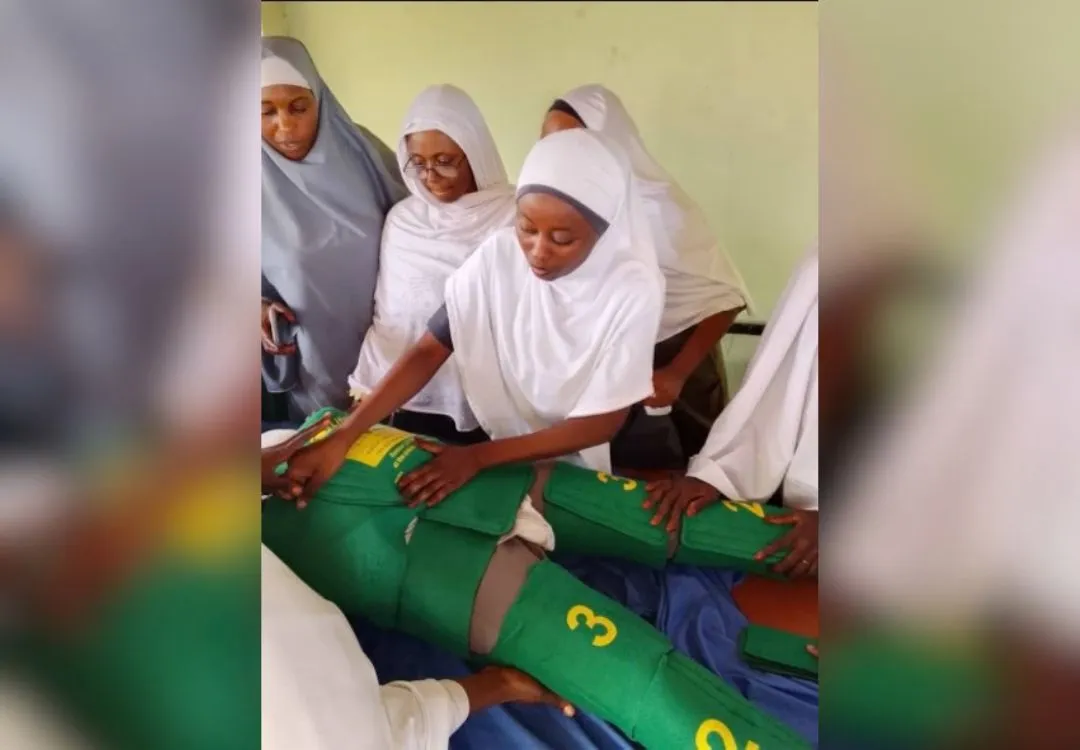
At a primary healthcare centre in Kaduna State, Zainab Garba remembers what health workers used to do when a woman began bleeding heavily after childbirth.
They would provide initial care, explain the seriousness of the situation to her relatives and prepare her for referral to a higher-level health facility.
For Ms Garba, an antenatal care provider at PHC Abdukwari in Sabon Gari LGA, who also assists with deliveries, there were limits to what health workers at her level could do.
But she said that began to change after she was trained to use the E-MOTIVE approach to detect and manage postpartum haemorrhage (PPH).
“With the presence of E-MOTIVE and the training given to us, we now do better,” she said. “The majority stop bleeding without even being referred.”

Ms Garba is one of the frontline health workers met during visits to primary healthcare facilities in Kaduna, where an intervention is attempting to address a longstanding challenge in maternal healthcare: shortages of skilled health workers to manage potentially life-threatening complications at the primary healthcare level.
The intervention, known as the Task Shifting Task Sharing (TSTS) project, is implemented by Pathfinder International in partnership with Impact Catalysts, with support from the Gates Foundation. It is designed to strengthen the capacity of Community Health Extension Workers (CHEWs) to take on specific maternal healthcare responsibilities at the primary healthcare level.
Under the project, 77 CHEWs have been trained across 77 primary healthcare facilities in nine LGAs: Kaduna North, Kaduna South, Igabi, Soba, Sabon Gari, Makarfi, Kaura, Jema’a and Zangon Kataf.
They are supported by nine clinical mentors, one in each LGA, and nine Reproductive Health Coordinators.
Programme records reviewed by PREMIUM TIMES show that the CHEWs received competency-based training in PPH prevention and management, basic emergency obstetric and newborn care and other maternal and newborn health services.
A key component of the training focuses on preventing, detecting, and managing PPH using the E-MOTIVE approach.
The deadly toll of PPH
PPH, or excessive bleeding after childbirth, is one of the leading causes of maternal deaths worldwide.
It can occur within the first 24 hours after childbirth, known as primary PPH, or between 24 hours and six weeks after delivery, known as secondary PPH.
A 2026 Lancet Series highlighted by the World Health Organisation estimates that PPH affects about 27 million women and kills nearly 43,000 women globally each year. It also indicates that PPH costs countries, health systems and families globally over $10 billion each year.
The burden is particularly high in poorer regions, with the WHO estimating that more than 85 per cent of deaths from PPH occur in sub-Saharan Africa and South Asia.
In Nigeria, PPH remains a major contributor to maternal mortality, accounting for an estimated 23 to 30 per cent of maternal deaths, according to WHO.
Recent surveillance data from Kaduna also show the continuing toll of PPH. A Kaduna State Primary Health Care Board review for the first quarter of 2026 identified PPH as the leading cause of maternal death among cases for which causes were detailed, with PPH-related deaths reported in Kudan, Birnin Gwari and Lere LGAs.
The finding followed a similar pattern in the last quarter of 2025, when the state’s community maternal and perinatal death surveillance report linked maternal deaths in several LGAs to PPH, often following deliveries outside health facilities.
In many cases, according to the WHO, there are no identifiable risk factors, making early detection and rapid treatment particularly important.
Lewis Aituma, a senior resident doctor in Obstetrics and Gynaecology, described PPH as “the obstetrician’s nightmare,” particularly in countries such as Nigeria, where access to emergency obstetric care remains inadequate.
He said women with multiple pregnancies, prolonged labour, fibroids, anaemia or previous Caesarean deliveries may face a higher risk.
If severe bleeding is not controlled quickly, he added, a woman can develop shock, organ failure and die.
A race against bleeding
Recognising excessive blood loss early and starting treatment quickly is therefore critical to preventing severe complications.
Under its latest guidance, WHO recommends objective measurement of blood loss after childbirth. Although PPH has traditionally been diagnosed when a woman loses at least 500 millilitres of blood after delivery, the latest guidance recommends earlier intervention when blood loss reaches 300 millilitres and is accompanied by abnormal vital signs.

One tool for doing this is a calibrated drape placed beneath the woman after delivery. It collects and measures blood, reducing reliance on visual estimation.
Once PPH is diagnosed, WHO recommends rapid use of the MOTIVE treatment bundle: massage of the uterus, oxytocic medicines to stimulate contractions, tranexamic acid to reduce bleeding, intravenous fluids, examination of the vaginal and genital tract, and escalation of care where necessary.
Together with early detection, the approach is commonly referred to as E-MOTIVE.
Evidence suggests it can make a substantial difference.
A large randomised trial involving more than 200,000 women in hospitals in Nigeria, Kenya, South Africa and Tanzania found that early detection and bundled treatment reduced, by about 60 per cent, the risk of a combined outcome of severe PPH, surgery for bleeding or death from bleeding compared with usual care.
But in Kaduna, having an effective approach is only part of the equation.
There must also be someone with the skills to use it when a woman starts bleeding.
Closing a workforce gap
Tanimu Argungu, Pathfinder International’s Kaduna State team lead, said the organisation found that many PHCs relied heavily on community-level health workers amid shortages of nurses, midwives and other highly skilled health personnel.
Programme data reviewed by PREMIUM TIMES show that CHEWs account for 28 per cent of Kaduna’s PHC workforce, while Junior CHEWs account for another 14 per cent. Together, they make up more than 40 per cent of the workforce at that level.
The data show that task shifting was already widespread before the intervention. At baseline, more than 84 per cent of the supported PHCs were already assigning some responsibilities to CHEWs and other cadres, but only 40 per cent of the staff performing those tasks had been trained to do them.
Mr Argungu said the TSTS intervention was designed to address this gap by training health workers to safely take on specific responsibilities.
“We first supported the state to adopt the policy and see how to implement it properly. We realised that many of the PHCs in Kaduna State were manned by CHEWs and JCHEWs,” he said.
He said facilities were selected partly based on maternal deaths previously reported through the state’s surveillance system, with CHEWs working in those facilities then selected for training.

Under the TSTS project in Kaduna, 77 CHEWs underwent an initial 9-day competency-based training before returning to their facilities, where clinical mentors continued to coach and mentor them.
Programme records reviewed by PREMIUM TIMES show that the mentorship component ran from October 2025 to August 2026, with nine clinical mentors conducting monthly facility-based coaching alongside LGA Reproductive Health (RH) coordinators.
After training, the CHEWs shared what they had learnt with colleagues who had not attended the initial sessions.
For Mr Argungu, the continued mentorship is critical.
“The mentorship session is key to any capacity building,” he said.
He said experience from previous training programmes showed that knowledge acquired during classroom sessions could decline after workers returned to their facilities without adequate follow-up.
He said some workers who did not attend the initial classroom training but participated in the cascade sessions and subsequent facility mentorship also showed improvement.
Adetoun Akor Aliu, Safe Motherhood coordinator at the Kaduna State Primary Health Care Board (KSPHCB), said shortages of nurses and midwives had already led PHCs to rely on CHEWs to provide some services.
Mrs Akor Aliu said the movement of health workers to federal institutions and outside Nigeria in search of better opportunities had contributed to workforce shortages.
“So task shifting, task sharing was already happening in Kaduna State,” she said.
What the Pathfinder-supported intervention did, Mrs Akor Aliu explained, was to make the practice more structured by concentrating on what CHEWs could be trained and permitted to do at the facility level.
A new approach to detecting PPH
At PHC Abdukwari in Sabon Gari LGA, Aisha Labaran, a CHEW, demonstrated how the training has changed the response to bleeding after delivery.
“Before, when we had a PPH case, we used to refer,” she said. “But now, if we have, we treat them through the E-MOTIVE procedure.”
One important change is how workers determine the amount of blood a woman has lost.
Before the intervention, visual estimation could play a major role. Now, Ms Labaran said, workers use a calibrated drape to collect and measure blood after childbirth.
WHO recommends objective measurement of blood loss because visual estimation can delay recognition of dangerous bleeding.

Ms Labaran said health workers monitor women after delivery and begin the PPH response once the diagnostic criteria are met.
She estimated that the facility had managed about 10 PPH cases since she received the training.
She said the knowledge was also spreading beyond the initially trained worker, with other technical staff benefiting from training and mentorship at the facility.
Rabiu Abdullahi, the officer-in-charge of PHC Abdukwari, said the facility previously relied on referrals for women who developed PPH because workers lacked the skills to manage the condition.
Mrs Abdullahi said the facility recorded five PPH cases in the two years preceding the intervention, all of which were referred for higher-level care.
She said three cases were referred to TundunWada Teaching Hospital, while two were referred to Major Ibrahim Abdullahi Memorial General Hospital.
She said the facility now begins managing PPH cases when they occur, rather than automatically referring every case.
“We usually referred patients with PPH to a secondary facility because we did not have the competence and skills to handle it,” she said.

Mrs Abdullahi said the training has strengthened the facility’s ability to monitor women in labour, recognise danger signs and begin managing PPH when it occurs.
She said the knowledge has also been passed on to other CHEWs at the facility, with five health workers trained.
Aisha Sambo, the Reproductive Health coordinator for Sabon Gari LGA, said nine health workers had been trained under the programme in the LGA.
Mrs Sambo monitors maternal health services across health facilities in the LGA.
She said facilities that previously relied heavily on referrals for PPH were increasingly managing cases at the PHC level following training and mentorship under the TSTS project.
What changed at Mando PHC
At Mando PHC in Afaka Ward, Igabi LGA, Hadiza Abdullahi described a change in practice.
The community health worker said some equipment and medicines used in responding to obstetric emergencies were either unfamiliar to her or not routinely used before her training.
For instance, she said she previously relied on visual estimation to judge blood loss and had never used a calibrated drape.
She also said she did not know how to use tranexamic acid for PPH or properly apply a non-pneumatic anti-shock garment, which can help stabilise a woman suffering severe blood loss while treatment or referral is arranged.
“Before, if the woman is bleeding, we can only give her misoprostol and oxytocin and refer her,” Ms Abdullahi said.
Ms Abdullahi said the facility handled several PPH cases before the intervention and referred them for higher-level care, although she could not provide records showing the exact number.

Now, she said, workers follow a more structured response, allowing them to begin managing the bleeding while determining whether the woman needs higher-level care.
Ms Abdullahi said the facility has managed about 20 PPH cases since the intervention began.
She said preparation has also changed. Rather than waiting until a complication develops, Ms Abdullahi said workers prepare emergency materials before a delivery so they can respond more quickly if something goes wrong.
Ms Abdullahi was the only worker from her facility who attended the initial training, but she said she subsequently shared what she learned with about 20 colleagues.
One of those colleagues was Hajara Yunusa, a CHEW at Mando PHC, who said she learnt the E-MOTIVE approach from Ms Abdullahi after the initial training.
Ms Yunusa said the sessions improved her understanding of how to recognise and manage PPH and also strengthened her skills in conducting deliveries.
“I learnt E-MOTIVE from Hadiza Abdullahi. I now know how to manage a woman with PPH at the PHC,” she said. “There were a lot of things I didn’t know about conducting deliveries before, which I now know after the training.”
Kyauta Isiaka, a public health midwife and TSTS clinical mentor covering Mando PHC and eight other facilities in Igabi LGA, said mentorship allows workers who did not attend the initial training to participate in practical sessions at the facility.
During her visits, she observes workers, identifies gaps and reinforces skills.
She said health workers also contact her when they encounter difficulties outside scheduled mentorship visits.

Mrs Isiaka said there was still a need for more health workers to receive comprehensive training rather than relying solely on knowledge passed down by colleagues.
“There is a need for some of the health workers to still have the complete training if possible,” she said.
What the records show
Beyond the accounts of individual health workers, programme monitoring records reviewed by PREMIUM TIMES provide some indication of what has happened across the supported facilities.
Between October 2025 and June 2026, mentored CHEWs attended 4,337 deliveries across the supported PHCs, according to the records.
During the same period, the programme recorded 192 PPH cases managed at the PHC level, 3,323 postpartum family planning insertions and 9,085 postnatal care services across the supported facilities.

The records state that some PHCs now manage PPH cases that would previously have been referred, while workers have also been trained to stabilise complications before referral when higher-level care is required.
Fatima Ma’azu, programme officer for the TSTS project, said the training had strengthened the ability of CHEWs to respond to PPH at the facility level and reduced the need for referrals.
“So far, so good, we have recorded zero maternal mortality as a result of PPH, and we have reduced referrals because the CHEWs are able to prevent and manage PPH where it happens,” she said.
More women coming to health centres
The intervention also depends on something that training alone cannot solve: women must reach health facilities before workers can help them.
The importance of reaching a health facility is also reflected in the state’s mortality surveillance. Kaduna’s Q1 2026 review found that all the maternal deaths for which the circumstances were explicitly detailed followed home deliveries involving unskilled providers.
Mrs Isiaka, the public health midwife, said community volunteers and Ward Development Committees are being used to encourage pregnant women to attend antenatal care and deliver at health facilities.
She said community structures refer women and promote facility delivery during meetings and household engagement.
Abdu Zaria, chairman of the Ward Development Committee in Afaka Ward, Igabi LGA, said the committee works with community and religious leaders to encourage pregnant women to seek care at the PHC rather than remain at home during pregnancy and childbirth.
Mr Zaria said residents had also noticed changes since more women began using the facility. He said reports of women dying during pregnancy had become rare in the community.
Mr Argungu, Pathfinder International’s Kaduna State team lead, said distrust of facilities was one of the early challenges encountered by the project, particularly where communities knew that skilled personnel were limited.
He said community engagement accompanied the health worker training to rebuild confidence in the facilities.
Sustainability efforts
The TSTS intervention was designed as a two-year project. Mr Argungu said it subsequently received a no-cost extension into early 2027, while attention increasingly shifted towards state ownership.
Programme documents reviewed by PREMIUM TIMES show that Kaduna has developed a N619.675 million Costed Implementation Plan covering 2025 to 2027.
The documents state that the plan was formally adopted by the Kaduna State Ministry of Health and the State Primary Health Care Board.
The plan covers regulatory support, quality of care, sustainability, clinical care organisation and monitoring and evaluation.
But the state says its plans for task shifting extend beyond the Pathfinder-supported project.
Mrs Akor Aliu said the state does not expect the training and mentorship of CHEWs to stop when Pathfinder’s support ends.
The reason, she said, is straightforward: “CHEWs remain more widely available across many PHCs than nurses and midwives.”

Mrs Akor Aliu said the state government has continued training frontline health workers in maternal and newborn healthcare, with further training planned.
She said more than 527 CHEWs have been trained on PPH and the E-MOTIVE approach across the state, while about 283 CHEWs have received training in essential newborn care, including newborn resuscitation.
“And presently, we have a training coming up soon strictly for 50 CHEWs,” she said.
Mrs Akor Aliu said mentorship is also continuing, with supervisors returning to facilities to assess how health workers are applying their skills and provide hands-on support where gaps remain.
Facility champions are also being selected to reinforce those skills between mentorship visits, she said.
“Continuous mentorship continues,” Mrs Akor Aliu said. “We go back, we see how they are doing, and then facility champions are being selected to continue that process.”
Programme records reviewed by PREMIUM TIMES provide some evidence of the transition, showing that the State Primary Health Care Board extended the TSTS mentorship approach to 14 LGAs in May and June 2026 without partner funding.
The transition plan also envisages reproductive health coordinators continuing monthly mentoring and incorporating TSTS quality-of-care tools into the state’s existing supervision system.
The documents further propose a dedicated budget line in the state’s 2027 Annual Operational Plan for mentorship, data reviews and related activities.
But financing remains a potential obstacle.
Mrs Akor Aliu acknowledged that state funding for health activities is not always released when required.
“Most times, the state funding is not released quickly, timely, because of cash-backing issues with the state government,” she said.
She said support from other organisations working in maternal and newborn health has helped the state continue training and mentorship activities.
Mr Argungu also identified financing as one of the challenges to expanding the intervention, saying the state may have to expand gradually if it cannot immediately fund implementation across all LGAs.
For Mrs Isiaka, sustaining the approach will require continued investment in both training and follow-up.
“We want the training to continue, and we also want the mentoring to continue,” she said.





Nearly 11 years after the adoption of the Paris Agreement, world leaders are preparing for another round of climate negotiations amid growing concerns that global commitments are not translating into action quickly enough to address the climate crisis.
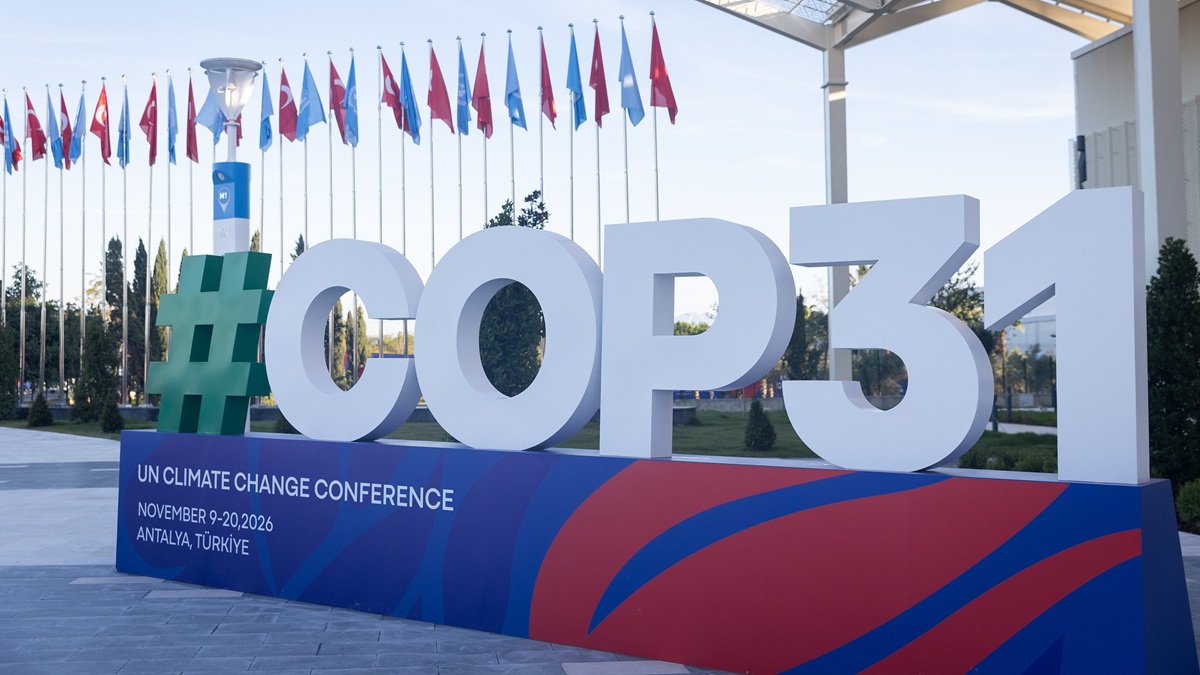
The 31st Conference of the Parties (COP31) to the United Nations Framework Convention on Climate Change (UNFCCC), scheduled for 9 to 20 November in Antalya, Türkiye, will bring together governments, climate scientists, development institutions, businesses and civil society organisations to negotiate the next steps in the global response to climate change.
The summit comes at a critical time, as countries face increasing pressure to reduce greenhouse gas emissions, accelerate investment in clean energy and protect communities already experiencing the effects of rising temperatures.
Yet some of the most difficult questions in international climate negotiations remain unresolved.
Who should pay for climate action? How quickly should countries move away from fossil fuels? And how can developing economies pursue economic growth while reducing emissions and protecting vulnerable populations?
These questions are particularly important for Nigeria and other African countries, where the consequences of climate change are becoming increasingly visible through flooding, drought, extreme heat and pressure on agricultural production.


Beyond the environmental consequences, the negotiations have implications for electricity access, public health, food security, employment and the ability of developing countries to attract investment in cleaner technologies.
COP31 is not expected to produce a single agreement comparable to the Paris Agreement. Instead, much of the work will centre on implementing existing commitments, resolving disagreements carried over from previous conferences and establishing clearer pathways for financing climate action.
The central test will be whether countries can move beyond repeated declarations and agree on practical measures that deliver measurable results.
An unusual leadership arrangement
One distinctive feature of COP31 is the arrangement between Türkiye and Australia, which will share responsibilities for organising and leading the conference.
Türkiye will host the summit, with its Minister of Environment, Urbanisation and Climate Change, Murat Kurum, serving as COP president. Australia’s Minister for Climate Change and Energy, Chris Bowen, will serve as president of negotiations.
The arrangement followed a compromise after both countries pursued competing bids to host the conference.
Under the agreement, Türkiye will oversee the presidency and action agenda, while Australia will lead the formal negotiations.
The partnership is significant because the two countries approach climate policy from different economic positions.
Türkiye is an emerging economy seeking to expand industrial development and energy security, while Australia is a developed economy with substantial fossil fuel production and exports.
Their leadership will therefore be tested by the same disagreements that have complicated previous climate summits, particularly those concerning fossil fuels, climate finance and the responsibilities of developed and developing countries.
The Turkish presidency has placed implementation, electrification, green industrial development and resilient infrastructure among its priorities.
One of its flagship initiatives is the 35-by-35 Global Electrification Pledge, which seeks to increase electricity’s share of global final energy consumption to 35 per cent by 2035, from just over 20 per cent.
The initiative is intended to encourage greater use of electricity in transport, buildings and industry, supported by cleaner power generation, modern electricity grids and energy storage.
However, the pledge forms part of the presidency’s voluntary action agenda rather than a binding agreement negotiated by all countries.
This distinction matters because announcements made by summit organisers do not automatically become obligations under the UN climate process.
The World Leaders Climate Action Summit, scheduled for 11 and 12 November, will provide an early indication of the political support available for these priorities.
The finance question remains unresolved
Climate finance is likely to be among the most contentious issues in Antalya.
Developing countries have long argued that they cannot be expected to reduce emissions and adapt to climate impacts without substantial financial support from wealthier nations, which bear greater historical responsibility for greenhouse gas emissions. This principle is reflected in Article 9 of the Paris Agreement, which requires developed countries to provide financial resources to support developing countries’ mitigation and adaptation efforts.
At COP29 in Baku, Azerbaijan, in 2024, countries agreed that developed nations should take the lead in mobilising at least $300 billion annually in climate finance for developing countries by 2035. The agreement also called for efforts to scale up finance from all public and private sources to at least $1.3 trillion annually by the same year.
The two figures are not interchangeable. The $300 billion target is the new collective finance goal led by developed countries, while the wider $1.3 trillion ambition is expected to draw on a broader range of sources, including private investment.
For developing countries, the concern is whether the money will be available on affordable terms and reach the communities and sectors most exposed to climate risks.
A major disagreement concerns the responsibility of developed countries to provide financial resources under the Paris Agreement.
Developing countries want discussions to address these obligations, particularly the provision of public finance. Some wealthier countries favour a broader approach that includes improving access to finance and expanding the range of contributors.
For Nigeria, the funding needs are substantial.
The country requires investment in renewable energy, electricity infrastructure, climate-resilient agriculture, flood management and early-warning systems. Many of these interventions will depend on concessional finance and public investment, rather than private capital alone.
The question at COP31 will be whether countries can make progress on the scale, quality and accessibility of climate finance, rather than simply restating funding ambitions.
Fossil fuels and the just transition
The future of fossil fuels will also remain a difficult issue.
At COP28 in Dubai in 2023, countries agreed for the first time in a final climate decision to transition away from fossil fuels in energy systems in a just, orderly and equitable manner. The agreement also called for tripling global renewable energy capacity and doubling the rate of energy-efficiency improvements by 2030.
The decision marked a significant shift in climate negotiations. However, countries have continued to disagree over how to implement it, and the commitment has yet to translate into an agreed global roadmap for moving away from coal, oil and gas.
At COP30 in Belém, Brazil, in 2025, countries failed to secure a formal roadmap for the transition away from fossil fuels. The omission exposed the continuing divide between nations seeking faster action and those whose economies depend heavily on fossil fuel production.
The issue is particularly sensitive for Nigeria, where oil and gas remain important sources of government revenue and foreign exchange. At the same time, millions of people lack reliable electricity, while gas flaring, pollution and energy poverty continue to affect communities.
A transition that ignores these realities risks deepening existing inequalities. But maintaining dependence on fossil fuels without a credible plan for cleaner energy also exposes the country to economic and environmental risks as the global energy system changes.
This is where the just transition mechanism agreed at COP30 becomes important. Countries are expected to discuss its structure and implementation at COP31.
The mechanism is intended to strengthen international cooperation, technical assistance and capacity-building to help countries and workers navigate the shift to lower-carbon economies.
For Nigeria, a meaningful just transition must go beyond replacing one energy source with another. It should address the affordability and reliability of electricity, the future of workers in fossil fuel-dependent industries, the development of local clean-energy businesses and the needs of communities affected by environmental degradation.
Adaptation cannot wait
While emissions reduction receives considerable attention at climate summits, adaptation is equally urgent for countries already experiencing the effects of climate change.
Flooding, prolonged dry spells and rising temperatures are affecting livelihoods and infrastructure across Africa. In Nigeria, recurring floods have displaced communities, damaged homes and farms, disrupted transport and increased pressure on public services.
The effects extend beyond physical damage.
Extreme heat can affect workers’ productivity and health, while disruptions to agricultural production can worsen food insecurity. Poorer households often have fewer resources to recover from these shocks.
At COP30, countries agreed on 59 indicators to help measure progress towards the Global Goal on Adaptation. The indicators are intended to assess how countries are strengthening resilience in areas such as water, food systems, health and infrastructure.
However, agreeing on indicators does not automatically provide the resources needed to implement adaptation plans. Developing countries continue to demand more predictable funding, particularly for projects that may not attract private investment.
COP30 also called for efforts to at least triple adaptation finance by 2035. Questions remain over how the commitment will be measured and delivered.
Nigeria’s climate ambitions
Nigeria will arrive in Antalya with an updated climate commitment that sets out a more specific emissions-reduction pathway.
Under its third Nationally Determined Contribution (NDC 3.0), submitted in 2025, Nigeria targets an absolute emissions reduction of 168.2 million tonnes of carbon dioxide equivalent by 2030 and 184.9 million tonnes by 2035, using 2018 as its base year. These targets represent reductions of about 29 and 32 per cent, respectively, against the country’s 2018 net emissions. Nigeria also maintains its ambition to achieve net-zero emissions by 2060.
The plan includes commitments for the energy, industrial, agriculture, land-use and waste sectors. For the oil and gas industry, it targets zero routine gas flaring by 2030, alongside reductions in fugitive emissions from leaks and venting.
But the challenge is turning these commitments into functioning projects and measurable results.
Achieving these targets will require sustained investment in renewable energy, stronger electricity infrastructure, effective regulation and better coordination among government agencies and private investors.
This is particularly relevant to COP31’s proposed 35-by-35 electrification target.
A narrowing window for climate action
COP31 also comes as the international community prepares for the second Global Stocktake under the Paris Agreement, the process through which countries assess collective progress towards the treaty’s goals.
The first stocktake, concluded in 2023, found that global efforts were insufficient to keep the world on track to limit warming to 1.5 degrees Celsius above pre-industrial levels. Its outcome called for faster action on renewable energy, energy efficiency, deforestation and the transition away from fossil fuels.
The latest United Nations Environment Programme Emissions Gap Report reinforces the urgency. It warns that global temperatures are expected to exceed the 1.5-degree threshold, even as it argues that the scale and duration of that overshoot can still be limited through faster emissions cuts.
The report estimates that current national climate pledges, if fully implemented, would reduce emissions by only 11 to 15 per cent by 2035 compared with 2025 levels. A pathway designed to return global temperatures to 1.5 degrees by the end of the century would require emissions to fall by 45 per cent by 2035.
The United States’ absence from the official government delegation will also be notable.
The country formally withdrew from the Paris Agreement in January 2026, presenting another challenge to international cooperation at a time when stronger action from major emitters is needed.
Ultimately, the significance of COP31 will not be measured by the number of speeches, announcements or pledges made in Antalya. It will depend on whether countries can resolve outstanding disagreements, strengthen support for vulnerable nations and establish practical pathways for delivering commitments already on the table.
For Nigeria, the summit should be more than an opportunity to restate its climate ambitions. It is a chance to push for accessible finance, strengthen the case for investment in clean energy and ensure that the transition supports jobs, electricity access and livelihoods.
This report is published as part of the COP31 Reporting Fellowship of the Centre for Journalism Innovation and Development
Discover more from Premium Times Nigeria
Subscribe to get the latest posts sent to your email.
Health
Plateau Mega Medical Outreach Treats 17,603 Patients, Performs 724 Surgeries Across Three Zones

The Plateau State Government says its free Mega Medical Outreach has attended to 17,603 patients and performed 724 surgical operations across the three senatorial zones, significantly exceeding its initial target of 6,000 beneficiaries.
The Commissioner for Health, Dr Nicholas Baamlong, disclosed this on Saturday, November 7, 2026, while briefing journalists on the conclusion of the general phase of the exercise organised by Governor Caleb Mutfwang.

According to Baamlong, the outreach, which ran from October 19 to November 6, covered selected public health facilities across the Central, Southern and Northern Senatorial Zones, providing free consultations, laboratory investigations, eye care, dental services and major and minor surgical procedures successfully carried out with no deaths.
The figures released by the Ministry of Health show that the programme attended to 4,294 patients in the Central Zone, 5,625 in the Southern Zone and 7,684 in the Northern Zone.
Across the three zones, the government recorded 5,033 eye consultations, distributed 3,588 pairs of eyeglasses and performed 390 cataract surgeries. A total of 4,857 laboratory investigations and 1,334 dental consultations were also conducted.
The outreach further recorded 724 surgical operations, comprising 151 major and 573 minor surgeries. The procedures included myomectomies, hysterectomies, prostatectomies, thyroidectomies, caesarean sections and orthopaedic interventions.
The ministry also disclosed that 457 people were enrolled in the Plateau State Contributory Healthcare Management Agency (PLASCHEMA) during the exercise.
Baamlong said the 17,603 beneficiaries represented approximately 193 per cent above the initial target, describing the turnout as evidence of the demand for accessible and affordable healthcare services in the state.
However, the commissioner acknowledged that the outreach should not be treated as an isolated intervention, stressing the need to strengthen healthcare delivery across primary, secondary and tertiary health facilities.
He disclosed that Governor Mutfwang intends to institutionalise the programme as a regular intervention rather than a one-off exercise, dismissing suggestions that it was organised primarily because of the approaching election.
According to him, the programme had been planned earlier in the year but was delayed by the coordination, planning and engagement required with development partners, including German partners.
He explained that while emergency interventions, outbreak responses and ambulance services remain part of the ministry’s activities, the medical outreach is another component of the government’s broader healthcare strategy.
The commissioner said the long-term objective should be to strengthen existing health institutions to the point where elaborate medical outreaches would no longer be necessary, while ensuring that residents have regular access to essential healthcare services.
The programme is, however, not yet entirely concluded, as the government announced another three-week phase of specialised medical interventions at Plateau State Specialist Hospital, Jos, Jos University Teaching Hospital (JUTH) and Potters Specialist Hospital, Jos.
The next phase is expected to cover advanced orthopaedic, neurological, neurosurgical, urological and ear, nose and throat (ENT) surgeries for patients requiring more complex medical procedures.
The Permanent Secretary of the Ministry of Health, Mr Samuel Aliyu Tsoho, said the intervention cost millions of naira, while appreciating the governor, medical personnel and other stakeholders who participated in the exercise.
He particularly acknowledged health workers who travelled to rural communities and remained at designated facilities to provide services throughout the outreach.
While the government has presented the figures as a major achievement, the planned institutionalisation of the programme raises an important question about the sustainability of free medical interventions and the capacity of existing public health facilities to provide affordable services beyond periodic government-sponsored outreaches.
For thousands of residents who benefited from the exercise, the intervention provided access to treatments and surgeries that might otherwise have been financially difficult to afford. The challenge now is to translate the intervention into lasting improvements in healthcare access, infrastructure and service delivery across Plateau State.
-

 News7 hours ago
Troops Arrest Suspected Gunrunner, Neutralise Two Terrorists in Plateau
-
News1 day ago
Makinde Visits COCIN Headquarters in Jos, Urges Christians to Shape Nigeria’s Political Future
-
News4 days ago
The New York Times reportedly in talks to buy Letterboxd for $330 million
-
News4 days ago
Nigeria Get Second Chance as CAF Reportedly Considers Flying Eagles for 2027 U-20 AFCON