News
Gombe, Kano, Bauchi, Delta bye-elections offer vital lessons for general election – INEC chairman

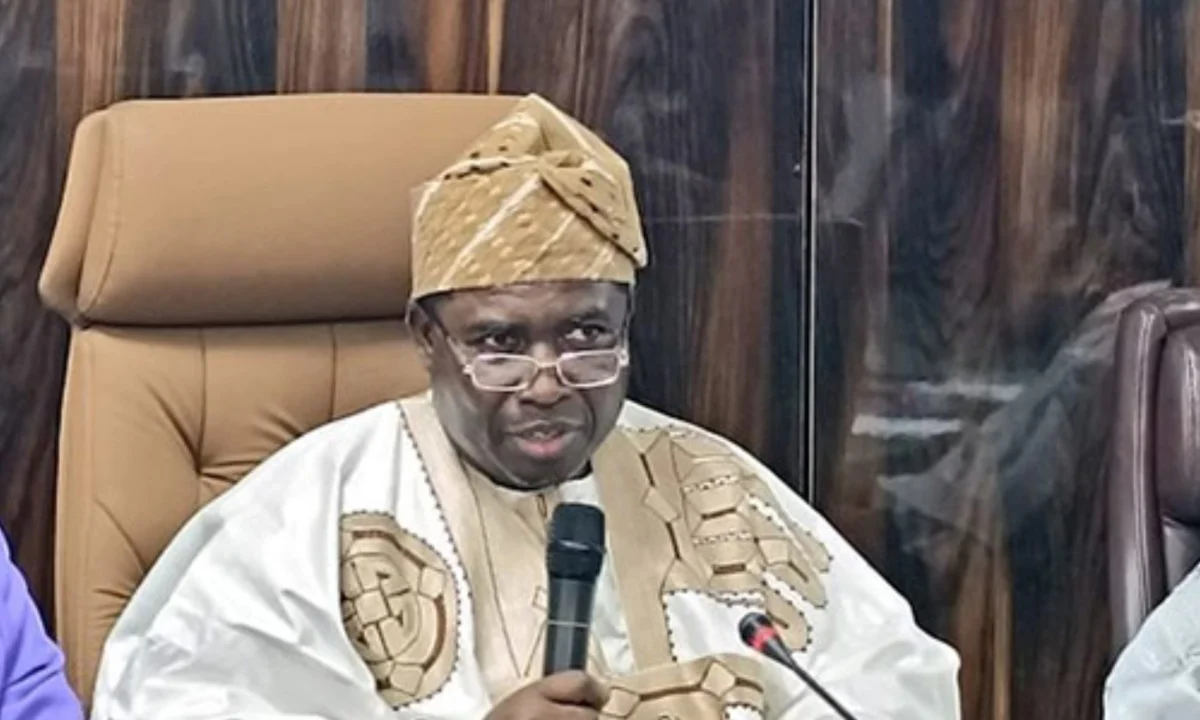




A chieftain of the Nigeria Democratic Congress, Babachir Lawal, has launched a scathing attack on former Vice President Atiku Abubakar, saying he wants the fuel subsidy to return so that his coven can loot N15.8 trillion again.
Lawal made the allegation on Tuesday in a post on his verified Facebook page titled: Kachalla Series No. 4.
Lawal said to understand Atiku's fixation on subsidy removal, one needs to look at figures.
He explained that before its removal by Bola Tinubu on 29th May 2023, the Nigerian National Petroleum Company, NNPC, reported that it spent N4.39 trillion in 2022 and N1.829 trillion between January and May 2023.
He quoted Tinubu's inauguration speech: "What is the past is the past, fuel subsidy is in our past, no more corruption, no more falsification of invoices, no more lies, and no more smuggling of fuel".
According to him, a 2022 motion in the House of Representatives alleged that nearly $10 billion was defrauded from the subsidy fund.
He added that the Minister of Finance, Taiwo Oyedele, in August 2026 reported that removing the fuel subsidy generated a revenue of N15.8 trillion for the Federation.
The former Secretary to the Government of the Federation, SGF, said that is what subsidy return means to Atiku and his coven.
He said they want a return to the open looting of the oil revenue by way of the scam of subsidy removal, and they want to share in this scam, no more, no less.
"Atiku wants a return of fuel subsidy so that his coven could loot N15.8 trillion again.
"Nigerians need to be warned that this Atiku coven is one composed of ruthless lootocrats, gayful deviants and narcissists," he wrote.
Atiku wants subsidy back so his coven can loot N15.8 trillion again – Babachir Lawal
News
Beyond Changing Leadership: Juwon Oshaniwa Warns Structural Deficiencies Could Keep Nigerian Football Trapped in Crisis

Former Super Eagles defender Juwon Oshaniwa has urged members of the Nigeria Football Federation (NFF) Normalisation Committee to prioritise establishing the right administrative structures, warning that Nigerian football risks repeating its historical mistakes if fundamental governance issues remain unresolved, Sports247.ng reports.
Oshaniwa believes the ongoing normalisation exercise presents an opportunity to rebuild the country’s football administration and create an enabling environment for competent individuals to participate in its governance.
The former international maintained that the quality of leadership emerging from future federation elections would largely depend on the structures established by the committee.
According to him, putting the right structures in place would create opportunities for individuals with the necessary expertise, experience and vision to contest elective positions and contribute meaningfully to Nigerian football development.
The 2013 Africa Cup of Nations winner stressed that changing individuals occupying administrative positions without addressing the deficiencies within the system would do little to guarantee sustainable progress.
He expressed concern that Nigerian football could continue experiencing the same challenges that have plagued its development over the years if the normalisation process fails to address fundamental structural problems.
Oshaniwa’s position comes amid growing demands from former internationals and other football stakeholders for comprehensive reforms within the NFF, particularly regarding its governance framework and electoral processes.
The former defender believes competence should be central to determining who occupies leadership positions, emphasising the importance of creating a system that allows capable individuals to emerge.
Rather than concentrating solely on the immediate task of conducting elections, Oshaniwa wants the committee to establish a lasting administrative framework that will serve successive generations.
His concerns also reflect the broader debate surrounding Nigerian football’s inability to consistently translate its enormous talent pool and passionate following into sustainable institutional development.
Having represented Nigeria at the highest level, including the 2014 FIFA World Cup in Brazil, Oshaniwa understands the importance of building a football system supported by effective administration.
He remains convinced that establishing the right structures will provide the foundation upon which future developments can be built.
For Oshaniwa, the success of the Normalisation Committee should ultimately be measured not merely by the emergence of new federation executives, but by its ability to create a credible system that attracts competent administrators and prevents Nigerian football from returning to familiar cycles of instability.
-

 Events2 days ago
Plateau Govt, CAN Strengthen Unity Through 2026 Christmas Carols and Praise Festival
-
Business4 days ago
FCMB Group’s profit jumps 86% on strong top-line growth
-
Health1 day ago
WHO Reports 26.3 Million People Living with HIV in Africa
-
News4 days ago
2027: Don't retaliate against opposition – Akpabio tells APC supporters