Connect with us

News

World Bank Delegation Visits Plateau, Commends Progress as PEPSA Hands Over Sanitation Facilities

info

Published

on

WhatsApp Image 2026 03 13 at 06.22.42

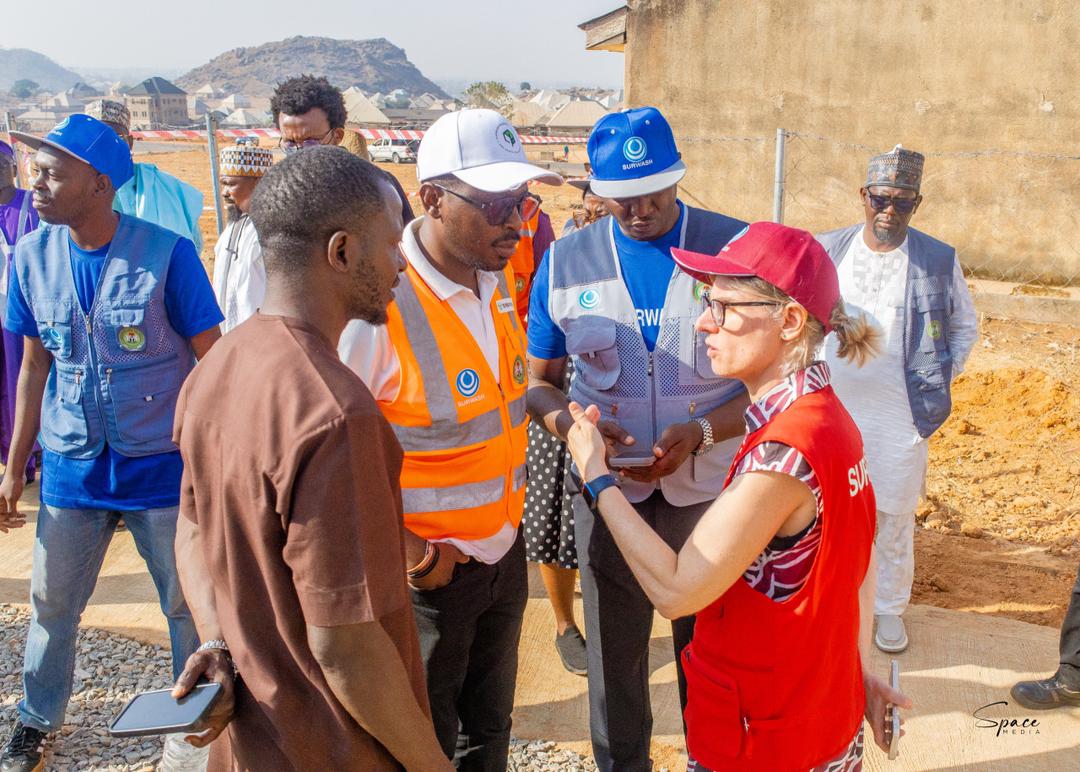
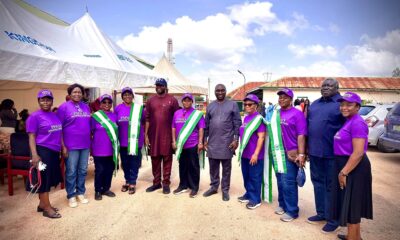
The Plateau Environmental Protection and Sanitation Agency (PEPSA) hosted a high-level delegation from the World Bank Group as part of an assessment visit to ongoing water, sanitation and hygiene interventions being implemented in Plateau State under the Sustainable Urban and Rural Water Supply, Sanitation and Hygiene (SURWASH) Programme.

The delegation, led by the Global Director for Water at the World Bank, Saroji Kumar Jha, and the World Bank Country Director for Nigeria, Mathew Verghis, visited the state to review progress made in the sanitation and hygiene sector and to formally witness the handover of sanitation facilities constructed under the programme.

Speaking during the visit, the Director General of PEPSA, Samuel Dapiya stated that the ongoing fight against open defecation in Plateau State is based on a standing mandate given by the State Governor, Caleb Manasseh Mutfwang, directing the agency to take deliberate and practical steps toward ending open defecation across the state through sustained social and behavioural change campaigns, promotion of household toilet construction and use, and inclusive sanitation interventions that ensure vulnerable members of society are not left behind.

The Director General explained that the Governor’s political will has continued to guide sanitation reforms in the state and has strengthened the implementation of the SURWASH Programme, a World Bank-supported initiative being carried out in selected states across Nigeria, with Plateau State among the participating states due to its demonstrated commitment to improving water, sanitation and hygiene services.

As part of the activities reviewed during the visit, PEPSA presented progress recorded in community-led sanitation efforts in Jos South Local Government Area, where more than 200 household toilets have been constructed or upgraded in eight communities through behaviour-change campaigns and community participation.

Under the Institutional WASH component of the programme, the agency has also constructed 27 sanitation facilities in schools and primary healthcare centres to provide safer and more hygienic environments for pupils, patients and residents.

The World Bank delegation expressed satisfaction with the level of progress recorded so far and commended the Plateau State Government for the commitment shown toward achieving improved sanitation outcomes.

PEPSA noted that while Nigeria’s national target for ending open defecation is 2030, the Plateau State Government has set a more ambitious target of 2028, with officials expressing confidence that the goal is achievable with sustained government support, continued partnership with the World Bank, and active participation from communities.

PEPSA added that the formal handover of the sanitation facilities and the positive feedback from the assessment visit serve as encouragement to sustain ongoing efforts aimed at protecting public health, restoring environmental dignity, and ensuring that Plateau State becomes one of the leading states in Nigeria to end open defecation.

Continue Reading
Click to comment

Leave a Reply

Your email address will not be published. Required fields are marked *

News

NEWSAN advocates increased WASH funding in Plateau  

info

Published

on

By

Screenshot 20250314 112625 Chrome.jpg

The Society for Water and Sanitation (NEWSAN) has called for strengthened financing mechanisms, institutional reforms, and multi-stakeholder collaboration to enhance water, sanitation and hygiene (WASH) services in Plateau.

The national coordinator of NEWSAN, Attah Benson, made the call during an advocacy visit to WASH stakeholders in Plateau State on Friday.

Mr Benson said the visit was part of the network’s ongoing efforts to deepen engagement and support reforms in the state’s WASH sector.

He noted that NEWSAN had maintained consistent advocacy in Plateau through engagements with key stakeholders at different periods, including after the #EndSARS protests, the 2023 general elections, and a follow-up visit in November 2025 to the deputy governor on its WASH scorecard.

“We are here again to see how we can move forward together in strengthening the sector,” he said.

Mr Benson highlighted the growing burden of neglected tropical diseases (NTDs) linked to poor water and sanitation, noting that about 150 million Nigerians are at risk of contracting schistosomiasis, and that the country bears the highest burden in Africa.

He added that more than 13.9 million Nigerians were at risk of blindness from advanced trachoma, stressing that both diseases were closely associated with inadequate access to potable water and sanitation, especially in rural communities and among school-age children.

He said strengthening WASH systems was critical to addressing these public health challenges.

The NEWSAN coordinator said the organisation was prioritising systems strengthening and institutional development through policy assessment, improvements to the regulatory framework, enhanced coordination, and long-term planning.

He added that these measures would also improve resource mobilisation within the sector.

Mr Benson referenced the Sanitation and Water for All (SWA) initiative, noting that it was promoting Water and Sanitation Compacts — high-level agreements by heads of state to guarantee funding for the sector.

He also pointed to outcomes from the April 2026 SWA Finance Ministers’ Meeting, which emphasised the role of fiscal policy in ensuring climate-resilient infrastructure.

He, therefore, urged the Plateau WASH sector to champion the creation of a “WASH-procurement budget line” to allocate a fixed percentage of project contracts to sanitation and water services.

According to him, such a mechanism would provide sustainable funding and reduce reliance on limited government budgets.

Mr Benson emphasised that Sustainable Development Goal 6 (clean water and sanitation) was central to achieving other SDGs, including health, education, economic growth, and social justice.

“Without progress on Goal 6, many of the other goals cannot be achieved,” he said.

He further underscored the role of water in addressing climate change and advancing development outcomes.

Mr Benson also highlighted the importance of behaviour change communication in ending open defecation and improving sanitation practices.

He expressed concern about the limited outcomes of the 2022 National Sanitation Summit, noting that it did not fully achieve its objective of attracting private-sector investment and partnerships.

He added that the WASH sector had strong potential for revenue generation if properly structured, especially through efficient tariff systems, metering, and improved service delivery.

While acknowledging that access to water is essential, he said that sustainable service delivery often requires cost-reflective systems with safeguards to protect citizens.

He also pointed to opportunities in the sanitation value chain, including faecal sludge management, which could generate economic value through biogas, fertiliser, and briquette production.

Responding, Plateau Commissioner for Water Resources and Energy, Bashir Lawandi, described the visit as timely and reaffirmed the state government’s commitment to strengthening collaboration with stakeholders.

Mr Lawandi was represented by the Sustainable Rural Water Supply and Sanitation (SURWASH) state coordinator, Jonathan Malann.

He said Plateau had developed a well-organised and coordinated water sector that had consistently ranked highly in performance assessments.

“During the last verification exercise, Plateau State came out top in terms of performance. Again, from the January Independent Verification Report, we are still leading.

“This shows that we are making progress and moving in the right direction,” he said.

The commissioner, however, acknowledged persistent challenges, especially the prevalence of water and sanitation-related diseases across the state.

According to him, 16 out of the 17 local government areas are affected, with only one recording a relatively lower impact.

“These are worrisome statistics because they are directly linked to water and sanitation conditions,” he said.

He added that trachoma cases were still present in at least one local government area.

He said the state was implementing a results-based WASH programme focused on eliminating open defecation.

He noted that while only one local government had officially attained open defecation-free (ODF) status under the programme, the state had independently achieved three ODF local governments.

“We are committed to declaring more local governments ODF before the end of the year, particularly within our programme communities,” he said.

He emphasised that achieving ODF status requires sustained community engagement, infrastructure development, and behavioural change interventions.

Mr Lawandi reaffirmed that the state would continue to work closely with the National Union of Sanitation Workers of Nigeria, describing it as a critical partner in WASH implementation.

“We have not left NEWSAN behind in the implementation. We will continue to carry them along and strengthen the relationship,” he said.

He commended sanitation workers involved in community “triggering” activities, noting their role in mobilising rural and urban communities to adopt improved hygiene practices.

He urged implementers to strengthen coordination to accelerate progress toward sanitation targets.

He also acknowledged the tight schedule under which the meeting was held.

“Our attention is required in multiple places, but we considered it important to attend to you and ensure this engagement takes place,” he said.

He reaffirmed the state government’s commitment to sustained collaboration with stakeholders and development partners to improve WASH service delivery and public health outcomes.

(NAN)

Continue Reading

News

Chef Robotics escaped the robot cooking graveyard and says it’s thriving — here’s why

info

Published

on

By

Chef robots deposit rice at Chef Bombay.jpg

Chef Robotics CEO Rajat Bhageria likes to tell people—correctly—that his industry is a veritable startup graveyard. Whether you’re talking about Chowbotics, a salad-making startup that was acquired and later shut down by DoorDash, or Zume, a $400 million attempt to “disrupt” pizza delivery that collapsed in 2023, the effort to automate a process that has heretofore required opposable thumbs and a sentient brain has not always gone so smoothly.

Bhageria thinks he’s figured out the workaround. The premise is simple, even if the execution isn’t: use AI-powered robot arms to take the labor out of large-scale food production. Originally, Chef sought to do that in fast casual restaurants, the kind that litter America’s cities. But the company pivoted early, finding success instead in food manufacturing, where it now serves enterprise customers like Amy’s Kitchen and Chef Bombay, and works with one of the largest school lunch providers in the country.

Now, the company says that it has passed an important milestone: 100 million servings. What’s a “serving,” exactly? A company spokesperson defines it as “a portion of food that our robots deposit into a meal tray.” So it’s not a meal, per se, but instead it represents “one component” of a full meal, the rep says. The takeaway: having ditched more traditional dining venues and instead courted larger, institutional-scale customers, Chef is busier than ever.

Bhageria says that the company’s next move is to expand into what it calls “smaller kitchens.” As for what those kitchens look like, the definition might surprise you. He tells me that one of Chef’s recently signed smaller customers is “one of the largest airline catering companies in the world.”

Other types of venues are also being pursued. The company said it has plans to expand into “ghost kitchens”—operations without any actual restaurant that supply meals for the likes of DoorDash. Eventually, the company would like to expand further into fast casual restaurants, stadiums, and prisons, Bhageria adds.

Bhageria also says that the data being generated from its 100 million servings is being fed into its AI models for food handling and packaging, which help those models to become smarter and more capable. The “inherent nature of food”—a slippery and malleable product without predictable proportions—makes it difficult for robots to handle it, he offers. With its models, Chef hopes to continue to improve the technology so that the robots get progressively better at their job, which will help the business to scale.

Techcrunch event

San Francisco, CA
|
October 13-15, 2026

Continue Reading

Trending