News
PRESS RELEASE: PEPSA CONDEMNS OBSTRUCTION OF SANITATION OFFICIALS DURING MARKET SANITATION EXERCISE





The camp of the presidential candidate of the Social Democratic Party, SDP, Adewole Adebayo, has urged Nigerians to scrutinise those aspiring to lead the country ahead of the 2027 general election while faulting President Bola Tinubu over reports that he will be absent from the campaigns.
The Movement Adebayo for President, MAP, made its position known in a statement titled ‘Choosing Between President Tinubu and Citizen Adebayo: A Social Democratic Manifesto That Signposts National Redemption’.
Highlighting Adebayo’s manifesto tagged ‘Farewell to Poverty and Insecurity’, the campaign team said the SDP candidate is a better alternative with a policy framework focused on poverty reduction, national security and economic development.
The SDP presidential candidate’s camp criticised Tinubu over his reported decision not to participate directly in the APC’s presidential campaign tour, arguing that candidates should engage with voters and explain their policy proposals.
According to the campaign team, the President’s decision to concentrate on governance while the APC Presidential Campaign Council campaigns on his behalf raises questions about direct engagement between presidential candidates and the electorate.
The campaign team further urged APC governors and party leaders to prioritise national interests in their political calculations, expressing concern over the country’s economic and security challenges.
It, however, said Nigerians should look beyond political affiliations and assess candidates based on their policy proposals, governing philosophy and plans for addressing the country’s development needs.
Highlighting Adebayo’s policy document, the campaign team described ‘Farewell to Poverty and Insecurity’ as a comprehensive blueprint for addressing Nigeria’s socioeconomic challenges.
It said the manifesto outlines a development agenda built around 12 priority areas, including national security, food security, electricity, affordable energy, jobs and enterprise, education and skills development, healthcare, modern infrastructure, innovation, transparent government, national unity and Nigeria’s international relations.
According to the campaign team, the document provides proposed strategies for moving Nigeria from poverty to prosperity, strengthening national security and improving citizens’ access to essential services.
It noted that the manifesto also incorporates a four-year delivery framework intended to establish measurable targets and track progress throughout a potential Adebayo administration.
According to the team, Adebayo’s first 100 days in office would focus on establishing institutional mechanisms for monitoring government performance and identifying priority areas for intervention.
Among the proposed measures are the establishment of a Presidential Delivery and Performance Office, directives to Federal Government ministries, departments and agencies, MDAs, on implementing the objectives of Chapter II of the Constitution, and baseline assessments of the security, power, food, health, education and infrastructure sectors.
The framework also proposes transparency measures for public procurement and expenditure, federal-state delivery agreements and the publication of a presidential performance dashboard.
The team said these measures are intended to strengthen accountability and provide Nigerians with a mechanism for tracking government performance.
The campaign team added that Adebayo’s proposed priorities would include improving security, stabilising essential services, expanding agricultural production, strengthening domestic energy supply and initiating priority electricity and transport projects. The plan also proposes youth skills development and employment programmes as part of efforts to expand economic opportunities.
According to the team, in years two and three, Adebayo’s administration will focus on expanding industrial clusters and infrastructure projects, improving electricity distribution, and investing in irrigation, food storage and processing, pharmaceutical production, technology, manufacturing, rail transportation, broadband, housing and water supply.
In the fourth year, the team said an Adebayo-led SDP government will focus on completing priority projects, strengthening successful programmes through permanent institutions, publishing audited performance reports and presenting Nigerians with an end-of-term scorecard.
2027: Adebayo’s camp faults Tinubu’s reported campaign absence
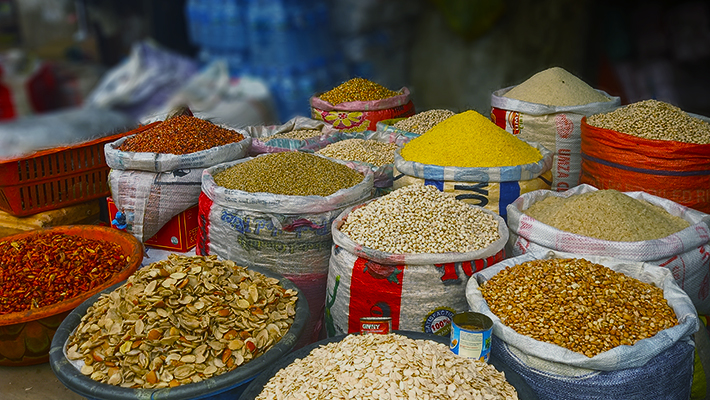
Consumers in markets across Kaduna city have lamented rising food prices, saying the situation has forced them to cut consumption.
A survey by journalists in Sabo, Narayi, Kakuri and Ungwan Boro markets showed that many households can no longer afford to buy in bulk.
Some buyers who said they previously bought rice and beans in half bags and quarter bags now buy in smaller quantities.
At Sabo Market, Rebecca Joseph said her monthly food budget has doubled, but inflation means she can only afford a few things.
“I came with N30,000 to buy rice, beans and garri for two weeks, but what I bought cannot take my family for one week,” Ms Joseph said.
She said she now mixes rice with more beans and buys broken rice, which is cheaper.
Another consumer, Sani Bello, said his salary can no longer sustain his family and expressed hope for cheap foodstuffs as farmers commenced harvest.
“My salary is N80,000, and things are costly. We now eat once a day, and my children take garri to school,” he said.
Mr Bello, a civil servant, urged the government at all levels to act on the hardship Nigerians face.
Some traders who spoke have confirmed the drop in patronage of their products due to hardship and inflation.
Hadiza Lawal, who sells grains and buys from major dealers in Kebbi and Kano, said customers are no longer trooping like before.
Ms Lawan said, “Before, I sold more than 10 bags in a week, but now I struggle to sell two bags.
“A bag of foreign rice, which was N75,000 in January, is now N125,000, and beans moved from N45,000 to N130,000 because of fuel and bad roads.”
She said wholesalers who go to villages to buy from farmers now pay N40,000 to N60,000 for transportation that used to cost N15,000.
At the vegetable section, buyers also decried the high cost of perishables.
Grace Simon, a vegetable seller who gets her supplies from wholesalers in Jos, Zaria and Kujama, said consumers now contribute money to buy one portion.
“Three women will put N500 each to buy one heap of Ugu for N1,500; that’s what one woman used to buy alone.
“I bought a basket of Ugu for N12,000 from Jos. The transport alone is N8,000, so I must add it to the price,” she said.
She attributed scarcity to harmattan and the high cost of fertiliser, which farmers now buy for N45,000 per bag.
Blessing Sunday, a mother of four, said she has stopped cooking egusi soup regularly and now manages groundnut soup.
“I came with N10,000 for egusi and crayfish, but I could only buy half mudu of egusi for N5,500,” she said.
Kabiru Musa, who sells egusi, ogbono and crayfish sourced from dealers who buy from farmers in Lafia, Otukpo and Ikom, said the price has doubled.
“A mudu of egusi that was N2,800 last year is now N5,500; ogbono is N7,000 per mudu; crayfish is N6,500. Buyers now buy in N200 and N500 wraps,” he said.
At Kakuri Abattoir, meat buyers complained of high prices.
Tina Okoro, a buyer who buys meat weekly for her food business, said she now uses more bones than flesh.
“A kilo of meat was N4,500 last year and now N7,000. I used to buy five kilos, but now I buy two kilos and add plenty of crayfish and seasoning to make soup taste,” she said.
A meat seller, Danladi Suleiman, who buys cows from livestock markets in Anchau and Giwa, said the high cost of feeding and transporting cows from villages due to insecurity has affected meat prices.
Aisha Mohammed, a yam seller who sources from middlemen who travel to Saminaka, Kachia, Makarfi and Niger State, said insecurity has forced traders to abandon short routes.
“Hundred tubers of big yams, which cost N150,000 last season, are now N280,000, while small ones cost N120,000.
“The boys who go to villages no longer go through shortcuts that pass through bush paths because of kidnappers. They go round through Kafanchan, so they have to add fuel money to the yam price,” she said.
Peter Ayuba, a buyer, said he used to buy 20 big tubers of yam for N50,000, but now 10 small tubers attract N45,000.
(NAN)

-

 News4 days ago
Meta releases its first frontier model, Muse Wonder
-
Health3 days ago
AMR: Livestock uses more antibiotics than human health sector
-
News3 days ago
The Stage Is Set, Nairobi Is Ready! Africa’s Business and Sports Power Players Converge for YORA Summit 2026
-
News3 days ago
MTN, Airtel take 90% of Nigeria’s 15m new subscribers as Glo shifts ground – Technology Times