Business
Nigeria’s business activity expands as household confidence weakens

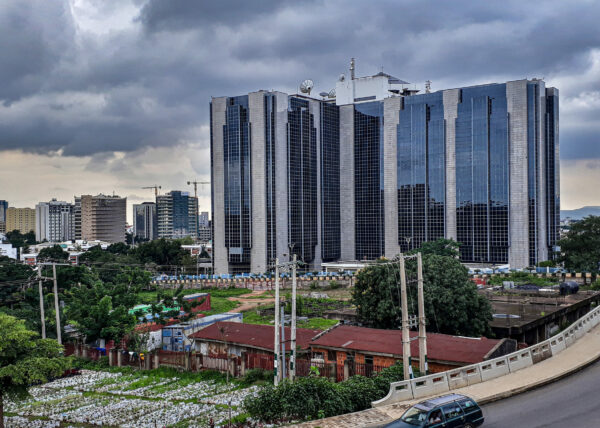
Nigeria’s business activity strengthened in September 2026, but households became more pessimistic about economic conditions, finances and prices, according to new reports by the Central Bank of Nigeria (CBN).
The CBN’s September Purchasing Managers’ Index (PMI) showed that overall economic activity expanded for the fourth consecutive month, with the Composite PMI rising to 53.0 points from 52.7 points in August.
The survey, conducted between 7 and 11 September among 1,900 purchasing and supply executives across the Industry, Services and Agriculture sectors, showed that 23 of the 32 subsectors surveyed recorded expansion, while nine declined.
The improvement was supported by stronger industrial activity, with the Industry PMI rising to 52.0 points in September from 50.6 points in August, marking a second consecutive month of expansion.
The sector’s Output Index also rose to 53.2 points, supported by increases in new orders and employment, while the Raw Materials Inventory Index returned to expansion at 51.1 points from 49.4 points in August.
The Services sector remained in expansion at 53.2 points, compared with 53.3 points in August, while the Agriculture PMI eased slightly to 53.1 points from 53.4 points.


The regulatory body said agriculture had now recorded 26 consecutive months of expansion.
However, the improvement in business activity was accompanied by renewed pressure on input prices.
The Composite input price index increased by 0.8 points in September, while the output price index declined by 0.5 points.
CBN said the September PMI pointed to a “broadening recovery” in economic activity, although the renewed increase in input price pressures warranted close monitoring.
Household expectations
Meanwhile, the picture was less positive among households. In a separate report, CBN’s September Household Expectations Survey, it was revealed that the Overall Consumer Sentiments Index fell sharply to -18.7 points from -9.9 points in August, indicating increased pessimism about the economy.
The Economic Conditions Index stood at -21.5 points, while the Family Financial Situation Index was -23.9 points and the Family Income Sentiments Index stood at -10.5 points.
This indicates a pessimistic outlook on current economic conditions among households and regarding their family financial situation.
Also, the report showed that Nigerian households also reported stronger concerns about prices.
The average price sentiment index rose to 33.5 points from 23.0 points in August, indicating that respondents perceived prices as remaining high. Among the selected items, households reported the lowest perceptions of price changes for food and telecommunication services.
The Central Bank said households expected price pressures to remain elevated over the next three and six months, with the price outlook indices standing at 29.7 and 28.4 points, respectively.
Meanwhile, Nigeria’s headline inflation eased marginally to 15.39 per cent in August 2026 from 15.43 per cent in July, according to the National Bureau of Statistics (NBS), while month-on-month inflation fell more sharply to 0.71 per cent from 1.57 per cent.
CBN said the respondents’ cautious mood was also reflected in household spending intentions, with food remaining the dominant expenditure priority, followed by transportation, other household goods, education, and electricity and water.
It said households remained particularly reluctant to make major purchases. The sentiment indices for house purchases, motor vehicles, investments and consumer durables were all negative, at -68.2, -67.3, -50.7 and -49.5 points, respectively.
Buying conditions also remained weak, with the index for consumer durables at 24.8 points and that for motor vehicles and buildings and landed properties at 24.2 points, all below the 50-point threshold.
The survey further showed that 61.1 per cent of respondents believed faster price increases would weaken the Nigerian economy, while 62.2 per cent preferred lower lending rates.
However, 45.1 per cent favoured higher interest rates when they were presented as a means of containing inflation, while 44.8% preferred lower interest rates, even at the cost of rising inflation.
READ ALSO: CBN urges Nigerians to handle Naira with care
Despite the weak September sentiment, households expected confidence to improve gradually, with the Overall Consumer Sentiments Index projected at -8.7 points next month, -0.4 points over the next three months and 7.1 points over the next six months.
The contrasting findings suggest that while business conditions continued to improve in September, households remained under pressure from high prices, interest rates and concerns about their finances.
The regulatory body said households remained cautious during the month, with subdued buying conditions and purchase intentions pointing to persistent concerns about household finances and economic conditions.
Discover more from Premium Times Nigeria
Subscribe to get the latest posts sent to your email.




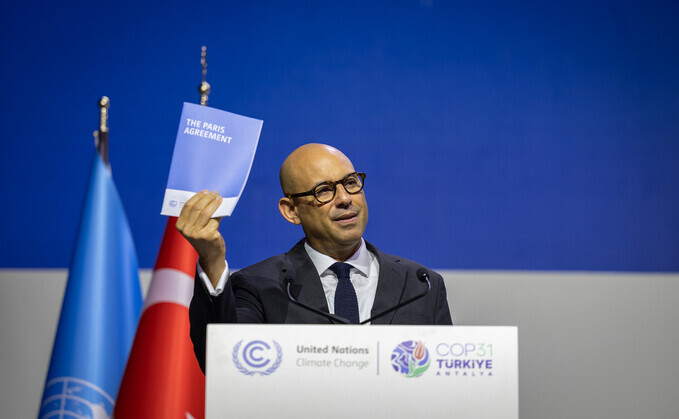
The executive secretary of UN Climate Change, Simon Stiell, told the ministers at COP31 that climate finance must be redesigned to lift developing countries out of a cycle of debt and disaster, adding that meeting a headline figure will not do it.
“Meeting a financial target does not always meet countries’ needs. To do that, we need to look at how finance is delivered,” Mr Stiell said on Friday at the opening of a high-level ministerial dialogue on climate finance in Antalya, Turkey.
Countries agreed at COP29 that developed nations would lead in providing $300 billion a year by 2035, as part of a wider effort to raise $1.3 trillion annually from all sources.
Mr Stiell said the roadmap for reaching those sums “must become reality”, but that the terms of the money mattered as much as the amount.
“Many developing countries are trapped in a downward loop of debt, disaster, and devastating capital costs,” he said. “The threat of floods, fires, storms and droughts hangs over them, pushing up the price of borrowing even before disaster strikes.”
He stated that the terms of finance should reflect each country’s debt position.
“Private finance, loans and guarantees are essential to achieving our collective goals. But grant-based and highly concessional finance will remain critical, particularly for Least Developed Countries, Small Island Developing States and other very vulnerable economies,” he said.
According to him, broader action on debt is also needed to prevent countries from being forced to choose between repayments and resilience.
International climate finance for developing countries reached about $137 billion in 2024, and almost 70 per cent of it came in the form of loans, according to a UN Women flagship report released on Tuesday in Antalya.
Countries in sub-Saharan Africa paid more than twice as much in external debt service between 2021 and 2023 as they received in climate finance, according to an analysis published by the Heinrich Böll Foundation.
The analysis found that interest payments consumed more than 10 per cent of government revenue in 27 African countries in 2024.
The chair of the African Group of Negotiators, Nana Antwi-Boasiako Amoah, has said that a transition could not be called just if poorer countries have to “mortgage their futures” to pay for it.
The group lost a bid on Monday for a separate agenda item on tripling adaptation finance. It now wants the target prioritised in the summit’s cover decision.
Nigeria is not on the UN’s list of least developed countries, which places it among the states the UN climate chief expects to rely more on loans, guarantees and private capital.
It needs about $337 billion between 2026 and 2035 to implement its climate commitments, according to the National Council on Climate Change.
Omotenioye Majekodunmi, the agency’s director-general, said more than 80 per cent of that will have to come from private investment, commercial debt, and international carbon finance.
About $2.5 billion a year went to climate action in Nigeria in 2021 and 2022, counting domestic and international sources, according to the Climate Policy Initiative’s tracking.
The dialogue was the last in a series that began in 2013, and its conclusions will go to COP32 in Ethiopia next year, Mr Stiell said.
Discover more from Premium Times Nigeria
Subscribe to get the latest posts sent to your email.
-

 News4 days ago
APM holds Presidential Campaign in Plateau, Pledges Security and Economic Reset
-
News2 days ago
UNIJOS Appoints Patricia Lar as First Female Vice-Chancellor
-
News3 days ago
NiYA: Nigeria Awards ₦49m grants to 17 young entrepreneurs – Technology Times
-
News4 days ago
NPFL Matchday 12 Roundup: Rangers Edge Kwara United, Bendel Snatch Late Winner as Inter Lagos Rescue Derby Point