News
HackerRank’s AI interviewer offers a glimpse into what job interviews could become


What happens when AI moves from helping job candidates to evaluating them? HackerRank, a platform used by companies to assess and hire developers, is offering a glimpse at what that future of job interviews could look like with Chakra, an AI agent that conducts interviews, observes candidates as they work, and evaluates not just their answers but how they got there.
After around six months in beta, HackerRank is making Chakra generally available to its customers on Monday. The startup says the AI interviewer has already conducted more than 500,000 interviews during testing, with companies including Snowflake, Snorkel, and Capgemini among those that tried it, while HackerRank also tested the product internally.
AI has been a staple in job interviews for some time, with companies using voice agents and other automated tools to screen candidates and make the hiring process more efficient. Job seekers, meanwhile, have increasingly gained their own AI tools to help them navigate interviews, sometimes without employers knowing.
With Chakra, HackerRank is betting AI can change not only how interviews are conducted, but also what employers can measure. Beyond whether someone arrives at the right answer, the startup wants to assess harder-to-capture signals such as critical thinking and judgment, as well as what it calls “AI fluency” — how well a candidate frames a problem for AI, judges its output, and steers it toward a solution.
“The previous modality of evaluation was evaluating the output,” HackerRank co-founder and CEO Vivek Ravisankar said in an interview. “Now, because of AI, anybody can produce an artifact.” The question for employers, he said, becomes whether they can understand the thinking and judgment that went into producing it.
In practice, a Chakra interview is designed to look more like doing the job than taking a traditional coding test. A candidate gets a task involving a real-world code repository, and they work through it in a canvas that includes an AI assistant. As the candidate works, Chakra can use the context of what they are doing to ask follow-up questions, such as why they chose one approach over another, or how their solution would change if a new constraint were introduced.

Ravisankar told TechCrunch that Chakra is changing the basic structure of the hiring process itself. What previously involved three separate rounds, comprising a recruiter screen, take-home assessment, and follow-up interview with an engineer, is now combined into a single Chakra interview, he said.
Giving candidates access to AI during an interview might seem to make it easier to cheat. However, HackerRank says it found the opposite. Suspicious-activity flags, Ravisankar said, were 70% to 80% lower in Chakra interviews than in comparable traditional HackerRank assessments, though the rate varied depending on factors such as geography and seniority.
Ravisankar told TechCrunch that giving candidates access to AI reduces the incentive to secretly use outside tools that can feed them answers during an interview.
Launched at TechCrunch Disrupt in 2012, HackerRank built its business around coding challenges, eventually helping companies assess and hire developers based on their technical skills. The Y Combinator-backed startup now has more than 3,000 business customers, including Amazon, Nvidia, Clay, and Replit, and a community of over 30 million developers worldwide.
Chakra represents a bet against the kind of technical assessment business HackerRank spent years building. Its traditional product largely tested whether developers could solve coding problems correctly. Nonetheless, Ravisankar believes AI has made HackerRank’s earlier model less useful to measure engineering ability.
Ravisankar compared the transition internally to Apple moving from the iPod to the iPhone, as the old product still has value, but the new one represents where the startup believes the market is headed. “Chakra is going to be the headline,” he said. “It’s going to be the way that we’re going to move forward.”
However, giving AI a deeper role in evaluating candidates raises a different set of questions, particularly around how much of a hiring decision companies should delegate to an algorithm. Ravisankar told TechCrunch that Chakra is designed to score candidates rather than make the final hiring decision, which remains with humans.
AI, Ravisankar said, can handle more structured parts of an interview by consistently applying criteria set by an employer, while human interviewers can spend more time determining whether they actually want to work with a candidate and answering questions about the company, team, and role.
“AI is way less biased than humans, if you tune it properly,” Ravisankar said, arguing that an AI system can be instructed to follow the same rubric for every candidate rather than being influenced by factors such as a candidate’s background or education.
Applying the same criteria consistently, however, does not necessarily make an AI system free of bias. Automated hiring tools can inherit or amplify biases from the data, models, and criteria used to build them, prompting regulators to scrutinize their use in employment decisions.
The use of AI in hiring is already drawing regulatory scrutiny. New York City, for instance, requires employers using certain automated employment decision tools to subject them to an independent bias audit and provide notice to candidates before using them. Ravisankar acknowledged that hiring is a regulated area and said complying with such requirements is part of what HackerRank has had to build for.
When you purchase through links in our articles, we may earn a small commission. This doesn’t affect our editorial independence.






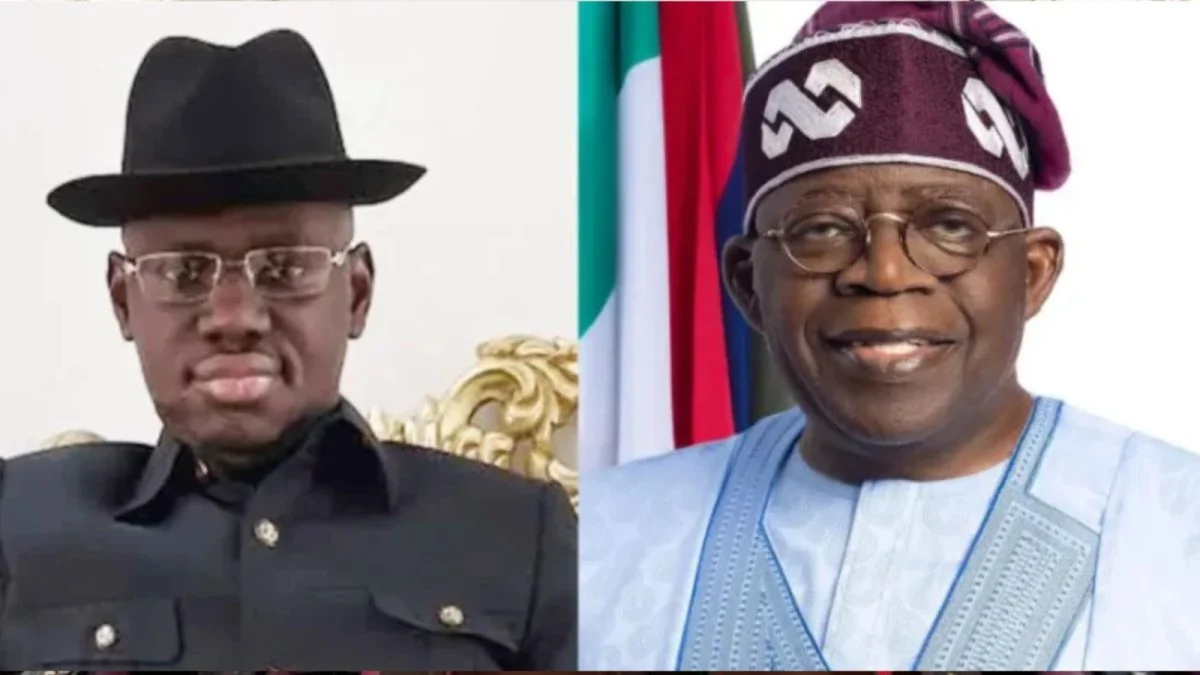
Former Deputy National Publicity Secretary of the All Progressives Congress (APC), Timi Frank, has called on President Bola Ahmed Tinubu to withdraw from the 2027 presidential election following the protest that greeted him at a mosque in Abuja.
Frank said the incident at the Shehu Shagari Central Mosque in Area 1, Garki, Abuja, should serve as a warning to the President about the level of dissatisfaction among some Nigerians over his administration.
He urged Tinubu to reconsider his second-term ambition rather than proceed with the election despite what he described as growing public opposition to his government.
The former APC chieftain also advised the President to ensure that the 2027 general election is free, fair and credible, insisting that Nigerians should be allowed to determine who leads the country through their votes.
Frank made the remarks following an incident on Friday, November 13, when some worshippers and youths reportedly expressed their displeasure with Tinubu shortly after he observed Juma’at prayers at the mosque.
Videos from the incident showed some individuals booing the President and chanting “Ba ma yi”, a Hausa expression meaning “we don’t want you”, as his convoy prepared to leave the premises.

The protest attracted attention after footage circulated on social media.
There were also reports of individuals removing and destroying campaign posters and billboards bearing Tinubu’s image in parts of the Area 1 neighbourhood.
Nonetheless, while condemning the decision to express political grievances during a religious gathering, Frank acknowledged the efforts of the President’s security team in protecting him and preventing the situation from escalating.
However, he maintained that the reaction from some worshippers should not be ignored or dismissed as an isolated incident.
According to him, the President needs to understand the political situation in the country and pay attention to the feelings of ordinary Nigerians rather than depend entirely on assurances from political associates.
“The rejection was total and unmistakable. No Nigerian president has been embarrassed like this publicly. The way Nigerians rejected him speaks volumes. But should he decide to go ahead and he loses, he should be prepared to accept defeat just like former President Goodluck Jonathan did,” Frank said.
He further questioned the level of support Tinubu reportedly enjoys in the Federal Capital Territory, arguing that the incident at the mosque raised questions about claims made by some political figures concerning the President’s popularity in Abuja.
Frank suggested that there was a difference between the assurances political associates gave Tinubu and the political realities outside government circles.
He warned that some individuals around the President might be giving him an inaccurate picture of public opinion because of their personal interests.
“I am giving him this advice because I genuinely want him to listen to the truth. Those around him may not be telling him that he has become very unpopular and that continuing in the presidential race may be a difficult undertaking,” he said.
The former APC spokesman maintained that Tinubu should seriously consider stepping aside from the 2027 contest instead of allowing political pressure from his associates to determine his decision.
Frank also questioned the confidence expressed by some political leaders about their ability to deliver substantial votes for the President in the next election.

He specifically mentioned FCT Minister Nyesom Wike and Edo State Governor Monday Okpebholo, questioning whether the electoral figures reportedly promised by political allies would reflect the actual choices of voters.
He argued that promises to secure 80 per cent of the votes in Abuja and 2.5 million votes in Edo State should not be taken as a guarantee of electoral victory.
According to him, political leaders should understand that making promises on behalf of voters is different from securing their support at the polling units.
Frank also referred to reactions witnessed in Abuja and Jos following political activities involving the ruling party.
He argued that such developments should encourage Tinubu to reassess the level of support his administration commands.
He further alleged that some individuals within the APC and the President’s political circle were more concerned about personal financial benefits than providing honest assessments of the government’s performance.
The former party official also brought opposition figures, including former Vice-President Atiku Abubakar and former Anambra State Governor Peter Obi, into the discussion.
He claimed that the reception given to the opposition leaders during their public appearances showed that Nigerians were increasingly interested in alternative political options ahead of the next general election.
Frank argued that the crowds received by the opposition figures were an indication that political support could not always be measured through organised rallies and the number of people mobilised by political parties.
“Wherever these opposition leaders go, Nigerians come out in large numbers to receive them without being induced with rice or money. Their reception should tell the President something about the mood of the country,” he said.
He maintained that the Tinubu administration should take public reactions seriously, particularly as political activities ahead of the 2027 elections continue to gather momentum.
Frank also linked the dissatisfaction he alleged to the economic difficulties confronting Nigerians.
He mentioned rising food prices, hunger, unemployment, insecurity and the increasing cost of living as some of the challenges affecting households across the country.
According to him, the difficulties experienced by ordinary citizens have contributed to the criticism directed at the Federal Government.
He argued that the administration needed to pay greater attention to the economic situation and the concerns of Nigerians instead of relying on political endorsements as evidence of public acceptance.
“If the President had performed well, there would be no need for the desperation we are witnessing today,” he said.
Frank also questioned the sincerity of some political endorsements received by Tinubu, alleging that certain expressions of support were driven by expectations of financial rewards and personal benefits.
He urged the President to identify those genuinely interested in the country’s progress and distinguish them from individuals whose political positions were influenced by their personal interests.

Beyond his criticism of the administration, Frank warned against any attempt to manipulate the 2027 general election or undermine the wishes of voters.
He insisted that the credibility of the election would be more important than the political ambitions of any individual or party.
“Nigerians will not accept a situation in which someone is declared the winner when the people know they did not vote for him. They should not push the country into a crisis by attempting to impose him on the people,” he warned.
He called on Tinubu to respect the democratic process and ensure that the electoral authorities are allowed to conduct an election in which every vote counts.
The former APC spokesman further argued that the President could still secure a positive place in Nigeria’s political history if he chose to put the country’s democratic interests above his personal ambition.
“President Tinubu still has an opportunity to make history and have his name written in gold. He can achieve this by ensuring that the country conducts a free, fair and credible election,” he said.
Frank maintained that a transparent electoral process would allow Nigerians to freely choose their preferred candidate without intimidation, manipulation or interference.
He also stressed that the next presidential election should not become a source of political instability, warning that attempts to impose a candidate against the wishes of voters could generate serious consequences for the country.

Former President Olusegun Obasanjo has told Nigerian youths not to allow politicians to use them to cause division in the country.
Obasanjo gave the advice on Saturday shortly after he was honoured with an honorary doctorate degree by Skyline University of Nigeria in Kano.
Speaking through a recorded video message, the former president said young people must refuse any campaign built on hate, segregation, discrimination and marginalisation, no matter who is behind it.
He said youths should not sit down and wait for change, but must fight for the kind of future they want for themselves.
According to him, young Nigerians must be positively disruptive, and must be ready to shake the system in a good way to bring real development.
Obasanjo reminded them that Nigeria was built by young leaders in the past, and he mentioned the likes of Aminu Kano and Anthony Enahoro, who stood up early to serve the country.
He said age, tribe or religion should not stop any youth from making impact, adding that the future of Nigeria is in the hands of the young generation.
"Don't let politicians divide you. You must reject campaigns capable of promoting division, segregation, discrimination and marginalisation, regardless of their ethnic, religious or age differences," he said.
The former president received the honour alongside former Executive Secretary of the National Universities Commission, Prof. Abubakar Adamu-Rasheed, and Mrs. Vadana Luthra.
2027: Don’t let politicians divide you – Obasanjo warns Nigerian youths in Kano
-

 News3 days ago
UNIJOS Appoints Patricia Lar as First Female Vice-Chancellor
-
News1 day ago
Tinubu (APC) in Jos: Promises to restore peace in the State and Nigeria
-
News3 days ago
Democrats launch Nvidia investigation, write scathing letter on Huang’s ‘scheme’ with Trump
-
News3 days ago
Nigeria opens 3MTT Cohort 5 with ₦4bn funding – Technology Times