Health
Non-communicable diseases caused 74% of global deaths in 2023

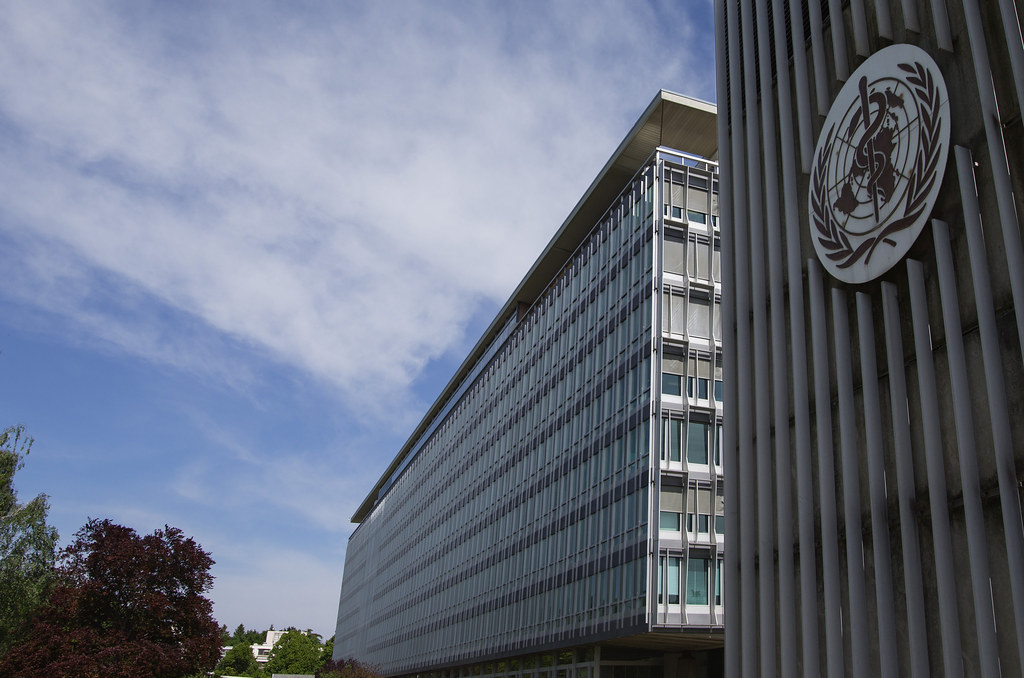
Non-communicable diseases (NCDs) such as heart disease, diabetes and dementia accounted for 74 per cent of global deaths in 2023, up from 58 per cent in 2000, according to the latest estimates released by the World Health Organisation (WHO).
The findings, contained in the WHO’s latest Global Health Estimates released on Friday, show that although global life expectancy has largely recovered from the disruption caused by the COVID-19 pandemic, the world’s disease burden is increasingly shifting towards chronic illnesses and mental health conditions.
According to the report, global life expectancy reached 73.3 years in 2023, almost returning to the 73.4 years recorded in 2019 before the pandemic. However, healthy life expectancy, which measures the number of years people live in good health, recovered more slowly, reaching 62.8 years in 2023, still 0.4 years below its pre-pandemic level.
The WHO noted that eight of the world’s 10 leading causes of death were NCDs in 2023, highlighting a long-term global shift away from communicable diseases.
Cardiovascular diseases remain leading killer
The report identified cardiovascular diseases as the leading cause of death and disease burden worldwide.
It said ischaemic heart disease alone caused approximately 9.5 million deaths and 210 million disability-adjusted life years (DALYs) in 2023. DALYs measure years of healthy life lost due to illness, disability or premature death.


While many parts of the world have made significant progress in reducing the burden of ischaemic heart disease since 2000, the WHO reported rising individual-level risks in the Western Pacific and South-East Asia regions, highlighting persistent inequalities in cardiovascular health outcomes.
The organisation also reported substantial increases in the burden of other chronic diseases.
According to the report, the risk of dying from diabetes has risen considerably since 2000, particularly in South-East Asia.
Alzheimer’s disease and dementia have also become more prominent.
Dementia rose from the 19th leading cause of death globally in 2000 to the fifth in 2023, while deaths linked to the condition tripled during the period.
Mental health concerns
The WHO also highlighted the growing impact of mental health conditions on global health.
Between 2019 and 2023, the global age-standardised DALY rate increased by approximately 20 per cent for depressive disorders and nearly 45 per cent for anxiety disorders.
Together, depression and anxiety accounted for an estimated 110 million years of healthy life lost through premature death and disability in 2023.
The report further showed changing patterns in drug use disorders across regions.
Between 2000 and 2023, the WHO Region of the Americas recorded the largest increases in mortality risk and healthy life loss associated with drug use disorders, while the Western Pacific region experienced substantial declines.
READ ALSO: Drug-resistant bacterial infections kill one million people annually – WHO
Need for stronger health data systems
Speaking further on the findings, Alani Labrique, Director of WHO’s Department of Data, Digital Health, Analytics and AI, described rising life expectancy as one of public health’s greatest achievements.
However, Mr Labrique noted that the next challenge is ensuring that the additional years people live are spent in good health, while health systems adapt to the changing needs of ageing populations and the growing burden of chronic diseases.
He said the estimates provide countries with evidence on how patterns of death and disease burden are changing over time, helping governments shape health policies, strengthen digital and data infrastructure, and improve their ability to generate insights needed for targeted health interventions.
Discover more from Premium Times Nigeria
Subscribe to get the latest posts sent to your email.







As more women consider menstrual cups as an option for managing their periods, questions have emerged about whether using them can affect the hymen or a woman’s virginity.
Some people fear that inserting a menstrual cup could “break” the hymen, cause a woman to lose her virginity or permanently make the vagina “loose”.
Speaking with PT Health Watch, Elizabeth Adewale, a Certified Holistic Sex Educator and Public Health Professional, said many of these concerns stem from misconceptions about the hymen and what it means medically to be a virgin.
Hymen changes
According to Ms Adewale, inserting a menstrual cup can stretch the hymen and, in some cases, may cause a small tear, but “this does not mean that a woman has lost her virginity.”
She explained that the hymen is a thin, elastic fold of tissue around the vaginal opening that varies in shape, thickness and elasticity from woman to woman.
“If it were a seal, menstrual blood and normal vaginal discharge wouldn’t be able to come out,” she said.
Ms Adewale said the hymen can also change for reasons unrelated to sexual intercourse, including physical activities such as cycling, gymnastics and other exercise. She added that some women may have very little hymenal tissue, while in others it may be difficult to see.
The American College of Obstetricians and Gynaecologists (ACOG) also explains that the hymen is a thin membrane that partially covers the entrance to the vagina and can be stretched or torn through tampon use, sports activities or medical procedures. It also says the presence or absence of the hymen does not indicate “virginity”.
Virginity marker
Ms Adewale said the belief that every woman is born with a hymen that remains intact until her first sexual experience is incorrect.
“The hymen is not a virginity marker,” she said.
She explained that the hymen does not simply disappear after sexual intercourse and can still be present afterwards, although its appearance may have changed.
According to the expert, this means that looking at a woman’s hymen cannot establish whether she has had sex.
The World Health Organisation (WHO) says there is no scientific or clinical examination that can prove whether a woman or girl has had vaginal intercourse. It also states that the appearance of the hymen cannot prove whether someone has had sexual intercourse or is sexually active.
Vaginal elasticity
Another concern is that inserting a menstrual cup could permanently stretch the vagina and make it “loose”.
Ms Adewale said there is no medical basis for this belief.
“The vagina is an elastic, muscular canal,” she said, noting that it can relax, expand and contract depending on what is happening.
She said inserting or removing a menstrual cup does not permanently stretch the vagina.
“Your vagina isn’t going to suddenly become a wide-open hole because you’ve used a menstrual cup,” she said.
However, Ms Adewale noted that vaginal insertion can be painful or difficult for some women.
She explained that women with vaginismus, for instance, may experience involuntary tightening of the vaginal or pelvic floor muscles, making the insertion of a menstrual cup, tampon, finger or penis painful or difficult.
“It’s not because their vagina is too small,” she said.
According to ACOG, vaginismus is an involuntary tightening of the muscles at the opening of the vagina that can make penetration painful or difficult.
Using menstral cup
For women who choose to try a menstrual cup, Ms Adewale advised first-time users not to rush the process.
READ ALSO: Group calls for reusable pads as menstrual stigma, access gaps persist
She recommended relaxing before insertion, washing the hands and cleaning the cup properly, finding a comfortable position and following the manufacturer’s instructions on how to fold and insert the cup.
A woman can squat, sit on the toilet or stand with one leg raised on a stool, she said, adding that taking slow, deep breaths can also help.
“Once you’ve successfully inserted it, allow it to open properly and create a seal, but don’t force it. If you experience significant pain, stop, don’t have to force it,” she said.
She added that first-time users may need time to become comfortable with the process and understand what works best for them.
Ms Adewale said the choice of menstrual product is personal and women should not feel pressured to use a menstrual cup if it does not work for them.
Discover more from Premium Times Nigeria
Subscribe to get the latest posts sent to your email.

The World Health Organisation (WHO) says drug-resistant bacterial infections kill about one million people globally every year, calling for coordinated action across human, animal, food and environmental sectors to curb the growing threat.
Jean-Pierre Nyemazi, Acting Director of the AMR Department at WHO Headquarters, said this at a virtual media conference marking an exhibition at the European Parliament on AMR and its human impact.
The virtual conference preceded the exhibition, “AMR: The Human Stories Behind a Silent Pandemic,” being held at the European Parliament from 28 September to 2 October and featuring stories of people affected by AMR across Europe.
“AMR is taking many lives. One million people die every year due to drug-resistant bacteria alone – that is, two people every minute die of bacterial AMR,” Mr Nyemazi said.
He said the scale of deaths meant that AMR should no longer be treated as a “silent pandemic”, stressing that “we know what works” to prevent and control the threat.
“Preventing infections is the number one priority. This can be done through better vaccination, infection prevention and control, Water, Sanitation and Hygiene (WASH), and improved animal husbandry,” he said.
“All of these work and can prevent AMR.”
Mr Nyemazi said strengthening surveillance, responsible use of antimicrobials, access to quality medicines and diagnostics, and reduction of environmental contamination could also make a difference.
“The tools exist, and the evidence is there, but the cost of inaction is rising. The longer we delay action, the higher the cost becomes,” he said.
He said the One Health approach, which recognises the links between human, animal, plant and environmental health, was essential because drug-resistant pathogens could move across sectors and borders.
According to him, parliamentarians have a critical role in ensuring that national AMR commitments are supported by legislation, financing and accountability.
“The media also plays an indispensable role. Journalists help bring AMR out of scientific circles and into public debate,” he said.
“They raise awareness, combat misinformation, and ensure that AMR remains visible to decision-makers and the public alike.”
He said WHO Member States approved an updated Global Action Plan on AMR at the World Health Assembly in May, providing a framework for combating AMR over the next 10 years through a One Health approach.
Mr Nyemazi said the updated plan placed stronger emphasis on prevention, governance, behavioural change and measurable targets, and that the four Quadripartite organisations developed it jointly.
He said the organisations comprised the Food and Agriculture Organisation (FAO), United Nations Environment Programme (UNEP), WHO and World Organisation for Animal Health (WOAH).
“What is new about the updated Global Action Plan on AMR for the next 10 years is that it is truly multi-sectoral – a genuine One Health plan.
“The previous plan was heavily focused on human health; this time the four Quadripartite organisations worked together and engaged all sectors,” he said.
Mr Nyemazi said a 10 per cent reduction in AMR was achievable through infection prevention and control, vaccination and improved access to quality antimicrobials, with better coordination, education and surveillance capable of delivering further gains.
He also called for investment in new antibiotics, antifungals, phage therapy and other technologies, while stressing the need to preserve existing medicines.
He said there was also a major access problem, with many regions unable to obtain even existing antibiotics.
A member of the European Parliament, Martin Häusling, said excessive antibiotic use in food-producing animals was contributing to the problem, particularly through mass treatment.
“When it comes to food-producing animals, we still use far too many last-resort antibiotics, and we must get away from that,” Mr Häusling said.
He said AMR was a global issue that could affect anyone, adding that it could destroy families and livelihoods.
To tackle it, the parliamentarian said it was important to create public awareness so that parliaments could address the issue properly, adding that the issue was still not taken as seriously as a future challenge should be.
Rob Purdie, an AMR survivor and member of the WHO Task Force of AMR Survivors, said his experience demonstrated the consequences of delayed diagnosis and treatment.
Mr Purdie said an infection that began with a headache eventually progressed to fungal meningitis after he received antibiotics for a condition that had not been properly diagnosed.
READ ALSO: Four Super Eagles stars who could decide Nigeria’s AFCON Qualifier against Guinea-Bissau
He said he eventually spent about $250,000 on hospital costs and had been unable to work for about five years.
“My ability to earn a living was eliminated for about five years in a single-income household where I provided for my wife and two children,” he said.
Mr Purdie said his experience underscored the need to keep AMR visible in public discussions.
“That is why it is so important for those of us who have survived and can speak, to remove the word ‘silent’ from the ‘silent pandemic’,” he said.
(NAN)
Discover more from Premium Times Nigeria
Subscribe to get the latest posts sent to your email.
-

 News2 days ago
PLASU Opens Doors to Global Investors at 2nd Inaugural Lecture
-
Health23 hours ago
Plateau: Medical Women Association of Nigeria Marks Older Persons Day with Free Outreach
-
News2 days ago
Plateau Specialist Hospital Celebrates Nigeria at 66, Salutes Mutfwang’s Health Initiatives
-
News2 days ago
Nigeria At 66: Rotjimwa Yilyok Salutes President Tinubu, APC Leadership and Plateau Government