News
Borno explores Moscow Smart-City solutions for urban development – Technology Times

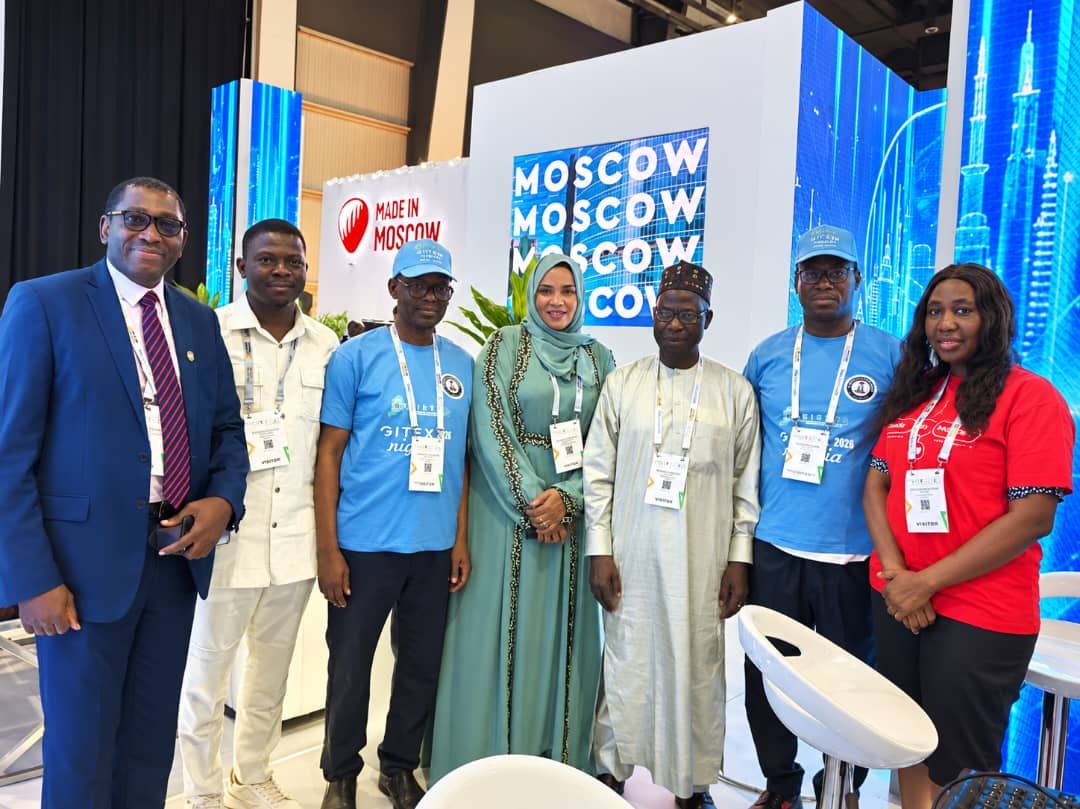
Borno State is eyeing smart-city technologies showcased by technology companies from Moscow as part of efforts to strengthen urban development and advance the state’s digital transformation agenda.

The engagement was undertaken by the Borno State Information and Communication Technology Development Agency (BICTDA) during the state’s participation at GITEX Nigeria 2026 in Lagos, where technology companies, innovators, investors and government institutions gathered to showcase emerging digital solutions.
The BICTDA delegation was led by Engr. Mohammed Ahmed Kabir Wanori, agency’s Chief Executive Officer, alongside the Chairman of the BICTDA Board, Dr Idriss Mohammed Yelwa, and Board Member, Prof. Mustapha Tijani.
Borno assesses smart-city solutions
At the Moscow Pavilion, the delegation received presentations from participating technology companies on a range of emerging solutions, including artificial intelligence, enterprise software, digital transformation platforms, business automation and smart-city technologies.
The engagement allowed BICTDA officials to examine how the technologies are being applied and assess their potential relevance to Borno State.
The agency identified urban development, smart infrastructure, digital government, data management, cybersecurity and public service delivery as areas where some of the technologies could potentially be applied.
The move reflects the state government’s broader effort to use technology and innovation to improve governance, strengthen institutions and create new opportunities for residents.
Speaking during the engagement, Wanori says the state is deliberately looking beyond its immediate environment to identify technologies and partnerships that can respond to its development needs.
“Our presence at the Moscow Pavilion reflects our deliberate effort to connect Borno State with global technology ecosystems,” Wanori says.
“We are interested not only in the technologies themselves, but also in building meaningful partnerships, promoting knowledge transfer and adapting global innovations to address our local realities.”
Focus on practical technology adoption
Rather than immediately adopting the technologies showcased, BICTDA says it will assess their suitability before making decisions on possible deployment.
The agency plans to review the solutions presented at the exhibition and identify those with potential applications in Borno State.
It will also engage the relevant companies to explore possible areas of cooperation, including technical knowledge exchange, capacity building, technology transfer and, where appropriate, pilot projects.
The assessment will consider factors such as cost-effectiveness, scalability, sustainability and the suitability of each technology to the state’s requirements.
This approach could allow Borno to test selected solutions on a smaller scale before considering broader deployment, particularly in areas where smart technology could improve the management of urban infrastructure and public services.
Global partnerships for local needs
The engagement also highlights a growing interest by subnational governments in looking beyond traditional technology procurement to establish partnerships that can support local digital capacity.
For Borno, the Moscow Pavilion engagement provides an opportunity to examine international technology solutions while considering how they can be adapted to the state’s specific development circumstances.
Wanori says BICTDA will continue engaging credible technology companies and innovation partners to identify solutions that are practical, scalable and relevant to Borno State.
The agency’s approach places emphasis on ensuring that exposure to emerging technologies translates into practical outcomes rather than remaining limited to technology demonstrations.
Potential collaboration with technology companies could include knowledge transfer and capacity building, which would help develop local expertise alongside any technology deployment.
For smart-city initiatives, such partnerships could potentially support the use of digital systems for urban planning, infrastructure management, data-driven decision-making and improved delivery of government services.
BICTDA says the ultimate objective is to ensure that engagements such as the Moscow Pavilion visit go beyond exposure to emerging technologies and create opportunities for practical collaboration.
The agency says such collaborations should contribute to stronger digital systems, improved government services and tangible benefits for the people of Borno State.
The exploration comes as the state seeks to deepen the role of technology in its development agenda, with smart infrastructure and digital solutions being considered among the tools that could support more efficient and technology-driven urban development.



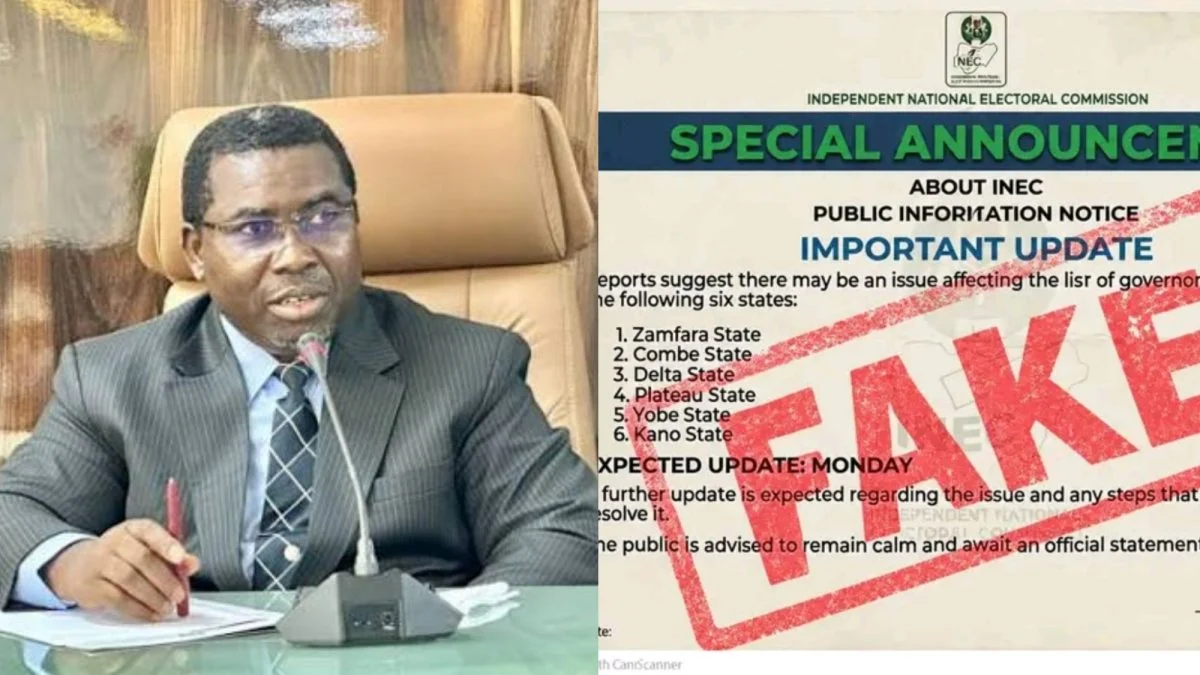
The Independent National Electoral Commission (INEC) has disowned a fake online publication claiming to be a special announcement on governorship candidates in six states.
Politics Nigeria reports that the commission identified the affected states as Zamfara, Gombe, Delta, Plateau, Yobe and Kano.
It urged members of the public to disregard the publication and rely on its verified communication channels for electoral information.
INEC said the publication did not originate from the commission and described it as fraudulent.
“The Commission wishes to categorically inform the general public that the publication is FAKE and did not originate from INEC,” the statement partly read.
“INEC therefore urges members of the public to disregard the fraudulent publication and refrain from sharing it.”
The commission’s warning comes amid concerns over the omission of several candidates from its final list of governorship candidates for the 2027 elections.
In Kano State, the Kwankwassiyya Movement has vowed to engage INEC over the omission of Mustapha Rabiu Kwankwaso, the Nigeria Democratic Congress (NDC) deputy governorship candidate, and his principal, Aminu Abdussalam Gwarzo, from the final list.
Habibu Mohammed, spokesperson for the movement, said the omissions came as a shock, insisting that the candidates had met the requirements for registration.
Speaking on Arise Television, Mohammed said the movement would explore the legal provisions available to candidates whose names were omitted from the commission’s list.
“It came as a shock because there had been no issue with INEC. Kwankwas, a former deputy governor, is registered with the NDC and met the stipulated deadline,” he said.
He added that electoral provisions allow affected candidates 14 days to seek redress over omissions from the list.
“We will explore that opportunity and engage with INEC,” Mohammed said.
The spokesperson maintained that the movement was unaware of any court judgment or order that could have justified the omission.
He expressed confidence that the matter would be resolved through engagement with the commission and the available legal procedures.
The NDC has also described the omission as an error and said it is seeking a correction.
Meanwhile, the Peoples Democratic Party (PDP) has also begun engaging INEC over the omission of its governorship candidates in Ogun and Gombe states.
The party’s National Publicity Secretary, Jungudo Mohammed, disclosed this in a statement on Sunday, saying the party was working towards an amicable resolution in line with the law and established electoral guidelines.

He assured affected candidates, members and supporters that the party was treating the matter seriously and would communicate further developments when necessary.
The PDP also urged those affected to remain calm and exercise patience while discussions with the commission continued.
This was just as the party warned against actions or statements that could undermine the ongoing engagements with INEC, stressing its commitment to addressing the concerns through lawful means.
INEC released its final list of candidates for the February 6, 2027 governorship elections on Saturday.
The list, signed by the commission’s Secretary, Rose Oriaran-Anthony, and published on its website, contained 13 candidates in Ogun State and 16 in Gombe State, with no PDP candidate listed in either state.
Among those omitted were Ladi Adebutu, the PDP candidate in Ogun State, and Isa Ali Pantami, the party’s candidate in Gombe State.
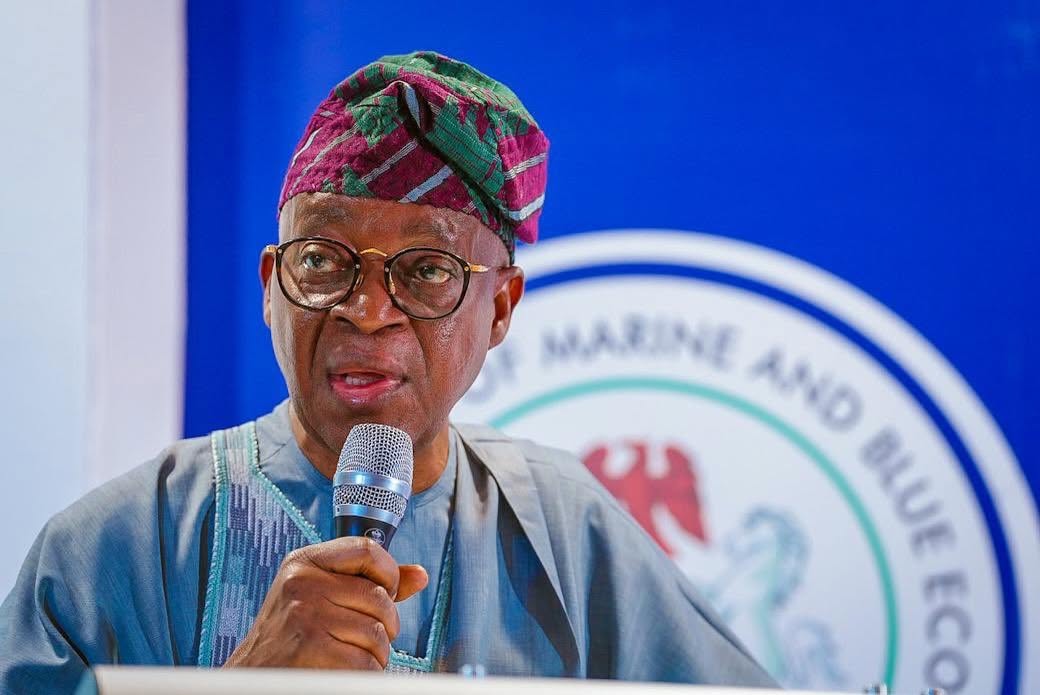
The Nigerian Ports Authority (NPA) has moved to address rail connectivity and logistics challenges affecting inland dry ports as part of efforts to integrate the facilities into the nation’s port system and improve cargo movement across the country.
The move followed a meeting between the NPA management, led by its Managing Director, Abubakar Dantsoho, and the Executive Director of Dala Inland Dry Port, Ahmad Rabiu, alongside representatives of Funtua Inland Dry Port, at the authority’s corporate headquarters in Marina, Lagos.
The engagement came after the Minister of Marine and Blue Economy, Adegboyega Oyetola, directed the transfer of operational oversight of inland dry ports to the NPA.
The discussions focused on strengthening institutional collaboration, addressing infrastructure constraints and improving operational efficiency across Nigeria’s maritime logistics chain.
Speaking during the meeting, Mr Dantsoho stressed the need to upgrade inland dry port infrastructure and technical capacity to complement ongoing modernisation efforts at the nation’s seaports.
He said the facilities must be equipped to handle increasing cargo volumes and support the broader transformation of Nigeria’s maritime sector.


“For our Inland Dry Ports to function at the same velocity as the ongoing modernisation across our seaports, we must proactively upgrade dry port infrastructure and technical capacity,” Mr Dantsoho said.
He explained that the integration of digital platforms, including the Port Community System (PCS) and the National Single Window, into seaport operations must be matched by corresponding improvements at inland dry ports.
“As we integrate digital systems such as the Port Community System (PCS) and the National Single Window in our seaports, the dry ports must deploy modern equipment and advanced technical capabilities to handle larger cargo volumes and bigger vessels coming to our coast,” he added.
Increased private-sector investment
The NPA managing director also called for increased private-sector investment in inland dry port infrastructure, noting that stronger investment would be critical to improving cargo handling capacity and operational efficiency.
He cited APM Terminals’ establishment of an Export Processing Terminal in Northern Nigeria as an example of private-sector participation in the development of inland logistics infrastructure.
ALSO READ: INVESTIGATION: Ganduje embroiled in multi-billion naira Kano dry port ownership scandal
Mr Dantsoho assured stakeholders that efforts to optimise the inland port system were underway and confirmed plans to visit the Dala and Funtua facilities to assess their operational conditions and infrastructure requirements.
Operational oversight
Speaking on behalf of the delegation, Hassan Bello welcomed the transfer of operational oversight to the NPA, expressing appreciation for what he described as a seamless transition.
Mr Bello referenced the gazetted Port Act, which recognises inland dry ports as official ports of origin and destination, while drawing attention to challenges confronting the facilities, particularly inadequate rail connectivity and broader logistics constraints.
Rail access is a critical component of inland dry port operations, as efficient connections to the national rail network can facilitate cargo movement between seaports and inland destinations, potentially reducing pressure on road transport and lowering logistics costs.
The meeting also established a framework for further technical consultations, infrastructure integration and physical planning to identify the requirements for improving operations at the facilities.
The discussions highlighted the need for detailed technical assessments, stakeholder coordination and physical inspections to establish infrastructure priorities and guide subsequent project development.
The planned visits to Dala and Funtua inland dry ports are expected to provide NPA with a clearer understanding of the facilities’ operational challenges and the interventions required to strengthen their roles in cargo distribution, trade facilitation and wider maritime logistics network.
Discover more from Premium Times Nigeria
Subscribe to get the latest posts sent to your email.
-

 Business3 days ago
Communications Ministry made ₦345.5 million duplicate payment for Abuja ICT Park project
-
Business3 days ago
Fuel subsidy would cost Nigeria over N20trn yearly — Minister
-
News3 days ago
LumenUs helps automate tedious paperwork in times of grief
-
News2 days ago
Inside INEC’s AI and cybersecurity plans to secure Nigeria’s 2027 Elections – Technology Times