Health
Nigeria’s ex-Head of State used for hospital advert in India


Former Nigerian Head of State Abdulsalami Abubakar has been featured in promotional material by an Indian hospital following his knee replacement surgery there.
The video, which has gone viral on social media, shows Mr Abubakar receiving care at Krishna Shalby Hospital in Ahmedabad, India, including footage of him walking and exercising after the procedure.
The hospital has also used images of the former Head of State and Vice President Kashim Shettima in posts promoting its services to international patients.
Hospital’s promotion
In an Instagram post on Monday, the Indian Hospital said Mr Shettima visited the facility and met its management to discuss Mr Abubakar’s progress and wellbeing.
The hospital described the visit as a reflection of the “growing trust in India’s healthcare” and its commitment to caring for patients from across the world.
“When patients travel across borders for specialised care, their trust means everything,” the hospital said.


It is not immediately clear whether Mr Abubakar’s treatment was fully sponsored by the federal government.
However, under the Remuneration of Former Presidents and Heads of State (and Other Ancillary Matters) Act, former Heads of State and their immediate families are entitled to free medical treatment in Nigeria and treatment abroad where necessary at federal government expense.
The law also provides other benefits, including diplomatic passports, protocol privileges, official vehicles, office and residential accommodation, security and annual vacation at federal government expense.
In 2026, the federal government budget provides N2.3 billion for the entitlements of former presidents, Heads of State and their deputies.
Nigerians react
The hospital’s use of Mr Abubakar’s treatment in its promotional material has generated reactions from Nigerians.
Activist and presidential candidate Omoyele Sowore was among those who reacted after sharing the promotional video on X on Tuesday.
“This is former Nigerian Head of State, General Abdulsalami Abubakar, being used in a hospital advert after undergoing knee replacement surgery in India,” Mr Sowore said.
He questioned why Nigerian leaders who had opportunities while in government to develop the country’s healthcare system continue to seek specialised treatment abroad.
Mr Sowore said the development was a reflection of what he described as “decades of failed leadership and neglect of Nigeria’s healthcare system”.
Aloy Ejimafor, a barrister, also criticised the development in a Facebook post.
Mr Ejimafor described it as a “diplomatic insult” for an Indian hospital to use Mr Abubakar’s image in an advert for knee replacement surgery in India.
Medical tourism
Mr Abubakar’s treatment abroad comes amid a long-running pattern of Nigerian political leaders seeking medical care outside the country.
For instance, late President Muhammadu Buhari faced repeated criticism over his medical trips to the United Kingdom during his presidency.
READ ALSO: Three years after doctor’s death, Lagos hospital’s elevator still not operational
Nigerian doctors and other critics argued that the practice undermined confidence in the country’s health system, particularly because political leaders control public investment in healthcare.
In April 2025, Coordinating Minister of Health and Social Welfare, Muhammad Pate, said Nigeria loses an estimated $2 billion annually to medical tourism.
Mr Pate made the statement at the commissioning of a 50-bed specialist hospital in Lagos, where he said the figure reflected gaps in confidence, access and quality in the country’s healthcare system.
“This is not just about stopping medical tourism. It is about building health sovereignty, the ability of a country to care for its own people, develop its institutions, talent, and innovation,” Mr Pate said.
Discover more from Premium Times Nigeria
Subscribe to get the latest posts sent to your email.


Health
Updated: Independence Anniversary: Tinubu promises stronger primary healthcare for poor Nigerians

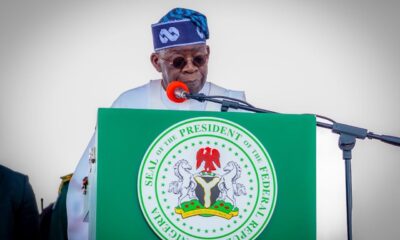
President Bola Tinubu has promised to strengthen primary healthcare services for poorer Nigerians as part of his administration’s efforts to reduce poverty and improve living conditions.
Mr Tinubu, in a televised address marking the country’s 66th Independence Anniversary, said his administration would work with state and local governments to strengthen primary healthcare, basic education, and other essential public services poorer Nigerians depend on.
“That is why, working with our states and local governments, we will continue to strengthen primary healthcare, basic education, and the essential public services poorer Nigerians depend on most,” he said.
The promise comes against the backdrop of persistent challenges in Nigeria’s primary healthcare system, with recent assessments and PREMIUM TIMES investigations documenting shortages of health workers, poor infrastructure, inadequate equipment and gaps in basic utilities at several facilities.
PHCs face staffing, infrastructure gaps
A recent assessment of 1,480 primary healthcare centres across 16 states found that 97 per cent of the facilities failed to meet the national minimum staffing requirement.
The assessment, conducted between October 2023 and June 2025 by Orodata Science and Civic Tech, covered 277 local government areas across Nigeria’s six geopolitical zones.
Only three per cent of the facilities assessed met the national minimum staffing requirement, while 11 of the 16 states had no assessed PHC that met the standard.
The assessment also found that 40 per cent of the facilities had broken ceilings or leaking roofs, while 38 per cent operated without electricity.
Another 39 per cent relied on unsafe water sources, while 75 per cent lacked essential neonatal resuscitation equipment.
About 75 per cent of the PHCs assessed were located in rural communities, where such facilities often serve as the first, and sometimes only, formal source of healthcare for residents, the report said.
PREMIUM TIMES’ recent investigation into rural PHCs in Osun State also found that challenges persisted at some facilities despite government spending and interventions aimed at revitalising primary healthcare.
The investigation across three PHCs found problems including deteriorating infrastructure, inadequate staffing, limited equipment and gaps in essential services.
Increase in PHC financing
The federal government has, however, reported increased funding for primary healthcare under the Basic Health Care Provision Fund (BHCPF).
In June, the Coordinating Minister of Health and Social Welfare, Muhammad Pate, said N339 billion had been disbursed to states through the BHCPF since its establishment in 2014, with N235 billion of the amount disbursed in the three years of the Tinubu administration.
Mr Pate said the increased funding reflected intensified investment in primary healthcare and had helped expand access to essential health services.
He said more than 8,000 PHCs across the 36 states were receiving funding through the BHCPF gateways, while assessments were underway to increase the number of supported facilities to 17,600 nationwide.
The government has also launched the Primary Healthcare Provision Strengthening Programme (HOPE-PHC), a $570 million programme designed to strengthen primary healthcare as part of a wider human capital development and poverty-reduction initiative.
The link between healthcare and poverty reduction
In his address, Mr Tinubu acknowledged that millions of Nigerians still struggle to meet basic needs, including healthcare costs.
“I am also conscious that millions of our fellow citizens cannot wait for tomorrow. Some Nigerian families still struggle today for the next meal, the next school fee, the next medical bill, or simply enough money to get to work,” he said.
ALSO READ: FG approves N32 billion for BHCPF to strengthen primary healthcare services
He said the difficulties facing vulnerable Nigerians were not created by the economic reforms of the last three years but were the accumulated consequences of decades of low productivity, inadequate infrastructure, insufficient opportunities and institutions that had often failed those who needed them most.
Mr Tinubu said his administration could not erase in four years problems that had accumulated over generations but could change their course.
“We can build an economy that steadily lifts people out of poverty while ensuring that those who remain vulnerable are not abandoned along the way,” he said.
He said the government was strengthening direct support for poor households and improving the National Social Register so that assistance reaches those who genuinely need it.
Discover more from Premium Times Nigeria
Subscribe to get the latest posts sent to your email.

Nigeria has been identified among high-volume markets where a new $1 testing package could help expand screening of pregnant women for HIV, syphilis and hepatitis B.
The package, launched by Premier Medical Corporation and Impact Nexus Africa, combines two rapid diagnostic tests under a single commercial offer for use through existing antenatal care services.
The companies said their analysis identified Nigeria, Ethiopia, Tanzania, Uganda, Kenya, Mozambique and South Africa among the countries with the largest potential markets for antenatal hepatitis B screening.
Impact Nexus Africa estimates that the package could generate about $215 million in commodity savings across 74 low- and middle-income countries between 2026 and 2035, if adopted across antenatal care at the modelled volumes.
However, the estimate is based on modelling and does not represent confirmed savings for individual countries, including Nigeria.
How the package works
The Triple Elimination Testing Bundle costs $1 ex-works per woman screened and contains two separate rapid diagnostic tests.
One is the World Health Organisation’s (WHO)-prequalified First Response HIV 1+2/Syphilis Combo Card Test, which screens for HIV and syphilis simultaneously.
The second is the First Response hepatitis B surface antigen (HBsAg) Card Test, which screens for a marker of hepatitis B infection.
The tests remain separate products but are supplied together as a single commercial offer.
The price also includes access to digital training, assessment and competency tools for end users.
The $1 price excludes freight, local distribution, taxes, regulatory costs and other programme or implementation expenses. Orders are subject to a minimum quantity of 100,000 bundles.
Potential savings
According to the companies, the package is between 22 per cent and 46 per cent cheaper in commodity terms than procuring equivalent HIV/syphilis and hepatitis B rapid diagnostic tests separately.
The analysis estimates an addressable market of about 37.8 million antenatal HBsAg tests annually across 74 low- and middle-income countries.
It projects that using the package instead of separately procured tests could generate about $215 million in commodity savings over 10 years.
The companies said annual savings could exceed $10 million in some high-volume markets, while they could remain below US$1 million in smaller markets.
Actual savings, however, would depend on countries’ existing procurement prices, testing volumes and the scale and pace of implementation, according to the analysis.
They also estimate that the modelled rollout could identify HBsAg-positive pregnancies in about 17.1 million women and contribute to averting approximately 2.7 million infant hepatitis B infections between 2026 and 2035.
It said the health impact projections depend on screening uptake, local hepatitis B prevalence and successful linkage of women who test positive to recommended maternal and infant interventions.
Why hepatitis B screening matters
The initiative is aimed at supporting the global effort to eliminate mother-to-child transmission of HIV, syphilis and hepatitis B.
The WHO recommends testing pregnant women for HIV, syphilis and hepatitis B at least once during pregnancy and as early as possible.
While HIV and syphilis screening have increasingly been incorporated into antenatal care, hepatitis B screening remains less consistently implemented across countries.
The companies said the new package could therefore serve both countries that already provide hepatitis B screening and those seeking to introduce or expand it.
They said the approach builds on existing antenatal care systems rather than requiring countries to establish a separate testing platform.
What the package could mean for Nigeria
For Nigeria, the significance of the package goes beyond its lower price.
A 2026 analysis of Nigeria Demographic and Health Survey data found that although 72 per cent of mothers attended antenatal care, only 12.3 per cent were tested for hepatitis B during pregnancy.
Earlier national data also highlighted the gap. An analysis of about 2.8 million pregnant women who received antenatal care across more than 6,000 facilities providing prevention of mother-to-child transmission services found that only 7.2 per cent were screened for hepatitis B.
READ ALSO: Man allegedly kills girlfriend over argument about HIV infection
The Federal Ministry of Health and Social Welfare has also been working to strengthen hepatitis B screening as part of Nigeria’s triple-elimination response. In 2025, the ministry said it planned to introduce free hepatitis B testing, treatment and care for pregnant women who test positive.
Against this backdrop, the new bundle could offer Nigeria a lower-cost option for expanding hepatitis B screening through existing antenatal care services.
The companies said the package is available to public and private sector purchasers across all low and middle-income countries, subject to national registration, importation and procurement requirements.
Discover more from Premium Times Nigeria
Subscribe to get the latest posts sent to your email.
-

 News10 hours ago
Plateau Specialist Hospital Celebrates Nigeria at 66, Salutes Mutfwang’s Health Initiatives
-
News10 hours ago
Nigeria At 66: Rotjimwa Yilyok Salutes President Tinubu, APC Leadership and Plateau Government
-
 News3 days ago
TikTok Access Disrupted in Parts of Northern Nigeria as Users Turn to VPNs
-
Business3 days ago
Court orders NMDPRA to continue issuing fuel import licences to Matrix, AA Rano, AYM Shafa