Business
Why we chose Chinese companies to revamp our refineries — Ojulari

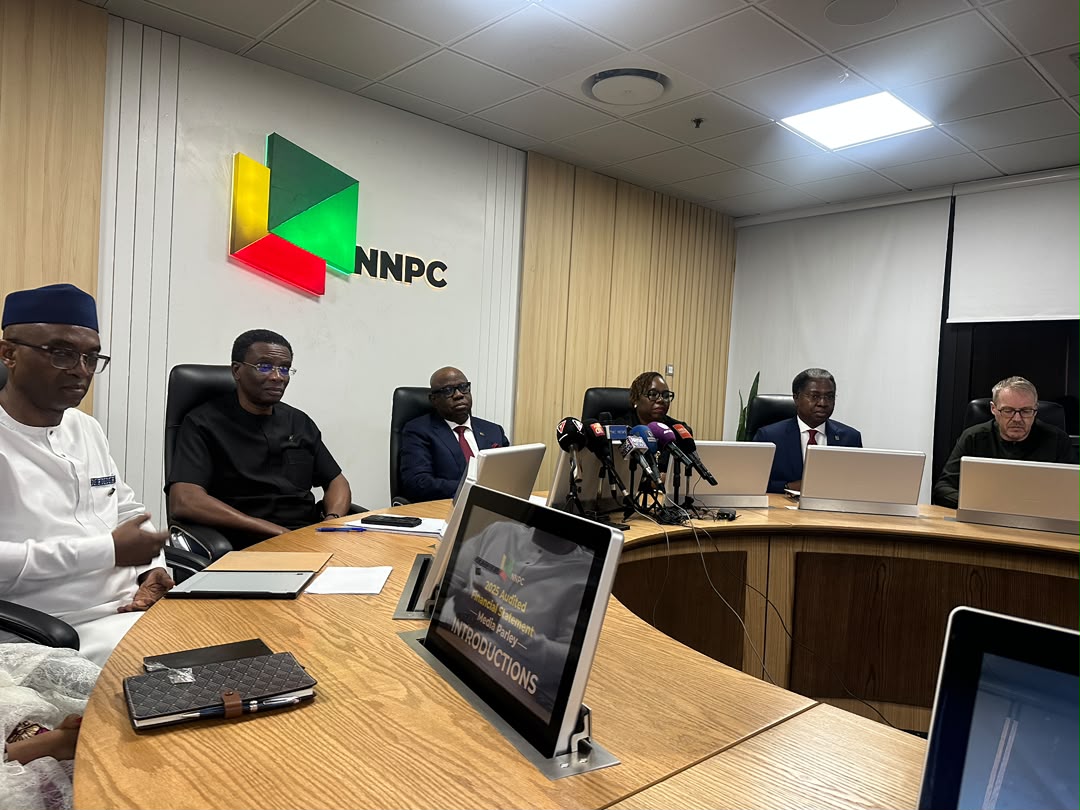
The Group Chief Executive Officer of NNPC Limited, Bayo Ojulari, has explained why the company selected two Chinese firms, Sanjiang Chemical Company Limited and Xinganchen (Fuzhou) Industrial Park Operation and Management Co. Ltd, for a potential technical equity partnership to revive and operate Nigeria’s Port Harcourt and Warri refineries.
Mr Ojulari said the selection followed a nine-month process during which NNPC considered more than 50 potential partners before narrowing the list to about 20.
He spoke on Tuesday while addressing journalists after the release of NNPC Limited’s 2025 financial results at the NNPC Towers in Abuja.
His comments followed a question from a PREMIUM TIMES correspondent on why NNPC had entrusted the revival of the two refineries to the Chinese companies amid concerns over their capacity and track record.
In May, NNPC announced that it had signed a Memorandum of Understanding (MoU) with the two Chinese companies for collaboration through a potential technical equity partnership to support the completion and operation of the Port Harcourt and Warri refineries.
“The NNPC Ltd has signed a Memorandum of Understanding (MoU) with two Chinese companies, Sanjiang Chemical Company Limited and Xinganchen (Fuzhou) Industrial Park Operation and Management Co. Ltd, for collaboration through a potential Technical Equity Partnership in support of the completion and operation of the Port Harcourt and Warri Refineries,” the company said at the time.


NNPC said the proposed arrangement would focus on completing outstanding work at the two refineries and ensuring efficient operation and maintenance to achieve “best-in-class, sustainable performance.”
Why Chinese companies
Mr Ojulari said NNPC did not settle on the companies without considering other potential partners.
“Before we settled on these companies, we considered more than 50 potential partners and eventually narrowed the list to about 20,” he said.
 “It took us approximately nine months to reach this stage of the process.”
According to him, the selected companies distinguished themselves based on their credibility and alignment with NNPC’s strategy.
He said several other companies approached by NNPC sought equity participation or significant control of the refineries.
“Most of the other companies we approached wanted us to provide them with equity or allow them to take over the refinery. Some wanted us to sign agreements that would give them significant control over the project,” he said.
Mr Ojulari said the Chinese companies were selected because their proposed approach was more closely aligned with NNPC’s objective of developing a sustainable refinery operation.
“Although we have not yet signed a final agreement with them, they are the only ones that have demonstrated the level of alignment we are looking for,” he said.
“Our vision is to build something sustainable, with a partner that is prepared to invest its own resources and expertise in the project, rather than simply secure a contract for which we would pay it.”
Due diligence
The NNPC boss also defended the companies against concerns about their technical capacity, saying the national oil company had conducted independent due diligence on them.
He said he personally visited their facilities in China alongside members of the NNPC team and board.
“We have conducted independent due diligence on the company. We know its specific address and location, and I personally visited its facilities. I saw its operations with my own eyes,” he said.
According to him, the companies are involved in the operation of a major petrochemical plant in China and have access to significant technical expertise.
“These are people who operate one of the largest petrochemical plants in China, with significant production capacity,” he said.
“Petrochemical plants are even more complex than refineries, as those of us with engineering knowledge understand.”
He also said the company has a stake in one of China’s major refineries and has board-level representation, giving it access to technical expertise and industry talent.
Mr Ojulari said NNPC was deliberately seeking a partner with a long-term stake in the success of the refineries rather than a contractor whose involvement would end after payment.
He illustrated the distinction with an analogy.
“As I often say, it is like hiring a taxi driver to transport your luggage from your home to the market. Whether or not you eventually sell your goods at the market is not the driver’s concern. The driver’s responsibility is simply to get you there,” he said.
“That is the kind of arrangement we want to avoid. We need a partner that has a genuine stake in the success and sustainability of the refinery, rather than one whose involvement ends once it has been paid for its services.”
‘Some people will be unhappy’
Mr Ojulari also cautioned against what he described as misleading reports and comments about NNPC’s refinery strategy.
“Let me first say this, as I have said before: when you embark on a strategy of this nature, there will always be people who are unhappy with your decisions,” he said.
He said efforts to address leakages and protect Nigeria’s interests could affect some stakeholders, prompting opposition to the company’s strategy.
“When you take steps to stop certain leakages in the system and protect Nigeria’s interests, some people will inevitably be disadvantaged,” he said.
He added that some stakeholders could seek to undermine the refinery rehabilitation efforts because they believe the strategy could threaten their interests.
“When you come up with a formidable and credible solution, you are inevitably going against the interests of certain people who may resort to different tactics to frustrate your efforts,” he said.
Mr Ojulari urged Nigerians to scrutinise such claims rather than accepting them at face value.
“So, please, let us not take all these comments and reports at face value,” he said.
He also cited his 35 years of experience in the oil industry as part of the basis for his assessment of the companies and the refinery rehabilitation strategy.
“You cannot have someone like me, who has spent 35 years in the industry, travel to China, return to Nigeria and tell Nigerians that the companies building refineries should be asked to leave,” he said.
The NNPC boss said the company would continue to examine claims about the project and verify the credibility of those making them.
“We have conducted independent due diligence on the company,” he said. “When people begin to circulate misleading information, we must make an effort to identify the sources and establish the facts.”
Background
Nigeria has four state-run refineries, including two in Port Harcourt, which together form the Port Harcourt Refining Company, with a combined installed capacity of 210,000 barrels per day (bpd).
The Kaduna Refining and Petrochemical Company Limited has an installed capacity of 110,000 bpd, while the Warri Refining and Petrochemical Company Limited has an installed capacity of 125,000 bpd.
All four refineries have a combined installed capacity of 445,000 bpd.
Despite significant cash injections aimed at getting the plants to run optimally for many years, the refineries continue to grapple with operational constraints, with site visits revealing that most facilities are far from operating at peak levels.
READ ALSO: NNPC’s profit rose 33.3% to N7.2trn in 2025
The Warri Refinery, which reopened in December 2024, shut down in January due to safety issues. In May last year, NNPC announced an outage at the Port Harcourt Refinery, preparatory to scheduled maintenance.
In October last year, NNPC announced that it had initiated a comprehensive technical and commercial review of its three refineries to ensure optimal performance and sustainability.
The goal of the overhaul, according to NNPC, is to position the corporation for its big role as a supplier of petroleum products of last resort, as stipulated by the Petroleum Industry Act, while ensuring the efficient and profitable operation of the refineries.
During his remarks on Tuesday, Mr Ojulari said over 30 officials of the Chinese companies have come to assess the current situation of the refineries, and that they spent months in the country working on the project.
However, he reiterated that a final agreement has not been signed.
Nigeria has continued to seek strategic investors and technical partners for its state-owned refineries as part of efforts to reduce dependence on imported petroleum products and improve domestic refining capacity.
Discover more from Premium Times Nigeria
Subscribe to get the latest posts sent to your email.






The Federal Government has signed a concession agreement with PH Airport Limited to manage and develop the Jeremiah Obafemi Awolowo International Airport, Port Harcourt, assuring aviation workers that the arrangement will not lead to job losses.
Minister of Aviation and Aerospace Development Festus Keyamo and the group managing director of PH Airport Limited, Eyo Asuquo, signed the deal, following consultations with aviation labour unions.
The minister’s media aide, Tunde Moshood, disclosed this in a statement on Thursday, saying the unions endorsed the agreement after receiving assurances that no aviation worker will lose their job because of the concession.
The agreement marks a new phase in the government’s plan to attract private investment into airport infrastructure and improve the management of selected airports across the country.
According to the statement, Mr Keyamo met with aviation union leaders before the formal signing to address concerns about the concession’s implications for workers.
Speaking on behalf of the unions, Ben Nnabue said workers’ welfare and job security remain central to their consideration of the agreement.
He added that organised labour will not support an arrangement that threatened the livelihoods of its members, adding that the unions are satisfied with the assurances received from the government and the concessionaire.
He also noted that the endorsement followed extensive engagement on the airport’s future and the potential effects of private-sector participation on aviation workers.
Mr Asuquo said the company intends to invest in infrastructure, improve operational standards and expand economic activities around the airport.
He described Port Harcourt’s location within the Gulf of Guinea as an advantage that could strengthen its role in regional commerce, investment and connectivity.
“Our vision goes beyond taking over the management of the airport. We are committed to driving development, expanding opportunities and creating additional jobs through investments and the growth of airport-related activities,” he stated.
READ ALSO: EXCLUSIVE: EFCC charges former Port Harcourt, Warri refinery MDs with money laundering
He added that the company intended to unlock the airport’s economic potential and strengthen its position as an aviation and commercial hub.
PREMIUM TIMES had earlier reported that the Federal Executive Council approved the concession of Port Harcourt International Airport in November 2025, alongside other projects aimed at modernising Nigeria’s aviation infrastructure and attracting private investment.
The approval formed part of the Federal Government’s broader airport concession programme, which seeks to improve airport infrastructure, operational efficiency and commercial viability through private-sector participation.
The government has argued that private investors could provide the capital and expertise needed to expand airport facilities and develop revenue-generating activities, particularly those outside conventional aviation operations.
The concession programme is designed to attract investment into airport terminals and related services, while the Federal Airports Authority of Nigeria continues to perform its statutory responsibilities.
Discover more from Premium Times Nigeria
Subscribe to get the latest posts sent to your email.
Business
Veritas Kapital Assurance Records 54% Growth in Total Assets to ₦54.56 Billion, Strengthens Financial Position
-

 News3 days ago
APM holds Presidential Campaign in Plateau, Pledges Security and Economic Reset
-
News4 days ago
APC Legacy Assembly Expresses Confidence in Tinubu Ahead of 2027 Election
-
News19 hours ago
UNIJOS Appoints Patricia Lar as First Female Vice-Chancellor
-
News4 days ago
Nigeria’s ntel wins international MVNO pitch competition in Spain – Technology Times