Connect with us

News

Apple Pay finally launches in India after years on the sidelines

info

Published

on

GettyImages 1814216780 e1711055311427.jpg

Apple began rolling out Apple Pay in India on Tuesday, as TechCrunch was first to report. Its first banking partner is Axis Bank, the country’s third-largest private-sector lender. The move brings the company’s payments service to the world’s most populous country after years of delays in a market dominated by the state-backed United Payments Interface (UPI).

The initial rollout is limited. Apple Pay supports eligible Axis Bank cards on Visa and Mastercard, but not India’s homegrown RuPay network. Acceptance will also be restricted to merchants and payment terminals that have been enabled for the service.

Apple said the service would be accepted by “millions of merchants” across India, including Blinkit, Croma, Ixigo, Reliance brands, Tata 1mg, and Zomato. The company has worked with payment service providers including Cashfree, JusPay, Mswipe, Paytm, PayU, Pine Labs, Razorpay, and Worldline to enable Apple Pay acceptance.

Unlike India’s ubiquitous Unified Payments Interface (UPI) system, which lets consumers make instant bank-to-bank payments without relying on cards, Apple Pay is card-based and requires individual issuers and payment infrastructure providers to integrate with the service. This makes a broad rollout more complex. Apple’s commercial terms have also emerged as a sticking point with some of India’s largest banks, the people said.

Apple is seeking a fee of about 20 basis points (0.2%) on transactions, according to the people, a significant bite out of the roughly 40 to 50 basis points (0.4% to 0.5%) of margin in the payments layer. The fee structure is broadly consistent with Apple Pay’s commercial model in other markets, the people said. HDFC Bank, ICICI Bank, and SBI Card are not supporting Apple Pay at launch as negotiations over commercial terms continue, one of the people told TechCrunch.

Apple, Axis Bank, HDFC Bank, ICICI Bank, and SBI Card did not respond to requests for comment on the launch. Earlier this month, Reuters reported that Apple was preparing to launch Apple Pay in India in October, starting with Axis Bank credit cards.

Apple Pay has entered a payments market that looks markedly different from the U.S. and other card-heavy economies. India’s digital payments boom has been driven largely by UPI, the state-backed system that lets consumers move money directly between bank accounts.

UPI handles the bulk of digital payments in India, where scanning a QR code to pay directly from a bank account has become commonplace. Apple Pay, by contrast, initially addresses a much smaller card payments market.

Nevertheless, Apple Pay could appeal to India’s growing base of iPhone users, who tend to be more affluent and are more likely to use premium credit cards. Those customers could make the service hard for banks to ignore, despite UPI’s dominance.

Even if Apple Pay remains a niche service, the economics could still make India meaningful for Apple. The transaction fee the iPhone maker would charge would give it another way to monetize its growing base of iPhone users in the country, the people said.

At launch, eligible Axis Bank customers can add their credit cards to Apple’s Wallet app and use Apple Pay for online purchases as well as contactless payments at supported terminals, the people said.

An Apple Pay transaction could work at a terminal operated by an independent payments provider that has enabled the service but fail at another terminal whose acquiring bank has not, one of the people said. That could make acceptance uneven during the initial rollout, even for customers with supported cards.

The launch adds another piece to Apple’s growing business in India, where it has been expanding iPhone sales, local manufacturing, and its retail footprint. Apple accounted for 28% of India’s smartphone market by value in 2025, up from 23% a year earlier, per an earlier report by Counterpoint Research.

India already accounts for about a quarter of global iPhone production, and that share could rise to 30% to 35% over the next five years, Indian English daily Business Standard reported last month, citing an Indian government official.

Update: This story, originally published Tuesday morning, has been updated to reflect that the launch is now underway.

When you purchase through links in our articles, we may earn a small commission. This doesn’t affect our editorial independence.

Continue Reading
Click to comment

Leave a Reply

Your email address will not be published. Required fields are marked *

News

Another Bauchi lawmaker withdraws from 2027 race

info

Published

on

Bauchi.jpg

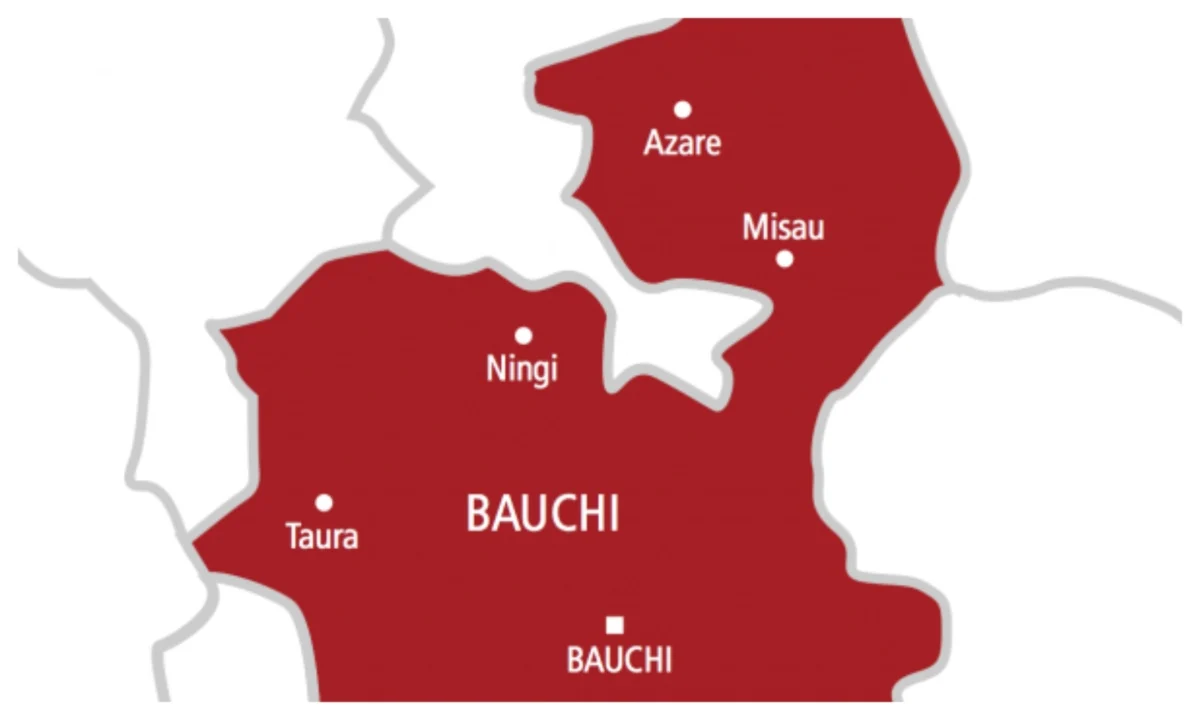
Yusuf Abdullahi Itas, a member of the Bauchi State House of Assembly representing Itas/Gadau State Constituency, has withdrawn from the 2027 general election.
Itas, who is seeking re-election on the platform of the Allied Peoples’ Movement (APM), announced his decision in a letter dated October 5, 2026, addressed to the party’s state chairman.

In the letter titled, “Withdrawal of Candidature for the Itas/Gadau State Constituency Seat in the Bauchi State House of Assembly,” the lawmaker formally informed the party that he would no longer contest the seat in the 2027 election.

He described his decision as “entirely voluntary and personal”.

He thanked the APM leadership and its members for giving him the opportunity to represent the party.

Recommended

Itas also expressed appreciation to residents of the constituency for their encouragement and support during his time in office.

The lawmaker is the Chairman of the House Committee on Petitions and Deputy Chairman of the Committee on Local Government and Chieftaincy Affairs.

His withdrawal comes less than three weeks after the Bauchi Assembly Chief Whip, Musa Wakili Nakwada, also announced that he would not contest the 2027 elections.

Continue Reading

News

JOS GHETTO STORIES: THE STORIES OF RESILIENCE, DREAMS & GREATNESS

info

Published

on

Photo output 1 681x1024.png


Views: 7

JOS GHETTO STORIES

Your Beginning Is Not Your Ending.

Welcome to Jos Ghetto Stories — a new Jos Events series created to tell the stories that are often overlooked, but should never be forgotten.

From the narrow streets of Gangare, Nasarawa, Angwan Rogo, Jenta-Adamu, Congo-Russia, Tudun Wada, Katako, Dadin Kowa, Bukuru and other communities across Jos, there are children growing up surrounded by challenges many of us may never fully understand.

Some wake up without knowing where their next meal will come from.

Some go to school with torn shoes.

Some live in crowded homes, struggle to afford basic needs, or watch their parents battle every day just to keep the family going.

And some are already beginning to believe that because they were born into hardship, hardship is all life has to offer them.

But we are here to tell them something different.

YOU CAN STILL BECOME GREAT.

Your address does not determine your destiny.

The street you grew up on does not decide the height you can reach.

Poverty may be part of your story, but it does not have to be the final chapter.

Look at Jos.

This city has produced and nurtured people who have gone on to make their mark far beyond the streets where their journeys began.

John Obi Mikel and Ogenyi Onazi, Ahmed Musa went from Jos to becoming aome of Nigeria’s most recognisable footballers, they all grew up from the Ghetto streets of Jos and made it in life through football to the point of representing Nigeria at the highest level.

Jeremiah Gyang, M.I Abaga and Ice Prince carried the sound and creativity of Jos into the Nigerian music industry and beyond.

P-Square and 2Baba are among the major names whose stories are connected to Jos.

Saint Obi,Dayo Okeniyi took their journey from Jos into international acting, while filmmakers Dimbo Atiya and Kenneth Gyang, have used film to tell stories that travel far beyond home.

And there are many more whose names may not yet be famous—but whose stories prove that greatness can rise from ordinary beginnings. 

So when we walk through the streets of Jos and meet these children, we are not looking at “ghetto children.”

We are looking at future doctors, engineers, footballers, musicians, filmmakers, entrepreneurs, teachers, leaders, creatives and nation builders.

We are looking at potential.

We are looking at dreams waiting for an opportunity.

Because sometimes, all a child needs is somebody to look them in the eyes and say:

“I believe in you.”

That is what Jos Ghetto Stories is about.

We will tell the stories of the streets.

We will show the struggles.

We will celebrate the talent.

We will listen to the dreams.

And most importantly, we will remind every young person watching that you can become the best version of yourself, regardless of where you started.

Your parents may not have everything.

Your environment may not be perfect.

You may not have the opportunities others have.

But never allow your circumstances to convince you that you cannot become somebody.

The world may see a child from the slum.

We see a future star.

The world may see a difficult beginning.

We see a story waiting to become extraordinary.

This is Jos Ghetto Stories.

Stories from the streets.

Stories of struggle.

Stories of hope.

Stories of talent.

Stories of resilience.

Stories of people who refuse to let their circumstances define them.

Because from the streets of Jos, greatness can rise.

And perhaps, the next great story is the child standing beside you.

JOS EVENTS PRESENTS: JOS GHETTO STORIES.

Your Beginning Is Not Your Ending.

Dream. Believe. Rise.

Continue Reading

Trending