Health
Tinubu establishes Ebola task force, approves ₦10bn for preparedness

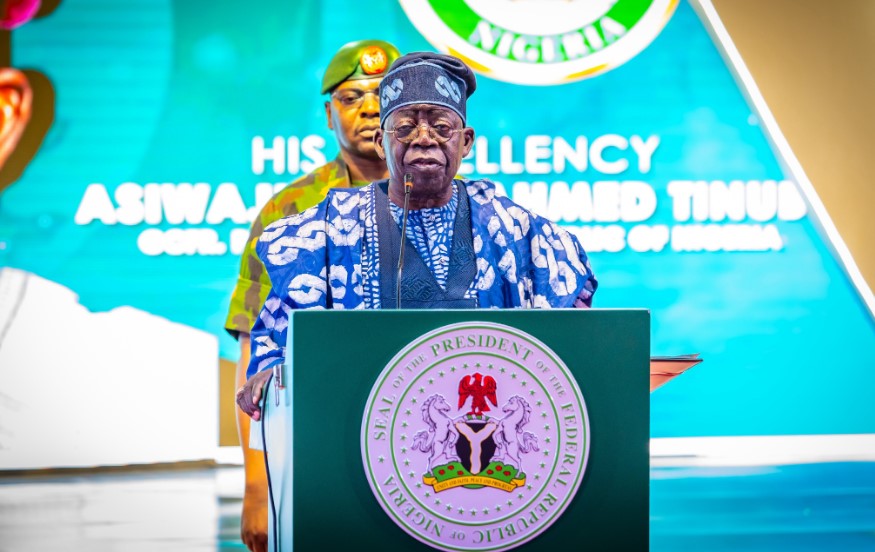

President Bola Tinubu has approved the establishment of a Presidential Task Force on Ebola Virus Disease Preparedness and Emerging Public Health Threats.
The president also ordered the immediate release of ₦10 billion for emergency preparedness.
The fund is expected to strengthen the operational readiness of the Nigeria Centre for Disease Control and Prevention (NCDC) and support critical national public health emergency response activities.
This was contained in a statement issued on Tuesday in Abuja by the presidential spokesperson, Bayo Onanuga.
The Presidential Task Force will be chaired by the Chief of Staff to the President, Femi Gbajabiamila, with membership drawn from relevant Ministries, Departments and Agencies (MDAs) as well as state representatives.

The approval followed a high-level stakeholder meeting convened by the Chief of Staff to assess Nigeria’s preparedness and develop strategies against the possible importation of Ebola into the country.
The meeting was attended by representatives of the Ministry of Interior, the Federal Airports Authority of Nigeria (FAAN), the Nigeria Immigration Service (NIS), the Nigerian Civ88il Aviation Authority (NCAA), the Lagos State Government and other key stakeholders.
Mr Tinubu also directed all states hosting international airports and border corridors, as well as relevant MDAs, to submit their preparedness plans, funding requirements and intervention needs for coordinated implementation.
The president approved a series of immediate measures to strengthen surveillance and response mechanisms across the country.
These include intensified passenger screening at all international airports through enhanced temperature checks and crowd-control protocols.
Other measures include increased monitoring of passengers arriving through designated high-risk airline routes, including Air Uganda, RwandAir, Air Tanzania, TAAG Angola Airlines, Kenya Airways and Ethiopian Airlines.
The task force is also to ensure the immediate activation of referral and isolation centres at the international airports in Lagos and Abuja, with similar facilities to be established at other airports.
In addition, a QR code-based pre-arrival health declaration system will be activated for passengers arriving from or transiting through designated high-risk countries.
READ ALSO: WHO urges Uganda to reconsider Congo border closure over Ebola outbreak
The government also approved the disinfection of departure halls, baggage areas, cargo sections and other airport facilities as precautionary environmental measures.
Mr Tinubu further directed the advisory group to consult with security, diplomatic and aviation authorities on measures to regulate flights from affected and designated high-risk countries.
The task force is expected to designate specific airports or terminals for high-risk flights to facilitate controlled screening, isolation and response procedures.
It will also consider adjusting flight schedules where necessary to minimise interaction between high-risk passengers and other travellers.
Mr Onanuga said the measures were part of proactive efforts by the federal government to safeguard public health and strengthen the country’s emergency response capacity against emerging disease threats. (NAN)







Health
NNMDA says funding challenges, infrastructure gaps slowing herbal medicine research, integration into healthcare


The Nigeria Natural Medicine Development Agency (NNMDA) has identified inadequate funding, weak research infrastructure and equipment shortages as major obstacles to developing and integrating herbal medicine into Nigeria’s healthcare system.
The Director-General of the agency, Martins Emeje, disclosed this on Tuesday during a one-day working visit by the Minister of Innovation, Science and Technology, Kingsley Udeh, to the agency’s headquarters in Lagos.
Mr Emeje said the challenges have slowed efforts to validate traditional medicines scientifically and develop locally produced herbal products that can be safely incorporated into healthcare.

The NNMDA is Nigeria’s only trans-cultural medical research agency responsible for researching, developing and promoting natural medicines derived from the country’s biodiversity.
Funding and infrastructure challenges
According to Mr Emeje, the agency lacks adequate funding to acquire critical research equipment and expand its scientific infrastructure.
He also identified low public awareness of the agency’s activities, inadequate staffing and limited opportunities for capacity development as constraints affecting its operations.

The agency said it also needs to expand its research and development facilities, including experimental medicinal plant farms across the country’s six geopolitical zones, while strengthening pre-clinical and clinical studies needed to establish the safety and effectiveness of herbal medicines.
Mr Emeje further raised concerns over what he described as unclear guidelines for the clinical evaluation of herbal medicines and their integration into Nigeria’s healthcare system.
He added that traditional medicine knowledge continues to suffer from poor public perception despite Nigeria’s rich biodiversity and abundance of medicinal plants.
Call for clinical laboratory
The agency’s director-general said one of its most urgent needs is a clinical observation laboratory to support scientific evaluation of herbal medicines.
He also requested the construction of chalets to accommodate researchers who often work beyond normal office hours.
Responding, Mr Udeh acknowledged the agency’s request and said the ministry would explore alternative financing options instead of relying solely on government budget allocations.
“The clinical observatory lab, which has been one of the major needs of the agency that’s been brought to my attention, is something that even the DG has mentioned, and we are not talking about taking the responsibility to have it done by tomorrow,” Mr Udeh said.
“We are sitting down today to innovatively identify ways of accessing funds to have it done. It mustn’t be budgeted funds. From what we are doing here, stakeholders can support in doing it. Stakeholders from the private sector can support it. We can also access some grants and other funds that we can use to make this a reality.”
The minister added that some ‘stakeholders’ had already expressed willingness to support the agency’s work.
Nigeria-India collaboration
During the visit, India’s Consul in Lagos, Kannan Chockalingam, called for stronger collaboration between Nigeria and India in traditional medicine.
He said the partnership could focus on biodiversity conservation, quality assurance, scientific validation and innovation in herbal medicine.
According to him, innovation in traditional medicine involves applying modern scientific methods to validate and standardise existing indigenous knowledge, creating opportunities for research, product development and integration into national healthcare systems.
READ ALSO: Digital tools alone cannot fix Nigeria’s health system — Experts
Seven herbal products unveiled
The minister also unveiled seven locally developed herbal products designed for the management of conditions including cancer, hepatitis, peptic ulcers, high cholesterol, hypertension and male sexual health.
He commended Mr Emeje for his leadership and pledged to engage industry stakeholders to accelerate the commercialisation of the agency’s herbal products.
“We will engage industry leaders on how to get these products into the market,” Mr Udeh said.
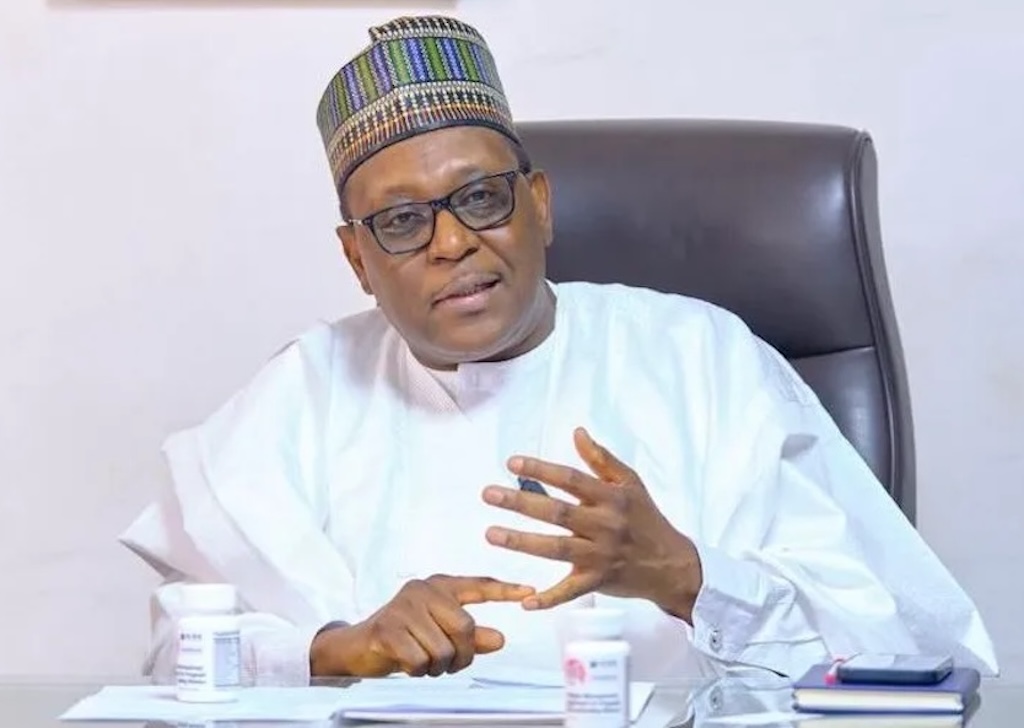
The federal government has unveiled plans to build Nigeria’s digital health ecosystem on the principles of security, interoperability and data sovereignty, describing the move as critical to integrating artificial intelligence (AI), big data and other digital technologies into healthcare delivery.
The Coordinating Minister of Health and Social Welfare, Muhammad Pate, disclosed this on Tuesday at the Insights Learning Forum (ILF) 2026, eHealth Africa’s flagship digital health conference held in Abuja.
Mr Pate was represented by the pioneer National Coordinator of the National Health Technology and Data Analytics Office (NHTDAO), Obi Adigwe.
He stated that although digital health interventions are already being implemented across hospitals, laboratories and disease surveillance systems, Nigeria must ensure they are developed within a unified framework that guarantees the security of health information, enables systems to communicate seamlessly and protects the country’s data.
“Interventions are going on, but the key problem is that whatever is going on, three key principles must underpin engagement in the digital health space: security, interoperability and sovereignty,” he said.
He explained that these principles would guide the development of health information exchanges, disease registries, and targeted data centres, while shaping the implementation of digital health interventions across the country.
According to him, Nigeria’s digital transformation agenda comes at a time when AI, the Internet of Things (IoT) and big data are increasingly being deployed to improve diagnosis, treatment, disease surveillance and patient monitoring worldwide.
However, he stressed that technology alone would not strengthen health systems without the right governance structures.
Regulations, innovation
Mr Pate said Nigeria must develop operational frameworks, policies, and regulations to govern the deployment of digital health technologies and AI.
While noting that digital tools are helping improve access to specialist care, diagnosis and treatment across the world, he questioned whether sufficient regulatory frameworks currently exist to coordinate these interventions.
“Do we have existing frameworks, guidelines and regulations that tie all this together?” he asked.
Mr Pate also called for greater investment in innovation hubs across the country to support young innovators developing AI and machine learning solutions for healthcare.
He noted that many young Africans already possess innovative ideas but require an enabling environment to translate them into practical solutions.
He also stressed the need to strengthen the capacity of Nigeria’s health workforce, stating that doctors, nurses and other health professionals must acquire the skills needed to adopt and implement emerging technologies.
According to him, interoperability standards and data exchange protocols must also be prioritised to ensure health information systems communicate effectively across facilities and countries.
Nigeria’s role in Africa
Mr Pate said Nigeria is prepared to play a leading role in advancing digital health across the continent, just as it emerged as one of Africa’s leading financial technology hubs.
He recalled that although East Africa initially led Africa’s fintech revolution, deliberate collaboration between government and the private sector enabled Nigeria to produce several fintech unicorns.
“We accept your challenge,” he said, responding to calls for Nigeria to take a greater leadership role in digital health innovation across Africa.
He added that technology has become one of the world’s strongest drivers of economic growth, noting that technology companies consistently dominate global market valuations.
According to him, Africa must position itself to benefit from this shift by investing in digital innovation and building resilient health systems.
Continental collaboration
Mr Pate stressed that Nigeria’s digital health strategy is designed not only to address domestic challenges but also to strengthen regional cooperation across Africa.
“We do not design interventions only for Nigeria. We design interventions that solve problems in Nigeria but also bring us closer to our brothers in all the other African countries,” he said.
He noted that health emergencies, environmental challenges and population movements frequently extend beyond national borders, making continental collaboration essential.
Mr Pate said Nigeria is already working with international partners, including the United States Office of the National Coordinator for Health Information Technology, Sweden’s eHealth Agency, Switzerland and Kenya’s Health Information Exchange, to learn from countries that have successfully integrated fragmented digital health systems.
ALSO READ: Nigeria needs ₦500 billion to scale digital health infrastructure over five years — Official
He added that the government has also begun engaging institutions in Francophone and Lusophone African countries to promote interoperability and ensure that digital health systems can function across language and geographical boundaries.
According to him, strengthening continental integration remains central to Nigeria’s digital health vision.
Call to stakeholders
Mr Pate urged the private sector, academia, innovators, and development partners to support the country’s digital health agenda actively.
He challenged investors and entrepreneurs to identify the incentives and policy reforms needed to accelerate innovation, while encouraging researchers to continue generating evidence to guide digital health policies.
Mr Pate also called for greater investment in local data infrastructure, stating that data sovereignty would require Nigeria to strengthen domestic capacity rather than rely heavily on external systems.
Addressing citizens, he said digital transformation should ultimately deliver a seamless healthcare experience comparable to what many people already experience in banking, hospitality and other sectors.
He urged Africans to seize the opportunity presented by digital technologies to improve healthcare delivery across the continent.
“As Africans, are we actually ready?” he asked. “What do you want to see in healthcare as a citizen, as a patient, as an African?”
Mr Pate said achieving a secure, interoperable and inclusive digital health ecosystem would require collective action from governments, development partners, healthcare professionals, innovators and citizens, adding that no single institution can drive the transformation alone.
-

 News3 days ago
Monday.com is the latest tech company to blame AI for layoffs — here are 20 others
-
Events23 hours ago
PLABOMA Visits NOA, Commends State Director for Social Media Day Keynote
-
News23 hours ago
Plateau CBM Youths Pledge 1m Votes For Tinubu In 2027 Elections
-
News2 days ago
Are brain waves the next unlock for physical AI?