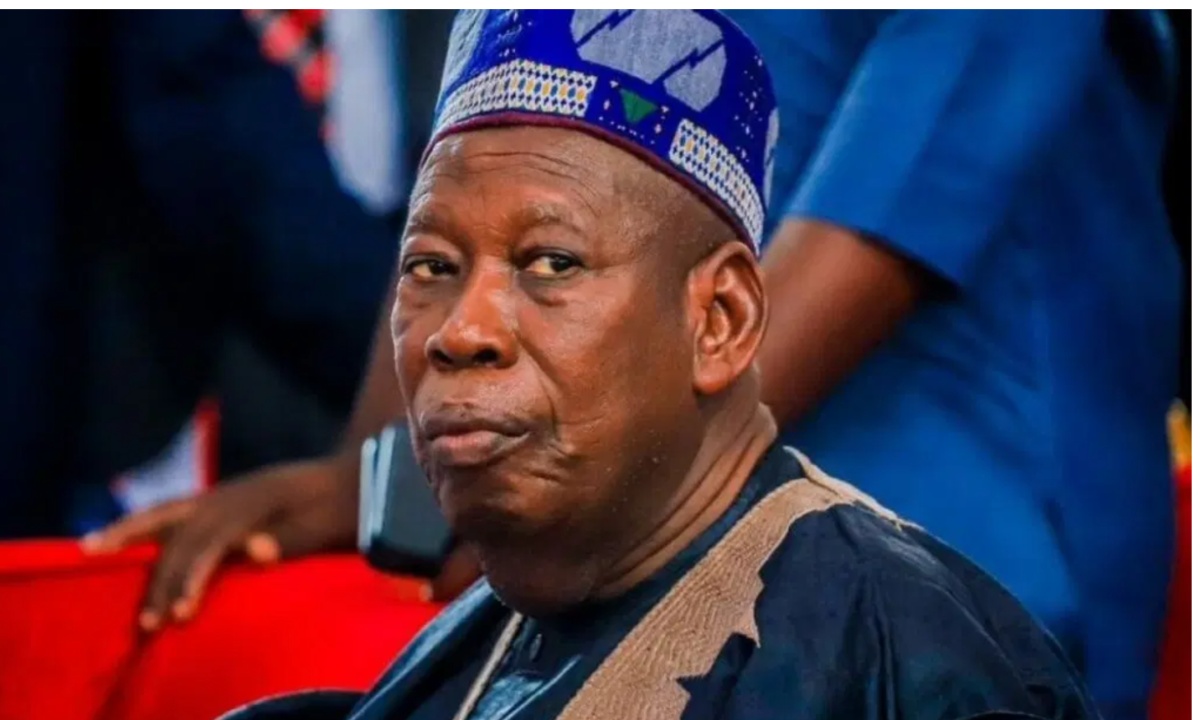
Former National Chairman of the All Progressives Congress, Abdullahi Umar Ganduje, has dismissed reports that he has defected to the Nigeria Democratic Congress, NDC, insisting that he remains a committed member of the APC.
Ganduje described as false and politically motivated the posters circulating on social media alleging that he had left the ruling party.
He said, “The claims were part of a deliberate misinformation campaign aimed at misleading the public, creating confusion among APC supporters, and generating unnecessary political speculation.”
In a statement issued by his former Commissioner for Information and Chief of Staff, Muhammad Garba, the former Kano State governor stressed that $he has never considered leaving the APC, a party he once led as National Chairman”.
He maintained that reports linking him to the NDC lack both political and logical basis.
Ganduje further stated that the APC remains the country’s largest political party and continues to gain support under the leadership of President Bola Tinubu.
He reaffirmed his commitment to working with the party’s leadership to advance the President Bola Tinubu administration’s Renewed Hope Agenda.
The former APC chairman also revealed that those responsible for producing and circulating the alleged defection posters had been identified. He warned that legal action would be taken if the materials were not withdrawn and the spread of the claims did not stop immediately.
He urged party members, supporters and the general public to disregard the posters, insisting that they do not reflect his political position or intentions.
DP
Read this in the Daily Post appFaster, cleaner, breaking-news alerts.
Get the app












 News2 days ago
 News3 days ago