News
Name aide who blocked Peter Obi’s convoy – Benue Govt tells NDC


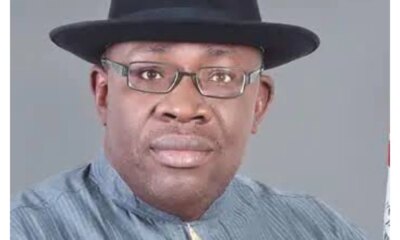


The Allied Peoples Movement (APM) has sued the Independent National Electoral Commission (INEC), the Peoples Redemption Party (PRP) and Senator Shehu Buba Umar over his eligibility to contest the 2027 Bauchi State governorship election on the platform of the PRP.
The party is asking the Federal High Court in Bauchi to nullify Buba’s nomination, alleging that his participation in the PRP governorship primary violated provisions of the Electoral Act 2026.
The APM’s legal adviser, Barrister Jidauna Tula, disclosed this while briefing journalists in Bauchi, saying the suit was filed to seek judicial interpretation of the law governing party membership registers and eligibility for primary elections.
The case, with suit number FHC/BAU/CS/68/2026, seeks the enforcement of Sections 77(4), 77(5) and 77(6) of the Electoral Act 2026.
According to Tula, Buba had earlier participated in the All Progressives Congress (APC) governorship primary before subsequently emerging as the PRP’s candidate for the 2027 election.
The APM contends that Buba’s name was absent from the PRP membership register submitted to INEC within the period prescribed by law, raising questions about his eligibility to participate in the party’s governorship primary.
In its originating summons, the party is asking the court to determine whether Buba’s participation in the PRP primary held on May 25, 2026, and his emergence as the party’s governorship candidate were lawful, considering the provisions of the Electoral Act.
It also wants the court to determine whether Buba was eligible to participate in the primary when his name was allegedly missing from the membership register submitted by the PRP to INEC within the statutory period.
The APM further asked the court to determine whether Buba’s continued membership of the APC at the time the PRP submitted its membership register, as alleged by the party, affected his eligibility to participate in the PRP primary.
The party is also seeking clarification on whether the PRP complied with Section 77(4) of the Electoral Act by submitting its membership register to INEC on or before May 10, 2026, ahead of its governorship primary conducted on May 25.
It further wants the court to determine whether the PRP could rely on any membership register other than the one submitted to INEC within the statutory period to establish Buba’s eligibility.
The APM is challenging INEC’s publication of Buba’s name as the PRP governorship candidate on October 10, 2026, arguing that the commission should not retain his name if the court finds that his participation in the primary and subsequent nomination contravened the law.
The party is consequently seeking a declaration that the publication of Buba’s name as the PRP candidate is unlawful, null and void.
It is also asking the court to order INEC to remove Buba’s name from the final list of candidates for the 2027 Bauchi governorship election published on October 10, 2026.
Explaining the legal basis of the suit, Tula said Section 77(4) of the Electoral Act 2026 requires political parties to submit their membership registers to INEC at least 21 days before their primaries, congresses or conventions.
He said Section 77(5) governs eligibility in relation to the applicable membership register, while Section 77(6) restricts political parties from using a different register from the one submitted to INEC within the stipulated period.
Tula alleged that because the PRP was required to submit its register by May 10, 2026, and Buba’s name was allegedly absent from the document, his participation in the party’s primary on May 25 raised questions about compliance with the law.
He further claimed that Buba remained a member of the APC as of May 19, 2026, nine days after the PRP’s reported deadline for submitting its membership register.
According to the APM legal adviser, Buba’s participation in the primary and his emergence as the PRP’s flag bearer, despite the alleged omission of his name from the relevant register, contravened the provisions of the Electoral Act 2026.
The party maintained that INEC’s inclusion of Buba on the final list of governorship candidates was based on a nomination it considers unlawful.
The allegations and claims contained in the suit are yet to be determined by the court.

Sporting Lagos head coach, Jeffrey Buter has credited his tactical switch for the club's 3-2 away victory over Plateau United, DAILY POST reports.
The Tech Boys continued their impressive away form with a battling performance at the New Jos Stadium on Sunday.
The win against Plateau United was their third on the road in the Nigeria Premier Football League, NPFL, this season.
Sporting Lagos are now unbeaten in their last six league outings.
Buter said his tactical adjustment paid off at the end of the game.
“We switched our press to a 4-5-1, which limited their wingers and fullbacks from having time and space.
"I think we played a very good second half. We dominated the game, found the early equaliser and went on to finish the game," Buter told reporters after the game.
The win took Sporting Lagos within two points of league leaders, Rivers United and titleholders, Rangers International, who are second on the log.
NPFL: Buter reveals winning formula behind Sporting Lagos’ victory at Plateau United
-
News2 days ago
NUCAP: Nigeria targets 20 million people with 3,700 telecom towers – Technology Times
-

 News3 days ago
Gunmen storm Plateau mining site, kill two persons
-
News2 days ago
Euromatch NPFL: Matchday 9 results
-
News3 days ago
Nigeria needs stronger collaboration ‘to shape internet governance’ – Technology Times