Connect with us

News

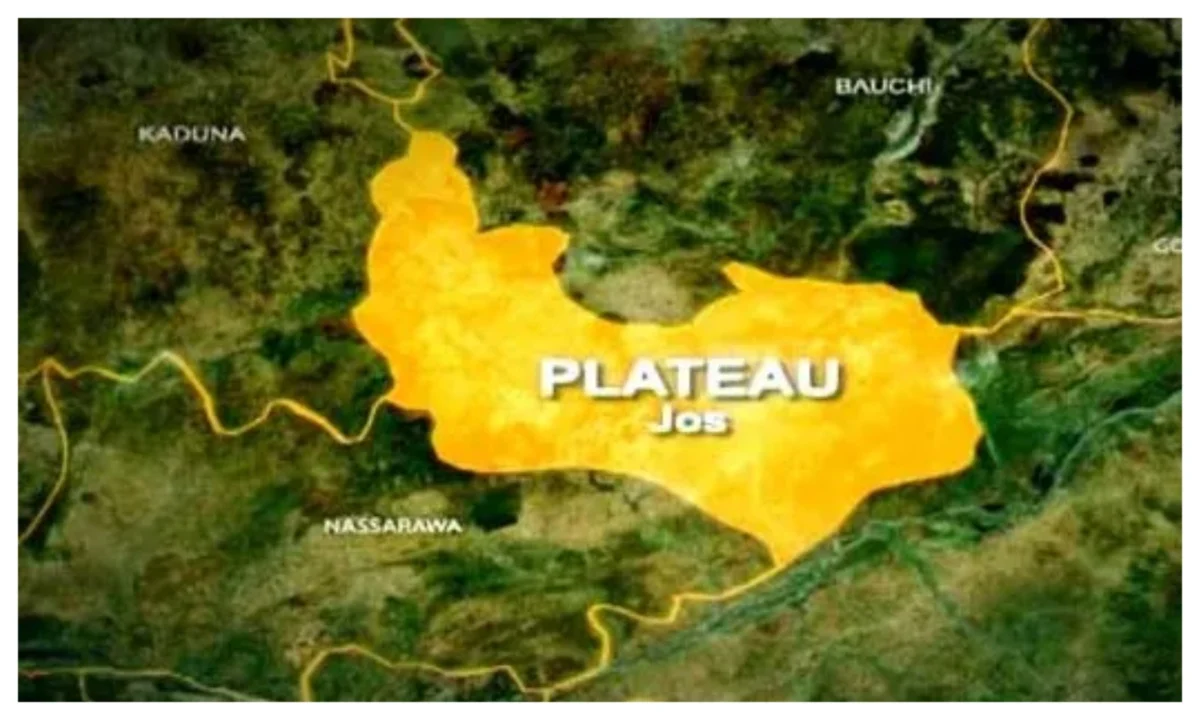
Christians targeted by Islamist extremists in Plateau – Group alleges

info

Published

on

Plateau.jpg

A global non-denominational organization, Open Doors International, has alleged that Christians in Plateau State are being targeted for total elimination by Islamist extremists and terrorist groups such as Boko Haram and the Islamic State in West Africa Province, ISWAP.

The group which made the allegations in its ‘Open Doors’ 2026 World Watch List’, published on Tuesday, said the claims are based on recent attacks in parts of the state, where more than 30 Christians were slaughtered by gunmen suspected to be Fulani jihadists. It also noted that communities, churches, houses, farms and food barns were burnt down and destroyed.

According to the report, the incidents cannot be treated as isolated events or reduced to competing narratives but should be seen as deliberate efforts by the jihadists to wipe out Christians and Christianity in the state.

The report noted that while Nigerian leaders are busy denying the fact that Christians are being targeted in Plateau State and other parts of the Middle Belt, attacks by armed herdsmen on Christian communities are inspired by their desire to forcefully take over Christians’ lands and impose Islam, as desertification has made it difficult for them to sustain their herds.

Recommended

“In Nigeria’s North-Central zone, especially in Plateau State, Islamic extremist Fulani militias attack farming communities, killing thousands of Christians in deliberate efforts to wipe out Christians,” parts of the report said.

“Jihadist groups such as Boko Haram and the splinter group Islamic State in West Africa Province (ISWAP), among others, have also been active in the attacks and killing of innocent Christians in Plateau.

“Christians and their communities continue to be the targets of raids, sexual violence, and roadblock killings. Abductions for ransom have increased considerably in recent years.”

The Open Doors’ 2026 World Watch List added that Fulani militias adhere to a radical Islamist ideology of expansionism, while also adopting a comparable strategy to Boko Haram and ISWAP, and demonstrate a clear intent to target Christians and symbols of Christian identity.

“We believe herdsmen attacks on Christian communities in Plateau State are inspired by their desire to forcefully take over Christians’ lands and impose Islam, as desertification has made it difficult for them to sustain their herds,” the report stated.

Continue Reading
Click to comment

Leave a Reply

Your email address will not be published. Required fields are marked *

Health

Nigeria among high-volume markets for new $1 HIV, syphilis, hepatitis B testing bundle

info

Published

on

Test kits.jpg

Nigeria has been identified among high-volume markets where a new $1 testing package could help expand screening of pregnant women for HIV, syphilis and hepatitis B.

The package, launched by Premier Medical Corporation and Impact Nexus Africa, combines two rapid diagnostic tests under a single commercial offer for use through existing antenatal care services.

The companies said their analysis identified Nigeria, Ethiopia, Tanzania, Uganda, Kenya, Mozambique and South Africa among the countries with the largest potential markets for antenatal hepatitis B screening.

Impact Nexus Africa estimates that the package could generate about $215 million in commodity savings across 74 low- and middle-income countries between 2026 and 2035, if adopted across antenatal care at the modelled volumes.

However, the estimate is based on modelling and does not represent confirmed savings for individual countries, including Nigeria.

How the package works

The Triple Elimination Testing Bundle costs $1 ex-works per woman screened and contains two separate rapid diagnostic tests.

PT WHATSAPP CHANNEL
Dangote Refinery AD

One is the World Health Organisation’s (WHO)-prequalified First Response HIV 1+2/Syphilis Combo Card Test, which screens for HIV and syphilis simultaneously.

The second is the First Response hepatitis B surface antigen (HBsAg) Card Test, which screens for a marker of hepatitis B infection.

The tests remain separate products but are supplied together as a single commercial offer.

The price also includes access to digital training, assessment and competency tools for end users.

The $1 price excludes freight, local distribution, taxes, regulatory costs and other programme or implementation expenses. Orders are subject to a minimum quantity of 100,000 bundles.

Potential savings

According to the companies, the package is between 22 per cent and 46 per cent cheaper in commodity terms than procuring equivalent HIV/syphilis and hepatitis B rapid diagnostic tests separately.

The analysis estimates an addressable market of about 37.8 million antenatal HBsAg tests annually across 74 low- and middle-income countries.

It projects that using the package instead of separately procured tests could generate about $215 million in commodity savings over 10 years.

The companies said annual savings could exceed $10 million in some high-volume markets, while they could remain below US$1 million in smaller markets.

Actual savings, however, would depend on countries’ existing procurement prices, testing volumes and the scale and pace of implementation, according to the analysis.

They also estimate that the modelled rollout could identify HBsAg-positive pregnancies in about 17.1 million women and contribute to averting approximately 2.7 million infant hepatitis B infections between 2026 and 2035.

It said the health impact projections depend on screening uptake, local hepatitis B prevalence and successful linkage of women who test positive to recommended maternal and infant interventions.

Why hepatitis B screening matters

The initiative is aimed at supporting the global effort to eliminate mother-to-child transmission of HIV, syphilis and hepatitis B.

The WHO recommends testing pregnant women for HIV, syphilis and hepatitis B at least once during pregnancy and as early as possible.

While HIV and syphilis screening have increasingly been incorporated into antenatal care, hepatitis B screening remains less consistently implemented across countries.

The companies said the new package could therefore serve both countries that already provide hepatitis B screening and those seeking to introduce or expand it.

They said the approach builds on existing antenatal care systems rather than requiring countries to establish a separate testing platform.

What the package could mean for Nigeria

For Nigeria, the significance of the package goes beyond its lower price.

A 2026 analysis of Nigeria Demographic and Health Survey data found that although 72 per cent of mothers attended antenatal care, only 12.3 per cent were tested for hepatitis B during pregnancy.

Earlier national data also highlighted the gap. An analysis of about 2.8 million pregnant women who received antenatal care across more than 6,000 facilities providing prevention of mother-to-child transmission services found that only 7.2 per cent were screened for hepatitis B.

READ ALSO: Man allegedly kills girlfriend over argument about HIV infection

The Federal Ministry of Health and Social Welfare has also been working to strengthen hepatitis B screening as part of Nigeria’s triple-elimination response. In 2025, the ministry said it planned to introduce free hepatitis B testing, treatment and care for pregnant women who test positive.

Against this backdrop, the new bundle could offer Nigeria a lower-cost option for expanding hepatitis B screening through existing antenatal care services.

The companies said the package is available to public and private sector purchasers across all low and middle-income countries, subject to national registration, importation and procurement requirements.


Discover more from Premium Times Nigeria

Subscribe to get the latest posts sent to your email.

Continue Reading

News

2027: Learning Yoruba not enough – Lagos APC tackles Rhodes-Vivour

info

Published

on

Rhodes Vivour 1.jpg

The Lagos State chapter of the All Progressives Congress, APC, has challenged the African Democratic Congress (ADC) governorship candidate, Gbadebo Rhodes-Vivour, to demonstrate a broader understanding of Lagos beyond his decision to learn Yoruba ahead of the 2027 governorship election.

The APC Publicity Secretary, Seye Oladejo, made the call on Tuesday in reaction to Rhodes-Vivour’s revelation that he had hired a Yoruba teacher and was now able to campaign in the indigenous language.

Rhodes-Vivour disclosed this during an interview on Arise TV, where he acknowledged the importance of language and culture but maintained that his priority was addressing the challenges confronting residents across the state.

Reacting, Oladejo welcomed the ADC candidate’s effort to learn Yoruba but questioned whether speaking the language alone was enough to demonstrate an understanding of Lagos and its people.

Recommended

“Language is one of the gateways to understanding people. It carries history, humour, values, idioms, traditions and ways of seeing the world,” Oladejo said.

He urged Rhodes-Vivour to complement his language lessons with a deeper knowledge of Lagos’ history, culture, institutions and governance challenges.

The APC spokesman also faulted Rhodes-Vivour’s remarks about the party’s governorship candidate, Dr Obafemi Hamzat, arguing that criticism of Hamzat could not discount his years of experience in Lagos public service.

Oladejo noted that Hamzat had occupied several public-sector positions, including commissioner and deputy governor, in addition to his professional experience.

“Rhodes-Vivour may argue that the administration has not done enough. He may identify areas where he believes Hamzat’s record should have been better. That is politics. But to suggest that experience has no value simply because Lagos still has challenges is a rather curious argument,” he said.

Turning to Rhodes-Vivour’s criticism of traffic congestion in Lagos, Oladejo argued that the issue required more than political statements, challenging the ADC candidate to explain how he would address the problem.

He specifically asked Rhodes-Vivour to outline his proposed road infrastructure, funding arrangements, mass-transit strategy, implementation framework, timelines and measurable targets.

“Lagos is not a village road network. It is one of Africa’s largest urban and economic centres, with enormous population pressure, intense commercial activity and rapidly expanding transportation demands,” Oladejo said.

During the Arise TV interview, Rhodes-Vivour had listed flooding, housing and traffic among the major challenges facing Lagos residents, while stressing that the problems affected people regardless of their ethnic or linguistic backgrounds.

The ADC candidate also displayed his growing proficiency in Yoruba during the interview, responding, “Mo ki gbogbo yin,” after a presenter greeted him in the language.

Oladejo said the 2027 election should instead centre on the candidates’ knowledge of Lagos and their ability to turn campaign promises into workable public policies.

“Lagos is not governed by Instagram posts, television appearances or campaign slogans,” he said, adding that effective governance involved institutions, budgets, planning, infrastructure, security coordination, transportation systems and day-to-day administrative decisions.

He further challenged Rhodes-Vivour to allow Lagos residents to assess his record, plans and capacity instead of focusing largely on Hamzat.

“2027 is not an audition for television. It is a conversation about the future of Lagos,” Oladejo said.

Continue Reading

Trending