News
FROM DREAMS TO EXCELLENCE: A PLATEAU STORY OF HOPE!


Views: 1
A PROUD MOMENT FOR PLATEAU!
Plateau-Born Air Force Cadet Emerges Best Graduating Student in Biology and Overall Best in Faculty of Science at NDA Kaduna
A young man from Plateau State has shown that hard work, discipline and determination can take you far in life.

Flying Officer FJ Davun, a Plateau-born Air Force Cadet, has emerged as the Best Graduating Student in Biology and also the Overall Best Graduating Student in the Faculty of Science at the Nigerian Defence Academy (NDA), Kaduna.
His achievement is not just a reason for Plateau to celebrate; it is also a message of hope to every young person who dreams of having a better future.


To the student who is struggling today, don’t give up.
To the young person who wants to graduate and make their family proud, keep studying and keep believing.
To those who feel their dreams are too big or their beginning is too small, remember that great things can start from anywhere.
Success may not come overnight, but with hard work, discipline, patience and consistency, your story can change.
One day, the effort you are making today may become the achievement everyone celebrates tomorrow.

Congratulations to Flying Officer FJ Davun on this remarkable achievement.
Plateau is proud of you! 👏🏽🎓
And to every young person in Plateau State and beyond:
Keep going. Your future is still ahead of you. 🌟



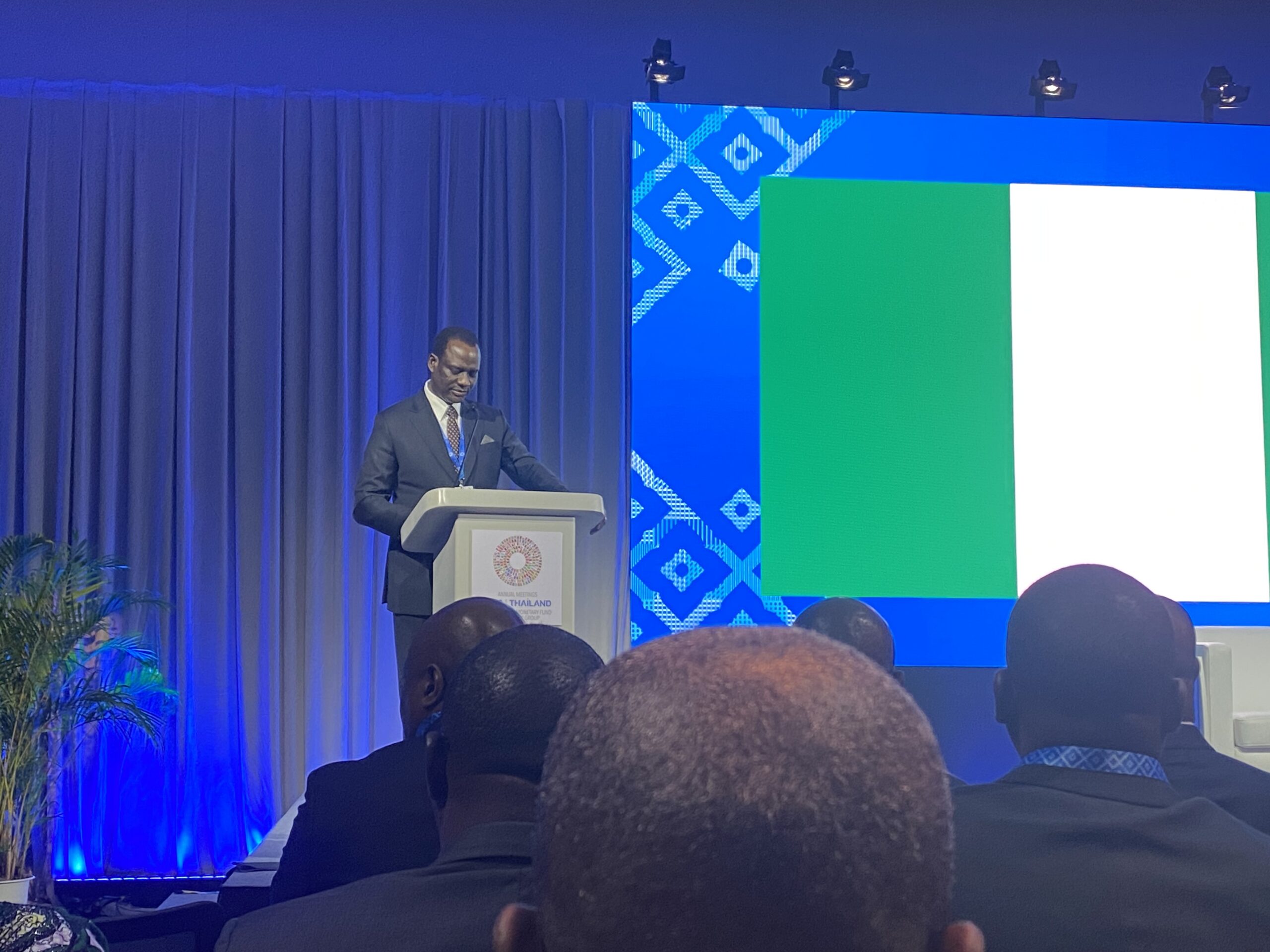
Nigeria’s Minister of Finance and Coordinating Minister of the Economy, Taiwo Oyedele, on Saturday said there will be no reversal of the government’s policies on fuel subsidy removal and foreign exchange market liberalisation.
Mr Oyedele spoke in response to concerns raised in the wake of the debates over subsidy policies ahead of the 2027 elections.
PREMIUM TIMES reports that the minister spoke on the sidelines of the World Bank/IMF meetings in Bangkok, Thailand.

Nigeria has introduced a series of reforms the government said were focused on fixing the structure of the economy, although the impact has been enormous for many Nigerians grappling with the cost-of-living crisis.
The government introduced reforms in the foreign exchange market, abolished what it termed a wasteful, corruption-ridden subsidy regime amid fiscal pressures, and institutionalised tax reforms.

While the Nigerian government, led by President Bola Tinubu, has defended its economic policy of subsidy removal as critical to the nation’s fiscal survival, opposition politicians—such as Atiku Abubakar of the ADC and Peter Obi of the NDC—have canvassed for and promised a return to different subsidy arrangements if elected into power.

Although the reforms have been hailed as positive for the nation’s fiscal health by global development and financial institutions, many Nigerians have expressed frustrations over their impact on the domestic front amid skyrocketed energy prices, high cost of living and sundry inflationary pressures.
Mr Oyedele said on Saturday that there will be no return to subsidy regimes, adding that the 30-day retail margin discount isn’t a subsidy arrangement.
“And let me be clear as well, this was a recurring question almost through all our engagements, but also with the rating agencies, with the investors, and the multilateral institutions. Every time they ask, are you reversing your plans? Are you bringing back subsidies? Let me be clear, there will be no return to fuel subsidies or multiple exchange rates,” he said.
READ ALSO: Oyedele warns against tax burden on poor people as G-24 seeks concessional lending support
PREMIUM TIMES reports that the government recently announced an intervention by the state-owned oil company, NNPC, that it would sell petrol at the cost price for about 30 days; a move many described as some form of subsidy. The government, however, insists the intervention is not a subsidy.
“The recent 30-day retail margin discount… is a time-bound commercial decision by the NNPC to reduce margins and support Nigerians. It is not a subsidy paid from public funds,” Mr Oyedele said.
Discover more from Premium Times Nigeria
Subscribe to get the latest posts sent to your email.
Nigeria needs stronger collaboration among government agencies, technology companies, civil society organisations, academics and technical experts to shape internet governance policies that reflect the country’s digital realities, Mrs Mary Uduma, Director of Digital Solutions Limited, West Africa, has said.
Uduma made the call during her presentation at the Nigerian Communications Commission (NCC) Internet Governance Symposium 2026, where she examined how Nigeria can translate global internet governance principles into policies that address local challenges and priorities.
Emphasising the need for a locally responsive approach, Uduma’s says that the internet is inherently global, but its impacts and governance require local consideration.

“The internet is inherently global,” she says, adding that “Its impacts, challenges, and governance must be local.”
“The internet is inherently global,” she says, adding that “Its impacts, challenges, and governance must be local.”
She highlighted the importance of a multi-stakeholder model that brings together government, civil society, academia, the technical community, private sector operators and international organisations to address the increasingly complex challenges associated with the internet.
The approach recognises that internet governance extends beyond technical infrastructure to include public policy, commercial interests, human rights, cybersecurity and national sovereignty.
Uduma’s also called for deeper collaboration across sectors to ensure Nigeria contributes to shaping international internet policies rather than merely adopting decisions made elsewhere.
The presentation’s concluding message urged stakeholders to work together to ensure Nigeria “shapes-rather than just consumes-future global internet policies.”
Nigeria’s place in global internet governance
She traced the evolution of internet governance from a decentralised technical coordination model managed largely by academics and engineers to a complex global system involving governments, private companies, civil society and international institutions.
The presentation identified the creation of the Internet Corporation for Assigned Names and Numbers (ICANN) in 1998 as a significant milestone in the institutional development of internet governance.
It explained that the system has evolved to balance technical management with state sovereignty, corporate power and human rights.
According to the presentation, internet governance operates through a multi-stakeholder framework involving different groups participating in policy discussions on an equal footing.
“The equal footing nature of the Internet stakeholder groups” was identified as a central principle of the model, with the groups including government, civil society, academia, the technical community, private sector operators, intergovernmental organisations and multilateral organisations.
The presentation also highlighted the development of internet governance forums at global, continental, regional and national levels, including the United Nations Internet Governance Forum (UN IGF), Africa Internet Governance Forum (AfIGF), West Africa Internet Governance Forum (WAIGF) and Nigeria Internet Governance Forum (NIGF).
These platforms provide opportunities for stakeholders to exchange perspectives and discuss policies affecting internet access, security, emerging technologies and digital rights.
AI, cybersecurity and data governance
Uduma identified artificial intelligence (AI), cross-border data flows, cybersecurity resilience and digital trust among the emerging priorities shaping internet governance.
Her presentation highlighted the need to address these issues alongside persistent challenges involving universal internet access, affordability, meaningful connectivity and digital literacy.
It also pointed to the importance of youth and women’s inclusion in digital policymaking, as well as responsible AI development and stronger international cooperation.
The presentation examined the World Summit on the Information Society’s 20-year review, known as WSIS+20, which assessed progress under the global information society framework and considered updated commitments for digital and internet governance.
Among the priorities identified were strengthening the multi-stakeholder model, bridging digital divides, addressing emerging technologies and reinforcing human rights, trust and security online.
For Nigeria, these priorities require cooperation between policymakers, regulators, technology providers and other stakeholders to ensure that global principles are translated into practical measures suited to local conditions.
Internet regulation and consumer protection
She also discussed the role of domestic regulation in addressing emerging challenges associated with digital platforms and internet-based services.
It referenced the NCC’s Internet Code of Practice 2026, identifying transactional data management, data breach and cybersecurity notifications, child online protection, default settings and AI integration among the areas of regulatory focus.
The presentation stated that the code “extends its regulatory reach to digital platforms, application providers, and other third-party actors operating over telecommunications networks.”
These issues highlight the growing intersection between telecommunications regulation, data protection, cybersecurity and consumer rights as more services are delivered through internet-based platforms.
The presentation also identified a key governance challenge as “Navigating the Risks of ‘Speed vs. Consent’,” pointing to the need to balance the pace of technological development and policymaking with meaningful stakeholder participation.
Effective collaboration, the presentation suggests, is important to ensure that regulatory decisions account for technical realities, consumer interests and the responsibilities of businesses operating in Nigeria’s digital ecosystem.
Call for stronger local participation
Uduma posited that internet governance requires continuous adaptation, from local communities to regional and global forums. Its key takeaway described effective internet governance as “a moving target that requires continuous adaptation from local communities up to global forums.”
The presentation called for deeper and more active cooperation across sectors to strengthen Nigeria’s participation in international digital policymaking.
As AI, data governance, cybersecurity and digital rights become increasingly prominent in global discussions, the challenge for Nigeria is to build a framework that supports innovation, protects internet users and ensures that the country’s interests are represented in decisions shaping the future of the internet.
-

 Health4 days ago
AMR: Livestock uses more antibiotics than human health sector
-
News3 days ago
MTN, Airtel take 90% of Nigeria’s 15m new subscribers as Glo shifts ground – Technology Times
-
News4 days ago
The Stage Is Set, Nairobi Is Ready! Africa’s Business and Sports Power Players Converge for YORA Summit 2026
-
Health2 days ago
Katsina health professionals declare 7-day warning strike