Business
Fitch Forecasts Nigeria’s Interest Rate at 18.6% and Inflation at 10.9% by 2028





Nigeria is among more than 50 countries planning to develop nuclear power or expressing interest in building new reactors, as global nuclear electricity generation reached a record high in 2025, according to a new report by the International Energy Agency (IEA).
The report, World Energy Outlook 2026, published on Thursday amid contentious negotiations over fossil fuel phase-out and electrification at the 31st session of the United Nations Climate Change Conference (COP31) in Türkiye, provides an assessment of global energy trends and prospects across regions.
The 564-page report said global nuclear power generation reached a record high in 2025 and is expected to continue rising, with more than 420 gigawatts (GW) of nuclear capacity currently operational across over 30 countries.
As of July 2026, the report said nearly 90 GW of additional nuclear capacity was under construction worldwide, the highest level in more than 35 years. The projects are spread across 17 countries, largely China, India, South Korea, Russia, Egypt and Türkiye.
The report said the ongoing construction includes small modular reactors (SMRs) in Argentina, Canada, China and Russia. Construction began on eight nuclear reactors in the first half of 2026, marking one of the highest levels recorded in four decades.
According to the IEA, more than 50 countries now have plans or targets for nuclear power or have expressed interest in developing new reactors.


These countries include African countries such as Egypt, Kenya and Nigeria; European countries including Italy, Poland and Türkiye; Middle Eastern countries such as Jordan and Saudi Arabia; and Southeast Asian nations, including Indonesia, the Philippines, Thailand and Vietnam.
Many of these countries are particularly interested in small modular reactors (SMRs), the report noted.
It said China continues to operate one of the world’s largest nuclear construction programmes, while the United States has approved lifetime extensions for several reactors, allowing them to operate for up to 80 years.
In the European Union, the IEA said nuclear power is increasingly viewed as critical to achieving energy security and climate goals, while Japan is gradually restarting reactors.
Nuclear development is also advancing in countries entering the sector for the first time. Bangladesh, Egypt and Türkiye have projects at advanced stages of construction, Uzbekistan is beginning work on its first nuclear power plant, and Vietnam is progressing with plans for its first reactor.
International support for nuclear energy has also strengthened, with multilateral development banks increasingly involved in financing the sector. As of August 2026, 38 countries had endorsed a pledge to triple global nuclear capacity by 2050.
The IEA said the prevailing geopolitical and energy security landscape could further accelerate nuclear development, as countries seek to diversify their energy mix, reduce exposure to market volatility and ensure reliable electricity supply amid growing electrification.
The agency said the 2026 energy crisis had prompted several countries to reinforce or confirm nuclear power plans, extend the operating lifetimes of existing reactors and reconsider restrictions on nuclear development.
READ ALSO: IEA says Nigeria’s energy investment could double in five years
Emerging electricity demand from electrification, artificial intelligence (AI) and data centres is also strengthening the case for reliable, dispatchable energy sources such as nuclear power.
However, the report noted that electricity generation trends vary across regions, reflecting differences in energy resources, security priorities and existing infrastructure.
While renewable energy is expanding across most regions and nuclear power is gaining ground in an increasing number of markets, the pace and composition of the transition differ considerably.
China, India and Southeast Asia are expected to retain coal-heavy electricity systems through 2035, although their energy mixes are projected to diversify as electricity demand grows faster than in most other regions.
Coal is expected to remain the dominant source of electricity in these regions, but wind, solar, nuclear and natural gas are also projected to expand, gradually creating more diversified energy sources.
Discover more from Premium Times Nigeria
Subscribe to get the latest posts sent to your email.
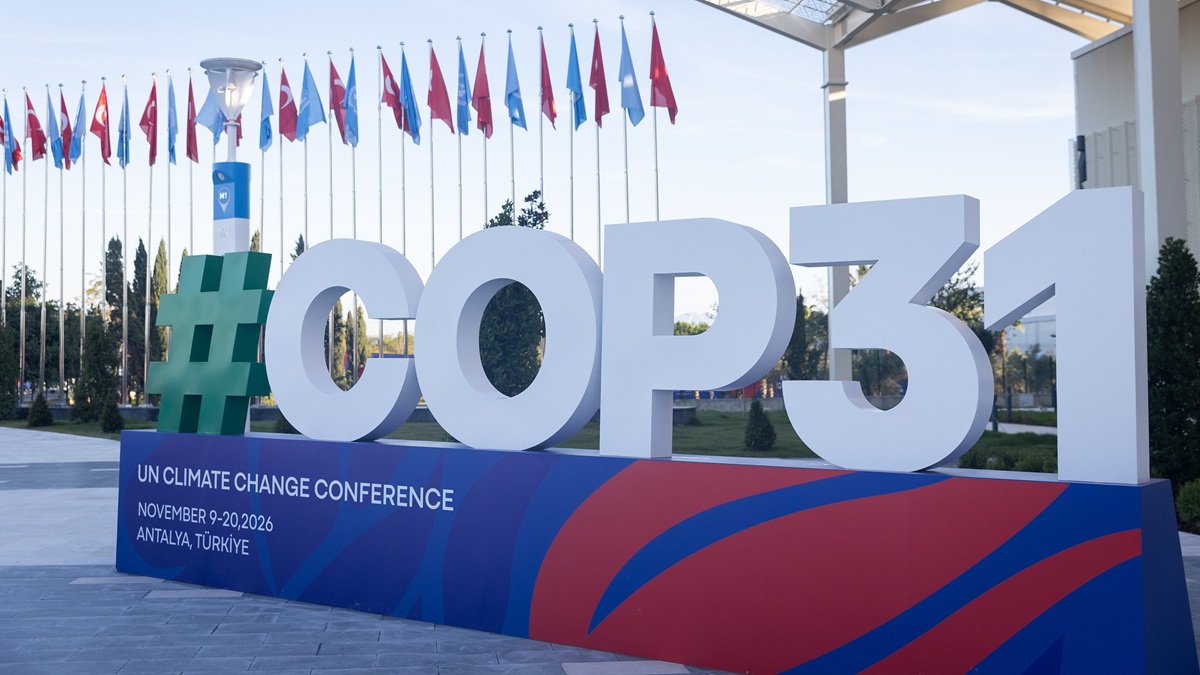
Civil society groups have expressed outrage over the omission of language on transitioning away from fossil fuels in the latest COP31 negotiation draft, published less than 48 hours before the climate talks conclude.
Environmental campaign group 350.org criticised the latest COP31 cover decision for removing all references to transitioning away from fossil fuels, despite calls from countries across negotiating blocs for a political outcome that advances roadmaps to move away from oil, coal and gas—the primary drivers of the climate crisis.
As negotiations enter their final hours, the group warned that efforts to phase out fossil fuels are being sidelined by the COP31 presidencies, climate finance commitments remain inadequate, and clean electrification risks being undermined by carbon capture and fossil fuel loopholes.
Key concerns
According to 350.org, the latest draft text raises several concerns, including Fossil fuel transition, Electrification target, Carbon capture, Adaptation finance baseline, Adaptation finance roadmap, and Climate finance accountability.
In the new draft text, PREMIUM TIMES observed that all references to transitioning away from fossil fuels, or roadmaps for the transition, have been removed.
Paragraph 36(d) places the 35 per cent electrification goal within the context of countries’ commitments to triple renewable energy capacity but does not explicitly require electricity to come from renewables.
While the goal references the need for financial support and enabling energy access, it lacks concrete measures to address these needs, the group noted.
Goals relating to carbon capture and storage, as well as other costly and unproven carbon removal technologies, appear in several paragraphs and could undermine the energy transition.
Paragraph 43 proposes a process for establishing a baseline for the goal of tripling adaptation finance—a step forward, but insufficient, as COP31 should already establish a clear baseline and milestones.
Paragraph 45 proposes launching an “Antalya-to-Addis Ababa Roadmap on Adaptation and Resilience Finance” to scale up adaptation funding. However, it no longer includes the $120 billion needed by 2035, which 350.org says developed countries should have committed to in Antalya.
Other finance-related paragraphs remain inadequate, with developed countries failing to demonstrate sufficient accountability for their commitments.
At COP28 in Dubai, one landmark decision was the adoption of the UAE Consensus, under which countries agreed to transition away from fossil fuels in energy systems in a just, orderly and equitable manner to achieve net zero by 2050.
The removal of references to the transition away from fossil fuels in the latest COP31 draft has sparked fresh concerns among observers, who argue that addressing the climate crisis requires a decisive shift away from fossil fuel dependence.
Reactions
Reacting to the draft text, Andreas Sieber, 350.org’s head of political strategy, described the situation as an “outrageous and utterly embarrassing” lack of leadership by the COP31 presidencies.
He said the presidencies had reduced one of the world’s defining challenges to an inconvenient paragraph they would rather delete, while leaving the door open for fossil fuels to masquerade as clean electrification.
Mr Sieber said Brazil, a country deeply dependent on oil, had the political courage to begin confronting the difficult question of how to move beyond fossil fuels last year.
He, however, criticised this year’s leadership, saying that with Minister Chris Bowen, observers had got a “spineless fossil fuel bro” while the Türkiye presidency stood by.
“If the COP31 presidencies want to keep some level of credibility, they should announce to take forward the global and national roadmaps in a presidency initiative similar to what the COP30 presidency did,” Mr Sieber said.
“Rich countries’ failure on finance is a historic disgrace. They expect developing countries to shoulder the costs of a global transition while refusing to provide the means to deliver it. This is not a failure of technical negotiations. It is a shameless abdication of political responsibility. If this is where COP31 lands, history will remember it as a summit where those entrusted with leadership chose the comfort of inaction over the courage to confront reality.”
Rukiya Khamis, 350.org East Africa lead, said more than 600 million people in Africa still lack access to electricity and need reliable, affordable renewable energy.
“But electrification that masquerades as green yet opens the door to more fossil fuel use is not what we came here for. Africa needs to electrify with renewables to keep people safe, lower bills, and create green jobs and industries,” she said.
Ms Khamis criticised wealthy countries for failing to provide sufficient climate finance, arguing that developing countries cannot build a sustainable future on inadequate funding.
READ ALSO: COP31: New Draft text calls for tripling adaptation finance by 2035
“We cannot build this future on crumbs thrown by rich polluting nations. Governments are spending around $1 trillion on fossil fuel subsidies. But at COP31 they have only pledged $50 million for adaptation, and the draft text delays agreeing on a baseline for tripling adaptation finance with yet another process. If that isn’t fixed, Ethiopia will be left to clean up the mess that rich nations, particularly European nations, made in Antalya by blocking climate finance.
“Developing countries and frontline communities don’t need another process; they need the money. COP31 must set the baseline now and deliver it. Anything less is a cruel injustice and an insult we will not accept.”
Fenton Lutunatabua, 350.org’s Pacific and Caribbean lead, said the direction of the negotiations amounted to a betrayal of Pacific nations, warning that the outcome must preserve the 1.5°C target and momentum towards transitioning away from fossil fuels.
“Australia calls itself part of the Pacific family, but the direction of the talks is already pointing to a betrayal of the Pacific. COP31 must keep 1.5°C and momentum on the transition away from fossil fuels alive.
“While overshooting 1.5°C is now inevitable, we absolutely can’t accept it as the norm. Every year above 1.5°C puts more pressure on Pacific ecosystems, infrastructure and lives. Yet world leaders are ignoring our reality and showing an outrageous lack of political will on phasing out fossil fuels.”
Mr Lutunatabua said the region cannot rely on costly, unproven technologies such as carbon capture to address the climate crisis.
“The science is clear: ending coal, oil and gas now is the only way to limit overshoot.”
Discover more from Premium Times Nigeria
Subscribe to get the latest posts sent to your email.
-

 Business1 day ago
Elon Musk Launches X Money, Bringing Banking and Payments to Social Media Platform
-
News4 days ago
79% of local providers ready for Nigeria’s sovereign cloud, NITDA finds – Technology Times
-
News4 days ago
JOGAMA Announces November 20 Date for 16th Edition, Voting Closes November 17
-
Health1 day ago
JUTH Student Nurse Anaesthetist Dies After Collapsing During Football Match in Jos