News
Apple launches new app to study how people use AI for health


Big AI labs like OpenAI and Anthropic have made their bets on offering chatbots that can answer health-related queries with specialized features. Apple is debuting a new study to understand how people use AI for health. But it isn’t quite following other AI startups just yet; it wants to study how clinically grounded answers can help people.
The iPhone maker is partnering with healthcare-focused AI company OpenEvidence to launch a new study app. Apple is inviting users in the U.S. over 21, using iPhone 15 or later, and running iOS 26 or later, with Apple Intelligence enabled. The company is aiming to run this study with up to 200,000 participants for more than 12 months.
The new app will allow users to ask health-related questions, as they do with ChatGPT or Claude, with answers grounded in clinical data, from sources including The New England Journal of Medicine, Journal of the American Medical Association, and Nature. Apple said that the app will try to give simplified answers to everyday medical questions. Users can rate those answers and provide feedback about the responses; they’ll also be asked to participate in monthly surveys.

Participants can share data from HealthKit such as resting heart rate, activity, sleep, or lab results to get more personalized and pointed suggestions from the app. The company said the app can also help prepare participants better for a doctor’s visit, and it will guide users to specific providers for answers related to concerning medical issues.
Apple specified that the data will be anonymized before sending it to a secure third-party cloud provider, and it won’t be used to train any kind of AI models. The company said that OpenEvidence deletes the query and response data after 24 hours.

“At Apple, we believe responsible innovation starts with scientific rigor and clinical grounding. Health is deeply personal, and conducting a dedicated research study is the most thoughtful way to understand how people engage with, comprehend, and evaluate health AI in everyday life,” Sumbul Desai, M.D., Apple’s vice president of Health and Fitness, said in a statement, adding, “Insights from this study will help advance the broader scientific conversation and ensure that as technology evolves, we continue building trusted tools that genuinely support people wherever they are on their health journey.”
The app is available to download starting today for U.S. users. It’s not clear if Apple wants to release AI-powered answering to its Health app or Siri yet. The potential is huge — earlier this year, OpenAI said users were asking over 300 million health-related queries each week.
When you purchase through links in our articles, we may earn a small commission. This doesn’t affect our editorial independence.





Business
COP31: Africa’s climate action network PACJA unveils plan to train 500 youths on climate justice
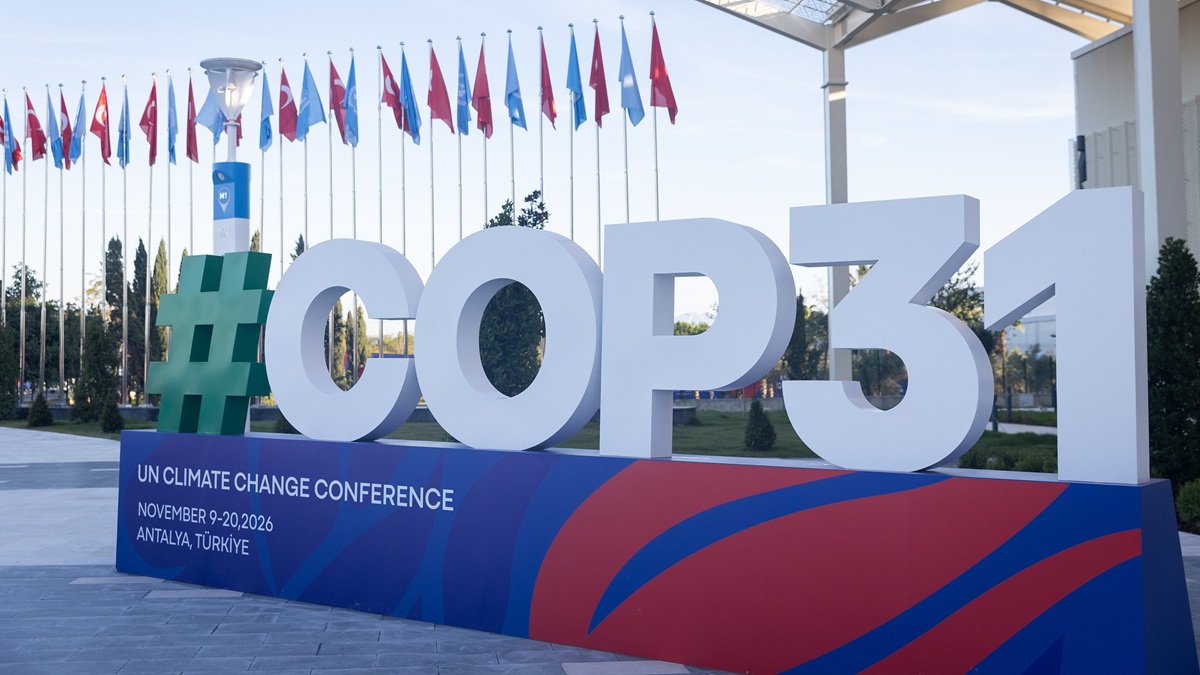
The Pan African Climate Justice Alliance (PACJA), a coalition of over 2000 organisations dedicated to promoting climate action as an advocacy tool in 54 African countries, has launched the sixth cohort of its Nairobi Summer School on Climate Justice, aiming to train 500 youths.
The trainees, to be drawn from within and outside the continent, will attend a capacity development workshop in Addis Ababa, Ethiopia, from 20 June to 3 July 2027, the group stated on Friday at the 31st meeting of the Conference of the Parties (COP31) to the UN Framework Convention on Climate Change.
Participants will learn how climate negotiations work and acquire insight into climate finance, adaptation, loss and damage, just transition and accountability. They will also take part in mock negotiations and meet negotiators and policymakers.
PACJA advances climate action through capacity building, policy advocacy, research, and support for local climate resilience and land restoration projects.
Mithika Mwenda, executive director of PACJA, said Africa’s young people hold less than five per cent of the positions where climate decisions are made, even though they constitute as much as 60 per cent of the continent’s population.
He said the school was set up in 2020 to close that gap. The five previous cohorts trained more than 2500 young people from 144 countries.


The programme will now be held every two years in line with the organisation’s strategic plan for 2026 to 2030.
“Young Africans should not only be invited to the table. They should arrive prepared,” said Augustine Njamnshi, chair of PACJA’s political and technical affairs, who unveiled the cohort.
Mr Njamnshi acknowledged the support given by the African Development Bank, the UN Economic Commission for Africa, the Swedish Development Agency, the East African Legislative Assembly and the HBCU Green Fund to the school.
Alumni’s testimonials
Mr Njamnshi said the school’s alumni include young negotiators, policy analysts, people working on the green economy and in academia.
Smriti Shah of the fourth cohort told PREMIUM TIMES she once believed climate justice was “highly political”, but PACJA has changed her perspective.
“PACJA taught me to carry the views of communities to policymakers, and now I include climate justice in every humanitarian programme I work on,” she said.
Shampi Anna, also from the same cohort, said alumni are helping young members of parliament in Kenya with bills, lobbying and advocacy.
“We worked, and we continue to work with young parliamentarians in Kenya,” Ms Anna said.
ALSO READ: COP31: White paper urges governments to invest in water-based energy storage
A Nigerian and member of the fifth batch, Anuoluwapo Otubusin, told FEMNET, an organisation promoting women’s development in Africa, that she had a remarkable experience that was more than just attending a climate action training.
“It was a turning point in how I currently view advocacy, policy influencing, solidarity and my role in shaping a feminist climate future,” she said.
Prospective applicants for the latest cohort must be 18 to 35 years old and hold at least a high school certificate.
PACJA said it will prioritise applicants from places most prone to climate change in Africa and the Global South, especially young people from indigenous communities, grassroots movements, women’s groups, universities and policy institutions.
Discover more from Premium Times Nigeria
Subscribe to get the latest posts sent to your email.
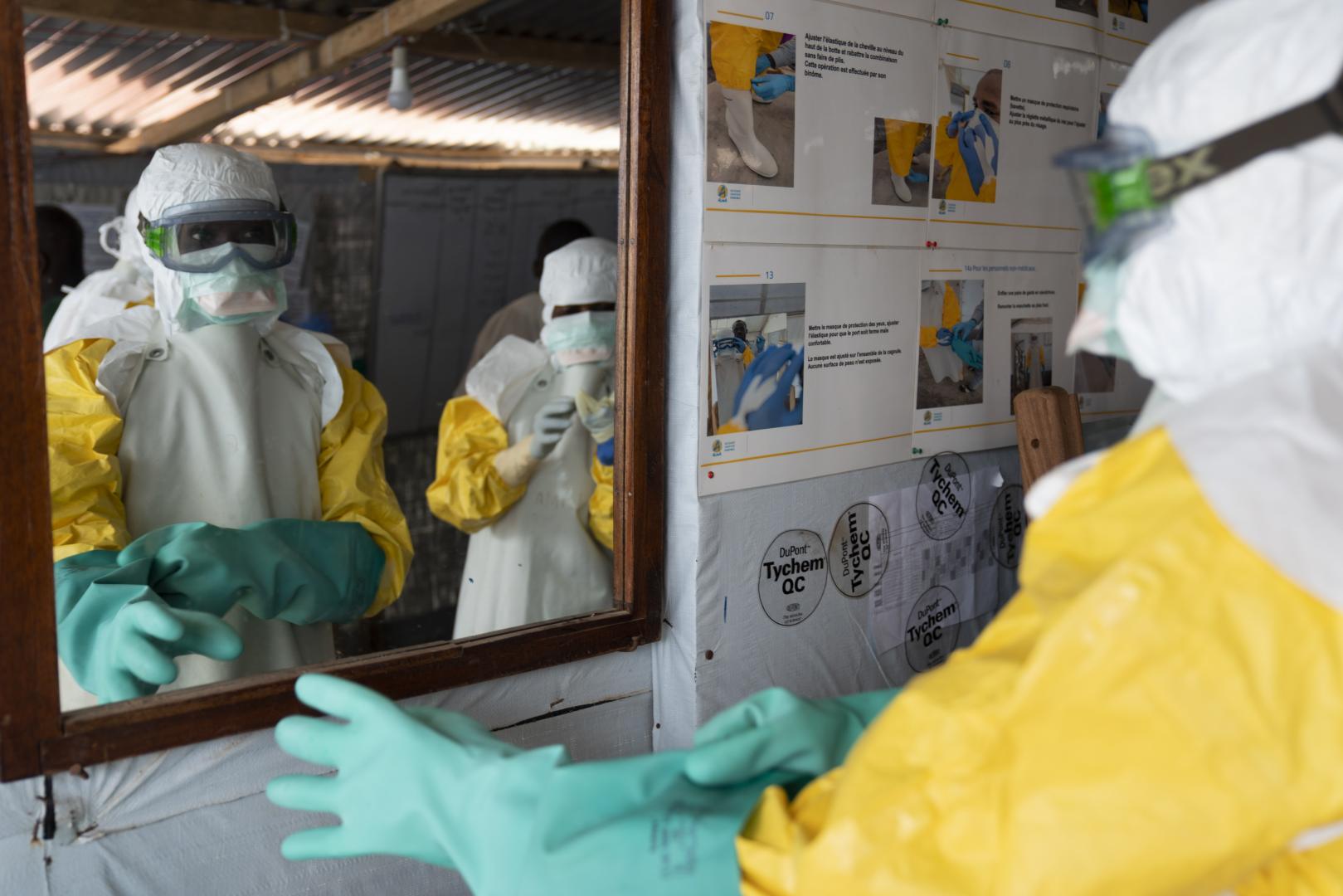
Insecurity has been identified as one of the “greatest obstacles” to containing the Ebola outbreak in the Democratic Republic of the Congo (DRC), where more than 11,000 cases and 5,400 deaths have been reported.
The World Health Organisation (WHO), in a news release published on 15 November, said attacks on health workers and facilities, displacement and difficulties reaching remote communities were disrupting efforts to contain the outbreak.
The outbreak, caused by the Bundibugyo virus, has spread to 67 health zones across eight provinces, with between 400 and 500 new cases reported weekly.
“Children account for more than a quarter of confirmed cases and one third of deaths. Seven in 10 children under five with confirmed Ebola have died,” it noted.
Attack on healthcare
According to the WHO, a recent armed attack in Cantine-Aloya killed 66 civilians, including three health workers, while three health facilities were looted.
The attack also resulted in more than 1,000 contacts being lost to follow-up, with three confirmed cases still unaccounted for. Another attack on the town was reported on 11 November.
According to WHO, more than 80 attacks on healthcare have been recorded since the outbreak was declared.
“A halt in hostilities is urgently needed to protect communities and health workers, and to safeguard the progress made over the past six months,” it noted.
The WHO said about two-thirds of confirmed deaths occurred in communities, suggesting that many infections were being identified too late for patients to receive timely treatment.
Cross-border transmission concerns
WHO also highlighted the risk of the outbreak spreading beyond the DRC, following recent imported cases in Kenya and Nigeria.
The agency said cross-border collaboration has strengthened surveillance, information-sharing and coordination among affected and at-risk countries.
“Recent imported cases in Kenya and Nigeria underscore the continuing risk of spread beyond national borders. Delays in paying frontline health workers and responders create tension and slow the response,” it said.
WHO said the developments underscored the need for neighbouring countries to maintain surveillance and preparedness, particularly around high-risk border areas.
Response gains
Despite the challenges, WHO said efforts had slowed transmission in some of the outbreak’s initial hotspots, including Mongbwalu, Nyankunde, Nizi, Rwampara and Butembo.
Diagnostic capacity has expanded from two laboratories to more than two dozen, while nearly 2,000 treatment beds are available across 104 treatment and transit centres.
About 3,000 people have recovered from the disease, while more than 17,000 community health workers and 46,000 community actors have been trained to support the response.
WHO said sustained funding, safe access for health workers and greater community participation would be essential to reaching areas that remain difficult to access and bringing the outbreak under control.
READ ALSO: WHO urges concrete action on antimicrobial resistance worldwide
Nigeria records no new infections
In Nigeria, the index patient evacuated to Switzerland has recovered and been discharged from hospital. At the same time, all 62 people identified as contacts have completed the mandatory 21-day monitoring period without any secondary infection.
The Nigeria Centre for Disease Control and Prevention (NCDC) disclosed this on 13 November, saying the patient tested negative for the virus after receiving further treatment in Switzerland.
NCDC Director-General, Jide Idris, said 13 of the 62 contacts developed fever or other symptoms during monitoring, but all tested negative. Seven suspected Ebola cases reported in five states were also investigated, with none testing positive.
“However, it is important to note that the completion of contact monitoring does not, by itself, constitute a formal declaration that an outbreak is over. Such a determination must be based on the applicable public health criteria and the findings of ongoing surveillance,” it noted.
“Nigeria therefore remains vigilant, particularly given the continued occurrence of Ebola virus disease in the DRC.”
Discover more from Premium Times Nigeria
Subscribe to get the latest posts sent to your email.
-

 News3 days ago
UNIJOS Appoints Patricia Lar as First Female Vice-Chancellor
-
News3 days ago
Democrats launch Nvidia investigation, write scathing letter on Huang’s ‘scheme’ with Trump
-
News1 day ago
Tinubu (APC) in Jos: Promises to restore peace in the State and Nigeria
-
News4 days ago
Nigeria opens 3MTT Cohort 5 with ₦4bn funding – Technology Times