Connect with us

News

Rivers 2027: ADC Chieftain challenges APC to prove legality of Chinda’s candidacy

info

Published

on

Kingsley Chinda.jpg

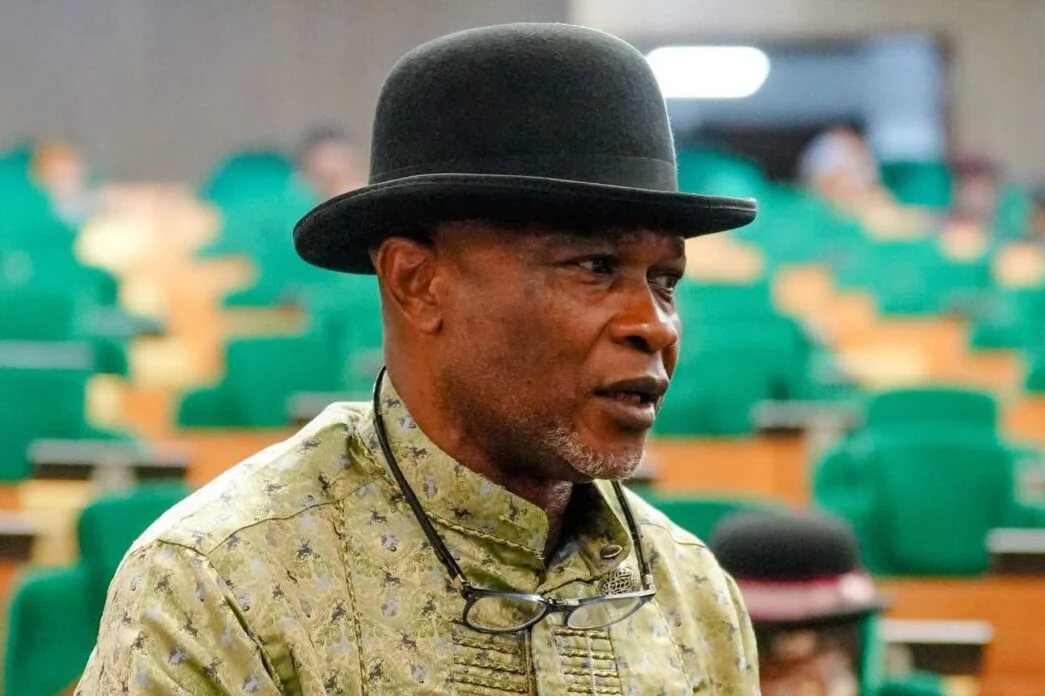
A chieftain of the African Democratic Congress, ADC, Chief Eze Chukwuemeka Eze, has challenged the All Progressives Congress, APC, to prove the legality of its Rivers State candidate.

Eze was reacting to the recent judgment of the Supreme Court on the validity of Sections 77(5), 77(6), 77(7) and 84(2) of the Electoral Act, 2026, describing it as a significant judicial reaffirmation that political parties must conduct their internal electoral processes within the bounds of the law and cannot treat statutory requirements as matters of political convenience.

The Supreme Court, in its judgment of September 24, 2026, restored the validity of the provisions relating, among other things, to the membership register to be submitted to the Independent National Electoral Commission (INEC) and the use of that register in the conduct of party primaries, congresses and conventions.

Section 77(5) requires that only members whose names appear in the party’s register submitted to INEC within the prescribed period may participate in the relevant party exercise, while Section 77(6) prohibits the use of a different membership register for that exercise.

Recommended

According to Eze, Section 77(7) goes further by prescribing consequences where a political party fails to comply with the statutory requirement.

This is contained in a statement made available to journalists on Friday, in which he stated that the issue before Nigerians is no longer one of political propaganda but of strict legal compliance.

“APC cannot merely announce that its Rivers State governorship candidate, Hon. Kingsley Chinda, is qualified because the party says he registered 24 days before its primary. The critical question, he said, is whether Chinda’s name was actually contained in the verified APC membership register validly submitted to INEC within the period prescribed by Section 77 of the Electoral Act and whether every other statutory requirement relating to the nomination of APC candidates was equally satisfied.

“The Supreme Court has spoken. What remains is compliance. The APC cannot substitute political assertions for documentary evidence. If the party insists that its Rivers candidates are validly nominated, let it place before INEC and, where necessary, the courts, the very documents upon which the legality of those nominations rests.”

Eze further observed that the constitutional architecture of electoral participation reinforces the importance of lawful party sponsorship, saying Section 177(c) of the Constitution provides that a person seeking election as Governor must be a member of a political party and be sponsored by that political party.

The Supreme Court has previously explained that membership and sponsorship are matters capable of being established through the relevant party records and nomination processes.

The ADC chieftain added that the Supreme Court’s latest pronouncement must therefore be understood within the broader constitutional principle that no political party is above the law and no candidate is entitled to a nomination founded upon a process that does not satisfy the mandatory requirements of the Electoral Act.

“This is not about Kingsley Chinda as an individual. It is not even about APC as a political party. It is about whether the rule of law will govern the 2027 electoral process in Rivers State or whether political expediency will once again be allowed to supersede statutory compliance.”

Eze recalled that Rivers State has witnessed several instances in which disputes over party primaries, nomination processes and internal party structures have ultimately found their way into the courts, sometimes with devastating consequences for political parties and their candidates. He therefore urged INEC to subject the APC’s Rivers State nominations to the same rigorous legal scrutiny applicable to every other political party.

He said the proper question before INEC is straightforward: Was the relevant APC membership register validly submitted to INEC within the period prescribed by law, and did the persons who participated in and emerged from the relevant primary exercises satisfy the statutory requirements governing such participation and nomination?

“If the answer is yes, let the documentary records establish it. If the answer is no, then the law must take its course. There should be no special exemption for APC, PDP, ADC or any other political party. The sanctity of the ballot begins with the legality of the process through which candidates emerge.”

On the political dimension of the controversy, Chief Eze said he finds it ironic that persons who, in his view, have previously deployed political and institutional mechanisms to frustrate the electoral ambitions of their opponents are now confronted with legal questions arising from the very electoral system they helped shape.

He particularly referenced what he described as the historical difficulties encountered by the APC in Rivers State during previous electoral cycles, contending that political actors associated with the FCT Minister, Nyesom Wike, had, at various times, contributed to circumstances that weakened the APC’s capacity to participate effectively in gubernatorial contests in the state.

Eze maintained, however, that whatever political grievances may exist, the appropriate instrument for resolving them is the law and not political retaliation.

“I do not subscribe to the idea that justice should be administered according to the principle of vengeance. But I firmly believe in the law of consequences: when political actors manipulate institutions, circumvent established procedures or disregard the rights of others, they must understand that the same legal and institutional structures may eventually subject their own actions to scrutiny.”

He said the present controversy should therefore serve as a lesson to every political party in Nigeria that electoral victories cannot legitimately be constructed upon defective nomination processes.

Turning specifically to Hon. Kingsley Chinda, Eze expressed disappointment that a politician with substantial legislative experience could find himself at the centre of a controversy involving the legality of the process through which he emerged as a governorship candidate.

“I have known Chinda for years and I have no personal quarrel with him. My concern is institutional. Public office, particularly the office of governor, should never be pursued at the expense of the legal order. Those who aspire to lead Rivers State must demonstrate, from the very beginning, respect for the Constitution, the Electoral Act and the institutions established to administer our democracy.”

Eze also cautioned against reducing Rivers State’s political history to the ambitions of a few individuals or to an ethnic or senatorial-axis contest. He said Rivers State belongs equally to the Ijaw, Ikwerre, Ogoni, Kalabari, Etche, Okrika, Opobo-Nkoro, Bonny, Andoni, Eleme and every other constituent community that makes up the state.

According to him, the argument should never be that an individual should be excluded merely because of his ethnic origin or local government. Rather, every Rivers person who satisfies the constitutional requirements should be entitled to seek elective office, while the electorate must ultimately determine who governs the state.

He nevertheless criticised what he described as the attempt by successive political actors to convert Rivers State’s political leadership into an exclusive preserve of particular individuals or political networks.

“Rivers State is not the private estate of Wike, Chinda or anybody else. It belongs to all Rivers people. The Constitution does not establish an Ikwerre State, an Ijaw State, an Ogoni State or an Etche State; it establishes Rivers State. Political power must therefore be contested on the basis of law, competence, legitimacy and the freely expressed will of the electorate.”

Eze further criticised what he described as the political consequences of the Federal Government’s intervention in the affairs of Rivers State, including the declaration of a state of emergency in 2025, saying that the experience should reinforce the need for stronger constitutional safeguards and respect for democratic institutions.

He called on INEC, political parties and all political actors to approach the 2027 elections with fidelity to the Constitution and the Electoral Act, stressing that the credibility of an election is determined not merely by the announcement of results but by the legality, transparency and integrity of the processes preceding the ballot.

“The lesson of the Supreme Court judgment is simple: nobody is bigger than the law. Not APC. Not PDP. Not Wike. Not Amaechi. Not Chinda. Not Tinubu. Not even INEC. Where the law imposes a condition, that condition must be satisfied. Where the Constitution confers a right, that right must be protected. And where a party fails to comply with mandatory electoral requirements, the appropriate legal consequence must follow, irrespective of the political stature of the persons affected.”

Chief Eze therefore called on INEC to publish and transparently scrutinise the relevant membership registers and nomination records of the APC in Rivers State and to take whatever consequential steps the law requires.

He added that the 2027 electoral process must not become another theatre for political impunity, noting that Rivers State deserves an election in which the law speaks before political power speaks, the Constitution stands above political interests, and the people—not political godfathers—retain the final sovereign authority to determine who governs them.

Continue Reading
Click to comment

Leave a Reply

Your email address will not be published. Required fields are marked *

News

ADC accuses APC of fuelling political violence ahead of 2027 elections

info

Published

on

The African Democratic Congress Presidential Campaign Council, ADC-PCC, has accused the All Progressives Congress, APC, of encouraging political violence across the country, describing the ruling party as the major force behind attacks on opposition parties.

The council made the allegation in response to a statement by the APC Presidential Campaign Council condemning attacks on opposition gatherings, describing the APC's position as hypocritical and an attempt to divert public attention from its alleged role in political violence.

In a statement signed by its Director of Media and Publicity, Kola Ologbondiyan, the ADC-PCC challenged the ruling party to control its members and take responsibility for the growing cases of political attacks across Nigeria.

It alleged that the APC had created an atmosphere of violence since taking power, accusing its supporters of disrupting opposition events, attacking party members and destroying campaign materials.

"The APC cannot pretend to be a victim of the very violence it has nurtured, funded and unleashed on Nigerians since it came to power," the statement said.

The council cited incidents in Edo, Cross River, Gombe and Lagos, alleging that APC supporters had repeatedly attacked opposition gatherings before the ruling party publicly condemned political violence.

It also accused some APC governors of using government power to frustrate opposition activities in their states.

According to the ADC-PCC, opposition parties have been denied access to venues for rallies, while some of their offices have allegedly been demolished. It further claimed that party members had suffered physical attacks and destruction of their vehicles.

The council also accused state governments of placing restrictions on opposition campaigns by limiting the display of posters, installation of billboards and organisation of public political events through what it described as excessive and unrealistic charges.

It specifically blamed the APC for the disruption of a town hall meeting scheduled for Thursday by the Nigeria Democratic Congress, NDC, in Lagos.

"The disruption of Thursday's scheduled town hall meeting of the Nigeria Democratic Congress in Lagos bears the unmistakable fingerprints of the APC," it stated.

The council added that the alleged attacks followed a familiar pattern of intimidation and political interference.

The ADC-PCC maintained that opposition parties were focused on discussing Nigeria's major challenges, including hunger, insecurity, unemployment and corruption, as well as what it described as the failure of governance under President Bola Ahmed Tinubu.

It accused the APC of lacking convincing answers to Nigerians' concerns and resorting to violence instead of engaging in meaningful political competition.

The council also questioned why the ruling party had suddenly become concerned about attacks on opposition groups, recalling alleged incidents involving the destruction of ADC billboards, disruption of rallies and assaults on its supporters.

"Where was the APC's condemnation when our billboards were destroyed, our rallies disrupted and our members brutalised?" the statement asked.

It urged President Tinubu to follow the advice of elder statesman Professor Jerry Gana by providing the leadership needed to protect democratic freedoms and ensure peaceful political activities across the country.

The ADC-PCC further disclosed that it was documenting reported attacks against its members and would forward relevant reports to international judicial and human rights organisations at the appropriate time.

It dismissed the APC's condemnation of political violence as insincere, urging Nigerians not to be misled by what it called an attempt by the ruling party to avoid responsibility.

Despite the allegations, the council reaffirmed its commitment to peaceful campaigns based on issues, insisting that intimidation would not stop it from seeking public support ahead of the 2027 general elections.

"The ADC remains committed to a peaceful, issue-based campaign. We will not be intimidated. We will not be silenced.

"No amount of APC-sponsored violence will stop Nigerians from voting for competence, integrity and a new beginning in 2027."

ADC accuses APC of fuelling political violence ahead of 2027 elections

Continue Reading

Health

Ebola: Swiss woman evacuated from Nigeria discharged after recovery

info

Published

on

Ebola.jpg

The woman who tested positive for Ebola in Nigeria and was evacuated to Switzerland for treatment has been discharged from hospital after making a full recovery.

She was discharged from Geneva University Hospitals on Wednesday, after medical personnel confirmed her recovery, Reuters reported on Thursday, quoting a statement from the hospital.

“After the medical team confirmed her full recovery, the cantonal physician authorised the patient being treated for Ebola virus disease to leave the Geneva University Hospitals (HUG) on 11 November 2026,” the hospital said.

The Uganda-born woman and her husband, a Swiss diplomat, were evacuated from Nigeria to Switzerland on 26 October. Her evacuation was confirmed by the Minister of Health and Social Welfare, Muhammad Pate.

The patient had returned to Abuja from Uganda on 3 October. She developed symptoms days later and was admitted to a private health facility before the Nigeria Centre for Disease Control and Prevention (NCDC) was notified. Laboratory tests confirmed the infection on 20 October.

Nigeria continues Ebola surveillance

The NCDC’s latest Ebola situation dashboard, updated on 12 November with data as of 11 November, lists one confirmed case, no deaths and seven negative cases.


PT WHATSAPP CHANNEL
Dangote Refinery AD

It also shows that 62 contacts linked to the confirmed case have been identified. Of these, 52 have completed their mandatory 21-day follow-up, while 10 remain under monitoring.

The NCDC said its response includes contact tracing, investigation of reported alerts, laboratory testing, infection prevention and control measures, and surveillance at the country’s points of entry.

On 11 November, NCDC disclosed that Nigeria recorded no additional confirmed Ebola cases since the imported infection was confirmed.

The agency has urged healthcare workers to remain vigilant, ask patients about their travel and exposure histories, and promptly report suspected cases to public health authorities.

READ ALSO: Ebola: Nigeria records no new cases 21 days after imported infection – NCDC

Regional outbreak continues

The situation in Nigeria is part of a wider outbreak of Bundibugyo virus disease affecting parts of Africa.

In its latest situation update published on 6 November, the World Health Organisation (WHO) said the DRC had recorded 10,668 confirmed cases and 5,198 deaths as of 3 November, across 67 health zones in eight provinces.

Kenya had recorded nine confirmed cases and two deaths, while Nigeria had reported one imported case. WHO said there had been no new confirmed cases in Kenya or Nigeria since its previous update.


Discover more from Premium Times Nigeria

Subscribe to get the latest posts sent to your email.

Continue Reading

Trending