News
Ekiti Guber: We expect good turnout – Oyebanji’s aide predicts


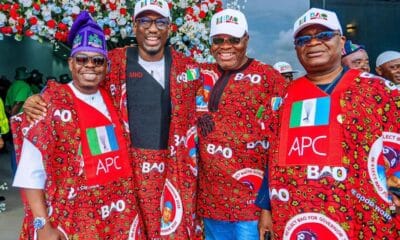




With the 2027 general election gradually gathering momentum, the ruling All Progressives Congress, APC, in Lagos State has moved into a new phase of its preparations, formally activating its campaign machinery and charging members to begin the mobilisation that will precede the election.
The Lagos APC recently inaugurated its campaign council, with Governor Babajide Sanwo-Olu as chairman and the Deputy Governor and governorship candidate, Obafemi Hamzat as deputy chairman.
Former Senator Musiliu Obanikoro was named director-general, while the structure also brings together several prominent figures, including former governors Babatunde Fashola and Akinwunmi Ambode.
The campaign structure includes directorates covering areas such as party and inter-party affairs, logistics, traditional institutions, residents’ associations and grassroots coordination. The party said its machinery would be deployed across the state’s senatorial districts, local government areas, wards and polling units.
Beyond the formal structure, however, the ruling party’s confidence is becoming increasingly evident, as APC leaders challenge opposition parties to demonstrate that they have the organisational capacity required to mount a serious statewide campaign.
An APC chieftain, Mr Olamilekan Babalola, who spoke with DAILY POST in Ikeja, said the activities of opposition parties so far had not convinced him that they were ready for the battle ahead.
He argued that political campaigns could not be won merely through media appearances or social media activity.
“Where are the opposition parties? What are they preparing? We have started our mobilisation, and our structures are already working. You cannot win Lagos by making noise on social media,” Babalola said.
According to him, the APC’s advantage lies in its established structures across the state, which he said would be activated as the election draws closer.
The chieftain also dismissed suggestions that the emergence of several opposition candidates could significantly alter the political equation in Lagos, insisting that the ruling party was focused on its own mobilisation rather than the activities of its rivals.
“Let them continue with whatever they are doing. Elections are not won on social media. What matters is what you have on the ground, from the local government to the ward and polling-unit levels. That is where the APC is preparing,” he said.
Babalola further expressed confidence that opposition parties would struggle to dislodge the ruling party, pointing to what he described as the APC’s long-standing political structure in Lagos.
The APC chieftain went further, suggesting that the ruling party’s level of preparation was already putting it ahead of its opponents.
He said the APC would approach the election with the expectation of securing a decisive victory, adding that the party’s confidence was based not merely on public rallies but also on its ability to mobilise voters at the grassroots.
Asked whether he believed any opposition party currently posed a serious threat to the APC’s hold on Lagos, he said, “As of today, I don’t see any opposition party that has demonstrated that capacity. They can make their plans, but the APC has been preparing.”
He was also asked how confident he was that the APC would retain Lagos and whether the party expected the result to become clear early on election day.
The chieftain responded confidently that the APC expected to establish a commanding position early in the process, saying the party’s preparations would speak for themselves when Lagosians eventually went to the polls.
The confidence echoes the position publicly expressed by Governor Sanwo-Olu, who recently challenged opposition parties preparing for the 2027 election to present alternative policies capable of competing with what the APC says it has achieved in Lagos and at the federal level.
Sanwo-Olu argued that voters should not support a change of government simply for the sake of change, saying opposition parties needed to demonstrate why their alternatives were preferable to the APC’s record.
ADC banks on grassroots mobilisation, vows to challenge APC
While the ruling APC has moved to strengthen its campaign machinery ahead of the 2027 Lagos governorship election, the African Democratic Congress, ADC, says it is equally focused on building the structures required to take its message to voters across the state.
The ADC has presented Gbadebo Rhodes-Vivour as its Lagos governorship candidate, with Gbadamosi Babatunde Olalere as his running mate. The party unveiled its governorship and deputy governorship candidates in 28 states in September as it stepped up preparations for the 2027 elections.
Rhodes-Vivour is returning to the Lagos governorship contest after participating in the 2023 election on the platform of the Labour Party (LP).
His current campaign has begun to focus on issues including flooding, housing and traffic, while he has also sought to address some of the issues that featured prominently during his 2023 candidacy.
Speaking recently on Arise TV, Rhodes-Vivour said he had learnt Yoruba and would use the language during his campaign, describing language and culture as important to his engagement with Lagos residents.
The ADC candidate has also recently questioned the eligibility of APC governorship candidate Obafemi Hamzat, reviving an issue surrounding alleged United States allegiance that featured during the 2023 election litigation. Rhodes-Vivour has argued that the matter deserves attention ahead of the 2027 contest.
Beyond the public exchanges, however, the ADC says its preparations are not limited to media appearances, insisting that its campaign is focused on taking its message to communities and building support ahead of the election.
An ADC chieftain, Michael Olusola, also known as Mr Ola, who spoke with DAILY POST, said the party was not intimidated by the APC’s recently unveiled campaign council, arguing that the size of a campaign structure alone would not determine how Lagos residents would vote.
“APC can unveil as many people as it wants in its campaign council. What matters is the people. The election will be decided by Lagosians, not by the number of names in a campaign council,” Olusola said.
He said the ADC was studying the lessons of the 2023 election and working to address areas where the opposition had fallen short.
“We have learnt from 2023. We know what happened, we know the mistakes that were made, and we know what we need to do differently. This time, we are going to the people, and we are building our structures from the grassroots,” he said.
The party official also rejected suggestions from APC quarters that opposition parties were relying excessively on social media and publicity.
“An election is not won on social media, and we know that. That is why we are not depending on social media.
“We are speaking with people, engaging communities and building the organisation that will take the campaign to every part of Lagos,” he said.
Asked whether the ADC was confident of defeating the APC, the chieftain said the party was approaching the election with the belief that a change was possible.
“We are confident. If we did not believe we could win, there would be no reason to contest. APC has been in government for a long time, but that does not mean Lagos belongs permanently to one political party,” he said.
He also dismissed the argument that the APC’s established structure automatically gave it an advantage that the opposition could not overcome.
“Structures are important, but structures do not vote. People vote. What we are doing is to convince Lagos residents that there is another option and that they have the power to decide what happens in 2027,” he said.
For Rhodes-Vivour, the challenge also involves convincing voters that his second attempt at the governorship is different from his 2023 campaign.
His recent emphasis on language and issues affecting residents appears aimed at broadening his engagement with Lagos voters. He has said his concerns extend beyond ethnic and linguistic considerations, pointing to flooding, housing, traffic and what he described as a loss of dignity among residents.
For now, the party insists that the relative visibility of the APC’s campaign machinery should not be mistaken for an absence of opposition activity.
“Let APC say whatever it wants to say. We are not running an election based on who makes the most noise today. We are preparing for the day Lagosians will vote,” the ADC chieftain added.
Quiet campaign does not mean we are not working — NDC
While the ADC has maintained a relatively visible campaign presence ahead of the 2027 Lagos governorship election, the Nigeria Democratic Congress, NDC, says it is taking a different approach, insisting that political activity should not be measured by the volume of appearances on social media.
Speaking with DAILY POST in Ikeja, an NDC chieftain said the party was concentrating on grassroots mobilisation and building its structures ahead of the election rather than engaging in what he described as excessive online publicity.
“Because you don’t see us making noise every day on social media does not mean we are not working. We are building our structures and engaging people on the ground. The election will not be decided by social media,” the party chieftain said.
The party official said the NDC was aware of the strength of the APC’s political structure in Lagos but insisted that the ruling party should not mistake its current visibility for a guaranteed electoral victory.
He also dismissed suggestions that opposition parties that appeared less active in the media were not preparing for the election.
“Those who are making noise online should continue. At the end of the day, it is the votes that will determine the result. We are focused on the people and what happens at the grassroots,” he said.
The NDC governorship candidate, Funso Doherty, has also publicly expressed confidence in his chances, saying he believes he will become Lagos governor in 2027.
PDP, APM insist opposition mobilisation goes beyond social media
For the Peoples Democratic Party, PDP, and the Allied Peoples Movement, APM, the battle for Lagos in 2027 will also be determined by what happens away from the cameras, with both parties insisting that their preparations are focused on building support among voters across the state.
In an interview with DAILY POST, a PDP stakeholder identified as Ayomide Emmanuel said the party was relying on its established grassroots network and was not worried about the online visibility of other political parties.
“We are working. The fact that you don’t see PDP making noise every day does not mean that our structures are sleeping.
“We have people at the grassroots, and we are engaging them. When the election comes, Lagosians will decide,” Emmanuel said.
The PDP governorship candidate, Adedeji Doherty, has also said the party is prepared to challenge the APC. The campaign has established different volunteer and mobilisation channels, including ward mobilisation and door-to-door canvassing.
The APM, meanwhile, has adopted a more visible mobilisation strategy, with its Lagos governorship campaign organisation recently commencing electioneering activities under the “Atunto Eko 1.0” agenda.
The campaign has said it will take its message across the state’s local government areas and wards, while APM leaders have also held meetings involving party officials, National Assembly candidates and chairmen from the 20 local government areas and 37 Local Council Development Areas (LCDAs).
A party insider, who did not want his name published, said the party was building its campaign from the grassroots and would not be intimidated by the APC’s established political structure.
“We know APC has been in Lagos for a long time, but that does not mean that other parties cannot win. We are organising our people and taking our message to Lagosians. Our focus is on the grassroots,” the source said.
Adeoye has anchored the APM campaign on the Atunto Eko agenda, which includes proposals on jobs, healthcare, education, infrastructure, housing and security.
2027: Lagos APC, ADC, NDC, others trade confidence as guber race gathers momentum
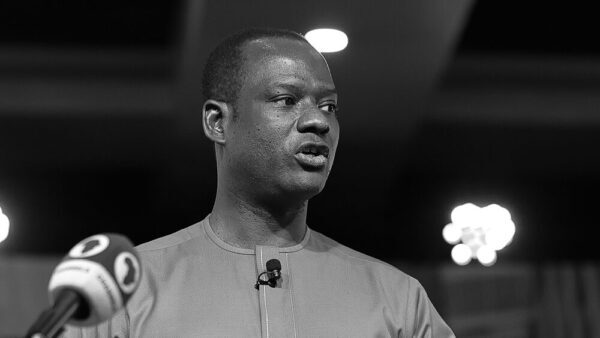
Nigeria’s Finance Minister and the Coordinating Minister of the Economy, Taiwo Oyedele, on Wednesday said the country is fortunate to have President Bola Tinubu at the helm of affairs at a time of economic challenges and global uncertainty.
Mr Oyedele made the remark on Wednesday on the sidelines of the World Bank/International Monetary Fund (IMF) meetings in Bangkok, Thailand, where he praised the president for his willingness to implement difficult economic reforms and his understanding of economic and monetary policy issues.
“I say to myself every time that Nigeria is lucky to have a leader like Mr President,” the minister said.
“A leader that says ‘I’ll do the right thing, even when it’s not popular’. There are so very few of them, and our president is not saying it; he’s doing it, he’s doing it even with pre-election (concerns),” he added.
Since assuming office in May 2023, the Tinubu administration has introduced a series of economic reforms, the impact of which international institutions like the World Bank and the IMF have acknowledged
The reforms include the removal of costly petrol subsidies, which had been a major drain on public finance for years, the unification of the foreign exchange rates and the sharp devaluation of the naira to attract foreign capital.


Although abolishing fuel subsidies has boosted government revenue and is seen as an investor-friendly move, it has triggered a cost-of-living crisis and spurred inflationary pressures.
Reforms in the foreign exchange market have helped increase accretion to external reserves, which stood at $55.1 billion as of 9 October, its peak level in over 18 years.
The banking sector also underwent a recapitalisation exercise that ended in March and helped Nigerian banks raise N4.7 trillion in new capital.
According to the Central Bank of Nigeria, the recapitalisation strengthened banks’ capital adequacy ratios, keeping the sector above international Basel benchmarks.
Mr Oyedele said President Tinubu possesses two attributes uncommon among leaders, notably those of democratic governments.
READ ALSO: AFC appoints Cardoso as board chairman
The first is his willingness to do what he considers right, even when the decision is unpopular or politically difficult.
“I remember at least three issues that were discussed with him recently, and on my own I would offer to say ‘maybe we wait until after the election’. And his question is always, ‘Is it the right thing to do?’ Yes, yes, it is. Why do we have to wait?” Mr Oyedele said.
“Number two attribute is that our President gets it. It’s not easy to understand issues to do with the economy, finance, monetary policy, like respect for the independence of the monetary authority. For Mr President, it’s 100 per cent,” he added.
The minister added that the president’s position on such matters has made it unnecessary for officials to discuss the issue with him repeatedly.
“We don’t even talk about it. So, I feel like we are so blessed, we cannot afford to wait even one minute,” he said.
Discover more from Premium Times Nigeria
Subscribe to get the latest posts sent to your email.
-
Business4 days ago
Veritas Kapital CEO Nwakuche Joins Coal City University Governing Council
-

 News2 days ago
Meta releases its first frontier model, Muse Wonder
-
News4 days ago
2027: INEC publishes final names of governorship candidates across states [FULL LIST]
-
News4 days ago
Arokodare Nets Seventh Goal of Season as Ajax Drop Points Against NEC Nijmegen