News
Covenant University Retains Africa’s Top Spot In THE Rankings








Giannis Antetokounmpo will come face to face with his former team for the first time in his NBA career when the Miami Heat host the Milwaukee Bucks at the Kaseya Center on Wednesday night, marking a significant moment in the aftermath of his blockbuster move from Milwaukee to Miami.
The encounter brings an end to a 13-year chapter that transformed Antetokounmpo from an emerging prospect into one of the NBA’s biggest stars and the most influential figures in Bucks history. He joined Milwaukee as an 18-year-old in 2013, developed into a two-time NBA Most Valuable Player and led the franchise to the 2021 NBA championship, its first title in 50 years.
That successful partnership ended on July 6, 2026, when Milwaukee traded the Greek-Nigerian superstar to Miami in a major deal that also sent forward Bobby Portis to the Heat. In return, the Bucks received Tyler Herro, Jaime Jaquez Jr., Kel’el Ware and Kasparas Jakucionis, alongside a package of draft picks.
The scale of the transaction reflected the importance of the move for both franchises. Miami acquired an established championship-winning superstar to strengthen its title ambitions, while Milwaukee began a new phase built around younger players and future draft assets.
However, Antetokounmpo insists that the emotional significance of facing his former employers will not affect his approach to the game.
“It’s going to be just another game,” he said ahead of Wednesday’s meeting, explaining that he intends to maintain his usual pre-game routine, including spending time with his family, eating his regular meals and preparing for the contest.
“I haven’t found myself being emotional. I think the only time I’ve been emotional was when we won the championship,” he added.
Despite playing down the reunion, the 31-year-old acknowledged the deep personal connection he developed with Milwaukee during his time at the franchise.
“I think I was able to give my heart and soul every single night for the organization and the fans. The fans were wonderful. They welcomed me when I was 18 years old, they welcomed my family. My brothers went to school there, my kids were born there, I was pretty much raised there,” he said.
His comments underline the significance of the occasion, with Wednesday’s contest bringing together a player and a franchise whose identities were closely connected for more than a decade.
Since arriving in Miami, Antetokounmpo has continued to deliver at an elite level, quickly establishing himself as the central figure in the Heat’s campaign.
He leads Miami in scoring and rebounding, averaging 28.3 points and 12.5 rebounds per game, while contributing 5.2 assists. He is also shooting 60.1 per cent from the field and has recorded 11 double-doubles in 14 appearances.
His latest contribution came in Monday’s 128-110 victory over the Houston Rockets, where he finished with 20 points, 13 rebounds and six assists.
The victory extended Miami’s winning streak to five games and improved its recent record to eight wins in 10 games, following a difficult 0-4 start to the season.
The Heat now head into the Milwaukee contest with renewed momentum and the opportunity to strengthen their position in the Eastern Conference.
For Milwaukee, the situation is considerably more challenging. The Bucks enter the game with a 1-13 record after losing their last 10 consecutive matches, leaving them at the bottom of the Eastern Conference standings.
Beyond Antetokounmpo’s return to the spotlight against his former team, the game also represents a homecoming of sorts for several players involved in the trade.
Herro, Jaquez, Ware and Jakucionis, who previously played for Miami, will now face their former franchise in Milwaukee colours. Their performances will add another dimension to a contest already carrying considerable attention because of Antetokounmpo’s departure.
The meeting will also offer an early opportunity to assess how the two teams are adjusting to the personnel changes that reshaped their rosters during the offseason.
For Miami, the immediate priority is to maintain its winning momentum and make the most of Antetokounmpo’s outstanding form. For Milwaukee, the challenge is to arrest its losing run against a team currently enjoying a strong spell.
Wednesday’s game is only the first meeting between the sides this season, with Antetokounmpo scheduled to return to Milwaukee later in the campaign when the Heat visit the Bucks.
For now, the spotlight will be on the player who gave Milwaukee 13 seasons of commitment, delivered its long-awaited championship and is now leading a new project in Miami.
The Milwaukee Bucks visit the Miami Heat on Wednesday, November 18, at 7 p.m. ET (1 a.m. Nigerian time) at the Kaseya Center. The game will be broadcast live on ESPN and NBA League Pass.
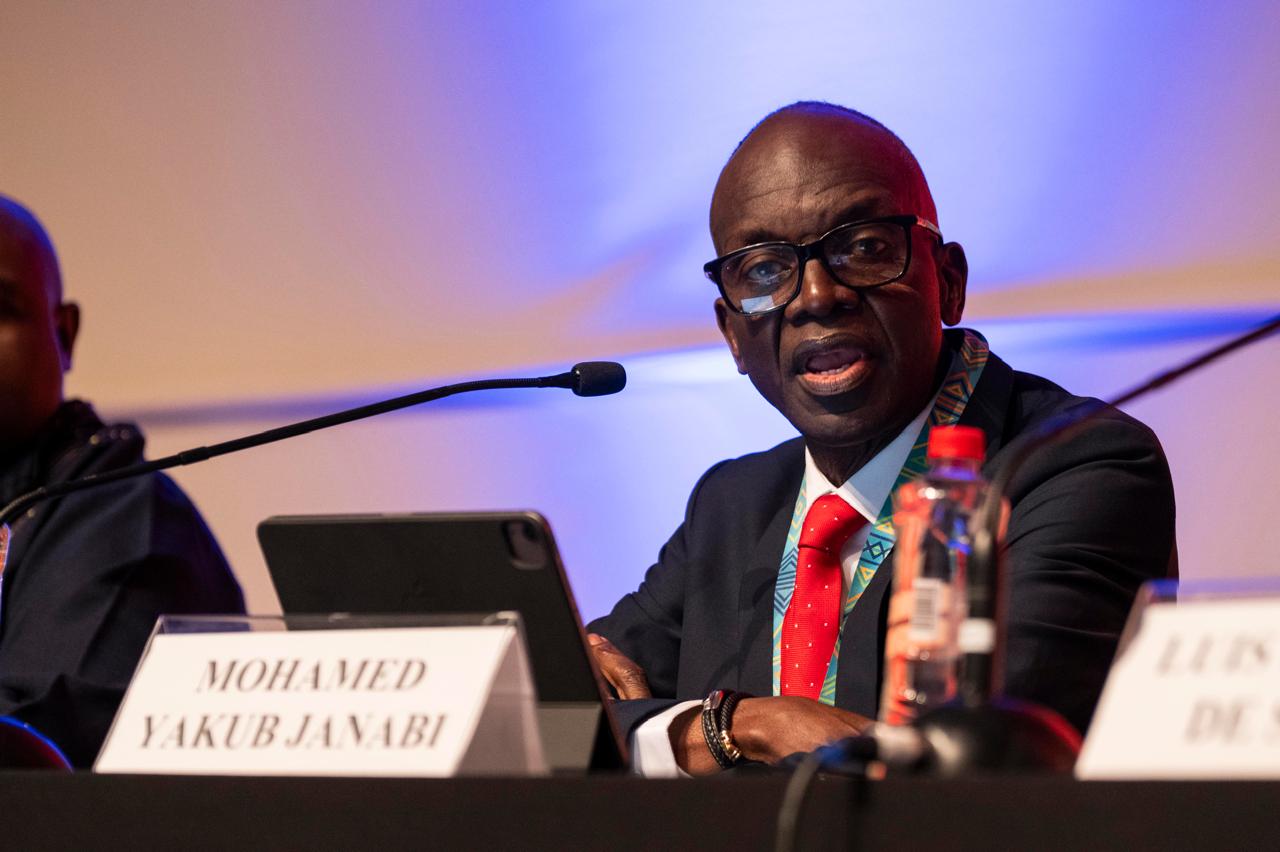
The World Health Organisation (WHO) has called on African countries to strengthen efforts to tackle antimicrobial resistance (AMR), warning that drug-resistant infections continue to threaten lives and undermine healthcare across the continent.
WHO said bacterial AMR was associated with an estimated 4.7 million deaths globally in 2021, with sub-Saharan Africa recording the highest rates of AMR-associated mortality.
The WHO Regional Director for Africa, Mohamed Janabi, made the call in a message ahead of World AMR Awareness Week, observed from 18 to 24 November, under the theme, “One Health, One Action: Prevent AMR Now”.
AMR occurs when bacteria, viruses, fungi and parasites no longer respond to medicines used to treat infections, making diseases more difficult to manage.
Mr Janabi said inappropriate use of antimicrobials in humans and animals, poor infection prevention, inadequate water and sanitation, and unsafe waste disposal were contributing to the spread of drug resistance.
He called for stronger action across human, animal, plant and environmental health, stressing that preventing infections would reduce the need for antimicrobial medicines.


Progress and gaps in Africa
According to WHO, all 47 countries in the African Region now have national action plans on AMR, although implementation varies.
All 47 countries are also enrolled in WHO’s Global Antimicrobial Resistance and Use Surveillance System, while 44 can conduct susceptibility testing for priority bacterial pathogens to help determine which antibiotics are likely to work.
The agency said 36 countries had adopted its Access, Watch and Reserve (AWaRe) classification of antibiotics to promote appropriate prescribing and responsible use.
WHO is also targeting a 70 per cent share of antibiotics used in human healthcare coming from the Access group by 2030.
Coordination across sectors has also improved, with the number of countries having functional One Health AMR governance mechanisms increasing from 15 in 2023 to 29 in 2026.
However, Mr Janabi said countries must translate these gains into stronger protection for communities through increased investment in laboratories, surveillance, infection prevention and responsible antimicrobial use.
He urged governments to fund national action plans, establish clear responsibilities, and measure progress.
Nigeria to host global AMR conference
Nigeria is expected to host the fifth Global High-Level Ministerial Conference on Antimicrobial Resistance in Abuja from 6 to 8 December.
READ ALSO: WHO urges concrete action on antimicrobial resistance worldwide
The conference, the first of its kind to be held on African soil, is expected to bring together government officials, public health experts, and other stakeholders to review progress and strengthen global action against AMR.
It will be held under the theme, “One Health: Advancing Global AMR Commitments through Local Action”.
The meeting is expected to focus on translating global commitments into practical interventions across human, animal and environmental health, as well as strengthening financing and accountability.
Mr Janabi called on health professionals, farmers, researchers, development partners and communities to contribute to efforts to prevent drug resistance.
He urged members of the public to keep vaccinations up to date, practice good hand hygiene, use antibiotics only when prescribed by qualified health professionals and avoid sharing leftover medicines.
“AMR is everyone’s business. Let us each choose one concrete action this week, sustain it throughout the year, and encourage others to act,” he said.
Discover more from Premium Times Nigeria
Subscribe to get the latest posts sent to your email.
-

 News3 days ago
Flaming Hydra’s new Kickstarter campaign rethinks e-book ownership and digital lending
-
News2 days ago
2027: Tinubu a failure, shouldn't seek second term – Atiku
-
News3 days ago
15,000 terrorists killed, 130,000 Boko Haram fighters surrendered in three years – APC
-
News2 days ago
2027: 'You abandoned Plateau when they were dying’ – Atiku blasts Tinubu over forgiveness plea in Jos