Health
FCTA upgrades 20 health centres, expands free maternal care


The Federal Capital Territory Administration (FCTA) says it has upgraded 20 primary healthcare centres (PHCs) across the six area councils as part of efforts to expand access to healthcare, particularly for women, children and vulnerable residents.
The administration is also providing free maternal healthcare, emergency transportation, health insurance and incentives to encourage pregnant women to deliver in recognised health facilities.
The interventions were highlighted during a community engagement at the Owner Occupier PHC in Kubwa, Abuja, attended by government officials, development partners, community leaders and residents.
The engagement was supported by the World Bank-funded Immunisation Plus and Malaria Progress by Accelerating Coverage and Transforming Services (IMPACT) project.
Speaking at the event, the Mandate Secretary, FCT Health Services and Environment Secretariat, Dolapo Fasawe, said the administration was addressing factors contributing to maternal deaths, including delays in reaching health facilities, inability to afford treatment and difficulties accessing emergency transportation.
Ms Fasawe said the 20 PHCs had been upgraded to Tier 2 standard, with electricity, water, staff accommodation, medical equipment and essential medicines to support round-the-clock services.


According to her, the facilities provide maternal and child healthcare, immunisation, nutrition services, breastfeeding education, malaria testing and treatment, and emergency referrals.
Free maternal care, emergency transportation
Ms Fasawe said the administration had strengthened emergency medical transportation to help pregnant women and other patients reach health facilities without delays.
She explained that the FCT Emergency Medical Services and Ambulance System (FEMSA) was linked to the national emergency response system, while commercial drivers and transport workers were being engaged to assist during medical emergencies.
Under the arrangement, participating drivers receive enhanced fares for transporting patients to health facilities.
She said the intervention complemented rural emergency and maternal transportation services for pregnant women and children under five, including referrals to higher-level facilities when necessary.
The administration is also providing free maternal healthcare and one-year health insurance coverage to eligible residents.
Ms Fasawe said health insurance enrolment in the FCT had increased by nearly 70 per cent, attributing the growth to improved access to services and public confidence in the system.
She explained that the insurance covered healthcare services in government facilities and selected private hospitals.
To encourage institutional childbirth, she said women delivering at recognised FCT health facilities were entitled to baby-care kits containing clothes, caps, bibs, gloves, socks, towels and soap.
The administration also provides delivery kits, commonly called mama kits, containing medical supplies such as gloves, cord clamps, drips and other essentials needed for childbirth.
According to her, the intervention is intended to reduce the financial burden on expectant mothers and encourage safe deliveries.
Funding and malaria reduction
On sustaining the upgraded facilities, Ms Fasawe said the administration was prioritising healthcare workers’ welfare and facility-level funding through the Basic Health Care Provision Fund (BHCPF).
She said the fund supported the purchase of medicines, operational expenses and treatment for patients unable to afford healthcare.
Ms Fasawe also said malaria incidence in the FCT declined from 18.7 per cent in 2023 to 7.4 per cent, attributing the reduction to free testing, treatment and other health interventions.
She urged residents and community leaders to monitor health workers’ attendance, report attempts to charge for services meant to be free, and ensure facilities are properly maintained.
According to her, access to healthcare is a fundamental right, and residents should receive quality medical services regardless of their financial circumstances.
World Bank, FG interventions
A World Bank Senior Health Specialist and Task Team Leader of the IMPACT project, Onoriode Ezire, said the initiative was designed to strengthen existing government programmes rather than establish parallel healthcare systems.
Mr Ezire said the FCTA had taken ownership of several interventions introduced through the project, including emergency medical services and expanded healthcare delivery.
He explained that the World Bank was providing technical support to strengthen implementation and ensure the programmes could continue with government resources after the project ended.
READ ALSO: Wike orders crackdown on illegal hospitals, quack doctors in FCT
Also speaking, the Senior Special Assistant to the President on Community Engagement (North-Central), Abiodun Essiet, said more than 16 million Nigerians had been enrolled in health coverage since 2023.
Ms Essiet said the federal government had invested over N235 billion in PHC upgrades, with the BHCPF supporting efforts to improve at least one PHC in each ward across the country’s 774 local government areas.
She listed other interventions, including subsidised dialysis, free Caesarean sections at federal medical centres, and expanded maternal and child healthcare services.
According to her, about 48,000 women had benefited from free maternal and child healthcare packages, while 14 million girls had received the human papillomavirus (HPV) vaccine.
She added that the government was targeting 90 per cent PHC coverage by 2027 and expanding free emergency childbirth services nationwide.
Discover more from Premium Times Nigeria
Subscribe to get the latest posts sent to your email.





More than 30,000 people at high risk of HIV infection in Nigeria have accessed Lenacapavir, a long-acting injectable drug administered twice a year to prevent HIV infection.
The National Coordinator of Nigeria’s AIDS, Viral Hepatitis and Sexually Transmitted Infections Control Programme (NASCP), Adebobola Bashorun, disclosed this on Monday in Abuja during a press briefing ahead of the 2026 World AIDS Day commemoration.
Mr Bashorun said Nigeria had received nearly 50,000 doses of the injectable medicine, with more than 30,000 eligible people already accessing it under the ongoing pilot programme.
He said the country expected an additional 170,000 doses by January 2027 to expand access to more people at substantial risk of acquiring HIV.
“We have over 30,000 that are currently on it. Don’t forget that the available injectable doses in Nigeria are not as much as in millions, but rather in the piloting phase of implementation,” he said.
Lenacapavir, also known as LEN PrEP, was officially rolled out in Nigeria in March 2026 and is currently being piloted in nine states and the Federal Capital Territory (FCT).
The participating states are Akwa Ibom, Anambra, Benue, Cross River, Ebonyi, Gombe, Kano, Kwara and Lagos.
Unlike daily oral pre-exposure prophylaxis (PrEP), Lenacapavir is administered once every six months, offering another prevention option for people at increased risk of HIV infection.
Mr Bashorun explained that the medicine was specifically intended for eligible high-risk populations rather than the general public.
He said other prevention options available in Nigeria include oral PrEP and injectable Cabotegravir, allowing individuals to choose suitable methods based on their needs.
“There are other options too. You can decide to use oral, you can decide to use Lenacapavir, you can decide to use Cabotegravir. That’s why this theme is access. There are many innovations. Get one that fits you most and access it,” he said.
Nigeria records progress in HIV treatment
Also speaking, the Director-General of the National Agency for the Control of AIDS (NACA), Temitope Ilori, disclosed that 80 per cent of Nigerians living with HIV knew their status in 2025.
Ms Ilori said 98 per cent of those who knew their HIV status were receiving antiretroviral treatment, while 94 per cent of people receiving treatment had achieved viral suppression.
The figures show that Nigeria has exceeded the second component of the Joint United Nations Programme on HIV/AIDS (UNAIDS) 95-95-95 targets but remains below the first and third targets.
The targets seek to ensure that 95 per cent of people living with HIV know their status, 95 per cent of those diagnosed receive treatment, and 95 per cent of those receiving treatment achieve viral suppression.
Ms Ilori said the gaps in diagnosis remained a concern despite improvements in treatment coverage.
“However, the gaps in diagnosis and treatment remind us that more work is required to ensure that everyone knows their status and has uninterrupted access to lifesaving treatment,” she said.
She also disclosed that early infant diagnosis coverage among HIV-exposed infants increased from 15 per cent in 2022 to 66 per cent in 2025.
The NACA boss said the government would continue expanding HIV testing, prevention and treatment services, particularly for underserved populations.
Nigeria to unveil HIV financing strategy
Ms Ilori also announced that Nigeria would unveil its National HIV Domestic Resource Mobilisation and Sustainability Strategy 2026–2030 on 1 December as part of activities marking World AIDS Day.
She said the strategy was developed to strengthen domestic financing, increase national ownership and ensure continuity of HIV services amid changes in international donor funding.
“As the global health financing landscape continues to evolve, Nigeria cannot afford an HIV response that depends solely on external support,” she said.
According to her, sustainable HIV financing requires stronger commitments from state governments, increased domestic resource mobilisation and the integration of HIV services into existing primary healthcare systems.
She said NACA had also developed a National HIV Prevention Plan and advanced work on the National Strategic Plan to strengthen coordination of the country’s HIV response.
The agency is also implementing the 2026 Integrated Biological and Behavioural Surveillance Survey to improve understanding of HIV prevalence, risk behaviours and access to services among key populations.
Ms Ilori said this year’s World AIDS Day theme, “Ending AIDS Starts with Access: Equity, Ownership and Sustainability,” highlights the need to make HIV services available to everyone, irrespective of their location, income or social circumstances.
Stakeholders call for equitable access
The Institute of Human Virology Nigeria (IHVN) called for stronger domestic investment, community participation and sustainable healthcare systems to improve HIV prevention and treatment.
In a goodwill message, the Chief Executive Officer, Patrick Dakum, said access to HIV services must be equitable and inclusive.
Mr Dakum, represented by the Director of Prevention, Care and Treatment, Helen Omuh, urged the government and stakeholders to strengthen local capacity, address stigma and discrimination, and support communities in delivering HIV services.
Similarly, Amber Erinmwinhe, the Executive Secretary of the Nigerian Network of Religious Leaders Living with or Personally Affected by HIV/AIDS (NINERELA+) called for greater involvement of religious institutions in addressing HIV-related stigma.
Ms Erinmwinhe said equitable access must include dignity, confidentiality and freedom from discrimination.
She urged faith-based institutions and community organisations to participate actively in HIV prevention, treatment advocacy and programme monitoring.
READ ALSO: Lagos increases HIV response budget to N1.07bn
She also called for increased domestic funding to sustain community-led HIV services as international donor support changes.
World AIDS Day 2026
World AIDS Day is commemorated annually on 1 December to raise awareness about HIV, remember people who have died from AIDS-related illnesses and promote prevention, treatment and care.
As part of this year’s activities, NACA said it would convene a National Prevention Conference under the theme “Reimagining HIV Prevention Strategies in Nigeria.”
Ms Ilori said the conference would examine existing prevention approaches, emerging technologies and strategies for expanding access to HIV services.
She urged Nigerians to know their HIV status and encouraged the media to promote accurate information while challenging stigma and discrimination.
Discover more from Premium Times Nigeria
Subscribe to get the latest posts sent to your email.

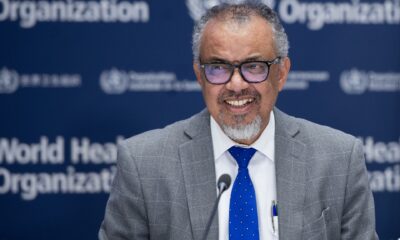
The Director-General of the World Health Organisation (WHO), Tedros Ghebreyesus, has described the failure of the 31st United Nations Climate Change Conference (COP31) to reach an agreement as a grave setback for global health.
Mr Ghebreyesus said the failure to agree on measures to protect lives and health would leave vulnerable communities exposed to the growing health impacts of climate change.
In a post on X on Tuesday, the WHO chief said the outcome also represents a missed opportunity to scale up proven interventions that could save more than 1.5 million lives annually.
“The failure of COP31 to deliver an agreement that protects people’s lives and health is a grave setback,” he wrote.
He also criticised the inability of countries to agree on how to advance the transition away from fossil fuels, noting that it is “another missed opportunity to save millions of lives from air pollution.”
“We urged leaders to negotiate as though lives depended on it. Because they do,” he said.
Mr Ghebreyesus said the WHO would continue working with scientists, health professionals and civil society organisations to push for climate action that protects people’s health.
Air pollution remains a major global health threat. The State of Global Air 2025 report estimated that air pollution caused 7.9 million deaths worldwide in 2023, accounting for about 13 per cent of all deaths globally.
Disagreement over fossil fuels stalled negotiations
COP31 ended in Antalya, Turkiye, on Sunday without consensus on the proposed overarching agreement, after more than two weeks of negotiations that ran nearly 48 hours past the scheduled closing date.
The failure followed deep disagreements among participating countries over the transition away from fossil fuels, climate finance and other contentious issues.
PREMIUM TIMES reported that an initial draft agreement released by the COP31 presidency on 16 November proposed increasing annual climate adaptation finance for developing countries to at least $120 billion by 2035 and called for accelerated action to phase out fossil fuels.
However, a revised draft released later in the negotiations removed the direct reference to transitioning away from fossil fuels and the proposed adaptation finance target.
In its report on the revised draft, PREMIUM TIMES found that the document had been reduced from 18 pages and 144 paragraphs to nine pages and 80 paragraphs.
Countries remained divided over the proposed agreement, with the European Union, Norway, Canada and the United Kingdom among those that rejected the final text.
The COP31 president, Murat Kurum, subsequently confirmed at the closing plenary that the proposed Antalya Pact would not be approved.
PREMIUM TIMES also reported that representatives of Ghana, speaking on behalf of the African bloc, expressed dissatisfaction with the negotiation process, while no Nigerian representative addressed the closing plenary.
Health impacts of climate change
The WHO has repeatedly warned that climate change poses serious risks to human health, including through extreme heat, air pollution, food insecurity and the spread of climate-sensitive infectious diseases.
At the opening of COP31, global health and climate funders announced more than $375 million in funding to address climate-related health challenges.
READ ALSO: COP31: African climate coalition says no deal better than ’empty’ text, sets demands for COP32
The funding was expected to support measures addressing extreme heat, air pollution, climate-sensitive infectious diseases, and other health risks associated with global warming.
In Nigeria and several other countries worldwide, surging temperatures have fuelled public health concerns in recent years.
Speaking at the opening ceremony, Simon Stiell, executive secretary of UN Climate Change, said the world is witnessing dangerous heat levels that expose hundreds of millions of people to extreme temperatures.
“As today’s important data from the WMO shows, the world is getting dangerously hot. Hundreds of millions of people are exposed to extreme heat across Southern Asia,” Mr Stiell said.
Discover more from Premium Times Nigeria
Subscribe to get the latest posts sent to your email.
-

 Events2 days ago
Plateau Govt, CAN Strengthen Unity Through 2026 Christmas Carols and Praise Festival
-
News1 day ago
Suspected Gunmen Set Plateau Secondary School Ablaze in Bokkos
-
Health1 day ago
WHO Reports 26.3 Million People Living with HIV in Africa
-
News3 days ago
Gunmen kill 60-year-old security guard, shoot two in Plateau