News
Folashade Ijamilusi Celebrates Historic Chinese Women’s Super League Triumph With Liaoning



Super Falcons forward Folashade Ijamilusi has secured a major milestone in her club career after being crowned champion of the 2026 Chinese Women’s Super League with Liaoning Shenyang Shenbei Hefeng.
Sports247 reports that the Nigerian forward was part of the Liaoning squad that completed a successful campaign to claim the club’s first-ever Chinese Women’s Super League title, marking a historic moment for the team.
The achievement represents a significant breakthrough for Liaoning, who have now added their name to the list of champions in Chinese women’s football. Winning the league for the first time is a landmark accomplishment for the club and a reward for the efforts invested throughout the campaign.
For Ijamilusi, the title adds another important achievement to her football journey and further highlights the presence of Nigerian players in leagues across the world.
The Super Falcons forward’s success in China is also positive news for Nigerian women’s football, with the country’s internationals continuing to make their presence felt in different football environments. Nigerian players have consistently pursued opportunities abroad, contributing to the growing visibility of the nation’s football talent.
Ijamilusi’s championship success comes as a proud moment for her, her teammates and the supporters of Liaoning Shenyang Shenbei Hefeng. The club’s maiden league triumph will undoubtedly remain a memorable chapter in its history.
While the title is a collective achievement, Ijamilusi can take pride in being part of the squad that delivered such an important milestone. Her latest honour also provides another reason for Nigerian football followers to celebrate the accomplishments of the country’s female players on the international stage.
Liaoning’s historic triumph brings their 2026 campaign to a successful conclusion and establishes a new benchmark for the club as it looks ahead to future seasons.
Congratulations to Folashade Ijamilusi and Liaoning Shenyang Shenbei Hefeng on a memorable Chinese Women’s Super League triumph.









The Federal Capital Territory Administration (FCTA) says it has upgraded 20 primary healthcare centres (PHCs) across the six area councils as part of efforts to expand access to healthcare, particularly for women, children and vulnerable residents.
The administration is also providing free maternal healthcare, emergency transportation, health insurance and incentives to encourage pregnant women to deliver in recognised health facilities.
The interventions were highlighted during a community engagement at the Owner Occupier PHC in Kubwa, Abuja, attended by government officials, development partners, community leaders and residents.
The engagement was supported by the World Bank-funded Immunisation Plus and Malaria Progress by Accelerating Coverage and Transforming Services (IMPACT) project.
Speaking at the event, the Mandate Secretary, FCT Health Services and Environment Secretariat, Dolapo Fasawe, said the administration was addressing factors contributing to maternal deaths, including delays in reaching health facilities, inability to afford treatment and difficulties accessing emergency transportation.
Ms Fasawe said the 20 PHCs had been upgraded to Tier 2 standard, with electricity, water, staff accommodation, medical equipment and essential medicines to support round-the-clock services.


According to her, the facilities provide maternal and child healthcare, immunisation, nutrition services, breastfeeding education, malaria testing and treatment, and emergency referrals.
Free maternal care, emergency transportation
Ms Fasawe said the administration had strengthened emergency medical transportation to help pregnant women and other patients reach health facilities without delays.
She explained that the FCT Emergency Medical Services and Ambulance System (FEMSA) was linked to the national emergency response system, while commercial drivers and transport workers were being engaged to assist during medical emergencies.
Under the arrangement, participating drivers receive enhanced fares for transporting patients to health facilities.
She said the intervention complemented rural emergency and maternal transportation services for pregnant women and children under five, including referrals to higher-level facilities when necessary.
The administration is also providing free maternal healthcare and one-year health insurance coverage to eligible residents.
Ms Fasawe said health insurance enrolment in the FCT had increased by nearly 70 per cent, attributing the growth to improved access to services and public confidence in the system.
She explained that the insurance covered healthcare services in government facilities and selected private hospitals.
To encourage institutional childbirth, she said women delivering at recognised FCT health facilities were entitled to baby-care kits containing clothes, caps, bibs, gloves, socks, towels and soap.
The administration also provides delivery kits, commonly called mama kits, containing medical supplies such as gloves, cord clamps, drips and other essentials needed for childbirth.
According to her, the intervention is intended to reduce the financial burden on expectant mothers and encourage safe deliveries.
Funding and malaria reduction
On sustaining the upgraded facilities, Ms Fasawe said the administration was prioritising healthcare workers’ welfare and facility-level funding through the Basic Health Care Provision Fund (BHCPF).
She said the fund supported the purchase of medicines, operational expenses and treatment for patients unable to afford healthcare.
Ms Fasawe also said malaria incidence in the FCT declined from 18.7 per cent in 2023 to 7.4 per cent, attributing the reduction to free testing, treatment and other health interventions.
She urged residents and community leaders to monitor health workers’ attendance, report attempts to charge for services meant to be free, and ensure facilities are properly maintained.
According to her, access to healthcare is a fundamental right, and residents should receive quality medical services regardless of their financial circumstances.
World Bank, FG interventions
A World Bank Senior Health Specialist and Task Team Leader of the IMPACT project, Onoriode Ezire, said the initiative was designed to strengthen existing government programmes rather than establish parallel healthcare systems.
Mr Ezire said the FCTA had taken ownership of several interventions introduced through the project, including emergency medical services and expanded healthcare delivery.
He explained that the World Bank was providing technical support to strengthen implementation and ensure the programmes could continue with government resources after the project ended.
READ ALSO: Wike orders crackdown on illegal hospitals, quack doctors in FCT
Also speaking, the Senior Special Assistant to the President on Community Engagement (North-Central), Abiodun Essiet, said more than 16 million Nigerians had been enrolled in health coverage since 2023.
Ms Essiet said the federal government had invested over N235 billion in PHC upgrades, with the BHCPF supporting efforts to improve at least one PHC in each ward across the country’s 774 local government areas.
She listed other interventions, including subsidised dialysis, free Caesarean sections at federal medical centres, and expanded maternal and child healthcare services.
According to her, about 48,000 women had benefited from free maternal and child healthcare packages, while 14 million girls had received the human papillomavirus (HPV) vaccine.
She added that the government was targeting 90 per cent PHC coverage by 2027 and expanding free emergency childbirth services nationwide.
Discover more from Premium Times Nigeria
Subscribe to get the latest posts sent to your email.

Nigeria’s economy recorded further improvements in the second quarter of 2026, but the developments have not yet translated into sufficient relief for households and businesses.
The Minister of Finance and Coordinating Minister of the Economy, Taiwo Oyedele, revealed the economic update on Monday at the National Economic Council (NEC)’s 162nd meeting.
Stanley Nkwocha, the Senior Special Assistant to the President on Media and Communications in the Office of the Vice President, disclosed the meeting’s proceedings in a statement on Monday.
At the meeting, Mr Oyedele said Nigeria’s economic indicators continue to improve, with real Gross Domestic Product growing by 4.43 per cent in the second quarter of 2026, compared with 4.23 per cent in the corresponding period of 2025.
He also noted that headline inflation declined for the fifth consecutive month to 14.06 per cent in October 2026, its lowest level since September 2020.
Additionally, Nigeria’s external reserves stood at $54.87 billion as of 12 November.
According to the minister, Nigeria’s trade surplus increased from N10.2 trillion in the first half of 2025 to N20.1 trillion in the corresponding period of 2026.
He added that net revenue distributed through the Federation Account Allocation Committee rose by 44 per cent, from N15.2 trillion in 2024 to N21.9 trillion in 2025.
Change in livelihoods
However, Mr Oyedele observed that improving economic indicators have yet to translate sufficiently into relief for households and businesses, particularly in food prices and employment.
“Oyedele, however, observed that the improving economic indicators had yet to translate sufficiently into relief for households and businesses, particularly in the areas of food prices, electricity costs, access to affordable credit and employment,” the statement read.
He noted that food inflation remained elevated at 19.13 per cent in October, while high lending rates and energy costs continued to place pressure on businesses and household incomes.
Strong institutions
Earlier, in his opening remarks, the Chairman of the Council and Vice President, Kashim Shettima, said Nigeria’s economic future and the lasting success of President Bola Tinubu‘s reforms depended on building strong institutions.
He noted that ministries and the 36 states of the federation must consider the people affected by government policies as they carry out their responsibilities.
“While His Excellency, President Bola Ahmed Tinubu, GCFR, makes the difficult reforms to stabilise the economy, we must all participate in establishing institutions capable of sustaining the benefits of those reforms,” the VP said.
According to Mr Shettima, to benefit from the economic reforms, ministries and states must settle practical responsibilities without losing sight of the people affected.
“To achieve this, we must cooperate. We must allow a sound practice in one jurisdiction to inform decisions elsewhere, while respecting the differences in capacity and circumstance across the country. The quality of our cooperation will shape the inheritance we leave,” he stated.
Mr Shettima urged Council members to consider Nigerians who would depend on the decisions they make years from now.
READ ALSO: Nigeria’s economy grows over 4% in 2026 Tinubu
Reforms
Since assuming office in May 2023, Mr Tinubu’s administration has introduced several economic reforms aimed at stabilising the economy, improving government revenue and attracting investment.
These include removing the petrol subsidy, unifying the foreign exchange market, implementing tighter monetary policy, ending deficit financing by the Central Bank of Nigeria (CBN), and reforming the tax system.
The administration has completed banks’ recapitalisation exercise to strengthen the sector, implemented the Electricity Act 2023 to encourage state participation in electricity generation and distribution, and introduced initiatives to expand access to student loans and consumer credit.
Although thr policies have been hailed as bold and decisive by international development agencies, many Nigerians have been impacted by the ripple effects through elevated prices of petrol and other essential goods and services.
Discover more from Premium Times Nigeria
Subscribe to get the latest posts sent to your email.
-

 Events1 day ago
Plateau Govt, CAN Strengthen Unity Through 2026 Christmas Carols and Praise Festival
-
Health4 days ago
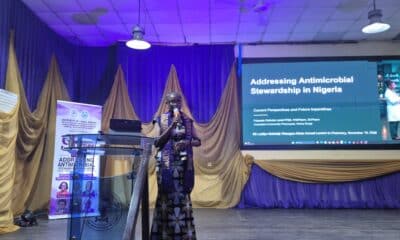
AMR: Pharmacist urges Nigeria to implement policies to curb drug resistance
-
Business3 days ago
FCMB Group’s profit jumps 86% on strong top-line growth
-
Health4 days ago
AMR Week: Artists, health experts use arts to raise awareness about drug resistance