Connect with us

News

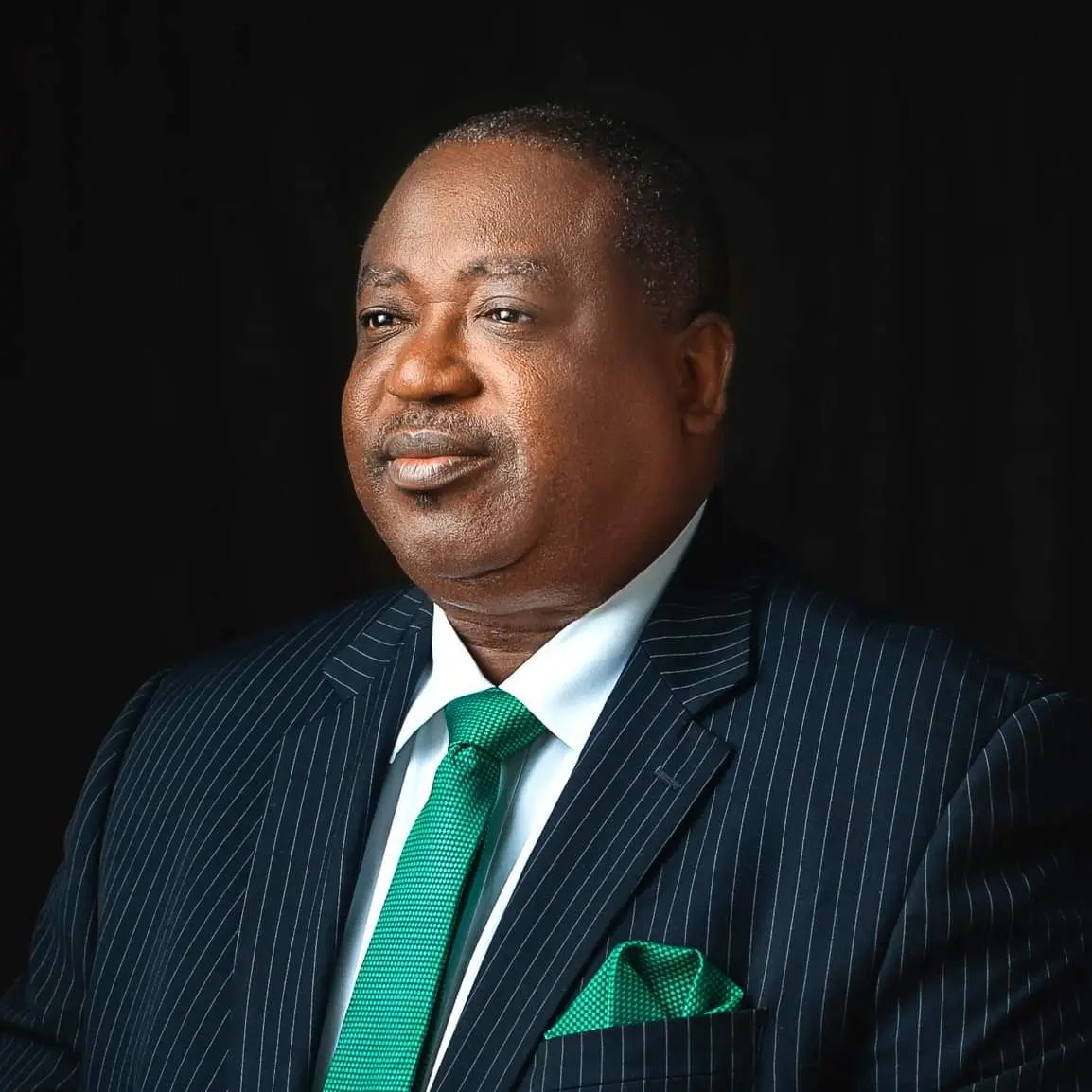
We Didn’t endorse Lalong As Tinubu/Shettima’s Campaign DG – Plateau CAN Chair

info

Published

on

Plateau CAN Chairman

The Christian Association of Nigeria (CAN) Plateau State Chapter has warned politicians to desist from using Christianity and CAN in particular to promote their political interests saying as a body it never endorses the appointment of Governor Simon Lalong as the Director General of the Tinubu/Shettima Campaign Organisation.

The State CAN Chairman, Rev. Fr. Polycarp Lubo while speaking with New Telegraph in Jos on Thursday said the fact that the majority of those who received the governor at the airport were Christians did not translate that CAN as a body was represented adding that every Christian is a member of CAN.

He also noted that the Christian Association of Nigeria Plateau State was not part of those that received the governor at the Yakubu Gowon Airport on arrival to the state after his appointment as the Director General of the campaign organisation.

Continue Reading
Click to comment

Leave a Reply

Your email address will not be published. Required fields are marked *

News

SoftBank says it will invest up to €75 billion to build French data centers

info

Published

on

By

GettyImages 2224533087.jpg

SoftBank Group announced today that it plans to spend up to €75 billion (around $87 billion) to expand data center capacity in France.

The goal, the firm said, is to develop and operate up to 5 gigawatts of additional data center capacity. The first phase of the plan involves building data centers in Dunkirk (Loon-Plage), Bosquel, and Bouchain to deliver 3.1 gigawatts of capacity to the Hauts-de-France region by 2031.

SoftBank, which is both an investor in and customer of OpenAI, says this will be its largest AI infrastructure investment in Europe.

In a statement, French economic minister Roland Lescure described the announcement as a “testament to President Emmanuel Macron’s ambition to position France as a leading destination all along the AI value chain.”

In the United States, opposition to data center construction is heating up over environmental concerns, as well as questions about how data centers affect the electrical grid and utility prices. Nonetheless, SoftBank earlier announced plans to build a data center in Ohio, powered by a new 9.2 gigawatt natural gas plant.

Continue Reading

Health

PT Health Watch: Why sleep paralysis feels like a spiritual attack — Expert

info

Published

on

By

D984811F 2766 4DCC ACF6 A838EDD9F2E4.jpeg

MTN ADVERT

Many Nigerians who wake up unable to move, speak or call for help often describe the experience as a spiritual attack, saying “something pressed me” or “a witch held me down.”

However, health experts say the frightening phenomenon, known as sleep paralysis, has a medical explanation rooted in the brain’s sleep cycle and is often linked to stress, sleep deprivation and irregular sleeping patterns.

Speaking with PT Health Watch, Joshua Nnatus, a senior manager at Lagos MiND and a public health professional, explained that while the experience can feel terrifyingly real, it is a recognised sleep condition with a well-understood neurological basis.

When the brain wakes before the body

Mr Nnatus described sleep paralysis as a temporary inability to move or speak that occurs either while falling asleep or, more commonly, while waking up.

“It is classified as a parasomnia, one of the sleep-related experiences recognised in the American Psychiatric Association’s DSM-5 and the International Classification of Sleep Disorders,” he said.

PT WHATSAPP CHANNEL

He explained that the condition is closely tied to rapid eye movement (REM) sleep, the stage of sleep associated with vivid dreaming, which typically accounts for about 20 to 25 per cent of an adult’s sleep cycle.

During REM sleep, the brain activates a protective mechanism called REM atonia, which temporarily switches off voluntary muscles to prevent people from physically acting out their dreams.

Normally, this muscle “off-switch” ends immediately upon waking. However, in sleep paralysis, the transition between sleep and wakefulness becomes misaligned.

“The mind becomes awake and aware before the muscle switch has been turned back on,” Mr Nnatus said.

As a result, the person is conscious, aware of their environment, but unable to move or speak. Breathing and eye movements remain unaffected, which is why people can still look around and breathe normally despite feeling completely “frozen”.

Episodes typically last from a few seconds to a couple of minutes and resolve on their own.

A common but misunderstood experience

Although many people are reluctant to discuss it, sleep paralysis is relatively common.

Research suggests that a significant proportion of people experience at least one episode during their lifetime, particularly adolescents, university students and young adults who are exposed to high levels of stress, sleep deprivation or irregular sleeping schedules.

Because the experience is often sudden and frightening, it is frequently misunderstood and interpreted through cultural or spiritual beliefs.

Why it feels like a spiritual attack

Mr Nnatus said the experience is often interpreted as supernatural because several frightening sensations occur at the same time.

The first is the sudden loss of control, which triggers intense fear. Second is the persistence of dream-like activity in the brain, which produces vivid hallucinations.

These may include sensing a presence in the room, seeing a figure, feeling pressure on the chest, or believing something is sitting on or holding the body down.

He added that the brain’s fear-processing centres remain highly active during REM sleep, which amplifies panic and makes the experience feel extremely real.

“The result feels absolutely real because, in a neurological sense, it is real to the person experiencing it. It is not imagination, and it is not a sign of madness,” he said.

Across cultures, similar experiences have been explained through spiritual beliefs.

In parts of Europe, it has been described as the “Old Hag” phenomenon. In some Middle Eastern traditions, it is linked to Jinn. In parts of China, it is associated with ghost oppression.

In south-west Nigeria, it is widely referred to as ogun oru, interpreted by many as nocturnal spiritual attack, while others describe it as a witch “pressing” the body during sleep.

Mr Nnatus said these interpretations reflect cultural frameworks, but the underlying process remains the same across populations.

Stress, disrupted sleep and lifestyle factors

According to Mr Nnatus, the strongest trigger for sleep paralysis is disrupted sleep.

Common risk factors include sleep deprivation, irregular sleep schedules, late-night studying, shift work, and constantly changing sleep routines.

He noted that stress and anxiety, particularly among students and young professionals, significantly increase vulnerability.

Other triggers include sleeping on the back, caffeine or alcohol close to bedtime, jet lag, and prolonged screen use at night, which delays sleep onset.

Mental health conditions such as anxiety, depression and post-traumatic stress disorder may also increase the likelihood of episodes.

In some cases, sleep paralysis occurs alongside narcolepsy, a neurological sleep disorder characterised by excessive daytime sleepiness and sudden sleep attacks.

He added that research suggests a possible genetic component in some individuals.

When it becomes a concern

Mr Nnatus stressed that sleep paralysis is not physically dangerous.

He, however, said repeated episodes can lead to significant distress, including fear of sleeping, anxiety and poor-quality rest.

He advised medical attention if episodes become frequent or are accompanied by excessive daytime sleepiness, or sudden uncontrollable sleep episodes during the day, symptoms that may suggest narcolepsy.

“That pattern is a core warning sign and should be properly evaluated,” he said.

Managing and reducing episodes

Mr Nnatus recommended maintaining consistent sleep and wake times, ensuring adequate sleep duration, and reducing stress levels.

Limiting caffeine and alcohol intake in the evening, reducing screen exposure before bedtime, and improving sleep environment can also help.

According to sleep health guidance from the US Centres for Disease Control and Prevention (CDC), adults require at least seven hours of sleep per night for optimal health.

He also noted that sleeping on one’s side may reduce the likelihood of episodes in people who are prone to them.

For people experiencing frequent or distressing episodes, Mr Nnatus said support and referral services are available through Lagos MiND’s Lagos Lifeline on 070 0000 6463, 020 1410 6463, or via WhatsApp on 090 9000 6463.


Continue Reading

Trending