News
PLABOMA Seeks Strategic Partnership with PEPSA, DG Pledges Support


The Plateau Bloggers and Online Media Association (PLABOMA) has sought partnership with the Plateau Environmental Protection and Sanitation Agency (PEPSA) to promote digital awareness and environmental consciousness ahead of the 2025 World Social Media Day.
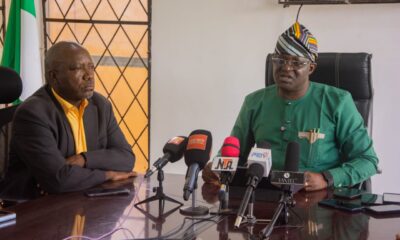
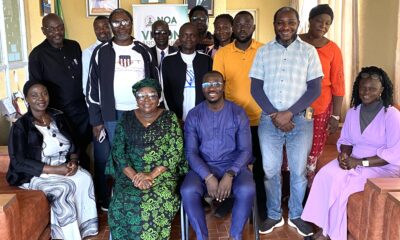
During a courtesy visit to PEPSA headquarters on May 27, 2025, PLABOMA Chairman, Matthew Tegha, led members of the association to engage with the Director General of PEPSA and his team. He praised the agency’s commitment to keeping Plateau clean and sustainable, while proposing areas of collaboration, including a digital media retainership and joint participation in this year’s Social Media Day seminar.

Tegha noted that digital platforms play a vital role in amplifying public awareness and shaping community behaviour. “Our visit today is not only to express solidarity with your mission but also to seek meaningful collaboration that will further strengthen your agency’s reach and impact in the digital space,” he said.
In his remarks, PEPSA Director General, Samuel Dapiya, commended PLABOMA for maintaining professionalism and credibility in the digital media space. “Anyone can be a blogger,” he said, “but it takes years of consistency, sacrifice, and integrity to build a name that commands public trust.”

He underscored the role of media in driving behavioural change, especially around environmental sanitation. Recalling the agency’s decision to rely solely on social media for public mobilization during the January sanitation exercise, Dapiya described it as a successful test of digital influence. “We used only social media—no radio, no television—and yet the public turnout was impressive. That’s the power of what you do,” he stated.
Dapiya pledged to establish a working relationship with PLABOMA and expressed readiness to discuss the retainership proposal, stating, “Even if we can’t make lump-sum payments upfront, we’ll work out a structure that provides value to both sides.”

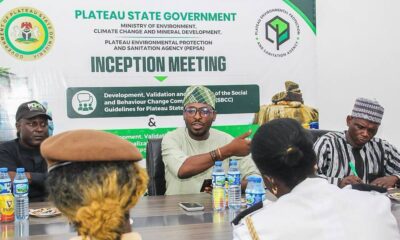
He also highlighted PEPSA’s ongoing initiatives including environmental protection, daily sanitation, and waste management. He noted that these efforts align with Governor Caleb Mutfwang’s vision of boosting tourism and creating a cleaner Plateau. He revealed that the agency is building a website, developing a mobile waste management app, and running an 8-day open defecation sensitization program—initiatives for which he welcomed PLABOMA’s media support.
Describing the association as a beacon of hope, the DG stated, “There is strength in your togetherness. I see your sacrifice and professionalism. You are part of Plateau, and we are glad to partner with you.”
The event concluded with mutual expressions of willingness to collaborate, particularly on the upcoming World Social Media Day celebration, slated for June 30, 2025.








Governor Seyi Makinde of Oyo State has declared that the All Progressives Congress, APC, or any of the political parties willing to use any of the public facilities in the state is free to do so.
Makinde specifically explained that the APC is free to use the ancient Mapo Hall for its proposed campaign.
Makinde made these declarations in a statement signed by his Special Adviser on Media, Dr Sulaimon Olanrewaju.
The statement was made available to DAILY POST Tuesday night.
Makinde in the statement explained that no political party should be denied access to use the facilities as long as they fulfil the conditions.
Makinde made these declarations in response to concerns surrounding the proposed use of Mapo Hall by the APC presidential campaign.
He added that public facilities belong to the people of the state.
He said that its usage must be done in transparent and equitable way.
Makinde in the statement explained that, "Any political party or organisation that fulfils the stipulated conditions should not face discrimination or unjust restrictions in accessing such facilities".
2027: APC, other political parties free to use public facilities- Makinde

The Nigeria Police Force has confirmed the arrest of a 22-year-old man, Umar Ibrahim Gandi Maradun, over a viral video allegedly showing him calling for the use of AK-47 rifles to kill Christians in Enugu and Plateau states.
Politics Nigeria reports that the suspect, a native of Maradun Local Government Area of Zamfara State, was arrested for investigation after the video circulated on social media and sparked concerns over religiously motivated violence.
In a statement issued on Tuesday, October 27, 2026, the Force Public Relations Officer, Chief Superintendent of Police (CSP) Ani Iniedu, said the Zamfara State Police Command had activated its intelligence resources to identify those involved in the incident.
The police also confirmed that the command had engaged the leadership of Jama’atu Izalatil Bidi’a Wa’ikamatus Sunnah (JIBWIS) at the national and state levels following the emergence of the video.
According to the police, the organisation disassociated itself from the alleged conduct and handed the suspect over to the authorities for investigation.
The video reportedly showed the suspect wearing JIBWIS uniform and appearing alongside pupils from two Islamic schools in Maradun: Nurul Islam Islamiya and Akidatul Sahiha Islamiya.
Preliminary findings by the Zamfara State Police Command indicated that the video was recorded on Friday, October 23, 2026, while the suspect was reportedly on his way to Aliyu Ibn Abi Thalib Mosque, where he and others allegedly provided security during Friday prayers and preaching.
The suspect was born on September 15, 2004. He reportedly attended Mualledi Model Primary School and Government Day Secondary School, both in Maradun.
He also reportedly joined JIBWIS in 2025 and recently gained admission to study Mass Communication at Zamfara State University, Talata Mafara.
The police said a comprehensive investigation had commenced and that the suspect would be charged before a competent court if sufficient evidence established an offence under applicable law.
Earlier, the Zamfara State Commissioner of Police, Bello, said the investigation would consider allegations of incitement to violence, disturbance of public peace and criminal intimidation under Sections 77, 78 and 380(b) of the Penal Code Law applicable in the state, subject to the evidence gathered and applicable law.
The police also condemned statements capable of promoting religious hatred, threatening community safety or undermining peaceful coexistence.
“The Zamfara State Police Command remains resolute in its duty to uphold the law, protect lives and property, defend the rights of all citizens without discrimination, and work with relevant stakeholders to sustain peace and security throughout Zamfara State,” the commissioner said.
The development comes as JIBWIS has publicly distanced itself from the video and condemned calls for violence against non-Muslims.
The group’s National Publicity Secretary, Sheikh Ahmad Muhammad Ashiru, stated this in a statement issued at its headquarters in Jos on Tuesday.
Ashiru said the organisation had yet to establish the authenticity of the video but maintained that its position against violence was clear.
“We are yet to confirm whether the video is authentic, but our position against violence remains clear,” he said.
He added that JIBWIS, under the leadership of Ash-Sheikh Muhammad Sani Yahaya Jingir, would not support calls to attack or kill anyone because of their religious affiliation.
Ashiru said banditry, kidnapping, armed robbery and Boko Haram attacks were already affecting communities across the country, warning that statements promoting violence could heighten tensions and threaten peaceful coexistence.
“We would not support any call capable of disturbing the peace of Nigeria, as such comments are capable of inciting violence and creating unnecessary tension among Nigerians,” he said.

The JIBWIS spokesperson stressed that anyone making such statements in the organisation’s name did not represent its position.
He urged security agencies to investigate the video, establish its authenticity and identify those responsible, adding that anyone found culpable should face the law after a proper investigation.
Meanwhile, the Nigeria Police Force has urged members of the public to remain calm, avoid circulating unverified information and refrain from sharing the video in ways that could escalate religious tensions.
The Force reiterated its commitment to protecting Nigerians irrespective of religious affiliation and taking lawful action against conduct capable of inciting hatred or threatening public peace.
-

 News3 days ago
Troops rescued 70 abductees, recovered N10 million ransom: DHQ
-
Business3 days ago
CBN grants JP Morgan approval-in-principle to set up merchant bank
-
News3 days ago
Plateau Activates Ebola Preparedness Measures, Urges Residents to Observe Safety Guidelines
-
Business3 days ago
REA Ends 16 Years of Darkness in Two Kano Communities