Business
PenCom to channel pension capital into national development projects


The National Pension Commission (PenCom) has announced plans to channel pension capital into infrastructure in order to create market investment and boost national development whilst safeguarding returns.
This was disclosed by the PenCom Director-General, Omolola Oloworaran, at the First Quarter 2026 Pension Industry Leadership Council (PILC) Meeting in Lagos on Tuesday.
The meeting was held for the first time since the Pension Industry Leadership Council was inaugurated in September 2025, to announce new developments in the commission’s operations and leadership.
In her remarks, Ms Oloworaran stated that PenCom intends to expand investment outlets beyond traditional instruments, and also develop alternative assets and new structures to optimise returns on pension funds.
The director-general explained that the plan of the commission is to build a market that works efficiently in the long term for all pension fund contributors, and create room for contributions to national development projects.
According to her, the efforts will provide an edge against inflation, create more employment, and preserve returns on pension funds when embarked on.

“This objective is clear. It is to build a market that works efficiently for a long time for all pension fund contributors. We also realise that it’s important to unlock infrastructure. The plan is to diversify, invest in pension fund assets across all PFAs.
“So we also realise that we need to unlock infrastructure investment. The council has considered or is considering the proposed Nigerian pension industry investment consortium and the investment committee will look at it.
“This is to create funding that can invest in national development projects. It is critical to channel pension capital into infrastructure and also important to create market investment and support national development whilst preserving returns,” she said.
Investment drivers
According to Ms Oloworaran, the Pension Industry Leadership Council, at the just concluded meeting, has also affirmed that pension funds will commence active investment, rather than being passive investors.
“They will become active drivers of economic development, leveraging one of the largest pools of savings capital in the country. I actually think it’s the largest pool of savings capital,” she said, noting the impact of corporate governance on shaping market outcomes.
The PenCom DG noted that the PILC, which mostly consists of Managing Directors of Pension Fund Administrators, has also set up committees to drive the commission’s market-specific agenda and improve investment depth.
The key committees are the Investment and Financial Market Committee, the Innovation, Risk and Sustainability Committee, the Policy, Strategy and Industry Development Committee, the Stakeholder Engagement and Advocacy Committee, the Governance and Ethics Committee, and the Strategy and Risk Committee.
Committee roles
She noted that through the Investment and Financial Market Committee, PenCom will address market sustainability constraints through advocacy and engagement across the board, while driving digital transformation through the Innovation, Risk and Sustainability Committee.
“We will strengthen cyber security and data protection. We’ll develop an industry-wide risk framework. We already have one, but we’ll do updates on that as risk continues to emerge,” she stated.
Through the Policy, Strategy and Industry Development Committee, PenCom will develop a new medium-term industry strategy that will drive policy harmonisation and strengthen research, benchmarking, and performance tracking across the board.
The commission also stated that it will deepen public trust in the pension system, expand pension coverage, and drive compliance and participation, and most importantly, ensure transparent, consistent communication across the industry, through the Stakeholder Engagement and Advocacy Committee.
Gratuity
Explaining PenCom’s efforts to bring workers’ gratuity to life, the DG added that the commission earlier reviewed the Nigeria Social Insurance Trust Fund (NSITF) pensions, which, according to her, resulted in significant increases across the board.
“The review of NSITF resulted in significant increases across the board, over 100 per cent. I’m sure people haven’t heard of that before in terms of monthly pension payout. This represents real tangible improvements in retirement outcomes.”
Ms Oloworaran further explained that the pension industry is no longer just about safeguarding funds, but also about driving economic growth, as the returns on pension assets depend on the overall performance and growth of the economy.
She said the commission will take a more active role in market expansion and strengthen its commitment to retirees and contributors to boost investments, optimise returns, and ensure dignity in retirement.
“Through this council and the committees, we will ensure that the industry is more coordinated, more influential, and more accountable,” Ms Oloworaran stated.
Compliance
The PenCom boss, Ms Oloworaran, said pension recoveries recorded last year were more than double what was achieved in the previous year, indicating improved compliance as more employers are contributing or covering more employees.
However, she said the commission will intensify efforts by working closely with labour unions across the country and leveraging its Memorandum of Understanding with the ICPC to strengthen enforcement against non-compliant employers.
READ ALSO: PenCom disburses N577bn to 1.05 million RSAs as pension arrears ease
“So we’re getting some traction, but certainly we are not close to where we want to be. We want a situation where every employer is contributing pensions and we have zero default.
“But sadly, that’s not where we are today. So what we are going to do now, going forward, is we will begin to work with the unions across the country and in addition to that, we signed an MOU, we did sign an MOU with the ICPC last year and we intend to begin to use those to fully drive compliance.
“We are also going to start naming and shaming as well. I’m sure by the next time you hear from me, you will have seen that certain actions have been taken on some of these employers already,” the PenCom DG said.
The Federal Government says Fitch Ratings’ decision to revise Nigeria’s credit rating outlook from Stable to Positive reflects progress in economic reforms, foreign exchange market adjustments and efforts to strengthen the country’s external position.
Fitch announced the revision on 9 October, retaining Nigeria’s long-term foreign-currency issuer default rating at ‘B’.
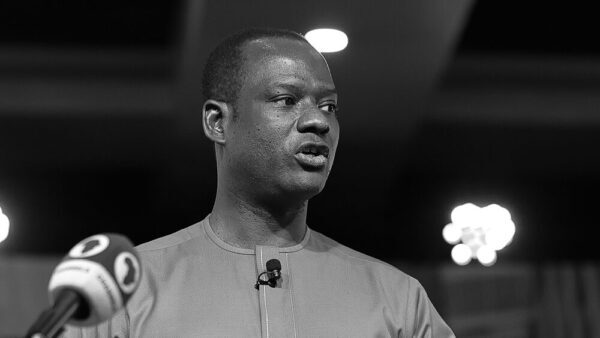
In a statement issued on Saturday, the Minister of Finance and Coordinating Minister of the Economy, Taiwo Oyedele, said Fitch cited increased foreign exchange reserves, easing inflation and improved economic prospects among the factors supporting the outlook revision.
According to the minister, Nigeria’s gross foreign exchange reserves rose to $54.9 billion as of 25 September 2026, from $32 billion in mid-April 2024.
He attributed the increase to more formalised foreign exchange transactions, portfolio inflows, higher exports and remittances.
Fitch also projected that Nigeria would record a current account surplus equivalent to 6.4 per cent of gross domestic product in 2026.

Economic growth and inflation
The ratings agency projected that Nigeria’s real gross domestic product would grow by 4.3 per cent in 2026, compared with 4 per cent in 2025, with growth remaining above 4 per cent in 2027 and 2028.
Fitch expects non-oil activities to remain the main driver of economic expansion.
The projection comes as Nigeria’s economy recorded growth of 4.43 per cent year-on-year in the second quarter of 2026, according to the National Bureau of Statistics (NBS).
The figure was higher than the 3.89 per cent recorded in the first quarter of 2026 and the 4.23 per cent recorded in the corresponding quarter of 2025.
The World Bank’s October 2026 Nigeria Development Update projected average annual economic growth of 4.4 per cent between 2026 and 2028, identifying services and agriculture among the contributors to economic activity.
On inflation, Fitch projected an average rate of 15.4 per cent in 2026, less than half the level recorded in 2024.
The NBS reported that Nigeria’s headline inflation rate eased marginally to 15.39 per cent in August 2026, from 15.43 per cent in July.
The figures provide recent context for Fitch’s assessment of inflation, although the agency’s annual average forecast is different from the monthly inflation rate reported by the NBS.
Reserves, oil production and public debt
Fitch also noted developments in Nigeria’s oil sector, including crude oil production meeting the country’s OPEC target of 1.5 million barrels per day from May 2026.
Mr Oyedele said increased domestic refining was helping to reduce fuel imports and foreign exchange demand.
On public finances, Fitch expects Nigeria’s tax reforms to increase non-oil revenue relative to the size of the economy.
The agency projected that general government debt would average 32 per cent of GDP between 2026 and 2028, below the median of 56 per cent for countries with a ‘B’ rating.
Fitch also highlighted Nigeria’s domestic debt market and the banking sector recapitalisation exercise, noting that many banks had capital adequacy ratios above 20 per cent.
However, the agency identified persistent challenges, including inflation remaining above levels in peer countries, government revenue being low relative to the size of the economy, and interest payments accounting for a high proportion of government revenue.
The minister said the federal government would continue implementing reforms aimed at increasing revenue, improving spending efficiency, strengthening debt management and supporting non-oil economic growth.
Other rating developments
The Fitch decision follows other developments in Nigeria’s international credit assessments.
READ ALSO: FG to negotiate ₦1,350 petrol price ceiling as global oil shock drives pump prices
In May 2026, S&P Global Ratings upgraded Nigeria’s credit rating from ‘B-’ to ‘B’. In August, Moody’s revised its outlook on Nigeria to Positive while retaining its ‘B3’ rating.
Mr Oyedele noted that the government’s medium-term objective remained to improve Nigeria’s credit standing and work towards investment-grade status.
He said the administration would continue to focus on foreign exchange market reforms, tax revenue mobilisation, fiscal governance, more efficient public spending and growth in non-oil sectors.
The minister said its broader objective was to “translate economic reforms into jobs, food security, support for small businesses and improved living standards”.
Discover more from Premium Times Nigeria
Subscribe to get the latest posts sent to your email.
-

 News4 days ago
Robot data startup Mecka AI nabs $60M from Sequoia
-
Business2 days ago
Communications Ministry made ₦345.5 million duplicate payment for Abuja ICT Park project
-
Business3 days ago
Fuel subsidy would cost Nigeria over N20trn yearly — Minister
-
News2 days ago
LumenUs helps automate tedious paperwork in times of grief