Business
Oyedele confirms Nigeria has drawn first $1.5 billion under $5 billion Abu Dhabi financing deal

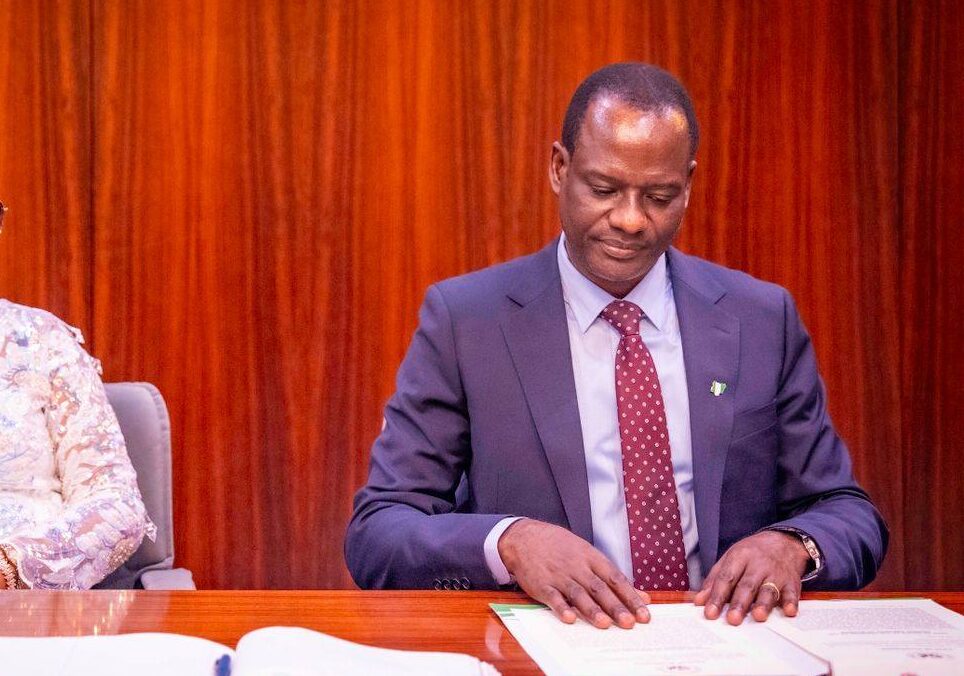

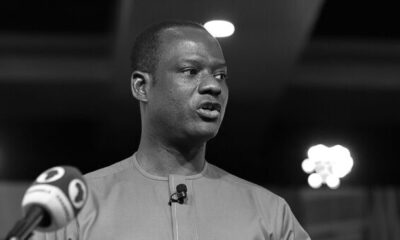
The Minister of Finance and Coordinating Minister of the Economy, Taiwo Oyedele, has confirmed that Nigeria has accessed the first $1.5 billion from its $5 billion financing arrangement with First Abu Dhabi Bank (FAB).
Mr Oyedele disclosed this while speaking to journalists after the Federal Executive Council (FEC) meeting in Abuja on Monday.
He said the financing facility, which had earlier received approval from the National Assembly, is intended to refinance expensive debt, fund infrastructure projects and support budget implementation.
“The approval for that loan went to the National Assembly, so everybody is aware of it. It’s for refinancing of expensive debts, financing of infrastructure, as well as budgets,” he said.
He added that, “So, we don’t want to start making press releases each time we do a drawdown. It is not different from any other loan.”

The minister’s comments provide the first official confirmation that the government has begun drawing on the financing package.
Last week, Bloomberg reported that Nigeria had accessed about $1.5 billion through a Total Return Swap with First Abu Dhabi Bank, marking the first utilisation of the broader $5 billion facility.
Mr Oyedele said the government deliberately structured the financing arrangement to allow funds to be accessed in tranches rather than all at once.
READ ALSO: FEC approves N215bn for CNG buses, $900 million agriculture financing – Minister
According to him, the approach is intended to reduce borrowing costs by ensuring Nigeria only pays interest on funds that have been drawn.
“The loan is meant to be a drawdown in tranches, and one of the advantages of that is, if you need $5 billion and you take everything at once, you start paying interest, even though you’re not spending all of it now. So, this has been structured in a way that makes us even more efficient in the cost of borrowing by taking what we need part time,” he explained.
Mr Oyedele said the phased approach forms part of the government’s broader debt management strategy aimed at lowering financing costs while meeting critical funding needs.





Business
IMF warns against blanket petrol subsidies, suggests targeted support for poor, vulnerable people

The International Monetary Fund (IMF) on Wednesday warned against blanket subsidies, saying targeted support for vulnerable and poor people provides better results.
Rodrigo Valdés, Director of the IMF’s Fiscal Affairs Department, spoke during a press briefing on the fund’s fiscal monitor at the 2026 annual meetings of the IMF and World Bank in Bangkok, Thailand.
The fund said that, beyond being expensive, blanket petrol subsidies often benefit higher-income consumers disproportionately and could worsen fiscal pressures amid rising debt and borrowing costs.
“Protecting people is not the same as protecting the price of fuels,” Mr Valdés said.
“It’s first fiscally very costly, and second, if you look at the pattern of consumption, it’s easy to see that that subsidy is readily regressive in many places.”
Mr Valdes spoke in response to a question on how the IMF could recommend energy prices to reflect scarcity when higher fuel prices in Nigeria and some other countries have led to higher cost of living, increased transport costs, worsening inflation, and poverty.

The IMF official said fuel subsidies or measures preventing prices from adjusting fully to an energy shock had cost countries between 1 per cent and 1.5 per cent of gross domestic product (GDP) in 2026.
He called on governments across the world to instead use social safety nets and household data to identify people who need assistance.
“There are better tools to deal with this,” he said.
The fund’s intervention is in line with its long-standing position on subsidy, as recently canvassed in a recent report.
“Targeted and temporary transfers are the most effective and cost-efficient way to protect poorer households when prices for basics spike,” fund said in its report.
“This approach directly supports those who need it most, preserves scarce fiscal space, and allows high market prices to continue signalling scarcity, encouraging consumers to reduce consumption if they can.”
READ ALSO: Targeted support, not subsidies, can best protect people when inflation surges IMF
Local Debates
Debates over the propriety of fuel subsidy has been at the centre of discussions in Nigeria in recent weeks, ahead of a crucial election slated for January.
While the Nigerian government, led by President Bola Tinubu, has defended its economic policy of subsidy removal as critical to the nation’s fiscal survival, opposition politicians—such as Atiku Abubakar of the ADC and Peter Obi of the NDC—have canvassed for and promised a return to different subsidy arrangements if elected into power.
Discover more from Premium Times Nigeria
Subscribe to get the latest posts sent to your email.
-

 News4 days ago
Microsoft’s Satya Nadella says AI models need an ‘emergency brake’
-
Business4 days ago
Veritas Kapital CEO Nwakuche Joins Coal City University Governing Council
-
News2 days ago
Meta releases its first frontier model, Muse Wonder
-
News4 days ago
2027: INEC publishes final names of governorship candidates across states [FULL LIST]