Health
WHO warns immunisation gaps leave Nigerian children vulnerable to disease


The World Health Organisation (WHO) has warned that gaps in routine immunisation are leaving Nigerian children vulnerable to preventable diseases, urging the government to increase domestic health financing and strengthen disease surveillance and outbreak preparedness.
Pavel Ursu, the WHO representative in Nigeria, raised the concern on Tuesday during the organisation’s Health Diplomacy Dialogue in Abuja, which brought together diplomats and health officials to discuss health security, disease outbreaks, global health financing and antimicrobial resistance.
Mr Ursu said Nigeria continued to face challenges in containing vaccine-preventable diseases, including measles and circulating vaccine-derived poliovirus, despite support from international partners.
He said the country’s immunisation programme must reach approximately eight million additional children annually, placing increasing pressure on the health system.
“If we want to maintain the same level of performance, we have to invest more,” he said.
Mr Ursu acknowledged support from Gavi, the Vaccine Alliance, and other partners in providing vaccines and related commodities but stressed the need for Nigeria to progressively increase domestic financing and assume greater responsibility for protecting its population.


He also highlighted changes in global health cooperation, including declining development assistance for health and ongoing discussions about reforming the global health architecture.
He said African countries needed to strengthen domestic financing, improve health system resilience, expand digital health services and promote local manufacturing of health commodities.
Mr Ursu said the dialogue was established to provide a platform for the WHO and diplomatic missions to exchange strategic information on public health developments, emerging threats and international health policy, including for embassies without dedicated development cooperation programmes.
He called for stronger international cooperation, including timely information-sharing and coordinated responses to outbreaks that could cross national borders.
Outbreaks expose gaps in health security
Speaking on health security, Alex Chimbaru, the WHO emergencies adviser, said Nigeria’s disease outbreaks reflected persistent weaknesses in immunisation coverage, disease surveillance and access to safe water and sanitation.
He said more than 700 children had been disabled by circulating vaccine-derived poliovirus in previous years, warning that the actual number could be higher.
Mr Chimbaru also highlighted cholera as a major public health concern, citing inadequate water, sanitation and hygiene infrastructure, insecurity and population displacement as factors complicating prevention and response efforts.
He said Borno State accounted for 96 per cent of cases in the affected area discussed during his presentation, highlighting the need to prioritise interventions in vulnerable communities.
According to him, the WHO, other United Nations agencies, Médecins Sans Frontières (MSF) and other partners supported the response through surveillance, logistics, case management, vaccination, risk communication and infection prevention and control.
Mr Chimbaru called for sustained investment in water and sanitation, functional public health emergency operations centres, rapid response teams and stronger cross-border coordination to prevent and contain outbreaks.
He also urged development partners to reinforce government-led health systems rather than establish parallel structures, stressing that sustainable financing and stronger primary healthcare services were essential to health security.
Abuja to host global conference on antimicrobial resistance
The dialogue also featured discussions on Nigeria’s preparations to host a global conference on antimicrobial resistance (AMR) in Abuja from 6 to 8 December.
Mary Bartuo, the WHO team lead for universal health coverage and life course, said the conference would seek to translate international commitments into measurable action, stronger accountability and sustainable financing.
READ ALSO: Non-communicable diseases caused 74% of global deaths in 2023 – WHO
She said AMR was associated with about one million deaths annually in the African Region and posed growing threats to food security, livestock production and economic development.
Ms Bartuo said priorities under the proposed Abuja Compact included responsible AMR use, infection prevention and control, vaccination, water and sanitation, equitable access to medicines and diagnostics, research, local manufacturing and sustainable financing.
She urged diplomatic missions to participate in the conference and support efforts to strengthen national and international responses to AMR.
The WHO officials called for sustained investment and stronger collaboration among governments, diplomatic missions and development partners to improve health security and strengthen countries’ capacity to prevent, detect and respond to public health threats.
Discover more from Premium Times Nigeria
Subscribe to get the latest posts sent to your email.






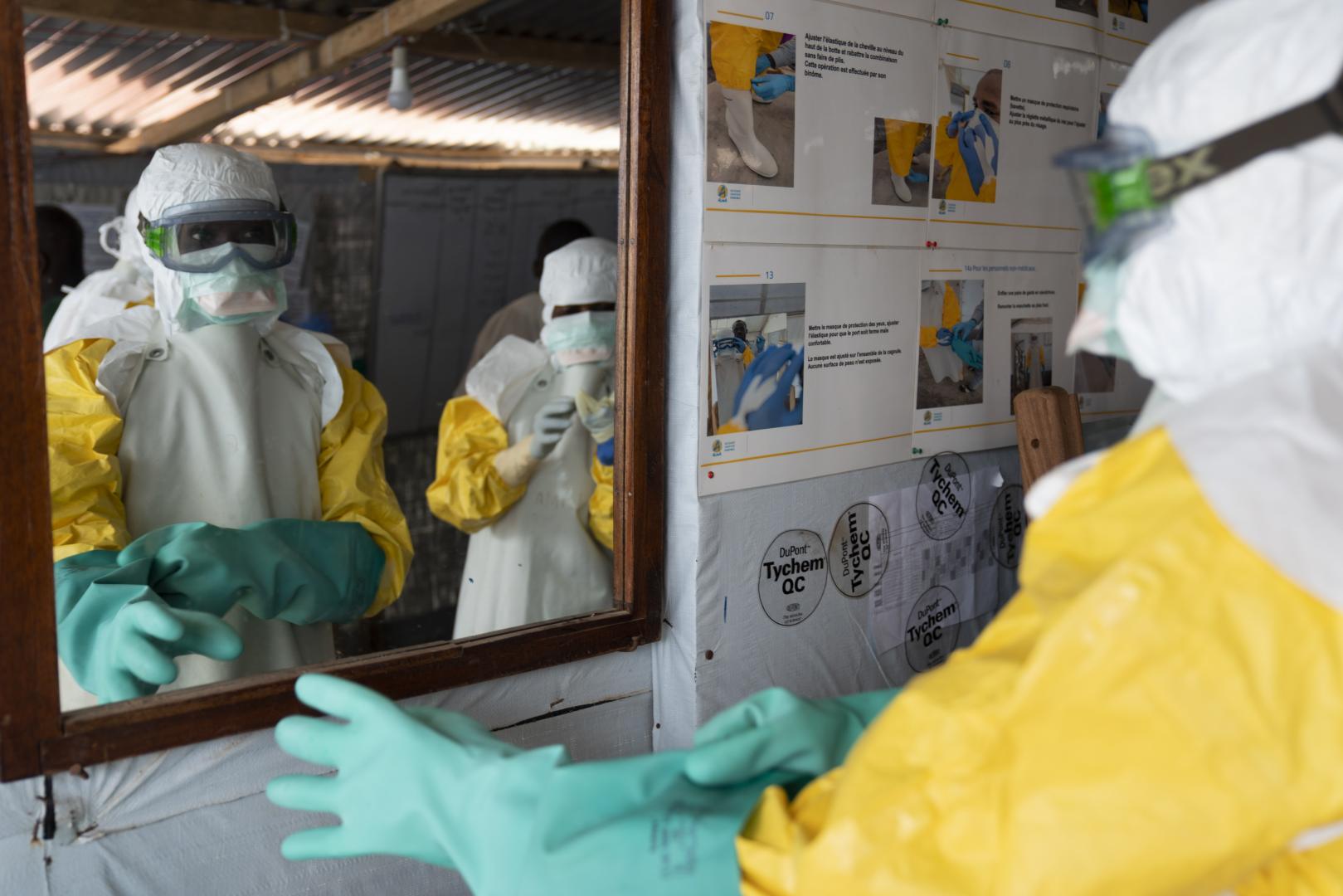
A British national has tested positive for Ebola in the Democratic Republic of the Congo (DRC), the UK government has confirmed.
According to the BBC, the British man tested positive for the virus while in the DRC. Reuters subsequently reported that he would be medically evacuated to the UK for specialist treatment. However, the exact time of the evacuation was not immediately known.
This marks the first confirmed case of a British national contracting the virus during the ongoing outbreak in the DRC, which has claimed more than 5,000 lives.
Ebola is a viral disease that can cause severe illness and spreads mainly through direct contact with the blood or other bodily fluids of an infected person.
Symptoms include fever, headache, vomiting, muscle pain, weakness, and diarrhoea.
“The UK has well-established procedures for dealing with cases like this, and those processes have been activated,” a UK government spokesperson was quoted as saying.
“Further information will be shared in due course as appropriate. The risk to the UK public from Ebola remains low.”
Ebola outbreak
The current outbreak is caused by the Bundibugyo virus, a species of Ebola virus, and was first declared in DRC in May 2026.
According to the latest figures from the United States Centres for Disease Control and Prevention (CDC), the outbreak had recorded 10,563 confirmed cases and 5,130 deaths across five countries as of 1 November 2026.
The DRC accounts for the majority of the cases, with 10,532 confirmed cases and 5,126 deaths. The outbreak has affected eight provinces in the country.
Kenya has recorded nine confirmed cases and two deaths, while Uganda has recorded 20 confirmed cases and two deaths, alongside one probable case and one probable death.
Nigeria confirmed its first case on 20 October after a traveller with a history of travel to Uganda tested positive for the virus. The patient was subsequently medically evacuated to Switzerland for treatment.
READ ALSO: Resident doctors commend Uba Sani for prioritising healthcare workers’ welfare
According to the European Centre for Disease Prevention and Control (ECDC), 62 contacts linked to the Nigerian case had been identified and were under follow-up as of 29 October.
Symptoms and transmission
The World Health Organisation (WHO) has explained that Ebola survivors may transmit the virus through sexual intercourse if it persists in their semen after recovery.
However, survivors who have met the criteria for discharge from treatment are not expected to transmit the virus through sweat or saliva, as the virus is cleared from their blood.
Discover more from Premium Times Nigeria
Subscribe to get the latest posts sent to your email.
Six proven climate and health interventions could prevent 1.6 million deaths annually and generate trillions of dollars in economic benefits if implemented globally, the World Health Organisation (WHO) has revealed.
The measures, which include heat-health warning systems, access to safe water and sanitation, cleaner household energy and more efficient fossil fuel pricing policies, could generate $3.9 trillion in annual economic welfare benefits and a further $5.4 trillion in fiscal gains.
The WHO disclosed this in a new report titled ‘Global benefits and costs of prioritised actions on climate change and health’, released ahead of the 31st United Nations Climate Change Conference (COP31), where countries are expected to present their climate commitments.
According to the report, the six interventions could prevent one in every 40 deaths globally, based on modelled projections, while avoiding 16.7 billion tonnes of carbon dioxide emissions annually.
The estimated emissions reduction is equivalent to 31 per cent of global annual greenhouse gas emissions, excluding emissions from land use, land-use change and forestry.
The report, which the WHO described as its first comprehensive assessment of the economic and fiscal returns from scaling up the six recommended interventions, highlights the potential health and financial gains of integrating public health considerations into climate policies.
It argues that many health consequences of climate change are preventable through existing solutions, but governments must implement them across health and other sectors that determine people’s health.
Six interventions
The report identifies six interventions: heat-health warning systems, climate-resilient drinking-water services, basic sanitation services, hygiene and handwashing facilities, cleaner household fuels and technologies for cooking and heating, and efficient fossil fuel pricing policies.
The WHO estimates that five of the interventions could generate $24 in benefits for every $1 invested, with returns expected to be greater in low- and middle-income countries.
Heat-health warning systems are projected to deliver particularly high returns, generating an estimated $835 in benefits for every $1 invested.
The report attributes the high returns to the relatively low cost of expanding existing warning systems and their potential to prevent heat-related illnesses.
Efficient fossil fuel pricing policies, however, are projected to deliver the largest overall gains.
Such policies, including removing inefficient fossil fuel subsidies and appropriately taxing fossil fuels, could prevent 1.2 million deaths annually while generating $3 trillion in economic welfare benefits and $5.4 trillion in fiscal gains.
Health at the centre of climate action
Commenting on the findings, WHO Director-General Tedros Ghebreyesus said the climate crisis was also a health crisis, but many of its consequences could be prevented using existing interventions.
READ ALSO: WHO raises alarm as 75% of diabetes cases in Africa remain undiagnosed
He said expanding proven and affordable interventions could save millions of lives, particularly in countries with the greatest need.
“The climate crisis is a health crisis, but much of the harm it causes can be prevented with tools we already have,” he said.
Mr Ghebreyesus urged governments to place health considerations at the centre of climate action as they prepare for the next round of international climate negotiations.
The WHO said countries were already experiencing record-breaking climate shocks in 2026, investing in measures that protect human health and the environment increasingly urgent.
The health body called on governments, development partners and financing institutions to use the economic evidence to scale up the interventions, noting that they could deliver simultaneous benefits for public health, climate mitigation and national economies.
Discover more from Premium Times Nigeria
Subscribe to get the latest posts sent to your email.
-

 News3 days ago
Plateau APC 2027 Campaign Council inaugurated today in Jos
-
News4 days ago
NPFL Matchday 11: Shooting Stars Run Riot, Rivers United Held by Rangers as Bendel, Kano Pillars Claim Away Wins
-
News3 days ago
Nigerians’ data appetite drives MTN Nigeria revenue to ₦2.68tn – Technology Times
-
Business4 days ago
Africa’s downstream petroleum sector at defining point of transformation – NMDPRA’s ex-CEO