News
Hon. Bagos Advocates Media-Driven Progress in Plateau, Receives Legislative Impact Award


Former House of Representatives member Hon. Musa Bagos has called on Plateau State’s youth media enthusiasts, especially online media practitioners, to embrace challenges, strive for excellence, and acquire professional certifications to enhance their credibility.
Bagos made this appeal during a courtesy visit by the Plateau Bloggers and Online Media Association (PLABOMA), led by its Chairman, Matthew Tegha.
The visit aimed to strengthen collaboration, celebrate Bagos’ contributions to Plateau State, and strategize on promoting positive narratives about the region through digital media.
Bagos commended PLABOMA’s role in reshaping Plateau’s image, describing its members as pioneers of the next generation of communication. He urged them to uphold unity and professionalism, transcending political, religious, and ethnic divides. Highlighting the power of technology and digital media, Bagos encouraged practitioners to leverage their platforms to showcase Plateau’s potential and promote its culture and development.


“You have revolutionized communication in Plateau State and positioned yourselves as key players in its development,” Bagos said. “However, to fully harness the opportunities ahead, you must pursue professional certifications, such as those from the National Institute of Public Relations (NIPR), to build credibility and access greater opportunities.”
Bagos further warned against partisanship, urging members to remain objective and focused on advancing Plateau’s collective interest. “Your credibility and objectivity are your greatest assets. Stay true to the Plateau agenda, and let your work promote unity, peace, and development,” he added.
In his remarks, PLABOMA Chairman Matthew Tegha praised Bagos for his unwavering commitment to youth empowerment, justice, and equity during his tenure as a lawmaker. Tegha outlined the association’s mission to promote positive narratives about Plateau State and sought Bagos’ support for capacity-building programs to enhance members’ skills in ethical reporting and digital media.
“Your contributions to nation-building and youth empowerment align with our vision to project Plateau positively to the world,” Tegha said. “We are committed to leveraging online media to build bridges, promote peace, and showcase Plateau’s rich culture and potential.”
During the visit, Comrade Friday Bako, a former PLABOMA chairman, lauded the association’s role in reshaping Plateau’s narrative and fostering unity. He also commended Bagos for his developmental strides and consistent dedication to the state’s progress.
Alex Audu, a PLABOMA Trustee, highlighted Bagos’ impactful community initiatives since 2013, describing him as a role model of persistence and leadership. Audu urged him to maintain his focus on empowering citizens and uplifting communities.


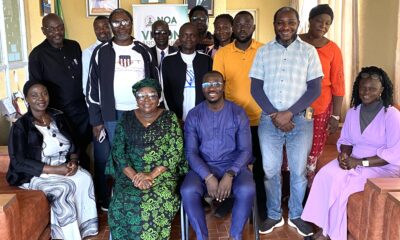
The visit culminated in the presentation of a special recognition award to Hon. Bagos for his legislative impact and contributions to human capital development. Bagos expressed gratitude for the honor and reaffirmed his commitment to collaborating with PLABOMA and other stakeholders to advance Plateau State’s growth.
The visit emphasized the shared commitment between Bagos and PLABOMA to harness digital media as a tool for positive transformation in Plateau State, fostering unity, peace, and sustainable development.







Nigeria Football Federation president Ibrahim Gusau has promised to work closely with the new Euromatch NPFL partnership to make the league more attractive, generate fresh ideas and bring Nigerian football fans back to the stadiums.
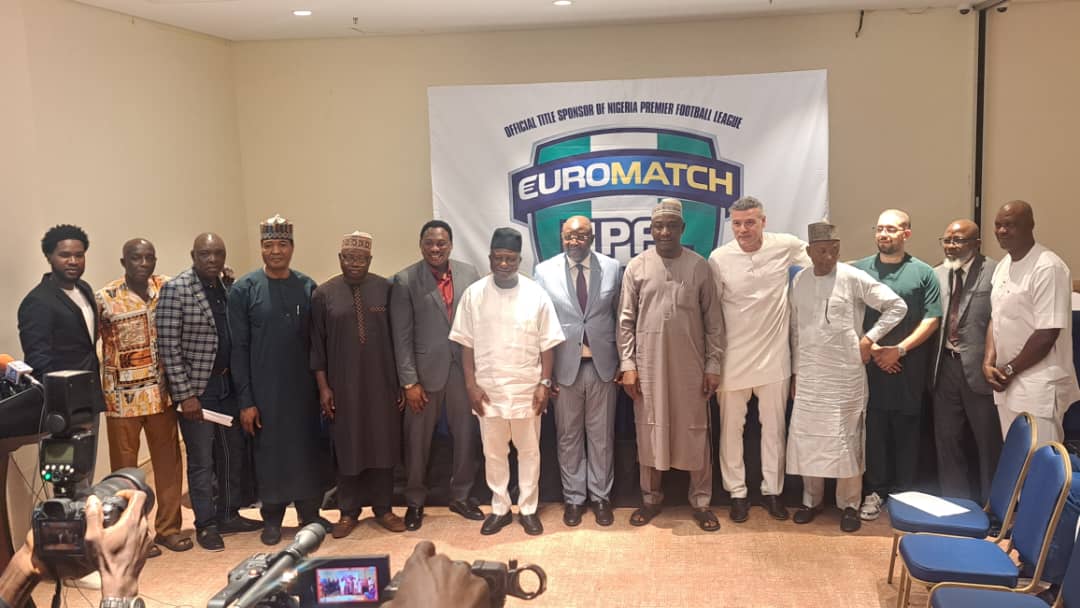
Gusau spoke in Abuja at the unveiling of Euromatch as the new title sponsor of the Nigeria Premier Football League, with the three-year agreement worth $7.5 million, or $2.5 million per season.
READ ALSO: Breaking: NPFL Set to End 10-Year Title Sponsor Drought As New Partner Unveiled in Abuja
The NFF president said he had believed in the current board from the beginning and maintained that the progress now being recorded in the domestic league was the result of four years of consistency and stabilisation.
“I believed in the board from inception, stabilised them, and we can see the result now after four years,” Gusau said.
The NFF boss said the new partnership must not be allowed to remain a sponsorship agreement on paper, insisting that football authorities, clubs and the sponsor must work together to turn the investment into tangible improvements.
“I want to assure the people involved in this collaboration that we will work together and make it realistic,” he said.
Gusau also called for new ideas capable of changing the matchday experience and restoring the NPFL’s connection with supporters.
He believes the league must become more attractive to fans, particularly by creating fixtures and events that can generate excitement around the competition.
“Let’s initiate new ideas so that the fans can be back to the stadium,” Gusau said.
One of his proposals is the introduction of a weekly “star match”, with former Nigerian internationals also brought into the project to help reconnect supporters with the domestic game.
“Let’s have a star match every week and involve the ex-international players as well as having a way of bringing back fans to our stadia,” he added.
Gusau’s comments come as the NPFL enters a new commercial era following the signing of the Euromatch agreement, which will provide $2.5 million annually for three seasons.
Sixty per cent of the sponsorship proceeds is expected to go directly to the participating clubs, with the aim of improving players’ salaries and welfare.
The NFF president believes the commercial injection can help strengthen the league, but only if the different stakeholders work together and maintain the stability that has attracted the new investment.
Gusau, who was elected NFF president in September 2022 after previously serving as chairman of the Zamfara State Football Association and Chairman of Chairmen within the NFF, has made stability and stronger administration central themes of his leadership.
The former Zamfara administrator also has experience within CAF and FIFA structures, having served on several football committees, including the CAF Youth Organising Committee and FIFA Men’s Club Competitions Committee.
Now, with the Euromatch partnership providing a significant financial platform for the NPFL, Gusau wants the league to use the opportunity to rebuild its relationship with its most important stakeholders — the fans.
His proposed weekly star match could also provide a platform for former Super Eagles players to become more involved in domestic football, helping to bring their personalities and experience closer to the league while creating additional interest around selected fixtures.
With the new sponsorship secured and the 2026/27 season approaching, Gusau believes the NPFL has an opportunity to move beyond simply surviving and begin building a commercially stronger competition.
The message from the NFF president is clear: the money is coming, but the real success will be measured by what Nigerian football does with it — and whether the fans finally have a reason to fill the stadiums again.

The Nigerian government has set a target to provide reliable electricity to at least 30 per cent of health facilities by the end of 2027, as about 40 per cent of functional Primary Healthcare Centres (PHCs) currently lack access to electricity.
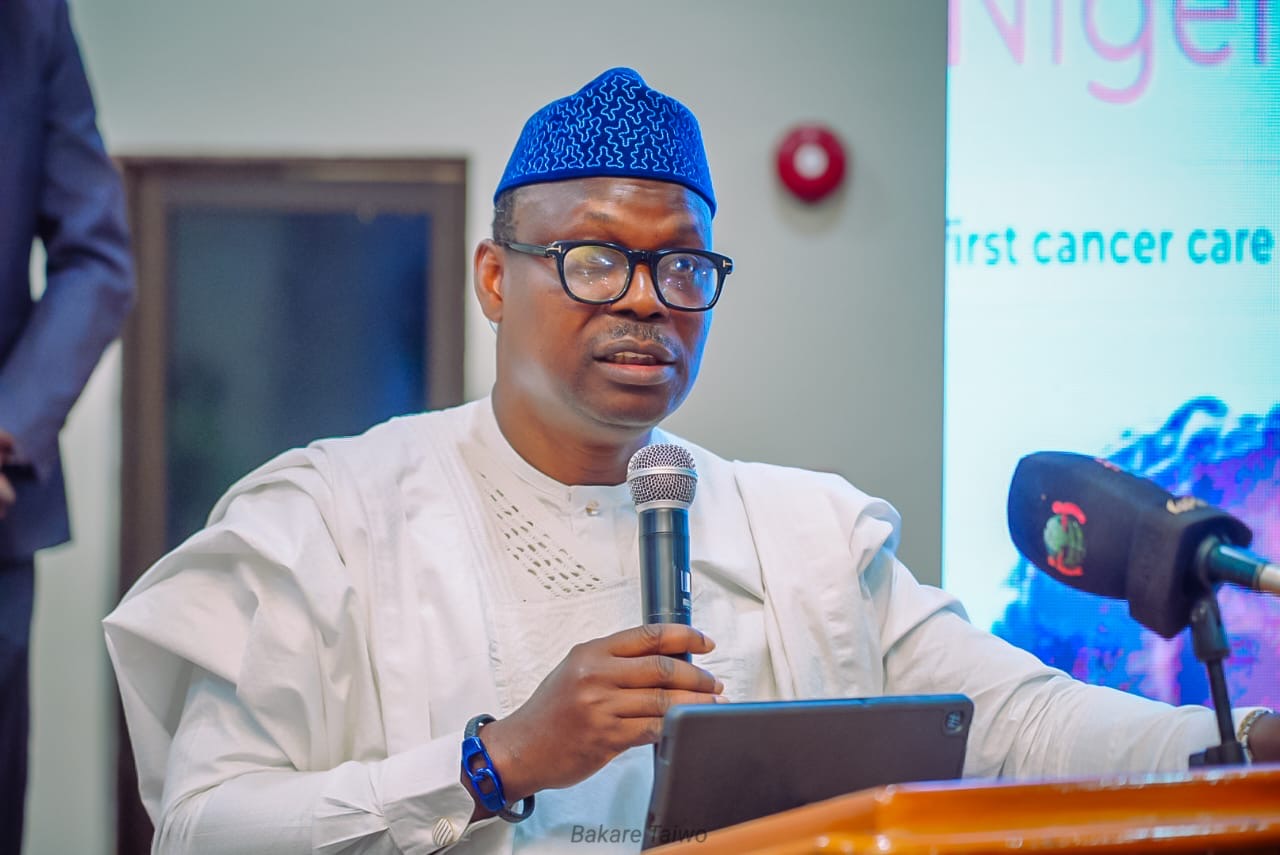
The Minister of State for Health and Social Welfare, Iziaq Salako, disclosed this on Wednesday in Abuja at the official launch of the Rural Electrification Agency (REA)-Renewable Asset Management Company (RAMCO).
The event was held under the theme, “Powering Sustainable Growth: Launching Nigeria’s Renewable Asset Management Company.”
Mr Salako said the electricity deficit in health facilities was undermining healthcare delivery, noting that reliable power was not merely an infrastructure requirement but a determinant of health outcomes.
“In a hospital, electricity is not an amenity; it is a clinical input,” he said.

He explained that electricity was required for critical services and equipment, including vaccine cold chains, oxygen concentrators, operating theatres and incubators for premature babies.
According to Mr Salako, between 60 and 70 per cent of Nigeria’s primary and tertiary health facilities experience frequent power outages or lack electricity altogether.
“About 40 per cent of functional PHCs have no electricity access, with most of the remaining 60 per cent receiving only six to 10 hours of electricity per day,” he said.
Hospitals spend up to 50% of their operating costs on energy
Mr Salako said the unreliable power supply was also placing a significant financial burden on teaching hospitals.
According to him, teaching hospitals require between three and eight megawatts to operate optimally but receive roughly five hours of electricity from the national grid daily.
He said this had resulted in hospitals committing between 40 and 50 per cent of their operating expenditure to energy, much of it spent on diesel.
Mr Salako acknowledged efforts by the Federal Ministry of Power and the REA to provide sustainable electricity to health facilities.
He said federal tertiary health institutions, including teaching hospitals in Maiduguri and Calabar, had benefited from the Energising Education Programme.
Under the Nigeria Electrification Project, he said 100 health facilities had also received 50 kilowatt containerised solar hybrid systems, while a second phase would target 400 PHCs.
Despite these interventions, Salako said the sustainability of renewable energy systems remained a major concern.
Steady power in 30% of facilities by 2027
Mr Salako said the 30 per cent target was part of the Nigeria Power-for-Health Initiative approved by President Bola Tinubu following the first National Stakeholders’ Dialogue on Power in the Health Sector held in September 2025.
According to him, the dialogue produced a Compact for the Sustainable Electrification of Public and Private Health Facilities, signed by the Federal Ministry of Health and Social Welfare, Federal Ministry of Power, sub-national governments, the Committee of CMDs/MDs, the private sector, development partners and civil society.
He said the dialogue also produced an implementation plan aimed at ensuring that at least 30 per cent of health facilities in Nigeria had a steady power supply by the end of 2027.
ALSO READ: Nigeria records 50% drop in maternal deaths in health facilities – Report
The initiative also produced a governance structure on which the REA and other government agencies sit, Mr Salako said.
He said achieving the target would require private capital and partnerships, as the government alone could not finance the scale of energy infrastructure needed across Nigeria’s health system.
RAMCO-health sector collaboration
Mr Salako proposed four areas of collaboration between RAMCO and the Nigeria Power-for-Health Initiative.
He called for health facilities to be recognised as a distinct asset class within RAMCO’s portfolio, beginning with teaching hospitals that had already been solarised under the Energising Education Programme and systems delivered to health facilities under the Nigeria Electrification Project.
He also proposed linking RAMCO’s professional asset management with the institutionalisation of Facility Energy Management Teams in hospitals, with support from UK PACT.
According to him, RAMCO’s asset register should be integrated with health facility energy audits so that both sectors can plan on a single evidence base.
He further proposed that a defined share of RAMCO’s capital be directed towards PHCs, which he described as the sites least commercially attractive but most consequential for maternal and newborn survival.
Mr Salako said the Federal Ministry of Health and Social Welfare would support RAMCO by giving it a seat on the Inter-Agency Technical Committee of the Power-for-Health Initiative.
Discover more from Premium Times Nigeria
Subscribe to get the latest posts sent to your email.
-
Business3 days ago
Police Arrest of Five Suspected Telecommunication Vandals, Recovery of Truckload of Suspected Stolen Iron Rods
-

 Health4 days ago
FCTA trains health workers in basic life support, plans Code Blue teams in hospitals
-
News4 days ago
SSA Adeboye: National Intermediate Games Will Give Nigeria’s Young Talents the Platform to Shine
-
News3 days ago
MTN Group service revenue hits ₦9.68tn as Nigeria contributes 30.6% – Technology Times