Business
Ethiopia, Djibouti hail Dangote’s $660 million pipeline as energy security boost

Ethiopian Prime Minister Abiy Ahmed and Djibouti President Ismaïl Omar Guelleh have commended Dangote Group’s $660 million Damarjog-Dewele Oil Terminal and Pipeline Project, describing it as a major infrastructure investment capable of transforming regional trade and energy supply.
The leaders spoke at the groundbreaking ceremony for the project at the Damerjog Industrial Development Free Trade Zone in Djibouti.
The project involves the construction of a 120-kilometre multiproduct pipeline connecting marine and coastal storage facilities at Damarjog in Djibouti with inland storage and distribution facilities at Dewele in Ethiopia.
Upon completion, the pipeline is expected to facilitate the movement of refined petroleum products into Ethiopia, reduce transportation bottlenecks and improve the reliability of fuel supplies to the country and the wider region.
Boost to Djibouti
President Guelleh said the project would support Djibouti’s ambition to become a major logistics, industrial and energy hub in Africa.
“Today marks an important chapter in Djibouti’s journey toward becoming a premier centre for logistics, energy, and industrial development. The Damarjog-Dewele Pipeline Project is not merely infrastructure; it is an investment in the future prosperity of our region,” he said.


According to him, the investment would increase trade volumes, expand port operations, attract additional investments and create direct and indirect employment opportunities.
“We are proud to partner with the Dangote Group in delivering a project that demonstrates the strength of African-led investment and practical African solutions to African challenges,” Mr Guelleh said.
On his part, Prime Minister Abiy said the pipeline would strengthen Ethiopia’s energy security by providing a more efficient and reliable channel for transporting refined petroleum products.
“Ethiopia’s continued economic expansion depends on reliable and efficient access to energy resources. This pipeline will provide a modern, dependable, and cost-effective system for transporting refined petroleum products into the country, thereby enhancing our energy security and reducing supply-chain vulnerabilities,” he said.
He said the project would support sectors including aviation, transportation, agriculture, manufacturing and construction by improving access to petroleum products.
The prime minister also said the infrastructure would reduce losses associated with long-distance transportation and improve the efficiency of Ethiopia’s petroleum distribution network.
He described the project as another example of economic cooperation between Ethiopia and Djibouti.
The project will reduce logistics risks
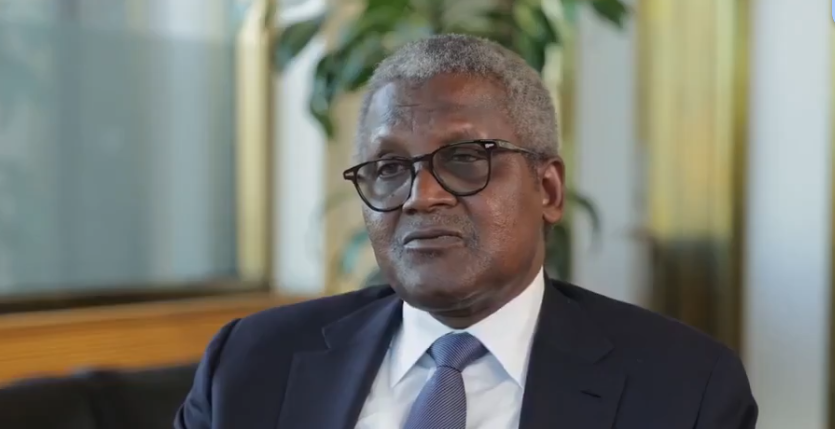
Speaking at the ceremony, Aliko Dangote, President and Chief Executive of Dangote Industries Limited, said the project was part of the group’s broader efforts to develop infrastructure that supports Africa’s economic growth and self-sufficiency.
“This project is designed to enhance energy security, improve supply-chain efficiency, and create sustainable economic value for both Djibouti and Ethiopia,” Mr Dangote said.
He said Djibouti would benefit from increased port activity, revenues and employment, while Ethiopia would gain improved energy security and reduced logistics constraints.
Mr Dangote noted that the Djibouti corridor is a major route for Ethiopia’s imports and exports, including petroleum products.
According to him, the pipeline would reduce dependence on long-distance tanker movements, ease congestion and lower operational risks associated with transporting petroleum products by road.
READ ALSO: Dangote refinery drove Nigeria’s petrol supply in August as NNPC refineries remain shut — Report
The project is also expected to create jobs during construction and operation and provide opportunities for local contractors, suppliers, transport operators and communities.
The Damarjog-Dewele project is part of Dangote Group’s Vision 2030 strategy, under which the conglomerate plans to invest $50 billion across Africa in industrial and energy infrastructure.
Mr Dangote said the group’s objective was to support African countries in reducing dependence on imports and increasing local production.
“Our vision is to support African countries in becoming self-sufficient in products for which they possess the raw materials, market demand, and strategic necessity,” he said.
The project further expands Dangote Group’s investments in Africa’s energy and industrial sectors, following the development of the Dangote Petroleum Refinery in Nigeria and other investments across the continent.
Discover more from Premium Times Nigeria
Subscribe to get the latest posts sent to your email.








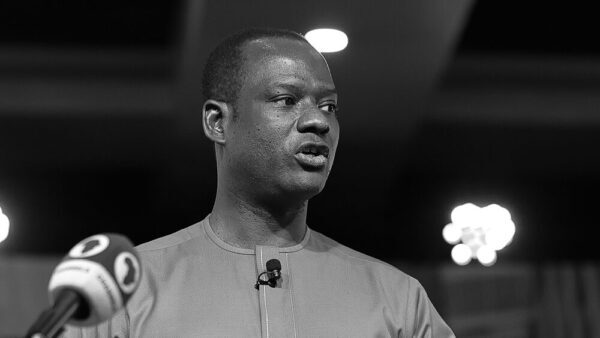
Nigeria’s Finance Minister and the Coordinating Minister of the Economy, Taiwo Oyedele, on Wednesday said the country is fortunate to have President Bola Tinubu at the helm of affairs at a time of economic challenges and global uncertainty.
Mr Oyedele made the remark on Wednesday on the sidelines of the World Bank/International Monetary Fund (IMF) meetings in Bangkok, Thailand, where he praised the president for his willingness to implement difficult economic reforms and his understanding of economic and monetary policy issues.
“I say to myself every time that Nigeria is lucky to have a leader like Mr President,” the minister said.
“A leader that says ‘I’ll do the right thing, even when it’s not popular’. There are so very few of them, and our president is not saying it; he’s doing it, he’s doing it even with pre-election (concerns),” he added.
Since assuming office in May 2023, the Tinubu administration has introduced a series of economic reforms, the impact of which international institutions like the World Bank and the IMF have acknowledged
The reforms include the removal of costly petrol subsidies, which had been a major drain on public finance for years, the unification of the foreign exchange rates and the sharp devaluation of the naira to attract foreign capital.
Although abolishing fuel subsidies has boosted government revenue and is seen as an investor-friendly move, it has triggered a cost-of-living crisis and spurred inflationary pressures.
Reforms in the foreign exchange market have helped increase accretion to external reserves, which stood at $55.1 billion as of 9 October, its peak level in over 18 years.
The banking sector also underwent a recapitalisation exercise that ended in March and helped Nigerian banks raise N4.7 trillion in new capital.
According to the Central Bank of Nigeria, the recapitalisation strengthened banks’ capital adequacy ratios, keeping the sector above international Basel benchmarks.
Mr Oyedele said President Tinubu possesses two attributes uncommon among leaders, notably those of democratic governments.
READ ALSO: AFC appoints Cardoso as board chairman
The first is his willingness to do what he considers right, even when the decision is unpopular or politically difficult.
“I remember at least three issues that were discussed with him recently, and on my own I would offer to say ‘maybe we wait until after the election’. And his question is always, ‘Is it the right thing to do?’ Yes, yes, it is. Why do we have to wait?” Mr Oyedele said.
“Number two attribute is that our President gets it. It’s not easy to understand issues to do with the economy, finance, monetary policy, like respect for the independence of the monetary authority. For Mr President, it’s 100 per cent,” he added.
The minister added that the president’s position on such matters has made it unnecessary for officials to discuss the issue with him repeatedly.
“We don’t even talk about it. So, I feel like we are so blessed, we cannot afford to wait even one minute,” he said.
Discover more from Premium Times Nigeria
Subscribe to get the latest posts sent to your email.
-

 News3 days ago
Meta releases its first frontier model, Muse Wonder
-
News3 days ago
EuroMatch NPFL: ‘We Never Gave Up!’ — Fidelis Ilechukwu Hails Rangers’ Fighting Spirit, Reacts to Two Penalties Against Barau FC
-
Health3 days ago
Kwara public hospitals introduce digital medical records
-
Health2 days ago
AMR: Livestock uses more antibiotics than human health sector