Business
Finance must break developing countries from ‘debt and disaster’ loop – UN climate chief

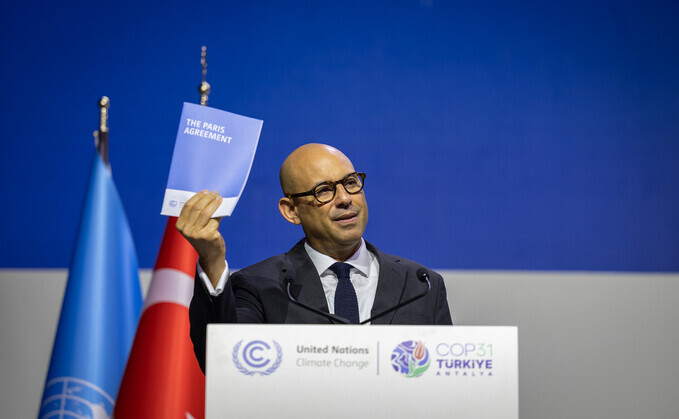
The executive secretary of UN Climate Change, Simon Stiell, told the ministers at COP31 that climate finance must be redesigned to lift developing countries out of a cycle of debt and disaster, adding that meeting a headline figure will not do it.
“Meeting a financial target does not always meet countries’ needs. To do that, we need to look at how finance is delivered,” Mr Stiell said on Friday at the opening of a high-level ministerial dialogue on climate finance in Antalya, Turkey.
Countries agreed at COP29 that developed nations would lead in providing $300 billion a year by 2035, as part of a wider effort to raise $1.3 trillion annually from all sources.
Mr Stiell said the roadmap for reaching those sums “must become reality”, but that the terms of the money mattered as much as the amount.
“Many developing countries are trapped in a downward loop of debt, disaster, and devastating capital costs,” he said. “The threat of floods, fires, storms and droughts hangs over them, pushing up the price of borrowing even before disaster strikes.”
He stated that the terms of finance should reflect each country’s debt position.


“Private finance, loans and guarantees are essential to achieving our collective goals. But grant-based and highly concessional finance will remain critical, particularly for Least Developed Countries, Small Island Developing States and other very vulnerable economies,” he said.
According to him, broader action on debt is also needed to prevent countries from being forced to choose between repayments and resilience.
International climate finance for developing countries reached about $137 billion in 2024, and almost 70 per cent of it came in the form of loans, according to a UN Women flagship report released on Tuesday in Antalya.
Countries in sub-Saharan Africa paid more than twice as much in external debt service between 2021 and 2023 as they received in climate finance, according to an analysis published by the Heinrich Böll Foundation.
The analysis found that interest payments consumed more than 10 per cent of government revenue in 27 African countries in 2024.
The chair of the African Group of Negotiators, Nana Antwi-Boasiako Amoah, has said that a transition could not be called just if poorer countries have to “mortgage their futures” to pay for it.
The group lost a bid on Monday for a separate agenda item on tripling adaptation finance. It now wants the target prioritised in the summit’s cover decision.
Nigeria is not on the UN’s list of least developed countries, which places it among the states the UN climate chief expects to rely more on loans, guarantees and private capital.
It needs about $337 billion between 2026 and 2035 to implement its climate commitments, according to the National Council on Climate Change.
Omotenioye Majekodunmi, the agency’s director-general, said more than 80 per cent of that will have to come from private investment, commercial debt, and international carbon finance.
About $2.5 billion a year went to climate action in Nigeria in 2021 and 2022, counting domestic and international sources, according to the Climate Policy Initiative’s tracking.
The dialogue was the last in a series that began in 2013, and its conclusions will go to COP32 in Ethiopia next year, Mr Stiell said.
Discover more from Premium Times Nigeria
Subscribe to get the latest posts sent to your email.




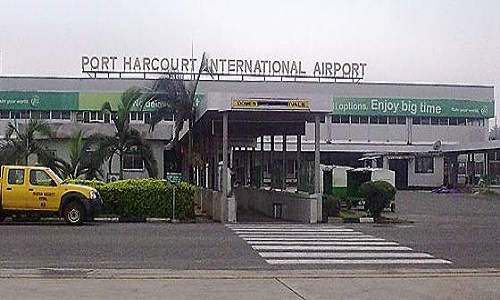
The Federal Government has signed a concession agreement with PH Airport Limited to manage and develop the Jeremiah Obafemi Awolowo International Airport, Port Harcourt, assuring aviation workers that the arrangement will not lead to job losses.
Minister of Aviation and Aerospace Development Festus Keyamo and the group managing director of PH Airport Limited, Eyo Asuquo, signed the deal, following consultations with aviation labour unions.
The minister’s media aide, Tunde Moshood, disclosed this in a statement on Thursday, saying the unions endorsed the agreement after receiving assurances that no aviation worker will lose their job because of the concession.
The agreement marks a new phase in the government’s plan to attract private investment into airport infrastructure and improve the management of selected airports across the country.
According to the statement, Mr Keyamo met with aviation union leaders before the formal signing to address concerns about the concession’s implications for workers.
Speaking on behalf of the unions, Ben Nnabue said workers’ welfare and job security remain central to their consideration of the agreement.
He added that organised labour will not support an arrangement that threatened the livelihoods of its members, adding that the unions are satisfied with the assurances received from the government and the concessionaire.
He also noted that the endorsement followed extensive engagement on the airport’s future and the potential effects of private-sector participation on aviation workers.
Mr Asuquo said the company intends to invest in infrastructure, improve operational standards and expand economic activities around the airport.
He described Port Harcourt’s location within the Gulf of Guinea as an advantage that could strengthen its role in regional commerce, investment and connectivity.
“Our vision goes beyond taking over the management of the airport. We are committed to driving development, expanding opportunities and creating additional jobs through investments and the growth of airport-related activities,” he stated.
READ ALSO: EXCLUSIVE: EFCC charges former Port Harcourt, Warri refinery MDs with money laundering
He added that the company intended to unlock the airport’s economic potential and strengthen its position as an aviation and commercial hub.
PREMIUM TIMES had earlier reported that the Federal Executive Council approved the concession of Port Harcourt International Airport in November 2025, alongside other projects aimed at modernising Nigeria’s aviation infrastructure and attracting private investment.
The approval formed part of the Federal Government’s broader airport concession programme, which seeks to improve airport infrastructure, operational efficiency and commercial viability through private-sector participation.
The government has argued that private investors could provide the capital and expertise needed to expand airport facilities and develop revenue-generating activities, particularly those outside conventional aviation operations.
The concession programme is designed to attract investment into airport terminals and related services, while the Federal Airports Authority of Nigeria continues to perform its statutory responsibilities.
Discover more from Premium Times Nigeria
Subscribe to get the latest posts sent to your email.
-

 News4 days ago
APM holds Presidential Campaign in Plateau, Pledges Security and Economic Reset
-
News1 day ago
UNIJOS Appoints Patricia Lar as First Female Vice-Chancellor
-
News3 days ago
NiYA: Nigeria Awards ₦49m grants to 17 young entrepreneurs – Technology Times
-
News4 days ago
NPFL Matchday 12 Roundup: Rangers Edge Kwara United, Bendel Snatch Late Winner as Inter Lagos Rescue Derby Point