Business
Reps propose 20% investment cap to protect trust fund beneficiaries

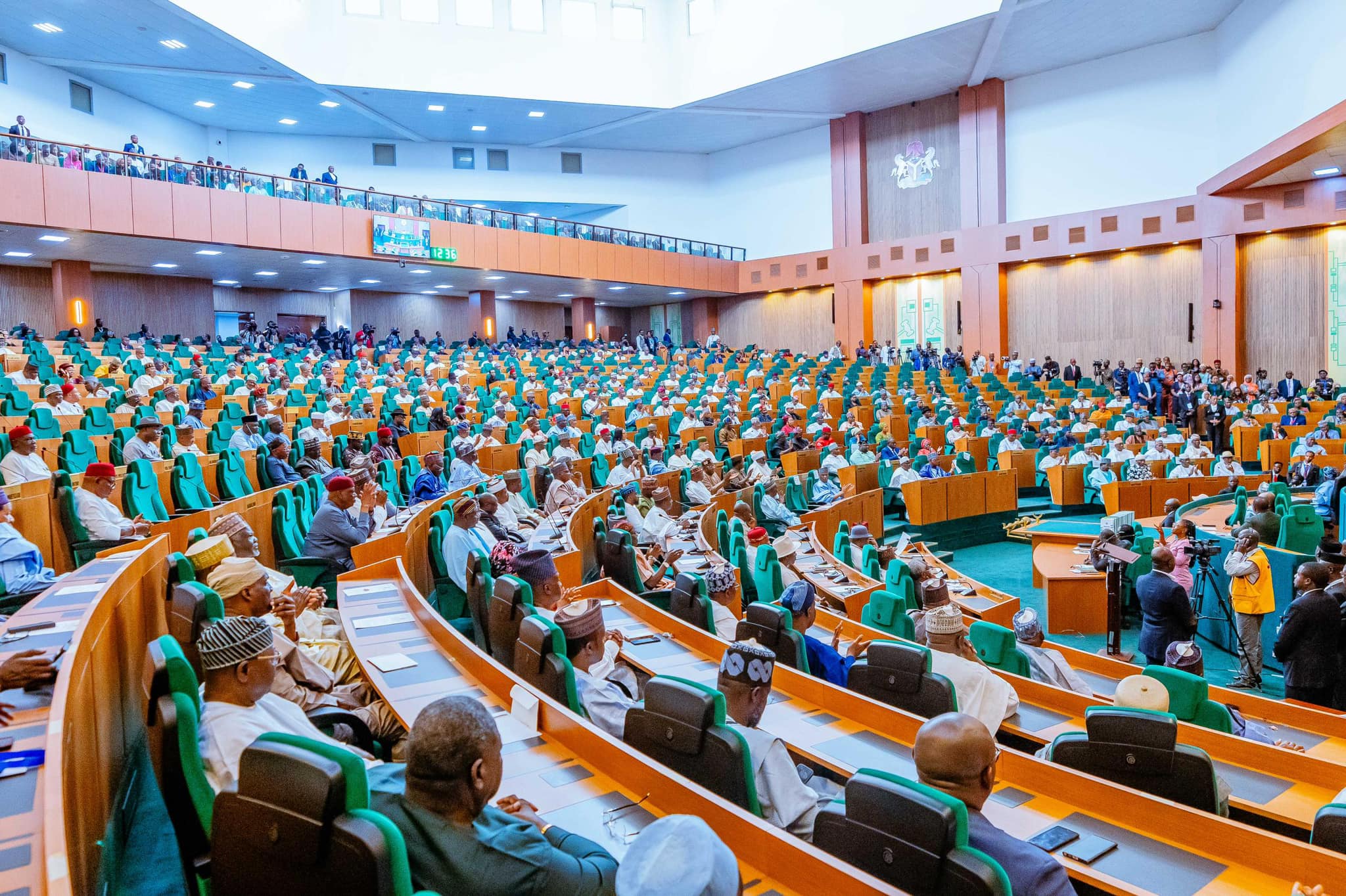
The House of Representatives has proposed limiting trustees’ investments in a single issuer to 20 per cent of a trust fund’s portfolio to reduce exposure to financial risks and protect beneficiaries’ assets.
The proposal is contained in the Trustee Investment Bill, 2026 (HB 2762), which seeks to replace the existing Trustee Investment Act of 1957 with a modern legal framework for managing trust assets.
The bill also proposes expanding the range of financial instruments trustees can invest in, introducing stricter fiduciary obligations, and strengthening reporting and regulatory oversight.
Chairman of the House Committee on Capital Market and Institutions, Solomon Bob (APC, Rivers), disclosed the proposed investment limit on Monday at a public hearing on the bill at the National Assembly in Abuja.
Mr Bob said the proposed 20 per cent threshold, provided under Clause 4, was intended to prevent trustees from concentrating a substantial portion of beneficiaries’ assets in one institution or investment.
He explained that the reform had become necessary because the existing law was enacted in 1957, when Nigeria’s financial system was less developed and investment opportunities were limited.


According to him, Nigeria now has a capital market valued at over N80 trillion, pension assets exceeding N30 trillion and several investment instruments that were not available when the existing legislation was introduced.
“Today, we have a sophisticated capital market worth over N80 trillion, pension assets over N30 trillion, and new asset classes from REITs to Infrastructure Funds to Green Bonds. The world has moved. Our law has not. This hearing is to correct that,” he said.
Under Clause 3, the proposed legislation seeks to broaden the investment options available to trustees to include corporate bonds, equities, collective investment schemes, Exchange Traded Funds (ETFs), Real Estate Investment Trusts (REITs), infrastructure funds and real property.
It also provides for foreign investments through licensed custodians, private equity, regulated virtual assets and environmental, social and governance (ESG)-compliant bonds.
Mr Bob said the expanded investment options would enable trustees to diversify their portfolios and pursue better returns while managing risks associated with trust assets.
Proposed safeguards for trustees
Beyond expanding investment opportunities, the bill seeks to impose clearer obligations on trustees to ensure that their decisions prioritise beneficiaries.
Clause 5 provides for the incorporation of fiduciary principles, including loyalty, prudence, care and impartiality, into the legal responsibilities of trustees.
The provision would require trustees to exercise reasonable care and prudence in managing entrusted assets and ensure that their personal interests do not override those of beneficiaries.
The bill also proposes allowing trustees to delegate investment responsibilities to professionals, including fund managers and custodians, under Clause 6.
However, such delegation would not absolve trustees of responsibility, as they would remain accountable for selecting, supervising and monitoring the professionals managing the assets.
To strengthen transparency, Clauses 7 and 8 propose requirements for the fair valuation of trust assets and annual reporting to beneficiaries.
The provisions are intended to give beneficiaries access to information about the value, management and performance of assets held on their behalf.
Meanwhile, Clause 10 seeks to prohibit speculative transactions, futures contracts and investments in unregulated schemes.
Clause 11 also proposes empowering the Minister of Finance, in consultation with the Securities and Exchange Commission (SEC) and other relevant regulators, to issue regulations for implementing the law.
Mr Bob said this would allow the regulatory framework to accommodate emerging financial products and developments without requiring repeated amendments to the legislation.
Committee laments poor attendance at hearing
Despite the extensive consultations planned for the exercise, Mr Bob expressed disappointment over the poor attendance of institutions invited to contribute to the proposed legislation.
He said only three of the approximately 12 institutions invited to the public hearing attended, describing their absence as a sign that some government agencies and relevant organisations were not taking the legislative process seriously.
The Securities and Exchange Commission, Debt Management Office (DMO) and Association of Corporate Trustees were the institutions represented at the hearing. They made submissions and offered recommendations on the proposed legislation.
Other invited institutions included the Ministries of Justice and Finance, the National Pension Commission, the Nigeria Deposit Insurance Corporation, and representatives of financial market operators, estate administrators, and civil society organisations.
Mr Bob said the committee had received eight memoranda before the hearing but expected further contributions from stakeholders.
He noted that the participation of the invited institutions was particularly important because their expertise would help identify possible conflicts between the proposed law and existing regulations governing the financial sector.
He specifically identified the SEC as central to the process because the bill proposes it as the host regulator under Clauses 2(2) and 11.
The National Pension Commission was also expected to provide technical input on pension assets, while the DMO and Nigeria Deposit Insurance Corporation were expected to contribute perspectives on public debt and financial stability.
The committee chairman urged stakeholders to examine whether the proposed 20 per cent investment limit was appropriate and whether lower thresholds should apply to higher-risk investment categories.
Speaker seeks balance between investment returns and protection
In his remarks, Speaker of the House of Representatives, Abbas Tajudeen, called for a comprehensive review of the legal framework governing trustee investments, describing the existing legislation as inadequate for Nigeria’s evolving financial market.
Mr Tajudeen, represented by Abubakar Sarki (APC, Nasarawa), said the emergence of new financial instruments and investment opportunities had made the 1957 law increasingly outdated.
He described the proposed legislation as an opportunity to establish a framework that would accommodate modern investment practices while protecting the interests of individuals and institutions whose assets are held in trust.
According to the Speaker, trustee investment is not merely a financial responsibility; it also involves protecting inheritances, preserving family wealth, and safeguarding the resources of charitable organisations.
“Behind every trust may be the inheritance of a child, the security of a widow, the resources of a charitable institution or the accumulated wealth of a family. The law must ensure that these interests are adequately protected,” he said.
He cautioned, however, that the proposed reform must balance the need to preserve trust assets with the opportunity to generate reasonable returns.
READ ALSO: NASS Roundup: Rising school fees, insecurity, poor telecom network, other stories from House of Reps
Mr Tajudeen warned that overly restrictive investment rules could deny beneficiaries opportunities to grow their assets, while weak regulations could expose them to reckless investment decisions and avoidable losses.
“The challenge is to strike the right balance between preserving trust assets and enabling reasonable returns on investment. An excessively restrictive framework may deny beneficiaries legitimate opportunities for growth, while an inadequately regulated one may expose their assets to imprudent decisions and avoidable risks,” he said.
He maintained that expanding investment opportunities must go hand in hand with stronger safeguards, effective risk management and clearly defined responsibilities for trustees.
“The governing principle must remain unmistakable: trustees hold assets for the benefit of others, not for their personal advantage. Their decisions must therefore be guided by prudence, integrity, transparency and an overriding commitment to the interests of beneficiaries,” he said.
He further warned that modernising the investment framework must not create room for speculative activities or expose trust property to unreasonable risks.
The Speaker also highlighted the potential economic benefits of reforming the trustee investment framework, particularly its capacity to mobilise long-term domestic capital for infrastructure and enterprise development.
He said Nigeria needed substantial long-term financing to address its infrastructure deficit, expand productive capacity and stimulate economic activities.
According to him, a credible system for managing trust investments could deepen the capital market and improve the mobilisation of domestic resources.
However, he stressed that these economic objectives must not undermine the financial security and rights of beneficiaries.
“Nigeria needs substantial long-term capital to address its infrastructure deficit, expand productive capacity and stimulate enterprise. A credible framework for managing trust investments can deepen capital markets and more effectively mobilise domestic resources. But this economic objective must always be pursued without compromising the rights and security of beneficiaries,” he said.
Mr Tajudeen urged participants at the hearing to scrutinise the proposed investment categories, diversification limits, fiduciary obligations, professional delegation and regulatory oversight.
He said the committee should produce legislation that was practical, enforceable and capable of responding to future developments in the financial sector.
Discover more from Premium Times Nigeria
Subscribe to get the latest posts sent to your email.







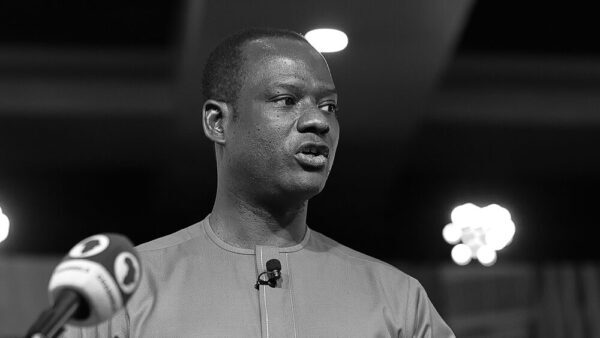
Nigeria’s economy recorded further improvements in the second quarter of 2026, but the developments have not yet translated into sufficient relief for households and businesses.
The Minister of Finance and Coordinating Minister of the Economy, Taiwo Oyedele, revealed the economic update on Monday at the National Economic Council (NEC)’s 162nd meeting.
Stanley Nkwocha, the Senior Special Assistant to the President on Media and Communications in the Office of the Vice President, disclosed the meeting’s proceedings in a statement on Monday.
At the meeting, Mr Oyedele said Nigeria’s economic indicators continue to improve, with real Gross Domestic Product growing by 4.43 per cent in the second quarter of 2026, compared with 4.23 per cent in the corresponding period of 2025.
He also noted that headline inflation declined for the fifth consecutive month to 14.06 per cent in October 2026, its lowest level since September 2020.
Additionally, Nigeria’s external reserves stood at $54.87 billion as of 12 November.
According to the minister, Nigeria’s trade surplus increased from N10.2 trillion in the first half of 2025 to N20.1 trillion in the corresponding period of 2026.
He added that net revenue distributed through the Federation Account Allocation Committee rose by 44 per cent, from N15.2 trillion in 2024 to N21.9 trillion in 2025.
Change in livelihoods
However, Mr Oyedele observed that improving economic indicators have yet to translate sufficiently into relief for households and businesses, particularly in food prices and employment.
“Oyedele, however, observed that the improving economic indicators had yet to translate sufficiently into relief for households and businesses, particularly in the areas of food prices, electricity costs, access to affordable credit and employment,” the statement read.
He noted that food inflation remained elevated at 19.13 per cent in October, while high lending rates and energy costs continued to place pressure on businesses and household incomes.
Strong institutions
Earlier, in his opening remarks, the Chairman of the Council and Vice President, Kashim Shettima, said Nigeria’s economic future and the lasting success of President Bola Tinubu‘s reforms depended on building strong institutions.
He noted that ministries and the 36 states of the federation must consider the people affected by government policies as they carry out their responsibilities.
“While His Excellency, President Bola Ahmed Tinubu, GCFR, makes the difficult reforms to stabilise the economy, we must all participate in establishing institutions capable of sustaining the benefits of those reforms,” the VP said.
According to Mr Shettima, to benefit from the economic reforms, ministries and states must settle practical responsibilities without losing sight of the people affected.
“To achieve this, we must cooperate. We must allow a sound practice in one jurisdiction to inform decisions elsewhere, while respecting the differences in capacity and circumstance across the country. The quality of our cooperation will shape the inheritance we leave,” he stated.
Mr Shettima urged Council members to consider Nigerians who would depend on the decisions they make years from now.
READ ALSO: Nigeria’s economy grows over 4% in 2026 Tinubu
Reforms
Since assuming office in May 2023, Mr Tinubu’s administration has introduced several economic reforms aimed at stabilising the economy, improving government revenue and attracting investment.
These include removing the petrol subsidy, unifying the foreign exchange market, implementing tighter monetary policy, ending deficit financing by the Central Bank of Nigeria (CBN), and reforming the tax system.
The administration has completed banks’ recapitalisation exercise to strengthen the sector, implemented the Electricity Act 2023 to encourage state participation in electricity generation and distribution, and introduced initiatives to expand access to student loans and consumer credit.
Although thr policies have been hailed as bold and decisive by international development agencies, many Nigerians have been impacted by the ripple effects through elevated prices of petrol and other essential goods and services.
Discover more from Premium Times Nigeria
Subscribe to get the latest posts sent to your email.
-

 Events1 day ago
Plateau Govt, CAN Strengthen Unity Through 2026 Christmas Carols and Praise Festival
-
Business3 days ago
FCMB Group’s profit jumps 86% on strong top-line growth
-
Health4 days ago
AMR Week: Artists, health experts use arts to raise awareness about drug resistance
-
Health3 days ago
PCN seals 261 illegal, non-compliant medicine outlets in FCT