News
Plateau Police Arrest Pregnant Bar Operator Over Alleged Trafficking of Three Girls to Ghana









News
“He’s Not at the Level We Want, But I Believe in Him” — Simeone Backs Lookman to Rediscover Best Form



Atlético Madrid manager Diego Simeone has thrown his weight behind Nigerian international Ademola Lookman despite admitting that the Super Eagles forward is yet to reach the performance level expected of him at the Spanish club.
Simeone acknowledged that Lookman has not been performing at the standard either the player or the coaching staff desires, but insisted that his commitment in training and willingness to improve remain encouraging.
“Ademola isn’t at the level he wants or we want, but he works hard every day,” Simeone said.
The Argentine tactician also highlighted Lookman’s attacking qualities, particularly his ability to take on defenders, explaining that losing possession is sometimes an unavoidable part of a player’s efforts to create opportunities.
“He’s a dribbler, and he needs to lose the ball sometimes,” the Atlético manager explained.
Despite his assessment of the Nigerian’s current form, Simeone made it clear that he retains confidence in Lookman’s ability to deliver.
“I believe in him,” he declared.
The comments underline the balance Simeone is seeking between demanding improved performances and allowing the forward the freedom to express himself in attacking situations.
Lookman’s reputation has been built on his pace, movement and ability to unsettle defenders in one-on-one situations, qualities that have made him an important attacking option for both club and country.
However, Simeone’s remarks suggest that the Nigerian still has work to do to consistently meet the demands of his manager’s tactical approach.
Rather than questioning Lookman’s effort, the Atlético coach appears encouraged by his attitude and daily commitment, indicating that the player continues to enjoy the backing of the technical staff.
For Lookman, the challenge will be to translate that hard work into more decisive contributions on matchdays while retaining the attacking boldness that defines his game.
Simeone’s message is clear: Lookman has not yet reached the desired standard, but his manager remains convinced that the Nigerian has the qualities and determination to improve.
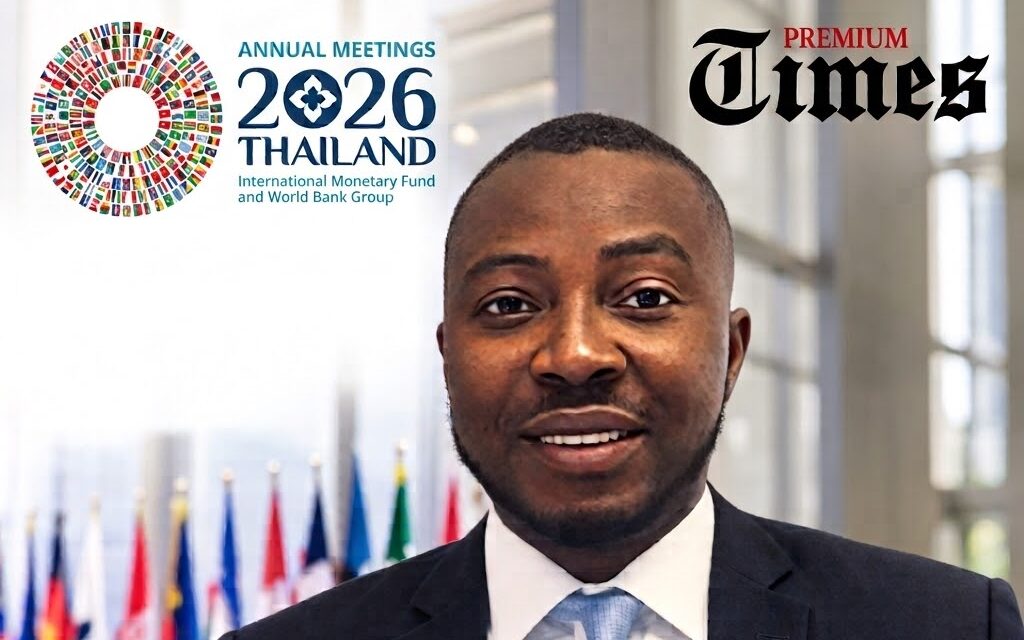
Financial experts, government officials, central bank chiefs, heads of multilateral organisations and other participants are gathered this week in Bangkok, Thailand, for the annual meetings of the International Monetary Fund (IMF) and World Bank scheduled to be held between October 12 and 18.
Participants are expected to deliberate on the disruptive potential of Artificial Intelligence (AI) in the global economy, the widening war in the Middle East and its impact on the global economy, the global energy supply shock, mounting debts, and rising interest rates that pose daunting risks to global economic growth.
IMF Managing Director Kristalina Georgieva says the Queen Sirikit National Convention Centre will host 18,000 people who were registered to attend the meetings, 4,000 more than the last off-site meetings held in Morocco in October 2023.
The IMF has made no significant change to its forecast of 3% global growth in 2026, and the body says some countries are expected to be downgraded because of war and reduced energy exports.
The meetings are also expected to address the growing public debt burden that has slowed growth and worsened inflation, as public debt remains at its highest level since World War Two and will exceed 100% of GDP before 2030, according to the IMF.
Emerging markets and low-income countries are particularly vulnerable, given high public debt levels that will have to be renegotiated at higher interest rates.


Equally important on the agenda is the precarity of platform-driven labour, amid AI-enabled automation and the changing future of work.
On Monday, Ms Georgieva said Artificial Intelligence (AI) could affect about 40 per cent of jobs globally, urging governments to prepare workers for the changing labour market. She described AI as a “slow-moving tsunami” for the labour market, saying it could augment, downgrade or eliminate jobs.
IMF estimates show that AI could affect about 60 per cent of jobs in advanced economies and 23 per cent in low-income countries, reflecting the slower spread of AI rather than greater protection from its effects.
Bangkok
The Bangkok meetings are taking place amid disruptions and a war that has negatively affected energy supplies, especially via the Middle East.
Flights to Bangkok, the host city of this year’s off-site meetings, often route through the Middle East, creating immediate challenges for global travellers heading to Thailand’s capital.
On Sunday, there were attacks on Saudi airports, prompting disruptions to international travel.
The IMF and World Bank’s last off-site annual meetings took place in Morocco in 2023.
Nigeria’s participation
Already, Nigeria’s Minister of Finance and Coordinating Minister of the Economy, Taiwo Oyedele, has arrived in Bangkok, Thailand, to lead the nation’s delegation to the meetings
A statement from the Federal Ministry of Finance said the annual gathering provides Nigeria with an opportunity to engage with international financial institutions and development partners on economic issues affecting the country and its development priorities.
Mr Oyedele’s presence at the meetings is equally expected to allow the Federal Government to present its economic priorities to development organisations and international partners. He is also expected to discuss how external cooperation can support domestic reform efforts.
The finance ministry website also says that, on the sidelines of the meetings, Nigeria will convene investors, project sponsors and public institutions around a curated pipeline of bankable opportunities across strategic sectors. The programme is focused on private-capital mobilisation, food security and infrastructure development. Another event focuses on investor and project-owner conversations at Fairmont Bangkok Sukhumvit.
PREMIUM TIMES newspaper is in Bangkok, Thailand’s capital, to report on the meetings and other policy decisions as they affect the global economy and Nigeria’s domestic affairs.
Discover more from Premium Times Nigeria
Subscribe to get the latest posts sent to your email.
-

 Business4 days ago
Communications Ministry made ₦345.5 million duplicate payment for Abuja ICT Park project
-
News4 days ago
LumenUs helps automate tedious paperwork in times of grief
-
News3 days ago
Inside INEC’s AI and cybersecurity plans to secure Nigeria’s 2027 Elections – Technology Times
-
News3 days ago
EuroMatch NPFL: Ikorodu City Return to Winning Ways as Salami, Ikechukwu Sink Kwara United in Lagos