Connect with us

News

Peter Sarlin’s QuTwo reaches $380M valuation in angel round

info

Published

on

GettyImages 2174694558.jpg

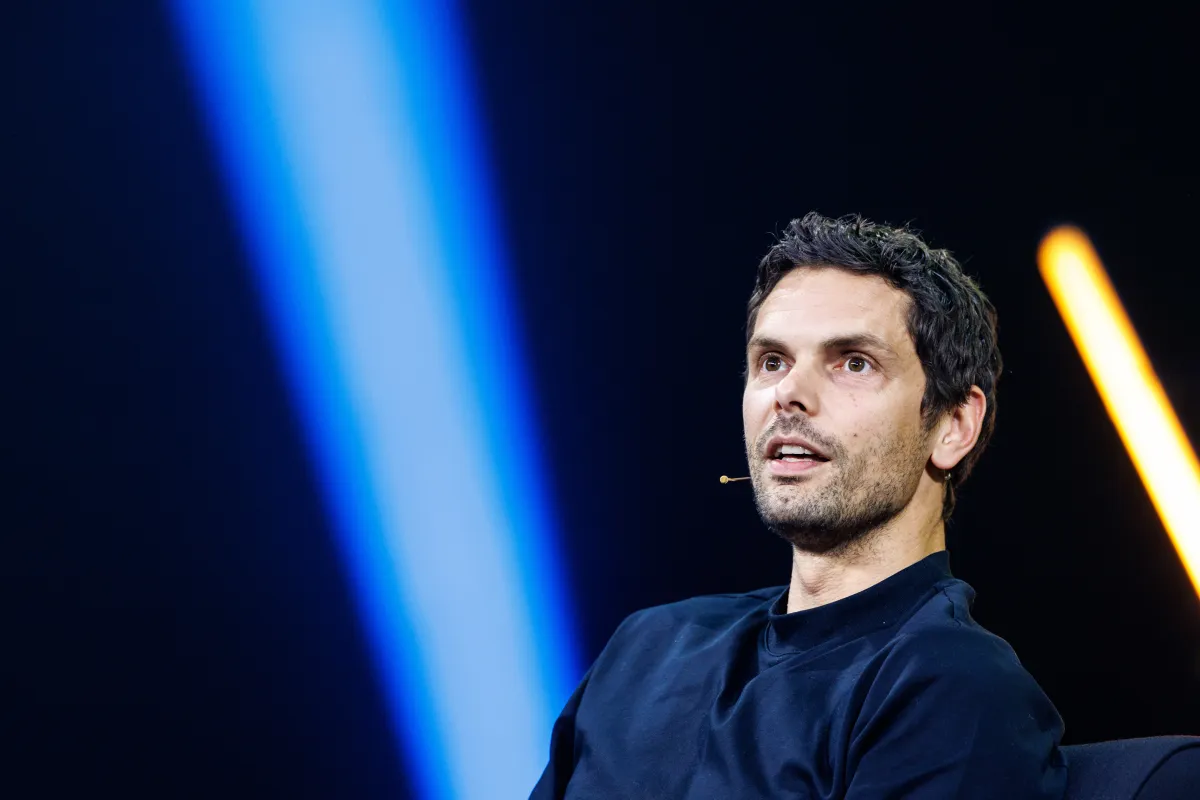
QuTwo, the Finnish AI lab founded by former AMD Silo AI CEO Peter Sarlin, is now valued at €325 million (approximately $380 million) after raising a €25 million angel round ($29 million). It’s a sign of enduring tailwinds for AI, quantum computing, and sovereign tech, especially for Europe-made companies.

QuTwo’s name is a nod to quantum computing, but it hasn’t gone all-in on quantum. Its core product, QuTwo OS, is an orchestration layer that directs tasks to classical, quantum or hybrid architectures — with the idea that enterprise use cases are often best served by “quantum-inspired” computing, which uses classical chips to simulate quantum behavior on more reliable hardware.

Enterprise AI will be QuTwo’s bread and butter. The company already secured some $23 million in committed revenue thanks to design partnerships with the likes of retail giant Zalando, for which it helped develop AI assistants. “AI is the North Star that we will continue to aim for. Quantum is just a new type of compute,” said Sarlin, who is adamant that QuTwo is an AI company.

Momentum has been building around Europe-based AI labs, and several of them have become overnight unicorns. Just last week, former DeepMind researcher David Silver secured $1.1 billion for his new endeavor, Ineffable Intelligence. QuTwo’s valuation and round size are somewhat modest in comparison but will let it pursue its roadmap under less pressure.

According to Sarlin, who serves as QuTwo’s executive chairman, this was a decision he also made for his previous company, Silo AI, which AMD acquired for $665 million in 2024. “I had a lot of investors who would have wanted to pour a lot of money into making Silo into Europe’s OpenAI, but I didn’t believe in that play,” he told TechCrunch.

The main difference is that QuTwo wants the freedom to think long term, with a five- to ten-year horizon. “We are on a mission to build the globally leading AI company for the next paradigm, given that Europe did not succeed in building the AI company for this era,” Sarlin said.

It’s not that Sarlin is bearish on European AI, of which he is a prolific backer. Nor is he necessarily critical of extra-large rounds — he volunteered that he is also an investor in Yann LeCun’s Ami Labs, which raised $1.03 billion, and in British-American venture Recursive Superintelligence, which is rumored to be following the same path. But he didn’t see a billion-dollar round as the right fit for QuTwo — nor VC money, at least for now.

Techcrunch event

San Francisco, CA
|
October 13-15, 2026

Until recently, QuTwo was solely funded through Sarlin’s family office, PostScriptum, which also incubated NestAI, the other company where he serves as executive chairman. But whereas NestAI raised some $115 million in a funding round led by Finland’s sovereign fund and Nokia, QuTwo wasn’t seeking to raise external funding.

However, when the lab’s soft launch generated significant interest earlier this year, Sarlin decided he would say no to checks from VCs and strategic investors, but yes to an angel round in part due to the geopolitical moment Europe is currently navigating. 

With Europe increasingly looking to favor local alternatives to U.S. tech providers, there are tailwinds for AI made in Finland. But there is also investor appetite for a company that promises to facilitate more ambitious R&D initiatives in the fields where the region already has strong players, such as the automotive, life sciences and gaming sectors.

Conversely, Sarlin expects that QuTwo’s angel investors could open doors across Europe. There are definitely quite a few introductions he could request from this group, which includes Yuri Milner, Xavier Niel, Nico Rosberg, Dieter Schwarz and Niklas Zennström, and as well as many startup founders from Hugging Space, Legora, Miro, Skype, Supercell, Wolt, and more.

This will also support QuTwo’s growth. It recently expanded into Sweden, and has been hiring. According to Sarlin, some 50 quantum and AI scientists have joined the team, which includes two other second-time entrepreneurs: his former cofounder at Silo, Kaj-Mikael Björk; and Kuan Yen Tan, a cofounder at IQM, the Finnish quantum company that is set to go public.

QuTwo’s connection with IQM is also a reminder that the company believes we are about to enter the quantum era — it just can’t wait. “The question for repeat founders like [us] is how can we have even a larger impact. In the long term, it’s important for Europe that we build the AI company for the next paradigm out of Europe. But, in the short term, we can have a significant impact in driving ambitious R&D moon shots in Europe,” Sarlin said.

When you purchase through links in our articles, we may earn a small commission. This doesn’t affect our editorial independence.

Continue Reading
Click to comment

Leave a Reply

Your email address will not be published. Required fields are marked *

News

Paramount and Warner Bros Discovery to become Skydance

info

Published

on

GettyImages 1334236014.jpg

Paramount and Warner Bros. Discovery will operate as Skydance once their merger closes, Paramount CEO David Ellison announced Friday. Skydance is the name of Ellison’s original film production company.

The roughly $110 billion deal is expected to close October 6. It will combine two major Hollywood studios, Paramount+ and HBO Max, and networks including CBS, CNN, MTV, TBS, Comedy Central, and Food Network. Skydance will also control franchises such as “The Lord of the Rings,” “Game of Thrones,” the DC Universe, and “Yellowstone.”

The merger followed a drawn-out corporate battle. Netflix had agreed to acquire Warner Bros.’ streaming and studio businesses before the broader Paramount deal moved forward. Twelve states challenged the deal, arguing it could reduce competition and harm consumers and workers, but a judge approved a settlement with the state attorneys general this week.

Ellison said the Paramount and Warner Bros. brands will remain central. “We never wanted a new corporate identity to diminish, alter or overshadow either one,” he wrote on X. The new name, he said, gives the company “an identity of its own” while letting both studios “remain in the spotlight.”

Continue Reading

Health

Drug-resistant bacterial infections kill 1m people annually – WHO

info

Published

on

WhatsApp Image 2026 05 18 at 21.41.48.jpeg

The World Health Organisation (WHO) says drug-resistant bacterial infections kill about one million people globally every year, calling for coordinated action across human, animal, food and environmental sectors to curb the growing threat.

Jean-Pierre Nyemazi, Acting Director of the AMR Department at WHO Headquarters, said this at a virtual media conference marking an exhibition at the European Parliament on AMR and its human impact.

The virtual conference preceded the exhibition, “AMR: The Human Stories Behind a Silent Pandemic,” being held at the European Parliament from 28 September to 2 October and featuring stories of people affected by AMR across Europe.

“AMR is taking many lives. One million people die every year due to drug-resistant bacteria alone – that is, two people every minute die of bacterial AMR,” Mr Nyemazi said.

He said the scale of deaths meant that AMR should no longer be treated as a “silent pandemic”, stressing that “we know what works” to prevent and control the threat.

“Preventing infections is the number one priority. This can be done through better vaccination, infection prevention and control, Water, Sanitation and Hygiene (WASH), and improved animal husbandry,” he said.

PT WHATSAPP CHANNEL
Dangote Refinery AD

“All of these work and can prevent AMR.”

Mr Nyemazi said strengthening surveillance, responsible use of antimicrobials, access to quality medicines and diagnostics, and reduction of environmental contamination could also make a difference.

“The tools exist, and the evidence is there, but the cost of inaction is rising. The longer we delay action, the higher the cost becomes,” he said.

He said the One Health approach, which recognises the links between human, animal, plant and environmental health, was essential because drug-resistant pathogens could move across sectors and borders.

According to him, parliamentarians have a critical role in ensuring that national AMR commitments are supported by legislation, financing and accountability.

“The media also plays an indispensable role. Journalists help bring AMR out of scientific circles and into public debate,” he said.

“They raise awareness, combat misinformation, and ensure that AMR remains visible to decision-makers and the public alike.”

He said WHO Member States approved an updated Global Action Plan on AMR at the World Health Assembly in May, providing a framework for combating AMR over the next 10 years through a One Health approach.

Mr Nyemazi said the updated plan placed stronger emphasis on prevention, governance, behavioural change and measurable targets, and that the four Quadripartite organisations developed it jointly.

He said the organisations comprised the Food and Agriculture Organisation (FAO), United Nations Environment Programme (UNEP), WHO and World Organisation for Animal Health (WOAH).

“What is new about the updated Global Action Plan on AMR for the next 10 years is that it is truly multi-sectoral – a genuine One Health plan.

“The previous plan was heavily focused on human health; this time the four Quadripartite organisations worked together and engaged all sectors,” he said.

Mr Nyemazi said a 10 per cent reduction in AMR was achievable through infection prevention and control, vaccination and improved access to quality antimicrobials, with better coordination, education and surveillance capable of delivering further gains.

He also called for investment in new antibiotics, antifungals, phage therapy and other technologies, while stressing the need to preserve existing medicines.

He said there was also a major access problem, with many regions unable to obtain even existing antibiotics.

A member of the European Parliament, Martin Häusling, said excessive antibiotic use in food-producing animals was contributing to the problem, particularly through mass treatment.

“When it comes to food-producing animals, we still use far too many last-resort antibiotics, and we must get away from that,” Mr Häusling said.

He said AMR was a global issue that could affect anyone, adding that it could destroy families and livelihoods.

To tackle it, the parliamentarian said it was important to create public awareness so that parliaments could address the issue properly, adding that the issue was still not taken as seriously as a future challenge should be.

Rob Purdie, an AMR survivor and member of the WHO Task Force of AMR Survivors, said his experience demonstrated the consequences of delayed diagnosis and treatment.

Mr Purdie said an infection that began with a headache eventually progressed to fungal meningitis after he received antibiotics for a condition that had not been properly diagnosed.

READ ALSO: Four Super Eagles stars who could decide Nigeria’s AFCON Qualifier against Guinea-Bissau

He said he eventually spent about $250,000 on hospital costs and had been unable to work for about five years.

“My ability to earn a living was eliminated for about five years in a single-income household where I provided for my wife and two children,” he said.

Mr Purdie said his experience underscored the need to keep AMR visible in public discussions.

“That is why it is so important for those of us who have survived and can speak, to remove the word ‘silent’ from the ‘silent pandemic’,” he said.

(NAN)


Discover more from Premium Times Nigeria

Subscribe to get the latest posts sent to your email.

Continue Reading

Trending