News
NHRC calls for comprehensive national policy on protection of human rights

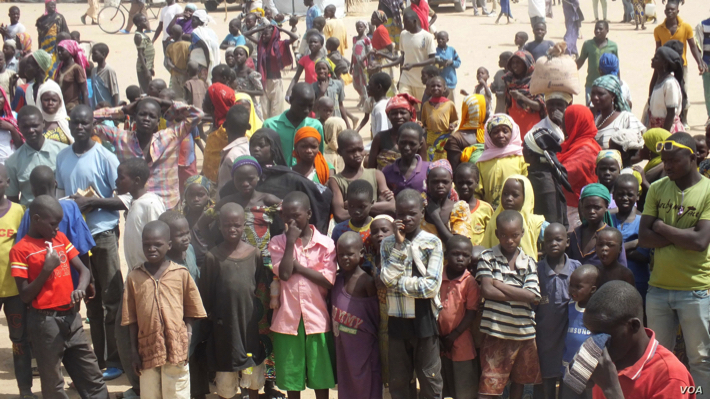
The National Human Rights Commission has called for a comprehensive national policy for the protection of human rights in Nigeria.
The executive secretary of the commission, Tony Ojukwu, made the call in reaction to the recent escalating attacks on both the military and civilian population in some parts of the country.
Mr Ojukwu condoled with the Nigerian military, governments and people of Borno, Niger, Benue, Kaduna, Kwara, Sokoto, Plateau and other affected states that have borne the brunt of the recent wave of terrorist and armed attacks.
He said the commission was deeply concerned by the escalation, frequency, and geographic spread of the attacks.
He noted that in recent months, the attacks have targeted military formations and civilian communities, as well as places of worship, markets, and public institutions.
He added that this had resulted in significant loss of lives, injuries, destruction of property, and large-scale displacement.
“Particularly troubling are the coordinated assaults on military bases in the North-East, including attacks on formations in Borno, leading to the loss of gallant officers, as well as suicide bombings in civilian areas such as markets and hospitals in Maiduguri.
“Equally alarming are the attacks on rural communities in Niger, Benue, and Kwara, as well as the targeting of worshippers in Kaduna state and the recurring violence in parts of the North-West, including Sokoto state and Plateau.
”We mourn with the families of the brave officers and soldiers who paid the ultimate price in defence of the nation as well as the countless civilians whose lives were cut short, dignity violated, and communities devastated by these acts of terror,” he said.
The NHRC executive secretary noted that the attacks represented a grave and systematic assault on the right to life, dignity, and security of citizens.
He noted that the deliberate targeting of civilians and security personnel by non-state armed groups was unlawful, unjustifiable, and constitutes a gross violation of the most fundamental norms of humanity.
According to him, the commission notes with grave concern that the evolving pattern of violence underscores the urgent need for a more coherent, preventive, and human rights-based national response.
”While the NHRC acknowledges the immense sacrifices and ongoing efforts of the Armed Forces and other security agencies, we must as a nation confront an urgent truth; the protection of civilians cannot remain incidental to security operations; it must be their central objective.
”The NHRC therefore reiterates its call for the immediate development, adoption, and implementation of a comprehensive national policy on the protection of civilians,” he said.
Mr Ojukwu said that such a policy must place human rights at the core of all security responses and prioritise the safety of civilians, especially those in vulnerable rural and conflict-affected communities.
He also said that policy must ensure accountability for violations, whether by state or non-state actors, as well as provide effective remedies, rehabilitation, and support for victims and survivors.
“It must guarantee that military and security operations adhere strictly to the principles of distinction, proportionality, and precaution and strengthen early warning, community engagement, and civilian protection mechanisms in high-risk areas,” he said.
Mr Ojukwu further said that the policy must ensure that affected populations were not reduced to statistics or collateral damage but recognised as rights-holders whose protection, dignity, and participation were non-negotiable.
According to him, an integrated human rights approach to national security is not a concession to weakness; it is a requirement of law and a foundation for legitimacy.
“Evidence globally demonstrates that sustainable peace and security are only achievable where the state consistently upholds and protects the rights of its people.
“The commission stands in solidarity with the military, affected states, and all communities impacted by this violence.
“We remain committed to working with the federal and state governments, security agencies, civil society, and other stakeholders to ensure that Nigeria’s response to terrorism strengthens, rather than undermines, the human rights framework upon which our democracy rests,” he added.
(NAN)


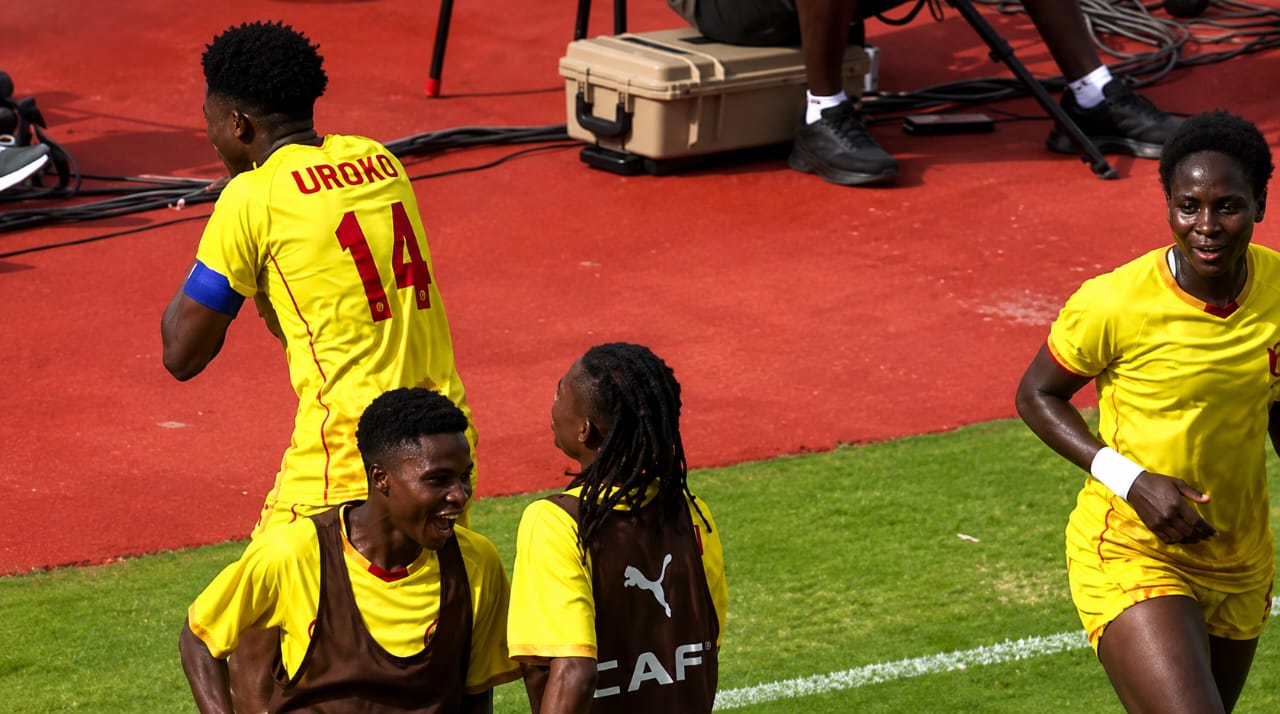
Edo Queens midfielder Valentina Uroko has revealed that her stunning free-kick against USFA was the result of repeated practice in training, after the Nigerian champions powered into the final of the CAF Women’s Champions League WAFU-B qualifying tournament with a commanding 5-1 victory.
READ ALSO: Edo Queens Demolish USFA 5-1, Storm WAFU-B Champions League Final
Uroko produced a moment of brilliance at the Stade 4 Août in Ouagadougou on Wednesday, scoring from an almost unimaginable position to give Edo Queens a 3-0 lead just before half-time.
The midfielder said she had repeatedly practised the technique during training and was delighted to see it finally produce a goal on the continental stage.
“I practise it in training and it is something that I kept trying, so I’m happy that it turned out good today,” Uroko said.
Her spectacular strike came in the 45th minute, shortly after Chioma Moses had doubled Edo Queens’ advantage.
Earlier, Atume Doosuur had opened the scoring in the 17th minute as the reigning NWFL champions established control of the semi-final.
Edo Queens returned from the break with even greater intensity, with Doshima Tarnum scoring directly from a corner just a minute into the second half to make it 4-0.
Aminat Folorunsho completed the scoring for the Nigerian side in the 62nd minute, effectively putting the contest beyond USFA before the hosts managed a consolation goal in the 91st minute.
The emphatic result sends Edo Queens into the WAFU-B final, keeping their hopes of regional glory and qualification for the CAF Women’s Champions League alive.
The Benin-based side had earlier opened their campaign with a remarkable 7-0 demolition of AS Garde Nationale of Niger Republic, followed by a 3-1 victory over ASEC Mimosas in their first two Group B matches.
Their only defeat came in the final group game when Ghanaian champions Ampem Darkoa Ladies edged them 2-1 on Sunday.
Edo Queens could now meet Ampem Darkoa again in the final, setting up the possibility of a rematch with the Ghanaian champions.
Despite scoring one of the highlights of the tournament and helping Edo Queens reach the final, Uroko insisted that the team must remain focused.
“I will remain focused and not carry it away because we are not there yet,” she added.
For Uroko, the spectacular free-kick was a reward for persistence in training. For Edo Queens, however, the bigger prize is now within touching distance.
-

 Events3 days ago
Nigeria’s Christian Leaders to Unite in Abuja for First Lausanne Congress in Over 10 Years (Register Now)
-
Business18 hours ago
PLACCIMA Nominates Bolcit Barshep-Amakiri as Vice President, Commerce
-
Health4 days ago
FG deploys task force to respond to diphtheria outbreaks in Kano, Katsina
-
News4 days ago
EuroMatch NPFL Explodes Into Action: Rangers Begin Title Defence as Matchday One Promises Fireworks