News
MainOne’s Opeke: Africa must turn connectivity into digital businesses that last – Technology Times

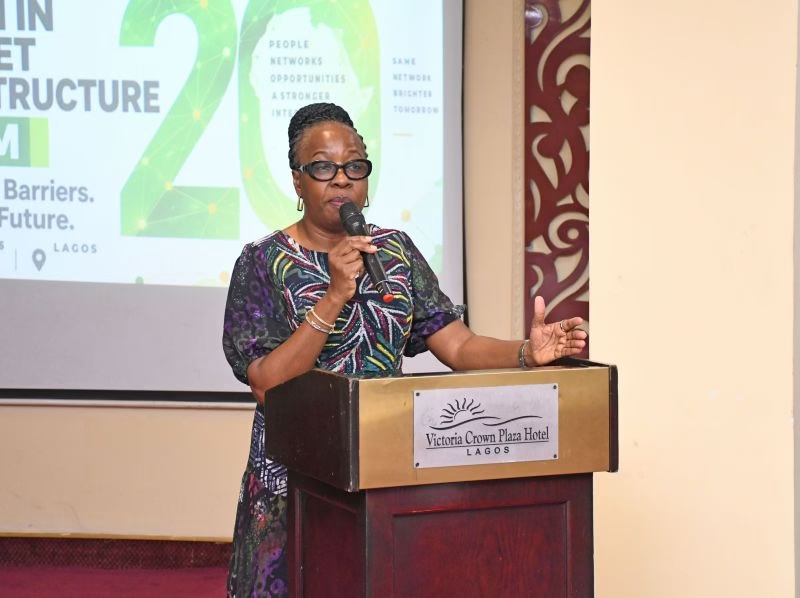
Africa’s expanding internet connectivity must now translate into sustainable digital businesses that create jobs, attract long-term investment and retain more economic value on the continent, according to Funke Opeke, Managing Director of MainOne.
Opeke said Africa’s digital economy had reached a point where expanding access alone was no longer sufficient, arguing that governments and technology stakeholders must focus on building businesses capable of surviving market pressures and generating lasting economic value.
Opeke, the founder of MainOne, who became Managing Director of the undersea cable company following its April 2022 acquisition by Equinix, made the call in a LinkedIn post while reflecting on the evolution of Africa’s digital economy, 16 years after MainOne’s submarine cable entered service in 2010.

“Sixteen years on, far more of Africa is online. The harder question is how much of that access we are converting into businesses that last, and recent weeks have not been encouraging,” Opeke said.
MainOne’s founder reflects on Africa’s digital evolution
Although connectivity has expanded significantly across the continent, Opeke said the harder challenge is converting that access into sustainable economic growth.
“Sixteen years on, far more of Africa is online. The harder question is how much of that access we are converting into businesses that last, and recent weeks have not been encouraging,” Opeke said.
She pointed to the withdrawal of Uber from Nigeria after 12 years of operations in September, followed by Moove, whose business depended on Uber’s platform, as examples of the difficulties facing technology businesses in African markets.
Opeke also cited Microsoft’s announcement of the closure of its Nairobi engineering centre, two years after shutting its Lagos engineering centre, as another indication of the challenges surrounding long-term technology investments on the continent.
According to Opeke, technology companies operating in Africa face several pressures, including currency instability, high operating costs, regulatory unpredictability, weak purchasing power and investment priorities determined by international markets.
International technology companies may successfully enter African markets but still struggle to establish commercially sustainable operations, she said, while local platforms face similar economic pressures and competition from businesses with greater scale and stronger monetisation systems.
She argued that the sustainability of technology businesses should become a more important measure of Africa’s digital progress than market entry or isolated success stories.
“The measure that matters is how much new investment we are converting into businesses that stay and grow and create jobs and value that remain in our economies,” she said.
Opeke challenges Africa to find its next digital growth sectors
The MainOne managing director also challenged African technology stakeholders to identify more everyday needs that digital solutions could address at scale.
She pointed to fintech as an example of how technology businesses can expand by addressing fundamental economic activities.
Financial technology companies have grown partly because they addressed universal needs such as money transfers and payments, Opeke said, but argued that Africa must identify other sectors where digital innovation could generate comparable economic opportunities.
“Fintech scaled partly because it met a universal need: moving money and making payments. But the story is not over. Which other basic needs can digital solutions meet, at scale? And how do we ensure we retain value in Africa?” she asked.
Her argument shifts the focus of Africa’s digital-economy debate from the number of people connected to the internet to what those connections produce in economic terms.
For Opeke, the objective should be to build companies and digital services that can scale, remain operational through economic cycles and create employment and other forms of locally retained value.
Africa needs stronger local digital value chains
Beyond developing digital products and services, Opeke called for greater investment in technology value chains within Africa.
She identified telecommunications networks, data centres, cloud platforms, devices and locally developed software as critical components of a stronger digital economy.
Building these capabilities locally, she argued, would allow African economies to retain more of the value generated by their expanding digital markets rather than relying heavily on technology infrastructure and services located outside the continent.
Opeke said global technology operators would not automatically establish these value chains in Africa because investment decisions are influenced by the availability of commercially attractive opportunities, skilled professionals and predictable policies.
“Global operators will not locate these value chains here by default. They go where the economics, skills and policy make it pay to stay,” she said.
She therefore urged African governments and industry stakeholders to create the economic conditions, develop technical capabilities and support businesses needed to attract long-term investment and strengthen the continent’s participation in the global digital economy.
For Africa, Opeke said, the challenge is increasingly about ensuring that expanding connectivity translates into productive economic activity, sustainable businesses, employment opportunities and digital value retained within African economies.







The governorship candidate of the Social Democratic Party, SDP, in Niger State, Mohammed Ndarani Mohammed, SAN, has blamed the worsening security situation in the state on what he described as the failure of the All Progressives Congress, APC-led government to protect residents.
Ndarani spoke while condemning the killing of the village head of Luma Baare community in Borgu Local Government Area, Mallam Bawa Mohammed, by suspected bandits.
The attack, which reportedly occurred on Saturday morning while residents were observing prayers in a mosque, also claimed the lives of 10 other villagers, including women and children, according to local sources, while the police and state government put the death toll at five, including the village head.
Several houses, shops and farm produce were reportedly set ablaze.
However, the state police, through its spokesperson, SP Wasiu Abiodun, and the Niger State Government, through the Commissioner for Information and Orientation, Hon. Obed Nuhu Nana, in separate statements, confirmed five deaths, including the village head, in the attack.
In a statement issued in Minna on Sunday by the Director of Contact and Mobilisation of the SDP Governorship Campaign Council, Hon. Jonathan Vatsa, Ndarani described the killing as “wicked, barbaric and inhuman”.
He condemned the repeated attacks on communities across the state, saying the killings of unarmed civilians were unacceptable.
The candidate blamed the escalation of banditry on the state government, describing the situation as “the manifestations of a failed leadership by the APC-led administration in the state”.
He accused the government of failing to provide adequate protection for residents, arguing that its response to attacks had largely been limited to issuing statements after lives and property had been lost.
“With the enormous resources at its disposal, the government has refused to deploy these resources to address the security situation in the state,” he stated.
Ndarani also criticised the governor for allegedly failing to visit communities affected by attacks, questioning how the incumbent would seek another term from residents who had suffered repeated violence.
“I wonder if the governor, who has failed to visit the people in their time of sorrow and grief, will go to them to seek their mandate for his second term in office. What will he tell them?” he asked.
He said the ability of a government to protect lives and property was a fundamental measure of its performance, adding that any administration unable to fulfil that responsibility had no business in governance.
The SDP candidate sympathised with the people of Luma Baare and the entire Borgu Kingdom, urging the state government to take more decisive steps to protect communities.
He also called on residents to use the 2027 general election to decide the state's political future, describing the poll as an opportunity to reject what he termed bad governance.
“The forthcoming 2027 election is an opportunity for our people to make a choice, either to remain stagnant and submerged in insecurity under this administration or free themselves from bad governance in the state,” he added.
Borgu attack: SDP Gov candidate blames APC govt of failing to tackle insecurity

The three-day festival, scheduled for November 27–29 in Du, highlights growing collaboration between the Plateau State Government and Christian leaders in promoting peace, unity and social cohesion.
The Plateau State Government and the Christian Association of Nigeria (CAN) are strengthening their partnership in promoting peace, unity and social cohesion through the 2026 Plateau Unity Christmas Carols and Praise Festival (PUCCPF).
The three-day event, scheduled to hold from November 27 to 29, 2026, at the Ten Commandments Prayer Altar, Du, is expected to provide a platform for Christians and other residents to celebrate the Christmas season while promoting peaceful coexistence across Plateau State.
Jointly organised by the state government and CAN, the festival reflects the growing recognition of the role faith-based institutions can play in supporting governance, community development and peacebuilding.


According to the organisers, the collaboration involves coordinated logistics, environmental sanitation and beautification efforts, as well as institutional support from the state government.
Church denominations and indigenous socio-cultural organisations, including BECO, NDA and Tarok leadership, are also part of the initiative, creating a platform that seeks to accommodate people across ethnic, political and denominational divides.
The organisers noted that participation in the festival would be free, making it accessible to residents from different communities and backgrounds.
The 2026 edition also forms part of the broader One Plateau Fest 2026 celebrations, which seek to showcase the state’s cultural identity, strengthen community relationships and encourage citizen participation.
Beyond the religious significance of Christmas, the Unity Carols and Praise Festival is expected to reinforce shared values of love, forgiveness, tolerance and peaceful coexistence among residents.
The partnership between the Plateau State Government and CAN also highlights the importance of sustained cooperation between government institutions, religious organisations and traditional community structures in addressing social divisions and building lasting peace.
With the festival approaching, organisers say the initiative represents an opportunity to strengthen public-faith partnerships and promote a more united Plateau State.
-

 Business3 days ago
Elon Musk Launches X Money, Bringing Banking and Payments to Social Media Platform
-
News3 days ago
OPEP troops arrest 21-year-old suspected child trafficker, rescue five minors in Plateau
-
Health3 days ago
JUTH Student Nurse Anaesthetist Dies After Collapsing During Football Match in Jos
-
Entertainment4 days ago
PLATEAU GEARS UP FOR ONE PLATEAU FEST 2026! CHRISTMAS CELEBRATION TO RUN FROM NOVEMBER 22 TO JANUARY 1